
A Buddist quote

  • Thread starter Thread starter tilly1
  • Start date Start date
Status
Not open for further replies.
T

tilly1

Guest
I would like any feedback on this because it seems sensible to me thank you
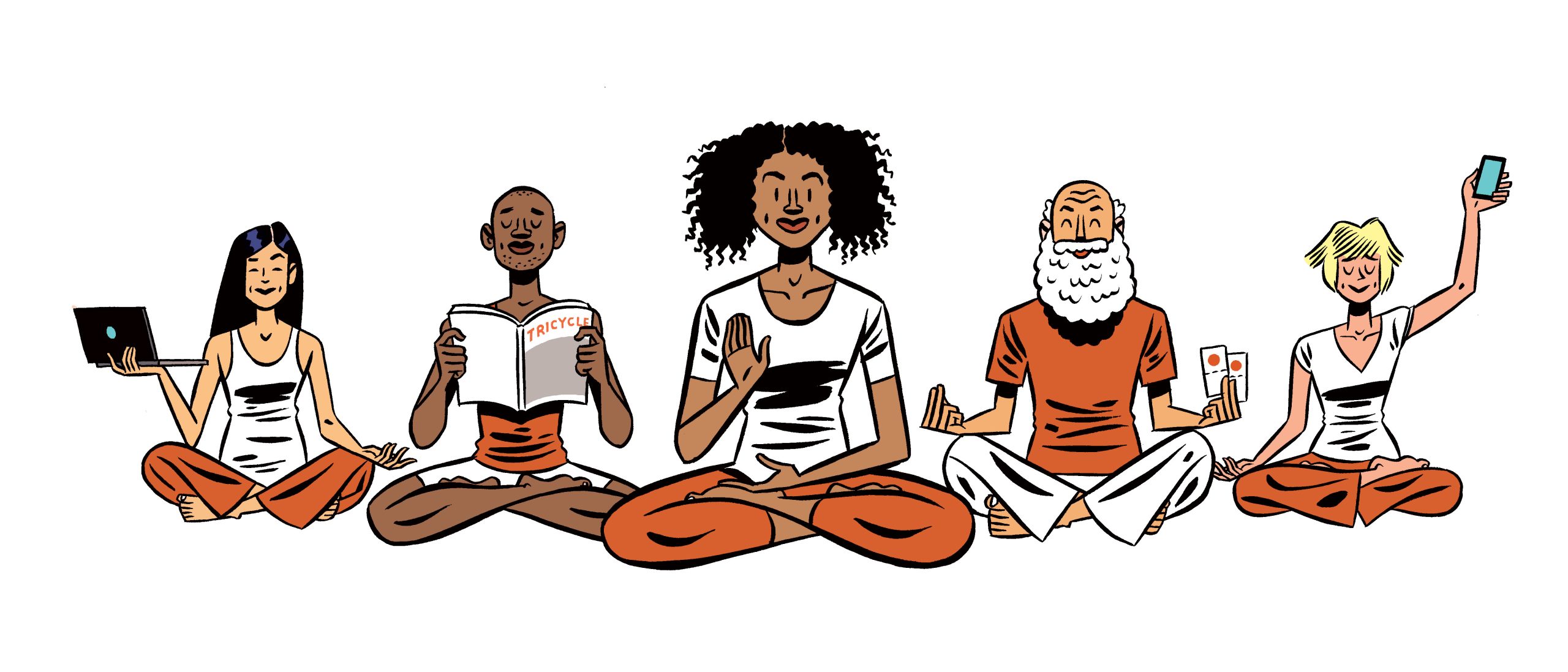
Buddhism stands unique in the history of human thought in denying the existence of. . . a Soul, Self, or Atman. According to the teaching of the Buddha, the idea of self is an imaginary, false belief which has no corresponding reality, and it produces harmful thoughts of “me” and “mine,” selfish desire, craving, attatchment, hatred, ill-will, conceit, pride, egoism, and other defilements, impurities and problems. It is the source of all the troubles in the world from personal conflicts to wars between nations. In short, to this false view can be traced all the evil in the world.
 
I would like any feedback on this because it seems sensible to me thank you

tricycle.com
For a “theological” thinking from someone thousands of years prior to modern theology, I see nothing wrong in that. It is anybody’s right to come to whatever perception of God in his life. The most important thing, is the fruit of such contemplation as pictured by his/her daily live and interaction between him/her and other persons.
 
The most important thing, is the fruit of such contemplation as pictured by his/her daily live and interaction between him/her and other persons.
Thanks I agree-I did not even think to remember that this was a theology quite before Christianity-I like the way it is worded and the way it conveys it’s message.

thanks!
 
I live in an area where the dominant attitude is self-contradictory; it holds that there is no true religion because all are true, that there is no true religion because all are false, that the true religion, regardless of “what faith practices work for you”, is actually shamanic animism, and that the true religion regardless of what works for you is of course a Westernized combination of the easiest-to-do elements of different forms of Buddhism. I find I’m socially acceptable as long as no one finds out I believe just what I say I believe, rather than pretending to believe what “works for me” while deep-down believing the tangle of contradictions that is the expected view here.
You need to understand that there is no “Buddhism” exactly, because the actual teachings of Gautama Siddhartha were lost with the death of his immediate disciples, not written down. Schism based on fundamental differences of opinion on what he had really taught began within a few generations. The first and most obvious division is between Mahayana and Theravada Buddhism, but the two branches soon divided and split over and over. Buddhism as we know it now (any kind of modern Buddhism) is recent, far newer than Christianity, and influenced in some areas by Christian, Muslim and other monotheistic thinking, while in other parts of the world it’s heavily affected by local polytheistic religions.
Selflessness can mean different things, too: kindness, emptiness, dissociation, self-sacrifice. In abnormal psychology, people with little or no self-concept are defined as borderline personalities. These people, rather than being especially helpful, are usually emotional and unpredictable, like small children, with no sense of other people’s needs or boundaries any more than their own. So my opinion is that a self-concept is important and not something to get rid of.
Of course, ab psych is pretty low on universal agreement too.🤷
 
I would like any feedback on this because it seems sensible to me thank you
What kind of feedback do you expect on a Catholic forum?

This statement is not compatible with Catholic teaching regarding the person and the soul.

So, my feedback is that Buddha’s statement is false.
 
You need to understand that there is no “Buddhism” exactly, because the actual teachings of Gautama Siddhartha were lost with the death of his immediate disciples, not written down.
Just because something is not written down does not mean that it is not old. Homer’s works, the Vedas and Buddhist scriptures were all remembered and passed on orally for hundreds of years. You can see the effects of this in the Buddhist scriptures now - they are split up into recitation sections. They are both repetitive and full of numerical lists; both of these are aids to memory. We still have different versions of the early Buddhist scriptures from different schools (see Agamas) and they match to a good degree; well enough to assure us that we have a reasonably accurate version now.
Schism based on fundamental differences of opinion on what he had really taught began within a few generations.
And Christianity did not have splits in the first few hundred years? Gnostics and so forth.
The first and most obvious division is between Mahayana and Theravada Buddhism,
That may be an obvious split, but it was not the first; it was was a relatively late split. There were traditionally 18 schools of Buddhism prior to the rise of the Mahayana of which only one, the Theravada, has survived. The Mahayana arose later from about 100 BCE onwards.
Buddhism as we know it now (any kind of modern Buddhism) is recent, far newer than Christianity, and influenced in some areas by Christian, Muslim and other monotheistic thinking, while in other parts of the world it’s heavily affected by local polytheistic religions.
Christianity as we know it now is very different from the Christianity of the Roman Empire. All religions change over time.

rossum
 
What kind of feedback do you expect on a Catholic forum?

This statement is not compatible with Catholic teaching regarding the person and the soul.

So, my feedback is that Buddha’s statement is false.
I don’t see anything wrong with affirming truth even when spoken outside of the context of Christianity. The comments about the soul being an imaginary concept are incorrect, but I’m happy to affirm the truth that the idolatry of self is at the heart of much if not all of the evil in this world.
 
Status
Not open for further replies.
Back
Top