Ask an Eastern Catholic

  • Thread starter Thread starter CDB1718
  • Start date Start date
Status
Not open for further replies.
C

CDB1718

Guest
I chose this forum because the thread is intended especially for Roman Catholics. I just had a positive exchange in the Ask a Cradle Catholic thread in which my questions were answered and I am paying it forward.

So what questions do you have for an Eastern Catholic? For the things I don’t know, I’ll try to find the answers or get an Eastern Catholic who does know to respond.
 
Yes 🙂 What language do eastern catholics mainly use in mass?
Well it would depend on where you were…In Greece Liturgy would be in Greek, in Russia in Church Slavonic, in the US Liturgy would be mainly in English though in some parishes with a large immigrant community some of the mother language would be used as well. 😃
 
Is there an Eastern Catholic Answers website with info on differences between Eastern and Western Catholics?

What percentage of Eastern Right priests are married?

Are Eastern Rite Catholics better at following Church teaching about contraception than Roman Rite’rs?

Who are the hotshot Eastern Rite apologists? Can you list their websites?

What exactly is a sub-deacon and what are his responsibilities?

How’s yer mama ‘n’ 'em?🙂
 
I chose this forum because the thread is intended especially for Roman Catholics. I just had a positive exchange in the Ask a Cradle Catholic thread in which my questions were answered and I am paying it forward.

So what questions do you have for an Eastern Catholic? For the things I don’t know, I’ll try to find the answers or get an Eastern Catholic who does know to respond.
For anyone who wants to know about Eastern Catholicism there is a forum in this site called Eastern Catholicism. It’s immediately above Traditional Catholicism.
 
Is there an Eastern Catholic Answers website with info on differences between Eastern and Western Catholics?
As thistle said, there’s an Eastern Catholic Answers here! forums.catholic-questions.org/forumdisplay.php?f=119
How’s yer mama ‘n’ 'em?🙂
😃 Fine, thank you!
To be clear for future questions, I don’t discuss my family or personal life online.
I hope yer mama ‘n’ 'em are all good!
What percentage of Eastern Right priests are married?
I don’t know of a number, but I think it is the majority if you count all of them around the world. Here in North America, there are more celibate priests in parish ministry because we were forbidden from ordaining married men. Now that we’re ordaining married men again, the numbers are getting closer to the rest of the world. Celibate men are traditionally monastics and/or scholars who stay around the cathedral as the city has the hub of learning. Most parish priests are traditionally married men.
Are Eastern Rite Catholics better at following Church teaching about contraception than Roman Rite’rs?
I don’t think I’m qualified to answer this. First because it assumes that we approach sexuality in the same way and second because it requires knowing how it is being taught outside North America and then if what is being taught is also being applied. I will try to find someone else to answer the question.

What I can say without hesitation is that those who live in the western secular world have the same struggles with sexuality and the corruption of it.
Who are the hotshot Eastern Rite apologists? Can you list their websites?
I can’t think of any Eastern Catholics who would primarily have the title of apologist. We don’t defend ourselves from intellectual attack as much as we teach through liturgy, spiritual growth and catechesis. With that in mind, here are some Eastern Catholic “hotshots,” one of whom has already responded in this thread. I hope other people add to the list.

The monks at Holy Resurrection Monastery
hrmonline.org
youtube.com/user/YourWordFromTheWise/videos

Fr. Tom Loya
taborlife.org
byzantinecatholic.com/theology.htm
catholicradiointernational.com/lightoftheeast.php
catholicradiointernational.com/abodyoftruth.php
emmausroad.org/%2FIcons-by-Fr-Thomas-Loya-C958.aspx

Fr. Andriy Chirovsky
sheptytskyinstitute.ca/?page_id=47
stmichaeltucson.org/site/Pastor.html

Fr. Roman Galadza
saintelias.com/ca/clergy/frroman.php

Fr. Peter Galadza
sheptytskyinstitute.ca/?page_id=49
yale.edu/ism/events/WorshipConference_pgaladza.html

Bp. Nicholas (Samra)
melkite.org/bishop-nicholas
instituteofcatholicculture.org/author/bishop-nicholas-samra/

Bp. John Michael (Botean)
romaniancatholic.org/most-rev-botean/
infinimo.com/author/johnmichaelbotean

Abouna Justin Rose
saintphilipchurchsb.org
usmaya.org

Fr. James Babcock
holycrossmelkite.org/message.htm

Fr. James Bankston
stjohnthebaptizer.org

Dc. Sabatino Carnazzo
instituteofcatholicculture.org/staff/
holytransfiguration.org

Jack Figel
ecpubs.com
olconference.com
ecbulletin.com
oltv.tv
ssjc.org

John Vernoski
byzcath.org/

There are more. I hope others provide them!
What exactly is a sub-deacon and what are his responsibilities?
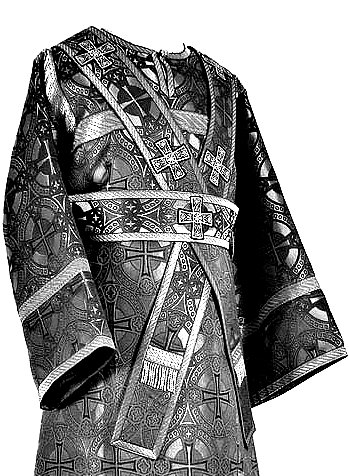
We retain the minor orders. The subdeacon is the ordained person who assists the deacon and priest in the divine services. He is distinguished by his orar, which is a cloth looped around both shoulders, forming a cross both in front and in back. This cross is referred to as the “angelic fashion” as it is reminiscent of the six wings of the seraphim (cf. Isaiah 6:2).

The subdeacon’s liturgical role is primarily that of servant to the bishop. He assists the bishop during hierarchical services by vesting him, by looking after and presenting the trikeri and dikeri (the triple and double candles of the bishop), etc. Outside of hierarchical services, the subdeacon serves in the altar as any other server but, as highest-ranking of the minor clergy, is responsible for training and leading the serving team. Being a minor order, subdeacons are able to marry after ordination if the need/desire arises in every Eastern Catholic Church I’m aware of, but I can’t make a universal statement.

The subdeacon also has practical responsibilities in the care of the altar by cleaning it, looking after the clergy vestments and the cloths of the Holy Table, cleaning and mending them, and changing them according to the feasts, fasts, and seasons. For this reason, he has a general blessing to touch the Holy Table and the table of oblation, which readers and other servers may not do. Should the need arise, the subdeacon may serve in the absence of a reader in the reader’s role.
 
So what questions do you have for an Eastern Catholic? .
I know someone who is Orthodox and converting to Eastern Rite Catholicism. She seeks an annulment of her prior marriage, which was not preformed in any church.

I know the western churches views on marriage changed with Vatican ii. What about eastern?
 
I know someone who is Orthodox and converting to Eastern Rite Catholicism. She seeks an annulment of her prior marriage, which was not preformed in any church.

I know the western churches views on marriage changed with Vatican ii. What about eastern?
I don’t know of any changes in teaching since Vatican II, but that’s irrelevant to the question. In the United States, we use the local Roman Catholic diocese’s tribunal and annulments are sought the same way. I think we’re supposed to have an Eastern Catholic canon lawyer involved in our cases at the tribunal.

If she was a baptized Orthodox at the time of her attempt at marriage, I think she’ll be considered under the lack of form, but she’ll have to ask her eparchy’s canon lawyer for information specific to her. She probably needs to talk to them before she formally converts to have all her ducks in a row.

Here is general information from the Ukrainian Catholic Archeparchy of Philadelphia.
ukrarcheparchy.us/tribunal/decree-of-nullity-pamphlet-for-responders.pdf
ukrarcheparchy.us/tribunal/lack-of-form.pdf
 
I chose this forum because the thread is intended especially for Roman Catholics. I just had a positive exchange in the Ask a Cradle Catholic thread in which my questions were answered and I am paying it forward.

So what questions do you have for an Eastern Catholic? For the things I don’t know, I’ll try to find the answers or get an Eastern Catholic who does know to respond.
Hello!

How exactly does Eastern Orthodox differ from Eastern Catholicism aside from the fact that Eastern Catholicism is in communion with Rome?

Why is Eastern Orthodox not in communion with Rome?

Also, I have another question. 🙂 Were you raised Eastern Catholic?

God Bless!
 
Hello!

How exactly does Eastern Orthodox differ from Eastern Catholicism aside from the fact that Eastern Catholicism is in communion with Rome?
Ideally, that is the only difference. In practice, we’ve developed apart from each other for nearly a millennium, so there are differences. We’re actively working to narrow the gap, but individual parishes are at different stages of renewal. A lot of our renewal of tradition has come since Vatican II which directed Eastern Catholics to look to the Orthodox for our patrimony and to close that gap.

The Ukrainian Greek-Catholic Church reaffirmed communion with Rome in 1596 with the Union of Brest. Mostly it says that Rome assures us we’re going to be able to continue thinking and living as Eastern Christians within the Catholic communion. There are two points where we say that we accept that Roman/Latin teachings and practices aren’t heretical: the filioque and purgatory.

The filioque is “and of the Son” that’s in the Creed. It didn’t use to be there and the union says we will continue saying it the original way while we accept that Rome will continue saying it with the filioque addition. The Orthodox have not made a statement that they accept (or reject) either teaching as being a Roman way of expressing the same truth, leading some Orthodox today to say Rome is in heresy on these issues.

You can read the treaty of union at EWTN: ewtn.com/library/COUNCILS/TREATBR.HTM
Why is Eastern Orthodox not in communion with Rome?
It is a big, sad, long and convoluted story that involves misunderstandings, poor communication, pride, secular powers, and I don’t even know what else. Both sides worked to maintain unity and even came to an agreement that restored unity, but then it just didn’t take off and we’ve stayed apart for all this time. 😦

ewtn.com/library/councils/florence.htm

I’ll ask for a recommendation for a video or book that covers it at an introductory level.
Also, I have another question. 🙂 Were you raised Eastern Catholic?
God Bless!
I don’t discuss my personal life online. Too many crazy people out there! Sorry about that.
 
I’ll ask for a recommendation for a video or book that covers it at an introductory level.
Vladimir Solovyov’s The Russian Church and the Papacy, played a significant role in my decision to convert from Orthodoxy to Catholicism.
 
Ideally, that is the only difference. In practice, we’ve developed apart from each other for nearly a millennium, so there are differences. We’re actively working to narrow the gap, but individual parishes are at different stages of renewal. A lot of our renewal of tradition has come since Vatican II which directed Eastern Catholics to look to the Orthodox for our patrimony and to close that gap.

The Ukrainian Greek-Catholic Church reaffirmed communion with Rome in 1596 with the Union of Brest. Mostly it says that Rome assures us we’re going to be able to continue thinking and living as Eastern Christians within the Catholic communion. There are two points where we say that we accept that Roman/Latin teachings and practices aren’t heretical: the filioque and purgatory.

The filioque is “and of the Son” that’s in the Creed. It didn’t use to be there and the union says we will continue saying it the original way while we accept that Rome will continue saying it with the filioque addition. The Orthodox have not made a statement that they accept (or reject) either teaching as being a Roman way of expressing the same truth, leading some Orthodox today to say Rome is in heresy on these issues.

You can read the treaty of union at EWTN: ewtn.com/library/COUNCILS/TREATBR.HTM

It is a big, sad, long and convoluted story that involves misunderstandings, poor communication, pride, secular powers, and I don’t even know what else. Both sides worked to maintain unity and even came to an agreement that restored unity, but then it just didn’t take off and we’ve stayed apart for all this time. 😦

ewtn.com/library/councils/florence.htm

I’ll ask for a recommendation for a video or book that covers it at an introductory level.

I don’t discuss my personal life online. Too many crazy people out there! Sorry about that.

Okay great! Thanks for the information 🙂 I’ll look into Eastern Catholicism and maybe go to Mass in an Easter Church sometime. 🙂

God Bless! 🙂
 
I chose this forum because the thread is intended especially for Roman Catholics. I just had a positive exchange in the Ask a Cradle Catholic thread in which my questions were answered and I am paying it forward.

So what questions do you have for an Eastern Catholic? For the things I don’t know, I’ll try to find the answers or get an Eastern Catholic who does know to respond.
I personally have no questions for the Easterns and if I did I think I would go to the Eastern Forum and ask there. Since this forum is specifically for matters relating to Traditional Catholicism and spirituality, I would think that most people who post here are of the sameopinion essentially.

Thanks for your concern and kind efforts on our behalf.
 
How would you say that Eastern Catholics traditionally prays as families?
It varies in custom by region and date. Among the Byzantines, it is common to to offer frequent brief prayers and blessings and to have an icon corner in a prominent area of the house in which they pray. Moderately pious families will pray morning and evening prayers together. And of course prayers before meals. The patron saint’s feast is celebrated as one’s name day in the family. Traditionally, fasting and feasting was culturally supported so the faith was more woven into the fabric of everyday life.

Now that most of us live in secular cultures, we have to be more proactive and intentional in our prayers and devotions. Icon corners at home are often larger than traditional ones. The laity are more likely to seek out liturgical services like Vespers and Orthros (the Hours) to pray not only as a family but as a community.

One thing worth noting is that our children are confirmed at the time of baptism so they receive the Eucharist from then forward. Traditionally, we have one liturgy per day, per priest, per altar so most communities have one liturgy time for the whole church. It is an important aspect of family prayer that whole family attends church together including the young children.
 
Status
Not open for further replies.
Back
Top