
P
patrick457
Guest
Something for Holy Week.
Ever wondered about the term, ‘carrying a cross’?
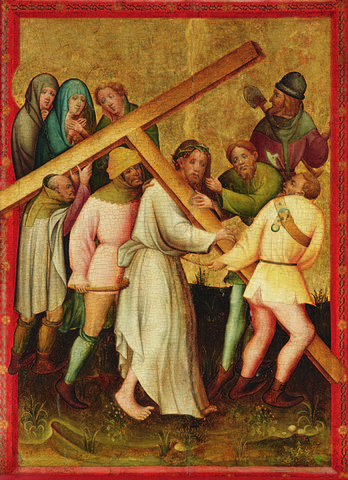
Anyone who has read their Bible at some point would have pretty much encountered the expression ‘carrying the cross’ and have some idea where it comes from: the gospels, which talk about Jesus inviting people to “take up (their) cross” and later, have Jesus “carry His cross” to Golgotha.
But did you know? In classical (non-Christian) Latin literature, nowhere does the term “to carry a cross” - to be more precise, “to carry a crux” - appear. You have texts which speak of people condemned to crucifixion being “led to the crux” (agere in crucem), “lifted up on a crux” (tollere in crucem), or “fastened to a crux” (cruci figere - where we get the terms ‘crucifixion’ and ‘crucify’), but nowhere is a crux said to be carried.
Instead, some of these texts describe such people bearing a horizontal beam known as the patibulum. As the literal meaning of the term suggests (‘spreader’, from pateo, ‘to spread open’, ‘to extend’), victims carry this beam with their arms extended, stretched out on it. These sources describe the condemned to crucifixion as carrying this patibulum first before they were “lifted up on a crux.”
Let him carry the patibulum (patibulum feram) through the city; then let him be fastened to the crux.
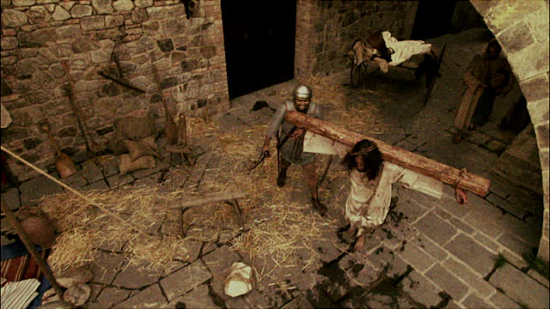
In the gospels, the word used to describe what Jesus and/or Simon of Cyrene carried is stauros. While the basic meaning of stauros is closer to the basic meaning of crux (‘upright stake/pole’), given what we know from these Latin texts, it is more likely that stauros in this instance means patibulum than crux, because we have no evidence (despite popular iconography) that the crux - either the upright stake by itself or the stake joined to the horizontal patibulum (i.e. a ‘full cross’) were ever carried in Roman crucifixions. In other words, when the gospels say that Jesus (or Simon) carried the stauros, they probably meant that He carried the horizontal beam (patibulum) rather than the upright post / the beam and the post conjoined together (crux).
Where it gets confusing is that this one word, stauros, apparently does double duty as an equivalent term for the horizontal beam (patibulum) and the beam (patibulum) joined to a vertical stake (crux) to form a T/t shaped gibbet, on top of its basic meaning of ‘vertical stake’. So basically, you have three possible nuances of stauros.

Ever wondered about the term, ‘carrying a cross’?
.jpg/348px-Warendorfer_Passionsaltar_(9).jpg)
Anyone who has read their Bible at some point would have pretty much encountered the expression ‘carrying the cross’ and have some idea where it comes from: the gospels, which talk about Jesus inviting people to “take up (their) cross” and later, have Jesus “carry His cross” to Golgotha.
But did you know? In classical (non-Christian) Latin literature, nowhere does the term “to carry a cross” - to be more precise, “to carry a crux” - appear. You have texts which speak of people condemned to crucifixion being “led to the crux” (agere in crucem), “lifted up on a crux” (tollere in crucem), or “fastened to a crux” (cruci figere - where we get the terms ‘crucifixion’ and ‘crucify’), but nowhere is a crux said to be carried.
Instead, some of these texts describe such people bearing a horizontal beam known as the patibulum. As the literal meaning of the term suggests (‘spreader’, from pateo, ‘to spread open’, ‘to extend’), victims carry this beam with their arms extended, stretched out on it. These sources describe the condemned to crucifixion as carrying this patibulum first before they were “lifted up on a crux.”
Let him carry the patibulum (patibulum feram) through the city; then let him be fastened to the crux.
- Plautus, Carbonaria, fragment 2
- Leges libitinariae (De publico libitinae), 8-9

In the gospels, the word used to describe what Jesus and/or Simon of Cyrene carried is stauros. While the basic meaning of stauros is closer to the basic meaning of crux (‘upright stake/pole’), given what we know from these Latin texts, it is more likely that stauros in this instance means patibulum than crux, because we have no evidence (despite popular iconography) that the crux - either the upright stake by itself or the stake joined to the horizontal patibulum (i.e. a ‘full cross’) were ever carried in Roman crucifixions. In other words, when the gospels say that Jesus (or Simon) carried the stauros, they probably meant that He carried the horizontal beam (patibulum) rather than the upright post / the beam and the post conjoined together (crux).
Where it gets confusing is that this one word, stauros, apparently does double duty as an equivalent term for the horizontal beam (patibulum) and the beam (patibulum) joined to a vertical stake (crux) to form a T/t shaped gibbet, on top of its basic meaning of ‘vertical stake’. So basically, you have three possible nuances of stauros.


 The victim did not bear a crux; they did not carry the upright stake, nor apparently did they bear the beam already attached to the stake.