
Eastern Catholic Vestments

  • Thread starter Thread starter Spinonitaliani
  • Start date Start date
Status
Not open for further replies.
S

Spinonitaliani

Guest
Hi everyone,
I’m a Latin Rite Catholic who has very little knowledge of the Eastern Rites, though I find them to be fascinating. I have one question which I’ve spent so long trying to figure out and so I thought I’d post it here. I was wondering what the instrument that Eastern Rite eparchs/bishops hold is called. I’m not talking about the crozier, but the small cross they hold in their other hand. I’ve provided some links below with pictures of what I’m talking about.
Just wanted to know if anyone knew what they were called, what their significance, and why it’s only a tradition among the Eastern Rites (in my quick research, I couldn’t find many Orthodox bishops with this ‘instrument’).
Thanks so much everyone!

Maronite:
cnewa.org/default.aspx?ID=1449&pagetypeID=8&sitecode=HQ&pageno=1

Byzantine Ruthenian:
catholicanchor.org/wordpress/archives/5490

Syro-Malabar:
catholicleader.com.au/news.php/features/syromalabar-major-archbishop-to-visit-brisbane_83183

Syro-Malankara:
catholicate.net/major_archbishop.html

Ukrainian Catholic:
stamforddio.org/biography.html
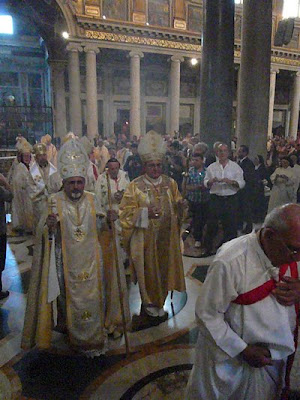
 
Hi everyone,
I’m a Latin Rite Catholic who has very little knowledge of the Eastern Rites, though I find them to be fascinating. I have one question which I’ve spent so long trying to figure out and so I thought I’d post it here. I was wondering what the instrument that Eastern Rite eparchs/bishops hold is called. I’m not talking about the crozier, but the small cross they hold in their other hand. I’ve provided some links below with pictures of what I’m talking about.
Just wanted to know if anyone knew what they were called, what their significance, and why it’s only a tradition among the Eastern Rites (in my quick research, I couldn’t find many Orthodox bishops with this ‘instrument’).
Thanks so much everyone!

Maronite:
cnewa.org/default.aspx?ID=1449&pagetypeID=8&sitecode=HQ&pageno=1

Byzantine Ruthenian:
catholicanchor.org/wordpress/archives/5490

Syro-Malabar:
catholicleader.com.au/news.php/features/syromalabar-major-archbishop-to-visit-brisbane_83183

Syro-Malankara:
catholicate.net/major_archbishop.html

Ukrainian Catholic:
stamforddio.org/biography.html
It is a hand cross. Bishops and priests of certain jurisdictions who are given the honor use the hand cross to bless during the liturgy and out. It is a fairly common staple of Eastern praxis.
 
Its called the Blessing Cross. It is a cross used for, wait for it… blessing. A bishop would normally carry it around at times during Liturgy and other public prayer services, but a priest would also use it. But a priest never carries it around unless he is going to do a blessing, so normally it is at the altar or another table like the tetrapod, and he’d pick it up when he is about to do a blessing.
 
That’s my Bishop!
Mine, too!

In all seriousness, in the Byzantine Rite, The Blessing Cross is normally only carried by bishops for paraliturgical services; for blessings during the liturgy, they normally use the dikiri/trikiri.

Priests carry the blessing cross only during liturgies and paraliturgies. Many bishops will say the liturgy as principle celebrant in the priestly form rather than hierarchical form; in such cases, they usually use the blessing cross as would a priest. But not always.

Certain blessings are done with the hand, others with specific candles, others still with holy water, and some with the blessing cross.

A Trend I’ve Noticed

Note that EO bishops tend to have their Portraits taken in what would be called “choir dress” or “travel dress” - rasson, exorasson, kamilkava, walking staff; sometimes the cloak is worn as well. Byzantine Rite Catholic bishops tend to have their portraits in liturgical vestments - usually epitrachelion, sticharion, sakkos, omophorion, epimanikia, zone, and miter, with blessing cross and liturgical staff.

I suspect this originated in a desire to be distinct. But I’ve seen portraits on both sides in both formats. It’s a trend, not a rule.
 
Thanks everyone for the great responses. The Blessing Cross is definitely an interesting element of the Eastern Traditions. One last question I was wondering if anyone had any experience with: is the Blessing Cross at all a part of the Latin Tradition, or has it been in the past?
Thanks

P.S. Please pray for my neighbors in Newtown, Connecticut
 
Thanks everyone for the great responses. The Blessing Cross is definitely an interesting element of the Eastern Traditions. One last question I was wondering if anyone had any experience with: is the Blessing Cross at all a part of the Latin Tradition, or has it been in the past?
Thanks

P.S. Please pray for my neighbors in Newtown, Connecticut
It’s not alien to the Latin rite, but hasn’t been in common use there in the 2nd millenium. Some old illustrations from the late 1st millenium show blessing crosses.
 
Status
Not open for further replies.
Back
Top