
Great older movie!

  • Thread starter Thread starter Bonnie
  • Start date Start date
Status
Not open for further replies.
“For the Greater Glory” was a good Catholic movie about Mexico’s War of the Cristeros.
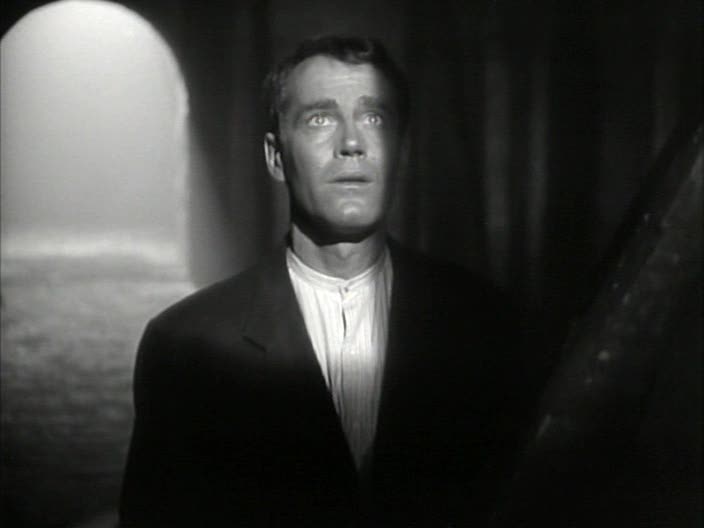
Henry Fonda, star of Hitchcock’s “The Wrong Man,” was in another great old movie, also about the Cristero War, from director John Ford - “The Fugitive” (1947), which also starred Dolores Del Rio, Ramon Pedro Armendáriz, J. Carrol Naish, Leo Carrillo, and Ward Bond.


Ford freely adapted the film from Graham Greene’s 1940 novel “The Power and the Glory”. Henry Fonda is a frightened, broken, haunted priest on the run from the anti-Catholic authorities, conflicted between his desire to escape with his life, and his duty to provide the sacraments to those who need them. As he evades the repressive revolutionary police and priest-hunters, protected by villagers and betrayed by informants, the priest is helped by “El Gringo” (the always enjoyable Ward Bond, who also played Father Lonergan in “The Quiet Man”), an American thief and murderer whose capture sets in motion the final test of the priest’s faith.

Fonda provided an excellent performance as a man who feels deeply inadequate to the demands of his priestly state under the new political order. The film was gorgeously lit and photographed by Mexican cinematographer Gabriel Figueroa. The opening sequence, when a young woman (the beautiful Dolores Del Rio) meets Fonda in a ransacked church and asks him to baptize her baby, is an amazing interplay of light and shadow as the villagers hesitantly respond to Fonda’s ringing of the Church bells, and begin to reclaim the church and prepare for the baptism. The musical score can be a bit overpowering at times, sometimes diverting attention from the beauty of the crisp black and white imagery, but the film is a powerful reminder of the visual palette that black and white film affords the photographer.

Graham Greene’s original 1940 novel (also published under the title “The Labyrinthine Ways”) was explicitly set in Mexico in the 1930s, in the Mexican state of Tabasco, where some of the worst repression against the Church occurred. To avoid offending the then-current government of Mexico, the film is set in an unnamed Latin American state, and the uniforms of the army and police suggest both Latin American, Nazi, and Soviet styles.

The film was awarded a prize by the International Catholic Organization for Cinema at the 1948 Venice Film Festival. The jury noted that the film was "most capable of contributing to the revival of moral and spiritual values of humanity.”

It is likely that Greene based the character of the unnamed priest portrayed by Fonda on the Blessed Miguel Pro, a Jesuit priest who was executed without trial for defying the virtual outlawing of Catholicism. Pedro Armendáriz’s character seems to be partly based on Tomás Garrido Canabal, the atheist Marxist governor of Tabasco and a fierce anti-Catholic.

The brief part of Father Serra was played by an uncredited Mel Ferrer, in his first film role.

John Ford, who was best known for films such as THE GRAPES OF WRATH, THE QUIET MAN, THE SEARCHERS, and SHE WORE A YELLOW RIBBON, was a lifelong Catholic who often wove religious themes into his work. In his later years, Ford served his parish as an Extraordinary Minister of Holy Communion.

Pedro Armendáriz and Ward Bond also appeared in Ford’s THREE GODFATHERS, a great Christmas movie with John Wayne (himself a later convert to Catholicism.)
 
Henry Fonda, star of Hitchcock’s “The Wrong Man,” was in another great old movie, also about the Cristero War, from director John Ford - “The Fugitive” (1947), which also starred Dolores Del Rio, Ramon Pedro Armendáriz, J. Carrol Naish, Leo Carrillo, and Ward Bond.

http://www.mardecortesbaja.com/wordpress/wp-content/uploads/64918247du0.jpg

Ford freely adapted the film from Graham Greene’s 1940 novel “The Power and the Glory”. Henry Fonda is a frightened, broken, haunted priest on the run from the anti-Catholic authorities, conflicted between his desire to escape with his life, and his duty to provide the sacraments to those who need them. As he evades the repressive revolutionary police and priest-hunters, protected by villagers and betrayed by informants, the priest is helped by “El Gringo” (the always enjoyable Ward Bond, who also played Father Lonergan in “The Quiet Man”), an American thief and murderer whose capture sets in motion the final test of the priest’s faith.

Fonda provided an excellent performance as a man who feels deeply inadequate to the demands of his priestly state under the new political order. The film was gorgeously lit and photographed by Mexican cinematographer Gabriel Figueroa. The opening sequence, when a young woman (the beautiful Dolores Del Rio) meets Fonda in a ransacked church and asks him to baptize her baby, is an amazing interplay of light and shadow as the villagers hesitantly respond to Fonda’s ringing of the Church bells, and begin to reclaim the church and prepare for the baptism. The musical score can be a bit overpowering at times, sometimes diverting attention from the beauty of the crisp black and white imagery, but the film is a powerful reminder of the visual palette that black and white film affords the photographer.

Graham Greene’s original 1940 novel (also published under the title “The Labyrinthine Ways”) was explicitly set in Mexico in the 1930s, in the Mexican state of Tabasco, where some of the worst repression against the Church occurred. To avoid offending the then-current government of Mexico, the film is set in an unnamed Latin American state, and the uniforms of the army and police suggest both Latin American, Nazi, and Soviet styles.

The film was awarded a prize by the International Catholic Organization for Cinema at the 1948 Venice Film Festival. The jury noted that the film was "most capable of contributing to the revival of moral and spiritual values of humanity.”

It is likely that Greene based the character of the unnamed priest portrayed by Fonda on the Blessed Miguel Pro, a Jesuit priest who was executed without trial for defying the virtual outlawing of Catholicism. Pedro Armendáriz’s character seems to be partly based on Tomás Garrido Canabal, the atheist Marxist governor of Tabasco and a fierce anti-Catholic.

The brief part of Father Serra was played by an uncredited Mel Ferrer, in his first film role.

John Ford, who was best known for films such as THE GRAPES OF WRATH, THE QUIET MAN, THE SEARCHERS, and SHE WORE A YELLOW RIBBON, was a lifelong Catholic who often wove religious themes into his work. In his later years, Ford served his parish as an Extraordinary Minister of Holy Communion.

Pedro Armendáriz and Ward Bond also appeared in Ford’s THREE GODFATHERS, a great Christmas movie with John Wayne (himself a later convert to Catholicism.)
I have never heard of this movie The Fugitive with Henry Fonda playingthe priest. looks really good. thanks for sharing.
 
“The Wrong Man” is showing on Turner Classic Movies (TCM) channel on Monday, December 14 if anyone wants to set their DVR.
 
“The Wrong Man” is showing on Turner Classic Movies (TCM) channel on Monday, December 14 if anyone wants to set their DVR.
I watched I Confess the other night. Really good. I had seen it before but I think I missed some parts. I saw the whole thing Saturday. Might watch The Wrong Man tonight on my DVD player.
 
Status
Not open for further replies.
Back
Top