
P
patrick457
Guest
Let’s look at some excerpts from the Opening Credits:
00:00-00:06: The OP starts with a single point shining like a drop of fallen water in the darkness (described in the storyboards as the beginning of the Universe). Then fade in to red, and an image of an Angel (Shito), which bear a curious resemblance to a Cherub/Seraph (albeit with twelve wings), advances.
As noted, that Angel does not appear in the series itself (the ‘Angels’ of the actual series are less ‘angel-looking’ than this one) though some of its characteristics seem to be shared by some of those who do, such as its face, which resembles Sachiel’s ‘mask-face’, and the orb-like globe in its chest (a Core).
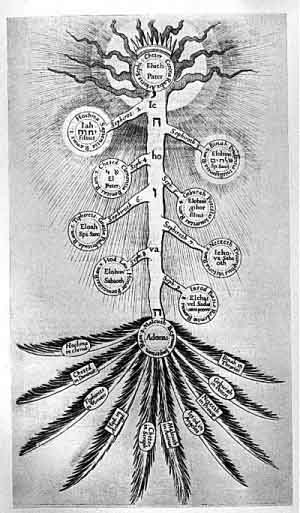
00:07-00:10: English Paracelsian physicist, astrologer, and mystic Robert Fludd (1574-1637)'s adaptation of the Kabbalistic Tree of Life, with some Christian additions (such as the reference to the Trinity and the nine choirs of Angels), from Utriusque Cosmi, volume II, 1621. The image does not appear in the series proper, though the ‘Tree of Life’ idea is present.

00:39-00:40: The Sephirotic System (Systema Sephiroticum). A 1652 depiction of the Kabbalistic Tree of Life by Jesuit scholar Athanasius Kircher S.J. (b. 1601-02, d. 1680). In the TV series proper this only appears once, though the diagram plays a key part in the film The End of Evangelion.
00:48-00:49: The protagonist, Shinji Ikari, with one of the heroines Rei Ayanami (you might recognize her from Milliardo’s sig).
01:04-01:06: EVA-01 sprouting twelve wings (Again, it does not display any such ability in the actual TV series).
01:11: NERV Headquarters.
01:13: Shinji’s father, Gendo Ikari (no, he’s not kind towards his son; nor to anyone else, for that matter).
01:14: An embryonic Adam (the progenitor of the beings called Angels. Officially designated as the 1st Angel; though, in a sense, Adam isn’t technically an Angel, but a Progenitor Entity).
01:16: The other heroine of the series, Asuka Langley Soryu.
01:18: A Giant of Light (Adam) turning around.
01:19: Antarctica during September 13, 2000 (the day of the Second Impact).
01:27: Shinji smiling. A rather similar shot occurs in the final scenes of the final episode (I believe), albeit with a different background.
01:28-01:30: A portion of the Secret Dead Sea Scrolls held by SEELE.
In the Evangelion universe, the scrolls are said to predict the events occurring in the series (such as the coming of the Angels, the Second and Third Impact, etc.) as well as containing important information. SEELE was said to have got their hands on the scrolls (which were said to be originally found in near-perfect condition), and after covering up the truth, released parts of the scrolls (dubbed simply as the ‘Dead Sea Scrolls’) which were ‘useless’, i.e. devoid of any important information, while keeping the very important ones.
Trivia: The organization that subsequently became known as SEELE (German for ‘soul’) in the final work was originally planned to be named ‘Essene’ (an obvious reference to the Jewish religious group to whom the real-life Dead Sea Scrolls are attributed to).
In the storyboards, the logo of the Essenes is an upside-down version of the SEELE logo shown in the finished product.
00:00-00:06: The OP starts with a single point shining like a drop of fallen water in the darkness (described in the storyboards as the beginning of the Universe). Then fade in to red, and an image of an Angel (Shito), which bear a curious resemblance to a Cherub/Seraph (albeit with twelve wings), advances.
As noted, that Angel does not appear in the series itself (the ‘Angels’ of the actual series are less ‘angel-looking’ than this one) though some of its characteristics seem to be shared by some of those who do, such as its face, which resembles Sachiel’s ‘mask-face’, and the orb-like globe in its chest (a Core).

00:07-00:10: English Paracelsian physicist, astrologer, and mystic Robert Fludd (1574-1637)'s adaptation of the Kabbalistic Tree of Life, with some Christian additions (such as the reference to the Trinity and the nine choirs of Angels), from Utriusque Cosmi, volume II, 1621. The image does not appear in the series proper, though the ‘Tree of Life’ idea is present.

00:39-00:40: The Sephirotic System (Systema Sephiroticum). A 1652 depiction of the Kabbalistic Tree of Life by Jesuit scholar Athanasius Kircher S.J. (b. 1601-02, d. 1680). In the TV series proper this only appears once, though the diagram plays a key part in the film The End of Evangelion.
00:48-00:49: The protagonist, Shinji Ikari, with one of the heroines Rei Ayanami (you might recognize her from Milliardo’s sig).
01:04-01:06: EVA-01 sprouting twelve wings (Again, it does not display any such ability in the actual TV series).
01:11: NERV Headquarters.
01:13: Shinji’s father, Gendo Ikari (no, he’s not kind towards his son; nor to anyone else, for that matter).
01:14: An embryonic Adam (the progenitor of the beings called Angels. Officially designated as the 1st Angel; though, in a sense, Adam isn’t technically an Angel, but a Progenitor Entity).
01:16: The other heroine of the series, Asuka Langley Soryu.
01:18: A Giant of Light (Adam) turning around.
01:19: Antarctica during September 13, 2000 (the day of the Second Impact).
01:27: Shinji smiling. A rather similar shot occurs in the final scenes of the final episode (I believe), albeit with a different background.
01:28-01:30: A portion of the Secret Dead Sea Scrolls held by SEELE.
In the Evangelion universe, the scrolls are said to predict the events occurring in the series (such as the coming of the Angels, the Second and Third Impact, etc.) as well as containing important information. SEELE was said to have got their hands on the scrolls (which were said to be originally found in near-perfect condition), and after covering up the truth, released parts of the scrolls (dubbed simply as the ‘Dead Sea Scrolls’) which were ‘useless’, i.e. devoid of any important information, while keeping the very important ones.
Trivia: The organization that subsequently became known as SEELE (German for ‘soul’) in the final work was originally planned to be named ‘Essene’ (an obvious reference to the Jewish religious group to whom the real-life Dead Sea Scrolls are attributed to).
In the storyboards, the logo of the Essenes is an upside-down version of the SEELE logo shown in the finished product.

