
Report: "Parents Outraged As London School Downgrades Jesus from ‘Lord’ To ‘Baby Boy’"

  • Thread starter Thread starter mdgspencer
  • Start date Start date
Status
Not open for further replies.
Fine, when I am talking to an Anglican in a face-to-face conversation in person, or perhaps on an “Anglican Answers” forum, we can reach some understanding about what words will be used. I am certainly not going to call them a Catholic anywhere though, including in real life. They are not Catholic to me and it would be denigrating my own faith, in my opinion, to call them that.

This is a Catholic forum, not an Anglican forum.
The word “Protestant” is not a slur and it is a word that the Catholic Church has used for centuries to describe Anglicans as well as people of other faiths who broke away from the Church at the time of the “Protestant Reformation” which is the term we use.
I plan to continue using the term “Protestant” on here to describe Anglicans, Lutherans, Presbyterians, Baptists and other non-Catholic Christians.
I don’t see anything against the TOS in doing so.

Other words that were historically used by the Church but are not used today, such as “h******”, are considered against the TOS and usually removed when flagged by the moderators, but complaining about use of the word “Protestant” by Catholics on a Catholic forum goes too far.
 
Last edited:
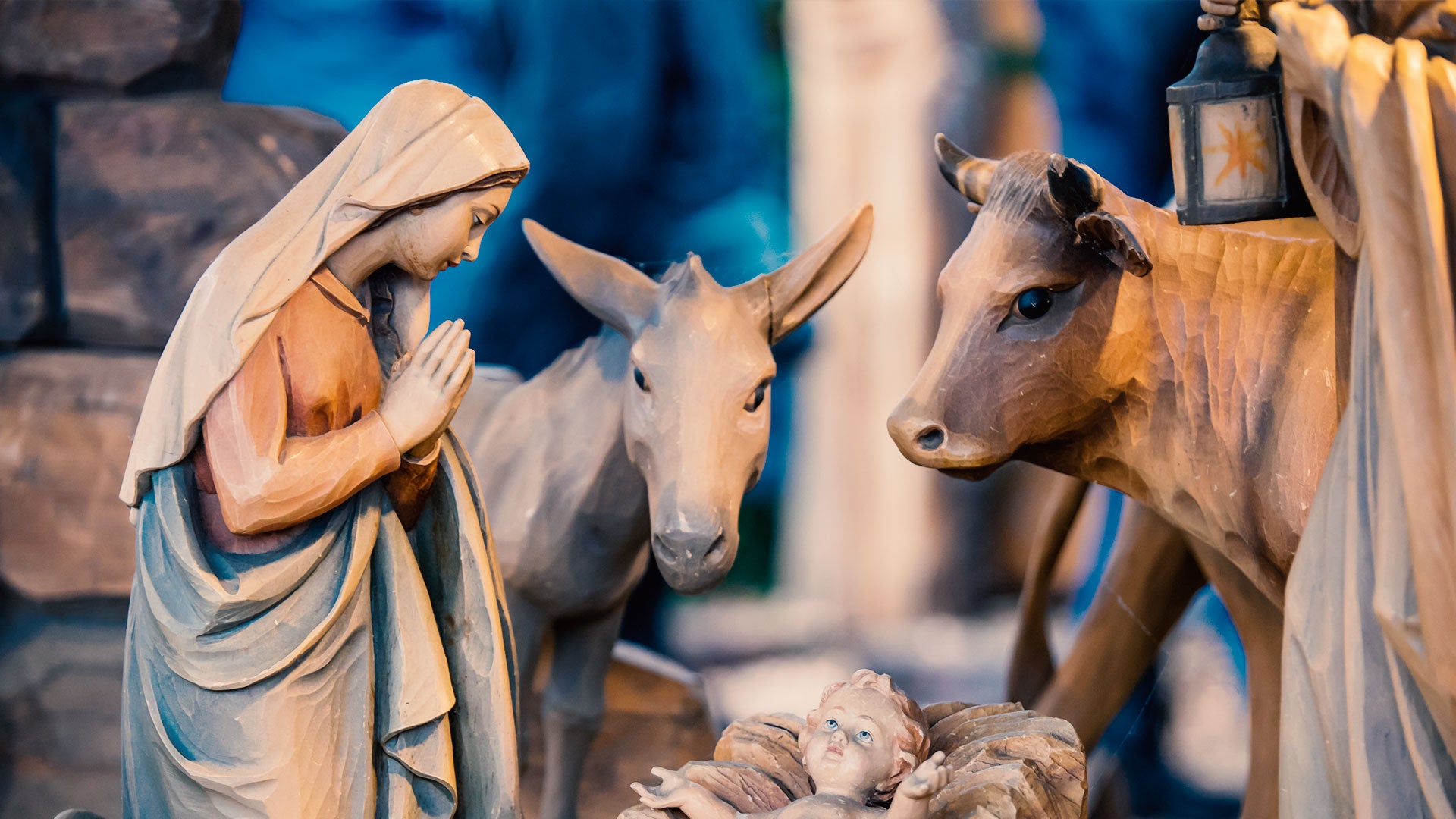
This is a school of no religious nature. However Christmas is of course celebrated by people of all religions and none in a society like the UK.

Here is their reasoning:
A spokesman for the school, which has 485 students, said: “We are a community school serving children from a range of faith backgrounds.”

“In the past, not all were able to come together to celebrate Christmas, so we have worked hard with our local church to ensure the celebrations this year are accessible to all our children to participate in, together, as one.”
For those losing sleep over the Church of England’s reaction, or lack of it, the full story quotes Bishop Nazir-Ali (who is very much a traditionalist) criticising the decision.

It does seem a daft decision to me, but then I’m not running an East London school in a multi-faith area.

Here’s the full story:

 
Last edited:
I continue to be very confused by the Church of England. Of all the Protestant denominations, it confuses me the most
Here’s what the Queen said about it:
Here at Lambeth Palace we should remind ourselves of the significant position of the Church of England in our nation’s life. The concept of our established Church is occasionally misunderstood and, I believe, commonly under-appreciated. Its role is not to defend Anglicanism to the exclusion of other religions. Instead, the Church has a duty to protect the free practice of all faiths in this country.

It certainly provides an identity and spiritual dimension for its own many adherents. But also, gently and assuredly, the Church of England has created an environment for other faith communities and indeed people of no faith to live freely. Woven into the fabric of this country, the Church has helped to build a better society – more and more in active co-operation for the common good with those of other faiths.
She was speaking, of course, at a multi-faith event:

http://aoc2013.brix.fatbeehive.com/...tends-multi-faith-reception-at-lambeth-palace
 
@(name removed by moderator)

If somebody doesn’t want to be called a protestant I won’t call them it, but the negative connotation with ‘protestant’ is an Irish/English thing.
 
@PickyPicky

Because of the influence of Christmas people of all kinds of backgrounds are celebratory for Christmas and that is perfectly fine and good, but since it’s the second most widely celebrated day of the year for Christians and has a very strongly religious background, I think if they’re going to sing religious songs they should make them religious or simply choose to not sing them at all.

It’s not surprising though. CoE is closely linked to the secular state and that was its eventual downfall from the very beginning, in my opinion. Ditto for the Church in Sweden, etc. Based on the number of people who regularly worship at a public location, England has already reverted to a Catholic country.
 
Last edited:
If somebody doesn’t want to be called a protestant I won’t call them it, but the negative connotation with ‘protestant’ is an Irish/English thing.
It’s certainly not a US thing. I’ve never seen anyone in US upset by being referred to as a WASP (“White Anglo Saxon Protestant”), for example.
 
but the negative connotation with ‘protestant’ is an Irish/English thing.
That helps make more sense of something I was remembering. Many years ago I visited a couple of Episcopal churches (yes, I know that Episcopal and Anglican are not the same, but they do have common roots). The BCP (I think it was that; I could be misremembering as it was mumble mumble years ago) stated that the church was “Catholic Protestant Episcopal”. I heard it explained that it was “catholic” as in part of the Universal Church, “protestant” as in not part of the Catholic (big C) Church, i.e. not in communion with the Pope, and “episcopal” of course referred to the system of governance by Bishops. It initially struck me as odd to hear a church refer to itself as catholic and protestant at the same time.
 
🤣 🤣 🤣 🤣
Half the time I was typing that I was hearing that word in the imaginary voice I sometimes use for the learned GKM…
 
On the rare occasion that you run into an albino elk or a traditional-minded Episcopalian (the American offshoot of the Church of England) they might take offense to ‘protestant’ but there are more Jews in the USA than there are such people anymore. Besides Catholic or Orthodox Christian, the other Christian groups in the USA have shifted to non-denominational or evangelical and they don’t care one way or another about the word. ‘Protestant’ might seem dated and antiquated but there’s not a negative connotation.
 
Last edited:
Wow. That was a near perfect description of what I was hearing internally. A voice just positively dripping with erudition and authority, but never condescension.
 
Because of the influence of Christmas people of all kinds of backgrounds are celebratory for Christmas and that is perfectly fine and good, but since it’s the second most widely celebrated day of the year for Christians and has a very strongly religious background, I think if they’re going to sing religious songs they should make them religious or simply choose to not sing them at all
Yes, I’m sympathetic to that point of view: I’m a non-believer but I happily sing Christmas carols and don’t find a need to edit them.

The problem for primary schools is this: the world around then is full of the Christmas festival. The tradition is for primary schools in England to have nativity plays and carol singing and to decorate the school for Christmas.

Parents generally expect that to happen, and would probably be angry and upset if their local primary school decided not to have these Christmas activities (and I can imagine the hoohah that would arise on CAF over a report that a school had “cancelled Christmas”. It would be held up as an example of the War on Christmas and the wickedness of the Church of England).

This obviously produces a problem for schools within multi-faith communities. One can understand that Muslim parents might take exception to their children singing words that announce Christ as God — I can recall occasions when American Christians have been deeply angered by news stories of children in religious knowledge classes being exposed to Islam or asked to recite Islamic verses.

So what does the school do? Cancel Christmas? Hold the traditional celebrations but exclude many of the pupils? This school has sought a third way. I’m not at all sure I agree with it, but I think we should have sympathy for their plight.
 
Last edited:
That helps make more sense of something I was remembering. Many years ago I visited a couple of Episcopal churches (yes, I know that Episcopal and Anglican are not the same, but they do have common roots). The BCP (I think it was that; I could be misremembering as it was mumble mumble years ago) stated that the church was “Catholic Protestant Episcopal”. I heard it explained that it was “catholic” as in part of the Universal Church, “protestant” as in not part of the Catholic (big C) Church, i.e. not in communion with the Pope, and “episcopal” of course referred to the system of governance by Bishops. It initially struck me as odd to hear a church refer to itself as catholic and protestant at the same time.
The Church of England has sometimes been called Catholic But Reformed. And although Jharek is right to say that many Anglicans dislike being called Protestant, some in the Church of England, on the Evangelical wing, would embrace the term. It’s almost as though there were something motley about Anglicans.
 
@PickyPicky

Well, there’s a library’s worth of holiday songs they could sing that aren’t super religious or that are more broad. “Away in the Manger” is very much religious and very much historically Christian. No, I absolutely don’t think a Muslim child or a Muslim family (or anybody else) should feel obligated or pressured into singing it because the lyrics are a major sticking point for their conscience and their faith. But then at the same time I don’t see why the Christian families in the school should have a classic song in their own faith tradition altered.

CoE chose the “bend-over-backwards” route and it’s part of why it’s so difficult for the average British citizen to take them seriously. They do it because they want to appear welcoming, but then there’s so little substance behind them.
 
Last edited:
CoE chose …
You do realise this is not a CofE school?
CoE chose the “bend-over-backwards” route and it’s part of why it’s so difficult for the average British citizen to take them seriously
The CofE does indeed tend to bend over backwards in love for those outside its walls. This average British citizen considers it one of the CofE’s most admirable qualities.
 
Status
Not open for further replies.
Back
Top