
H
HolyCrusader007
Guest
I feel that one of the more interesting aspects about the past was when Saint Francis Of Assisi meant with Al Kamil, a previous Sultan of Egypt.
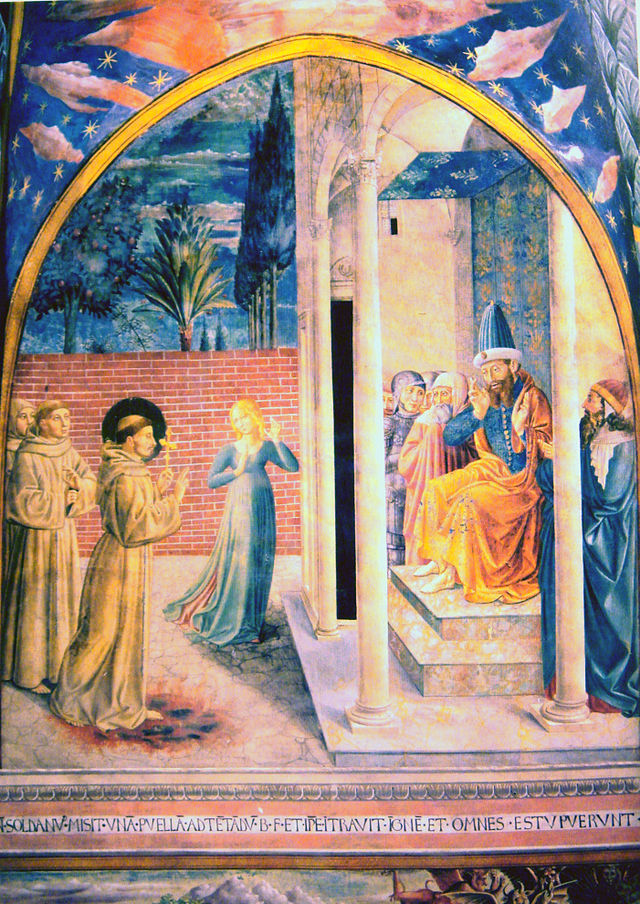
St. Francis had some remarkable conversation skills,
*Francis lived in the political turmoil of the 13th Century “Holy Roman Empire,” locked in a culture of war, fought both within the empire as city fought city and without, as the empire united in a series of Crusades against Moslems, Jews and “heretics.” It was during the fifth crusade, in 1219, that Francis began an amazing journey that directly opposed this culture of war and enmity. Christians in his time viewed The Crusades as holy; a complete reversal of the first 300 years of Christianity when disciples of Jesus would not participate in any killing.
In response, the Sultan of Egypt had decreed that anyone who brought him the head of a Christian should be rewarded with a Byzantine gold piece.
Francis began his prophetic resistance to the violence of the Crusades by meeting first with his own religious leaders, begging Cardinal Pelagius, the Christian commander, to stop the fighting. Pelagius refused.
Francis then took a companion, Brother Illuminatus, and set out, unarmed and filled with love for his “enemy” brother, to visit the Sultan of Egypt, Malik-al-Kamil, the nephew of Saladin. The men of the Sultan’s army captured Francis and Illuminatus and dragged them, beaten and exhausted, before the Sultan – just as Francis had wished.
The Sultan was receptive to these two unarmed messengers from the enemy camp. St. Bonaventure, in his Major Life of St. Francis, described the event, “The sultan asked them by whom and why and in what capacity they had been sent, and how they got there; but Francis replied that they had been sent by God, not by men, to show him and his subjects the way of salvation and proclaim the truth of the Gospel message. When the sultan saw his enthusiasm and courage, he listened to him willingly and pressed him to stay with him.”
Francis’ enthusiastic desire to share his “good news” with the Sultan, without insulting Islam or refuting Mohammed, was unique and disarming.
In the encounter between them, both Francis and the Sultan were changed. When Francis finally left to return to Italy, the Sultan showered him with many gifts and treasures. Because he had no interest in worldly wealth, Francis refused them all, except one special gift: an ivory horn used by the muezzin to call the faithful to prayer. On his return, Francis used it to call people for prayer or for preaching.
Francis also shared with his community his new and deep respect for his Moslem brothers and sisters, breaking down the cycle of enmity and misunderstanding that fueled the Crusades. Francis was especially struck by the Moslem five times daily prayer, and the practice of prostrations in worship of God; his letters urged Christians to adopt a similar practice: To make prayer a part of everyday life, in effect to remember God in everything you do, as in the Sufi zekr.
…
Francis lives out the core of the Christian mandate: to love one’s enemies, to reach out in respect to those of other religions and cultures.
Meeting the sultan confirmed to Francis that we are all brothers and sisters. Neither converted the other and yet they met each other as men of God.*
more,
darvish.wordpress.com/2008/12/23/st-francis-meets-sultan-malik-al-kamil/
Raised in privilege and renouncing that privilege for the sake of justice, fidelity to God’s revelations and God and God’s creation – to the harsh criticism of friend and family alike – St. Francis’ early life path is achingly close to that of Muhammad. And the events of his later life, particularly his three-week dialogue with Sheikh al-Malik al-Kamel the Sultan of Egypt, had a profound affect on Francis, the Sultan and the Christians and Muslims living then that are still being felt today. That should bring hope to us all.
Surprisingly, little is know about what actually happened when they talked to each other: everything written was written long after the fact, and carries the obvious imprint of whatever philosophical “spin” was popular at the time. However, the influence of that meeting on those two men was both profound and significant, for St. Francis perhaps as significant as his first embrace of the lepers of Assisi that led him to recognize their equality in the eyes of God. Because Francis went to Egypt expecting to find martyrdom, and evil men who needed to be converted to Christians in order to be saved from hell-fire. But he left respectful of Muslims to the point that he encouraged Christians to emulate them in prayer and prostration, and to join Muslms – and others – in service to all despite their different religions, and he specifically told his followers not to try and convert them.*
more,
huffingtonpost.com/dr-david-liepert/pope-francis-saint-francis-of-assisi-and-islam_b_2877661.html

St. Francis had some remarkable conversation skills,
*Francis lived in the political turmoil of the 13th Century “Holy Roman Empire,” locked in a culture of war, fought both within the empire as city fought city and without, as the empire united in a series of Crusades against Moslems, Jews and “heretics.” It was during the fifth crusade, in 1219, that Francis began an amazing journey that directly opposed this culture of war and enmity. Christians in his time viewed The Crusades as holy; a complete reversal of the first 300 years of Christianity when disciples of Jesus would not participate in any killing.
In response, the Sultan of Egypt had decreed that anyone who brought him the head of a Christian should be rewarded with a Byzantine gold piece.
Francis began his prophetic resistance to the violence of the Crusades by meeting first with his own religious leaders, begging Cardinal Pelagius, the Christian commander, to stop the fighting. Pelagius refused.
Francis then took a companion, Brother Illuminatus, and set out, unarmed and filled with love for his “enemy” brother, to visit the Sultan of Egypt, Malik-al-Kamil, the nephew of Saladin. The men of the Sultan’s army captured Francis and Illuminatus and dragged them, beaten and exhausted, before the Sultan – just as Francis had wished.
The Sultan was receptive to these two unarmed messengers from the enemy camp. St. Bonaventure, in his Major Life of St. Francis, described the event, “The sultan asked them by whom and why and in what capacity they had been sent, and how they got there; but Francis replied that they had been sent by God, not by men, to show him and his subjects the way of salvation and proclaim the truth of the Gospel message. When the sultan saw his enthusiasm and courage, he listened to him willingly and pressed him to stay with him.”
Francis’ enthusiastic desire to share his “good news” with the Sultan, without insulting Islam or refuting Mohammed, was unique and disarming.
In the encounter between them, both Francis and the Sultan were changed. When Francis finally left to return to Italy, the Sultan showered him with many gifts and treasures. Because he had no interest in worldly wealth, Francis refused them all, except one special gift: an ivory horn used by the muezzin to call the faithful to prayer. On his return, Francis used it to call people for prayer or for preaching.
Francis also shared with his community his new and deep respect for his Moslem brothers and sisters, breaking down the cycle of enmity and misunderstanding that fueled the Crusades. Francis was especially struck by the Moslem five times daily prayer, and the practice of prostrations in worship of God; his letters urged Christians to adopt a similar practice: To make prayer a part of everyday life, in effect to remember God in everything you do, as in the Sufi zekr.
…
Francis lives out the core of the Christian mandate: to love one’s enemies, to reach out in respect to those of other religions and cultures.
Meeting the sultan confirmed to Francis that we are all brothers and sisters. Neither converted the other and yet they met each other as men of God.*
more,
darvish.wordpress.com/2008/12/23/st-francis-meets-sultan-malik-al-kamil/
Raised in privilege and renouncing that privilege for the sake of justice, fidelity to God’s revelations and God and God’s creation – to the harsh criticism of friend and family alike – St. Francis’ early life path is achingly close to that of Muhammad. And the events of his later life, particularly his three-week dialogue with Sheikh al-Malik al-Kamel the Sultan of Egypt, had a profound affect on Francis, the Sultan and the Christians and Muslims living then that are still being felt today. That should bring hope to us all.
Surprisingly, little is know about what actually happened when they talked to each other: everything written was written long after the fact, and carries the obvious imprint of whatever philosophical “spin” was popular at the time. However, the influence of that meeting on those two men was both profound and significant, for St. Francis perhaps as significant as his first embrace of the lepers of Assisi that led him to recognize their equality in the eyes of God. Because Francis went to Egypt expecting to find martyrdom, and evil men who needed to be converted to Christians in order to be saved from hell-fire. But he left respectful of Muslims to the point that he encouraged Christians to emulate them in prayer and prostration, and to join Muslms – and others – in service to all despite their different religions, and he specifically told his followers not to try and convert them.*
more,
huffingtonpost.com/dr-david-liepert/pope-francis-saint-francis-of-assisi-and-islam_b_2877661.html


