I havent been able to find much. But I did find an interesting blog on some of the archeology of the bible. Here is the source:
bibleandarchaeology.blogspot.com/ for those interested.
The historical accuracy of the Bible is pretty amazing. I cant wait to see what they continue to find just in my lifetime. Below is the only thing I could find that showed what anyone from the Bible looked like.
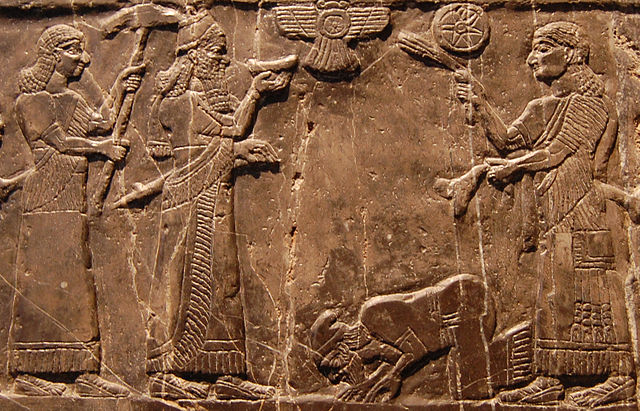
This limestone monument, known as the Kurkh Monolith, is approximately seven feet high and is now located in the British Museum. Discovered in 1862 in Kurkh, Turkey, it was originally carved in c. 850 BC by the Assyrians. The cuneiform text refers to a battle involving King Ahab of Israel, who is also frequently referred to in the Bible (cf. 1 Kings).
http://4.bp.blogspot.com/-YtROxByvUtY/TnX3wpdPzqI/AAAAAAAAAII/rKFoo2MxB4o/s200/Kurkh+Monolith.jpg
The thing is, that figure most likely isn’t Ahab. I mean, it’s an
Assyrian monument, recording the achievements of Shalmaneser III (858-824 BC). If anything, Ahab is just one of those
twelve kings who fought against him in the battle
recorded at the end of the stele.
From the city of Argana I departed; to the city of Qarqara I approached. Qarqara his royal city I threw down, dug up (and) burned with fire; 1,200 chariots, 1,200 litters (?) (and) 20,000 men from Dadda-idri of the [country] of Damascus, 700 chariots, 700 litters (?) (and) 10,000 men from Irkhulêni the Hamathite,
2,000 chariots (and) 10,000 men from Ahab the Israelite; 500 men from the Guans; 1,000 men from the Egyptians; 10 chariots (and) 10,000 men from the Irqanatians; 200 men from Matinu-ba’al the Arvadite; 200 men from the Usanatians; 30 chariots (and) 10,000 men from Adunu-ba’al the Shianian; 1,000 camels from Gindibu’i the Arabian; (and) … 00 men from Ba’asha, the son of Rukhubi of the country of Ammon — these 12 kings he took to his assistance; to [offer] battle and combat they came against me.
With the mighty forces which Assur the lord has given (me), with the powerful weapons which Nergal who goes before me has granted (me), I fought with them; from the city of Qarqara to the city of Kirzau I utterly defeated them; 14,000 of their fighting-men I slew with weapons. Like Hadad I rained a deluge upon them (and) exterminated (?) them. I filled the face of the plain with their wide-spread troops, with (my) weapons I covered with their blood the whole district; (the soil) ceased to give food to its inhabitants; in the broad fields was no room for their graves; with (the bodies of) their men as with a bridge I bound together (the banks of) the Orontes. In this battle their chariots, their litters(?) (and) their horses bound to the yoke I took from them.
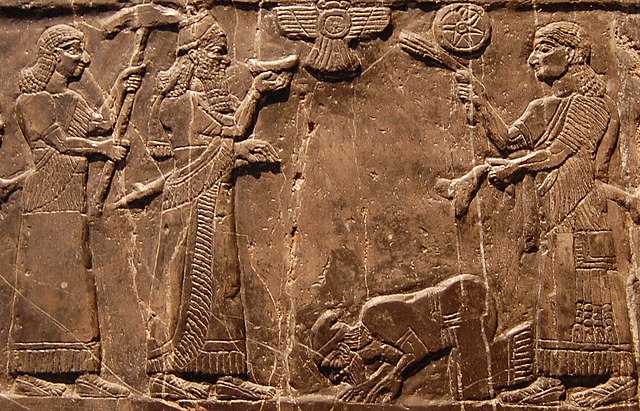
Now Shalmaneser’s
black obelisk does show a figure which is most likely the Israelite king Jehu or a messenger of his kneeling before Shalmaneser, but even then it IMHO isn’t a 100% reliable indicator as to what Jehu looked like.