
"Strange Things Happen on the Night of Christmas"

  • Thread starter Thread starter boomerang
  • Start date Start date
Status
Not open for further replies.
B

boomerang

Guest
“Strange Things Happen on the Night of Christmas”
Monsignor Charles M. Mangan

Father Segundo Llorente (1906-1989) was a Spanish Jesuit priest who was assigned to the missions in Alaska. For forty years he labored strenuously to bring the Holy Gospel to the natives of that place.

Father Llorente wrote a reflection entitled “Strange Things Happen on the Night of Christmas,” that discussed the important of revering the Most Holy Eucharist. This insightful piece, which was published in the February 1998 newsletter of the Catholic Society of Evangelists, is relevant for our Third Christian Millennium.

A priest told me what happened to him once in his first parish. After the Midnight Mass on Christmas Day he personally locked the church. With the keys in his pocket he went to his room and had a good sleep. At 7:30 in the morning he got up and went back to the church intending to have one hour of prayer all to himself. He opened the side door leading to the sacristy, turned on a light, and then turned on the lights for the church. As he opened the sacristy door and walked into the church, he literally froze. Strange people clad in the poorest of clothes occupied most of the pews and all were in total silence. No one so much as wiggled and nobody cared to look at him. A small group was standing by the Nativity Scene contemplating the manger in total silence.

The priest recovered quickly and in a loud voice asked them how they got in. Nobody answered. He walked closer to them and asked again. “Who let you in?” A woman answered totally unconcerned: “Strange things happen on the night of Christmas.” And back to total silence The priest went to check the main door and found it locked just as he had left it. He was now determined to get the facts and turned his face to the pews; but they were empty. The people had vanished.

He kept this puzzle to himself for some time. Unable to hold it in any longer, he told me just what I have told you. Could I help with any plausible explanation? Let me hurry to say that the priest in question is a model of sanity and is as well educated academically as most of the priests I know, if not better.

My explanation was and still is as follows. Those were dead people who were doing their purgatory, or part of it, in the church. It is safe to assume that we atone for our sins where we committed them. Those people were immersed in total silence. Why? Consider the irreverence committed before the Blessed Sacrament; how many people act out in church: chatting, giggling, and looking around. After Mass some people gather in small groups around the pews and turn the church into a market place with no regard for Christ’s Real Presence in the tabernacle. Why did they vanish? They did not vanish. They simply became invisible; but they remained tied to their pews unable to utter one single word to atone for their disrespectful chatter while living.

The Blessed Sacrament is no laughing matter. There is a price tag to all we do or say. In the end it is God Who gets the last laugh–so to speak. Those people had to give the Blessed Sacrament the adoration and respect that Christ deserves. For how long? Only God can answer that. Why did the priest see them? So he could pray for them and for all other Poor Souls detained in other churches. Why other priests do not see these people? Well, perhaps they already know in theory that souls can be detained in churches as well as anywhere else, so they do not need a miracle.

Why were they clad in such poor clothes? To atone for their vanity while living. People often use clothes not so much to cover their nakedness but as a status symbol to impress others. But God is not impressed by, say, mink coats. Also people walk into church with hardly any clothes. In the summer months it is not unusual for people–mostly women–to go to receive Holy Communion in the most indecent clothing. The pastor may or may not put up with it; but God will have His day in court about this. Rags could be an appropriate punishment for these excesses.

Although the Church does not command that we need to believe the account as related by Father Llorente, it is, nonetheless, a salutary reminder of the reverence to be paid the Most Holy Eucharist.

We realize that we can never adore Jesus in the Blessed Sacrament as we ought. But we must try! He deserves our humble efforts and will reward us for our attempts.

O Sacrament most holy! O Sacrament divine! All praise and all thanksgiving be every moment Thine!"
 
I’m not so sure I believe the account, not that I’d say he’s lying or anything, only that I’ve become skeptical in my old age. But I did want to thank you for this.

Christmas, (and Easter) sadly is for the me the saddest time of year, because God is so often forgotten in it that it fills me with supreme sadness… people do not know the Lord, nor do they give him due honor. … at least it *seems *much anymore. (I know we cannot read souls) It was better when I was younger it seems. It seems its just a cute story to them.

At Easter time I actually overheard a conversation some workers at target were having when putting up Easter decorations… The one young lady asked the other “why do we celebrate Easter anyway?” 😦 Has society become so godless and lost they don’t even know the reason? Is "religion’ so shamed that people don’t even bother to know their roots? Has it all become so trite and the real meaning lost?

God helps us.
 
At Easter time I actually overheard a conversation some workers at target were having when putting up Easter decorations… The one young lady asked the other “why do we celebrate Easter anyway?” 😦 Has society become so godless and lost they don’t even know the reason? Is "religion’ so shamed that people don’t even bother to know their roots? Has it all become so trite and the real meaning lost?

God helps us.
Wow. That’s sad. God help us, indeed.
 
It is easy to overlook the Eucharist. :sad_yes: Mea culpa! :gopray2:

Jesus once again makes Himself so small. So seemingly helpless, like the poor babe of Bethlehem, shivering in swaddling clothes in a manger. Who … but those with the gift of faith … would guess that the Lord of all would place Himself below us as well as above us, around us … and per the Eucharist IN us?

I know He is there … just as He is everywhere. Yet not JUST there (in the same sense). Our part of the covenant is to believe, take and eat, and DO it in memory of Him (as He does not now walk amongst us as He did on the night He instituted the Eucharist).

If we do this, we become like Mary, the first Christian to accept Christ into her body with a “let it be done unto me …” and like Peter, who struggled but continued - when Jesus told him of what He would and must do (in placing Himself “below” people as their savior and sacrifice … or as the washer of their feet).

I liked this account … even though it is a Christian horror story. The thought that these penitent souls were now atoning for sins of thoughtlessness that might seem venial … and that many of us have probably also committed … is frightening. Yet comforting too … as the story does point to life beyond death and souls being able to atone (or undergo atonement) in the presence of the Lord.

I have been distracted and aloof and unintentionally irreverent at Mass in ways from being chronically late, daydreamy, rubbernecking to see who else it at Mass, etc., etc.

So accounts like this may do me good. Occasionally I am full of God’s spirit and inspired.
And at those times, I want everyone else to be. And at those times can easily be tempted toward having disdain for those around me (who are in my usual state of semi-participation).

While this is a cautionary story … there is also the good news that we can atone here and now and with God’s graces have our sins be put as far away from us as east to west. And prepare ourselves more completely to seek Jesus in His Father’s House with the Holy Spirit guiding us instead of our own stumbling spirit.

It has a bit of “A Christmas Carol” in it … and I think I will probably think of this account during Christmastime in years to come. The priest is not Scrooge exactly … but (where I relate to him is) he’s seemingly going through the motions of just doing his duties when the miracle (or revelation) occurs. A bit more Martha than Mary if you will, during the time he interfaces with the silently praying (more like “that Mary”) people.

I was also reminded of Jesus’ words about a place or time when our debts would be paid “to the uttermost farthing”. And His counsel to settle with our debtors. < (Something I need to do … but sometimes lack the power to do. And for that reason … sometimes the inclination too). 😊

Some of the souls seem to just be discovering what they’d missed while misbehaving or being distracted (or a distraction) in Church. Whether these are struck dumb or willfully silent and reverent is another point to ponder.

Thanks for posting it Boomerang.
 
“Strange Things Happen on the Night of Christmas”
Monsignor Charles M. Mangan

Father Segundo Llorente (1906-1989) was a Spanish Jesuit priest who was assigned to the missions in Alaska. For forty years he labored strenuously to bring the Holy Gospel to the natives of that place.

Father Llorente wrote a reflection entitled “Strange Things Happen on the Night of Christmas,” that discussed the important of revering the Most Holy Eucharist. This insightful piece, which was published in the February 1998 newsletter of the Catholic Society of Evangelists, is relevant for our Third Christian Millennium.

A priest told me what happened to him once in his first parish. After the Midnight Mass on Christmas Day he personally locked the church. With the keys in his pocket he went to his room and had a good sleep. At 7:30 in the morning he got up and went back to the church intending to have one hour of prayer all to himself. He opened the side door leading to the sacristy, turned on a light, and then turned on the lights for the church. As he opened the sacristy door and walked into the church, he literally froze. Strange people clad in the poorest of clothes occupied most of the pews and all were in total silence. No one so much as wiggled and nobody cared to look at him. A small group was standing by the Nativity Scene contemplating the manger in total silence.

The priest recovered quickly and in a loud voice asked them how they got in. Nobody answered. He walked closer to them and asked again. “Who let you in?” A woman answered totally unconcerned: “Strange things happen on the night of Christmas.” And back to total silence The priest went to check the main door and found it locked just as he had left it. He was now determined to get the facts and turned his face to the pews; but they were empty. The people had vanished.

He kept this puzzle to himself for some time. Unable to hold it in any longer, he told me just what I have told you. Could I help with any plausible explanation? Let me hurry to say that the priest in question is a model of sanity and is as well educated academically as most of the priests I know, if not better.

My explanation was and still is as follows. Those were dead people who were doing their purgatory, or part of it, in the church. It is safe to assume that we atone for our sins where we committed them. Those people were immersed in total silence. Why? Consider the irreverence committed before the Blessed Sacrament; how many people act out in church: chatting, giggling, and looking around. After Mass some people gather in small groups around the pews and turn the church into a market place with no regard for Christ’s Real Presence in the tabernacle. Why did they vanish? They did not vanish. They simply became invisible; but they remained tied to their pews unable to utter one single word to atone for their disrespectful chatter while living.

The Blessed Sacrament is no laughing matter. There is a price tag to all we do or say. In the end it is God Who gets the last laugh–so to speak. Those people had to give the Blessed Sacrament the adoration and respect that Christ deserves. For how long? Only God can answer that. Why did the priest see them? So he could pray for them and for all other Poor Souls detained in other churches. Why other priests do not see these people? Well, perhaps they already know in theory that souls can be detained in churches as well as anywhere else, so they do not need a miracle.

Why were they clad in such poor clothes? To atone for their vanity while living. People often use clothes not so much to cover their nakedness but as a status symbol to impress others. But God is not impressed by, say, mink coats. Also people walk into church with hardly any clothes. In the summer months it is not unusual for people–mostly women–to go to receive Holy Communion in the most indecent clothing. The pastor may or may not put up with it; but God will have His day in court about this. Rags could be an appropriate punishment for these excesses.

Although the Church does not command that we need to believe the account as related by Father Llorente, it is, nonetheless, a salutary reminder of the reverence to be paid the Most Holy Eucharist.

We realize that we can never adore Jesus in the Blessed Sacrament as we ought. But we must try! He deserves our humble efforts and will reward us for our attempts.

O Sacrament most holy! O Sacrament divine! All praise and all thanksgiving be every moment Thine!"

http://2.bp.blogspot.com/-EKyelyZOR5M/U8WEgGSBDaI/AAAAAAAABfE/7hVqTZUt1o8/s1600/jul8202.jpg
You thing that strange,in the 1600 hundered,s a church were Franciscan,use was burn down,the chalice and Host was not,their ,as they search for it,they came upon it flowing in the air, and a voice came and said bring me back to the-church were I belong.
 
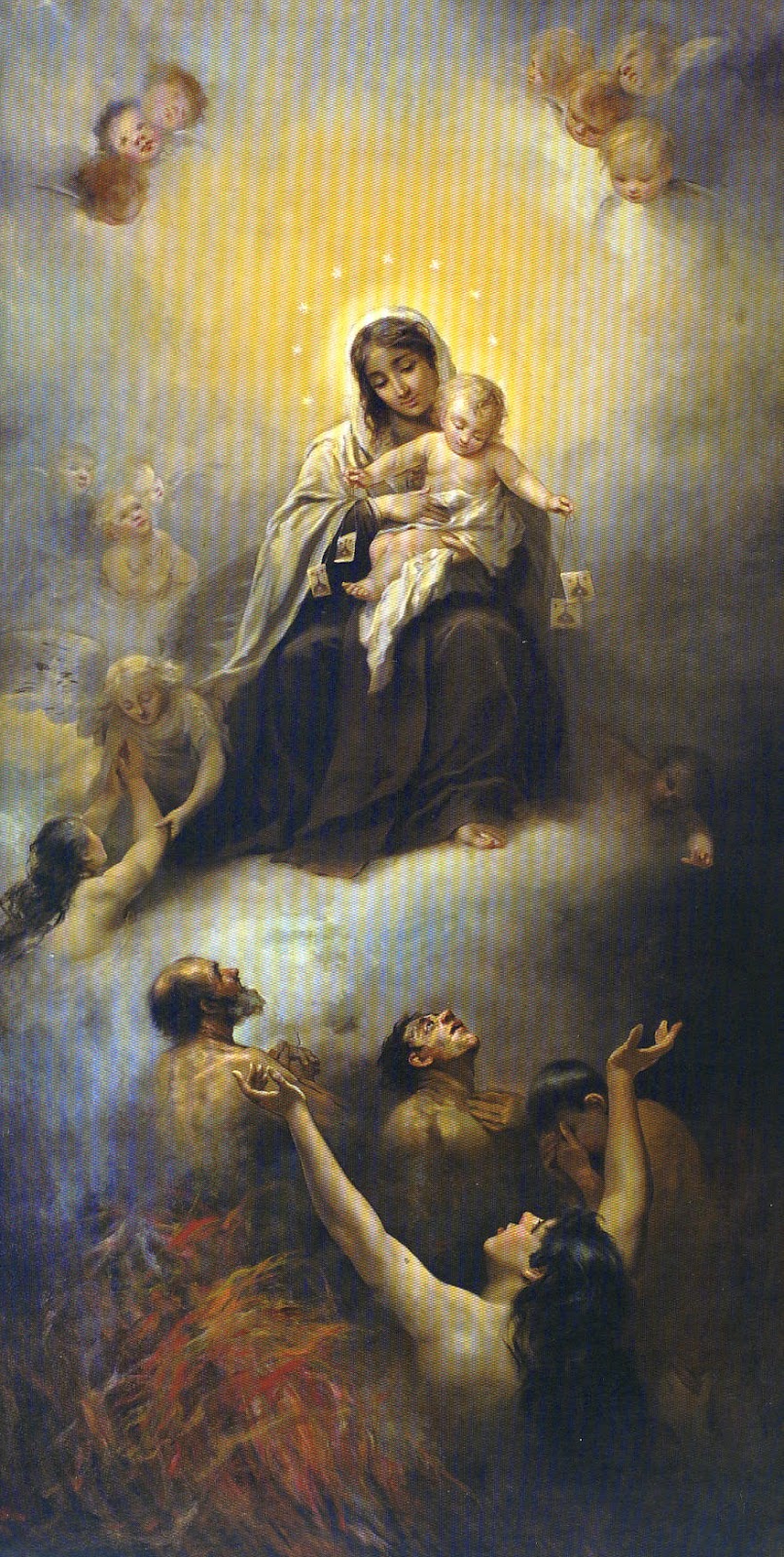
I like the artwork a lot. I’ve never been very fond of Sacred Art that lacks human expression, except for very old pictures whose painters lacked the technique, not because they did it on purpose.
 
Thanks for this Holy Souls story…it reminds me about the stories on this link of Holy Souls doing their Purgatory at the Altar in front of the Tabernacle

spiritdaily.com/altarpurgatory.htm

God bless you

Crystal waters
“Strange Things Happen on the Night of Christmas”
Monsignor Charles M. Mangan

Father Segundo Llorente (1906-1989) was a Spanish Jesuit priest who was assigned to the missions in Alaska. For forty years he labored strenuously to bring the Holy Gospel to the natives of that place.

Father Llorente wrote a reflection entitled “Strange Things Happen on the Night of Christmas,” that discussed the important of revering the Most Holy Eucharist. This insightful piece, which was published in the February 1998 newsletter of the Catholic Society of Evangelists, is relevant for our Third Christian Millennium.

A priest told me what happened to him once in his first parish. After the Midnight Mass on Christmas Day he personally locked the church. With the keys in his pocket he went to his room and had a good sleep. At 7:30 in the morning he got up and went back to the church intending to have one hour of prayer all to himself. He opened the side door leading to the sacristy, turned on a light, and then turned on the lights for the church. As he opened the sacristy door and walked into the church, he literally froze. Strange people clad in the poorest of clothes occupied most of the pews and all were in total silence. No one so much as wiggled and nobody cared to look at him. A small group was standing by the Nativity Scene contemplating the manger in total silence.

The priest recovered quickly and in a loud voice asked them how they got in. Nobody answered. He walked closer to them and asked again. “Who let you in?” A woman answered totally unconcerned: “Strange things happen on the night of Christmas.” And back to total silence The priest went to check the main door and found it locked just as he had left it. He was now determined to get the facts and turned his face to the pews; but they were empty. The people had vanished.

He kept this puzzle to himself for some time. Unable to hold it in any longer, he told me just what I have told you. Could I help with any plausible explanation? Let me hurry to say that the priest in question is a model of sanity and is as well educated academically as most of the priests I know, if not better.

My explanation was and still is as follows. Those were dead people who were doing their purgatory, or part of it, in the church. It is safe to assume that we atone for our sins where we committed them. Those people were immersed in total silence. Why? Consider the irreverence committed before the Blessed Sacrament; how many people act out in church: chatting, giggling, and looking around. After Mass some people gather in small groups around the pews and turn the church into a market place with no regard for Christ’s Real Presence in the tabernacle. Why did they vanish? They did not vanish. They simply became invisible; but they remained tied to their pews unable to utter one single word to atone for their disrespectful chatter while living.

The Blessed Sacrament is no laughing matter. There is a price tag to all we do or say. In the end it is God Who gets the last laugh–so to speak. Those people had to give the Blessed Sacrament the adoration and respect that Christ deserves. For how long? Only God can answer that. Why did the priest see them? So he could pray for them and for all other Poor Souls detained in other churches. Why other priests do not see these people? Well, perhaps they already know in theory that souls can be detained in churches as well as anywhere else, so they do not need a miracle.

Why were they clad in such poor clothes? To atone for their vanity while living. People often use clothes not so much to cover their nakedness but as a status symbol to impress others. But God is not impressed by, say, mink coats. Also people walk into church with hardly any clothes. In the summer months it is not unusual for people–mostly women–to go to receive Holy Communion in the most indecent clothing. The pastor may or may not put up with it; but God will have His day in court about this. Rags could be an appropriate punishment for these excesses.

Although the Church does not command that we need to believe the account as related by Father Llorente, it is, nonetheless, a salutary reminder of the reverence to be paid the Most Holy Eucharist.

We realize that we can never adore Jesus in the Blessed Sacrament as we ought. But we must try! He deserves our humble efforts and will reward us for our attempts.

O Sacrament most holy! O Sacrament divine! All praise and all thanksgiving be every moment Thine!"

http://2.bp.blogspot.com/-EKyelyZOR5M/U8WEgGSBDaI/AAAAAAAABfE/7hVqTZUt1o8/s1600/jul8202.jpg
 
Status
Not open for further replies.
Back
Top