A Tale of Two Eucharists

  • Thread starter Thread starter Socrates4Jesus
  • Start date Start date
Status
Not open for further replies.
I understand where you’re coming from Soc. I really do. I was born and raised a scientist. I love science and the explanations that it gives. I love the problems that it can solve. I love that on many levels “biology is just chemistry”, something I discovered and told my mom in High School. I received a bachelors degree in biochemistry and now I’m in medical school, learning how to take care of people. I love science.

But one thing I’ve learned over the past few years is that science isn’t everything. There is far more to this world than what we can see or feel or study. There is the physical world made up of atoms. There is also a metaphysical world that underlies it. The beauty of God’s creation is that 99.999% of the time, he makes it so the two match up. Because he commands that the natural world follow these laws he has established for the vast majority of the time, we can study it and make predictions about it.

Studying the natural world is wonderful. Its a good job and a good calling. BUT sometimes, when we think we have God’s creation all figured out, we become tempted to be intellectually prideful. We start saying that what we’ve discovered or learned is all there is. We ignore other truths, other realities.

Philosophy isn’t wrong simply because it looks at the world through different eyes than Biology or Chemistry. Philosophy doesn’t negate the “truths” of Biology and Chemistry. Philosophy studies that which is deeper. It studies the metaphysical realm.

With your questions, you are making the mistake of thinking that “if I just get to the smallest part then I will have found the substance in the material world.” I showed you the error in your thinking about the snowball and so you turned to water. But you’re ignoring things on a macro-level.

Soc, what makes a chair a chair? It isn’t its atoms or molecules: I can make a chair out of almost any substance and then turn around and use those same atoms to create something entirely different. It isn’t how it looks: chairs come in all sorts of shapes and sizes and colors. They can have 2 legs or 4 legs or no legs at all. They can have a short back or a tall back or no back at all. They can have arms or no arms. I can take each of the above parts of a chair (legs, back, arms, and a seat) and make a couch or a love seat or a stool or a foot rest. A chair is a chair because it has the metaphysical substance of a chair. This substance, its “chair-ness” is what makes it a chair. And on some level we recognize that in things. We can walk into a room and see a chair we’ve never seen - perhaps one that even looks VERY different from anything we’ve ever seen - and know that it is probably a chair.

What makes a snowball a snowball? As I demonstrated before, it isn’t its atoms. So, Soc, what makes a snowball a snowball? And what makes a pen a pen? And what makes bread bread? And what makes an atom an atom?
Is the metaphysical, physical?

🤷
 
Regarding Christ’s glorified body, I think Jesus has (and we will have) control over his body as to how “solid” it appears. I’m guessing it has DNA and atoms. But I also think that it can more easily break the laws of physics as we know them. He had the ability to be in one place in one minute and gone in the next. I think he also had the ability to be solid in one moment and semi-solid in the next, not because he wasn’t actually physically raised from the dead, but because our glorified bodies are so integrally connected to our spirit that our spirit will rule them and command them. Jesus continues to bear the marks of crucifixion in his physical body. But I believe he can do many things with that physical body. …
Yes, i can see that, Doc!

👍

Being a science fiction geek, i can imagine Jesus separating and reforming the molecules of His body at will. However, i do not think we even have to stretch our imaginations that far. In fact, i was thinking as i was getting wet this morning walking my dog, that if God would just separate the hydrogen and oxygen atoms of the water that was drenching me, there would be no more raindrops falling on my head! I suppose that when Jesus calmed the storm over the Sea of Galilee, He might have done so by separating the H2 from the O in the H2O that threatened to flood the boat.

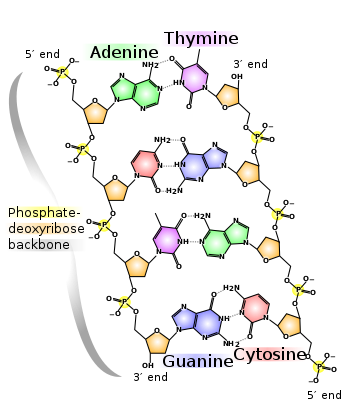
And i think, Doc, that you are correct about Jesus. For whatever His glorified body is, it must have DNA, or something similar, to contain its genetic code. DNA, as i’m sure you know, is made up of nucleotides, which are molecules consisting of the chemicals we find on the Periodic Table learned by any Catholic high school student in a beginning Chemistry class. We’ve known this ever since 1944, when Oswald Avery found that a cell’s genetic information was carried in DNA.

Do you think, then, Doc, that Jesus had a material glorified body made of atoms (albeit, immortal atoms)? or are you of the opinion that His body is immaterial, like a ghost, or a disembodied soul, or an angel?

🤷

 
Thank you, these are good definitions. 👍

You should definitely apply for the “swim team.” If you do, then I guarantee, there’s an RCIA facilitator out there who doesn’t know it yet, but is about to get his or her socks blown off. 😃
You are welcome, JM!

🙂
 
Thank you, Arc Angel Guy! BTW: As i see it, there are two roadblocks standing in my way of seeing the Eucharist as you do:

  1. *]How the material body and blood of Christ can possibly be in the Eucharist.
    *]How one can understand Jesus to be speaking literally when He says the bread and wine are His material body and blood.
    Eventually, i’m going to have to get past both.

  1. Regarding question 1, why not, indeed? I suppose the discussion of substance and accidents will give us the answer, Michael.

    Regarding question 2, what is it that Jesus said that leads you to believe the Eucharist is His physical flesh and material blood?

    🤷
 
So substance would include non-concrete attributes like God is

omniscent, omnipresent, omnipotent, Infinite, immutable, all just, etc…
Web Page on God’s Attributes which I would say you are defining as His substance:
preceptaustin.org/attributes_of_god.htm

coorect me if I am wrong.

maryJohnz
I suppose human beings have at least two substances: One, which is material or physical or made of atoms, and one that is immaterial or non-physical or not bade of atoms. The material substance is what makes up the body of you or me; the immaterial substance is what makes up the sould of you or me.

I think it would help, however, to start talking about something simple, like water: What is the substance of water? What gives water its wateriness? What is water?
 
You are welcome, JM!

🙂
Hey Soc,

I just want to point out, that his comment was directed at me and my definitions which I proposed. About a page ago, I said that I disagree with your definitions and proposed my own:

Substance is the single metaphysical quality of something or someone that makes that thing or being what it is.

Accidents are any attributes of a thing or being. These include attributes that can be observed by the senses or equipment or tools in the physical world, either now or in the future, as well as any metaphysical attributes of that thing.
 
I actually disagree with these definitions because I can see how you might use them to make atoms or molecules the “substances” of a thing. So, no, I disagree. I would change it to be such:

Substance is the metaphysical quality of something or someone that makes that thing or being what it is.

Accidents are any attributes of a thing or being that can be observed by the senses or equipment or tools in the physical world, either now or in the future.
Whether substance is physical or metaphysical is something to be discovered, Doc. I think we should keep the definition broad, at the beginning, and narrow it as we rule out possibilities.

Two people, thus far, have agreed that the definitions i suggested are sufficient, so i’d like to begin there. If in the course of the discussion you are able to prove that nothing existing has material substance, then we will change the definition of substance as you suggest.
 
Is your God capable of changing bread & wine into His Body & Blood…

Mine is. He changed water into wine…

He created human beings out of the dirt…
Yes, He can, but we are not asking, “Can He do it?” rather, we are asking, “Does He do it?”

If you want to join in the conversation, distracted like me, please consider the definitions of substance and accidents we are considering. This will at least tell us whether it is likely that God not only can but in fact does change the Eucharist in the actual human body and blood of Jesus Christ.
 
Yes!!!

So Soc, I have tried to show you that the Eucharist is not a symbol, but a “sign”. Good luck and God bless on your journey. If today you hear His voice, harden not your heart.
Thank you, MJ. It’s unclear to me how a symbol is not a sign.

It seems to me that all symbols are not signs, but all signs are symbolic.
 
Whether substance is physical or metaphysical is something to be discovered, Doc. I think we should keep the definition broad, at the beginning, and narrow it as we rule out possibilities.

Two people, thus far, have agreed that the definitions i suggested are sufficient, so i’d like to begin there. If in the course of the discussion you are able to prove that nothing existing has material substance, then we will change the definition of substance as you suggest.
Actually one agreed with yours. The second with mine. And no, I don’t think its right. We’re proposing definitions as a way to not have to deal with terminology. I’m telling you that when I use the term substance I am referring to the single metaphysical quality that makes that thing (or being) what it is. The “snowballness” of a snowball. To force me to use your definition, which is not how I am using the word goes against the entire point of finding definitions that we can agree on.
 
Hey Soc,

I just want to point out, that his comment was directed at me and my definitions which I proposed. About a page ago, I said that I disagree with your definitions and proposed my own:

Substance is the single metaphysical quality of something or someone that makes that thing or being what it is.

Accidents are any attributes of a thing or being. These include attributes that can be observed by the senses or equipment or tools in the physical world, either now or in the future, as well as any metaphysical attributes of that thing.
Yes, my mistake! Sorry for being easily distracted.

:o
 
Actually one agreed with yours. The second with mine. And no, I don’t think its right. We’re proposing definitions as a way to not have to deal with terminology. I’m telling you that when I use the term substance I am referring to the single metaphysical quality that makes that thing (or being) what it is. The “snowballness” of a snowball. To force me to use your definition, which is not how I am using the word goes against the entire point of finding definitions that we can agree on.
Yes, well, both may actually agree with yours, Doc, as my definition allows for yours but yours. I think we should at least start the conversation with a definition with which we can all agree, don’t you?

If it is OK with you, i’d like to begin with these definitions and then amend them as reason and evidence and thoughtful discussion compels us. What do you say?

Substance is that which is required and necessary for a thing or being to be or remain what it is.

Accidents are those attributes of a thing or being which are not required nor necessary for it to be or remain what it is.
 
Yes, well, both may actually agree with yours, Doc, as my definition allows for yours but yours. I think we should at least start the conversation with a definition with which we can all agree, don’t you?

If it is OK with you, i’d like to begin with these definitions and then amend them as reason and evidence and thoughtful discussion compels us. What do you say?

Substance is that which is required and necessary for a thing or being to be or remain what it is.

Accidents are those attributes of a thing or being which are not required nor necessary for it to be or remain what it is.
Yours may allow for mine, but I’m telling you now, its inadequate to describe what I am describing when I use the terms “substance” and “accidents”. Thus, no, it is not ok to use them. I cannot use your definitions because they do not describe the same thing that mine does. I cannot agree with your definitions for these two terms.

What I can do is amend mine slightly:

Substance is the single quality of something or someone that makes that thing or being what it is and separates it from any other thing (or being).

Accidents are any attributes of a thing or being. These include attributes that can be observed by the senses or equipment or tools in the physical world, either now or in the future, as well as any metaphysical attributes of that thing.
 
I suppose human beings have at least two substances: One, which is material or physical or made of atoms, and one that is immaterial or non-physical or not bade of atoms. The material substance is what makes up the body of you or me; the immaterial substance is what makes up the sould of you or me.
This statement departs from the definitions nearly agreed upon so far. A human has only one substance and as such it is metaphysical. A human is also not a mixture of immaterial and material. It is a union of the two. Without one or the other we are not human. In the language of philosophy the phrase “material substance” is misleading at best and a contradiction at worst. Anything physically observable is a accident of a things substance.
 
Yours may allow for mine, but I’m telling you now, its inadequate to describe what I am describing when I use the terms “substance” and “accidents”. Thus, no, it is not ok to use them. I cannot use your definitions because they do not describe the same thing that mine does. I cannot agree with your definitions for these two terms.

What I can do is amend mine slightly:

Substance is the single quality of something or someone that makes that thing or being what it is and separates it from any other thing (or being).

Accidents are any attributes of a thing or being. These include attributes that can be observed by the senses or equipment or tools in the physical world, either now or in the future, as well as any metaphysical attributes of that thing.
OK, Doc, we will start with your definitions. We might have to amend them as time goes on, but we have to start somewhere!

👍

My first question is this: What is the substance of water? Would you call it wateriness, or something else?

🤷

 
OK, Doc, we will start with your definitions. We might have to amend them as time goes on, but we have to start somewhere!

👍

My first question is this: What is the substance of water? Would you call it wateriness, or something else?

🤷
I would call it “wateri-ness”, yes. I know you may disagree, but I pose the same questions of you that I have earlier. What makes a snowball, a snowball? What makes a pen, a pen? What makes a chair, a chair? What makes God, God?
 
I would call it “wateri-ness”, yes. I know you may disagree, but I pose the same questions of you that I have earlier. What makes a snowball, a snowball? What makes a pen, a pen? What makes a chair, a chair? What makes God, God?
No, it is not my goal to disagree! It is my goal to try to understand. I’m going to put your thoughts on, like a pair of shoes, and try to walk around in them for a time.

😃

Now would you say that all water has wateriness, or just some water?
 
No, it is not my goal to disagree! It is my goal to try to understand. I’m going to put your thoughts on, like a pair of shoes, and try to walk around in them for a time.

😃

Now would you say that all water has wateriness, or just some water?
I’ll answer your question if you answer mine 😉

What makes a snowball, a snowball? What makes a pen, a pen? What makes a chair, a chair? What makes God, God?
 
I’ll answer your question if you answer mine 😉

What makes a snowball, a snowball? What makes a pen, a pen? What makes a chair, a chair? What makes God, God?
Is that fair, Doc? I’m asking you sincere questions and you are poking fun!

:confused:
 
Oh my, i’m late! If you decide, Doc, to talk about this thoughtfully and seriously, please let me know. I stopped poking fun with the Doe Boy many replies ago. Walking through a Lewis Carol kind of conversation might be fun, but would not get us anywhere.

 
Status
Not open for further replies.
Back
Top