
Ancient Vestments depicted in art

  • Thread starter Thread starter CutlerB
  • Start date Start date
Status
Not open for further replies.
C

CutlerB

Guest
This may be a silly question, but please bear with me. I’ve come across some images of priests, many of whom are saints, that mostly lived centuries ago that dressed somewhat differently than today. Of course that’s not unusual or unexpected, but allow me to explain.

As an example, I have attached images of St Francis Xavier. I wondered whether Catholic priests nowadays would have some environment or occasion on which they would dress the way he is depicted here (cassock, surplice and this, pardon the wording, wide-ended stole)? I’ve only seen this depicted in art like Holy Cards (which I love!), but never in our time. I really like that type of dress, as it looks quite traditional and the images in which it’s depicted are generally somewhat romantic (by that I mean a type of art that idealises the past). Hard to explain.

Does anyone know more about the history, etc. of this? 🙂

(Please Note: This uploaded content is no longer available.)
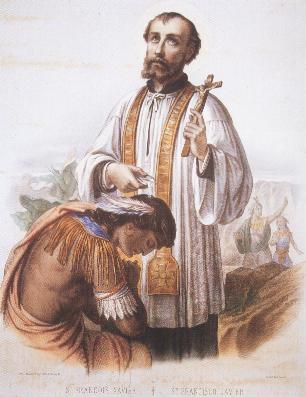
 
Priestly attire has evolved over time. Priests used to walk around in differing amounts vestments before a plain cassock became the norm. In fact Byzantine Empire court dress influenced priestly vestments in Europe. Other cultures continued to influence other local Church attire, Coptic, Syriac, etc. This is why different Catholic Churches have similar but different vestments. 🙂

A Byzantine bishop (St John Chrysostom) painted in 11th century Turkey:
http://sphotos-e.ak.fbcdn.net/hphotos-ak-ash4/1005432_172806406224033_1033996327_n.jpg

An English bishop (St Thomas Becket) painted in 12th century Sicily shows that the Western bishops at the time still dressed similar to the Byzantine bishops:
http://sphotos-h.ak.fbcdn.net/hphotos-ak-frc1/1000129_172805266224147_1653160950_n.jpg

Here is a picture of the Extraordinary Form clergy (this was how most dressed before Vatican II):
http://sphotos-g.ak.fbcdn.net/hphotos-ak-ash4/1000995_172807652890575_268257712_n.jpg

Here is a priest (St Andrew Kim Daegeon) wearing a Korean Joseon Dynasty alb:
http://sphotos-a.xx.fbcdn.net/hphotos-prn2/970037_172805646224109_1332490962_n.jpg
 
This is called a stole, and you can run a search for images of “priest wearng a stole” and see many images from today of priests wearing stoles.

The presiding priest is required to wear a stole, a chasuble (the item which is sort of like a poncho), and an alb, the garment underneath the chasuble and over his clothing.

I realized that some stoles match the chasuble so well it’s hard to tell they are there, which may be why you haven’t noticed them.
 
Priests in my parish dress like that all the time. FSSP…
I love FSSP 🙂
Same with our FSSP priests! 🙂

saints.sqpn.com/martyr07.jpg

The North American Martyrs
See in that North American Martyrs image there’ one wearing the same style. Could it be some sort of missionary attire? It’s different from what FSSP priests wear, since they have an alb instead of a surplice (length is different) and add chasuble, maniple, etc.
I realized that some stoles match the chasuble so well it’s hard to tell they are there, which may be why you haven’t noticed them.
In the images, the people depicted don’t wear chasubles. 🙂
Here’s Bishop Rice during confirmations at my church… As you can see, he is wearing the wide-ended stole here.

http://www.institute-christ-king.or...aunheim_frances_de_sales_confirmation_030.JPG
Nice picture! But it’s not quite the same… It appears to me as though the images of i.e. Saint Francis Xavier, North American Martyrs, etc. depict a distinct dress from one used for Mass. Unless they went out half-dressed of course. 😉
 
I love FSSP 🙂

See in that North American Martyrs image there’ one wearing the same style. Could it be some sort of missionary attire? It’s different from what FSSP priests wear, since they have an alb instead of a surplice (length is different) and add chasuble, maniple, etc.

In the images, the people depicted don’t wear chasubles. 🙂

Nice picture! But it’s not quite the same… It appears to me as though the images of i.e. Saint Francis Xavier, North American Martyrs, etc. depict a distinct dress from one used for Mass. Unless they went out half-dressed of course. 😉
Before I begin, one must bear in mind that paintings and icons are not intended to be historically accurate or even to be realistic. They are meant to be a summary of the life and mission of the saint we commemorate. Naturalism is secondary and can be either helpful or distracting. What is important that the important details that convey what the saint was and he did are compiled into one. This is rooted in ancient tradition as a means of conveying the story and lessons of the saints to the laity who were illiterate or did not have a church historian sitting around to describe it to them.

In the case that we are discussing, the dress is one of the major details in paintings. It helps us understand the place of that saint in the church, be it a bishop (see Saint Patrick), priest (see Saint Philip Neri), deacon (see Saint Stephen), or religious (see Saint Dominic and Saint Francis).

In particular to priests, chasubles and stoles are distinctive items of dress which are often used to depict the priest. However, they do carry particular nuances. The chasuble could be used because the saint is being depicted in some action relating to Mass, or is known for his passionate dedication to liturgy, or even the manner of his martyrdom (such as being martyred while celebrating Mass). In this example, Saint Ignatius is seen celebrating Mass (the altar is depicted in the background).

The stole, on the other hand, could be used because of some other action he is associated with or being depicted of apart from Mass. For example, in the case of missionary priests, it could be the fact that he baptised and converted many pagans. This is a sacramental action that is not associated with the chasuble but rather the stole. This is the case for Saint Francis Xavier, whose prolific missionary work saved many souls. For Saint John Vianney, it would be his fervent dedication to the sacraments in general, especially of confession.

Sometimes, they might not even be depicted with stole at all. This could again be related to what they did that was not strictly sacramental in nature. Again, for Saint John Vianney, it could also depict his passion toward pastoral work. Of course, he could arguably be depicted with his stole as an expression of his priestly role that made him so closely associated with pastoral work, but that’s for another discussion.

Another entirely separate category would that be of religious. Religious are usually depicted in the habit associated with their order if there is one. Hence, Saint Francis is in a Franciscan brown tunic, Saint Dominic in Dominican black and white, and Saint John of the Cross in Carmelite brown and white. However, do note that their ordination is not reflected in the depictions, despite the fact that Saint Francis was a deacon, and Saint Dominic and Saint John were priests. This is because their association with their religious order is stronger than their sacramental status. On the other hand, note again that St Francis Xavier is depicted with a regular choir dress and stole despite being a Jesuit religious because Jesuits do not have a habit specific to their order but instead adopt the dress of secular priests.

I hope this helps in understanding depictions of saints. This tradition continues today and you might be able to see it in many more recently-canonised saints, such as Saint Augustine Zhao Rong and Companions. It is part of the great and wonderful deposit of faith that just keeps growing with every new saint that the church produces. 🙂
 
Before I begin, one must bear in mind that paintings and icons are not intended to be historically accurate or even to be realistic. They are meant to be a summary of the life and mission of the saint we commemorate. Naturalism is secondary and can be either helpful or distracting. What is important that the important details that convey what the saint was and he did are compiled into one. This is rooted in ancient tradition as a means of conveying the story and lessons of the saints to the laity who were illiterate or did not have a church historian sitting around to describe it to them.

In the case that we are discussing, the dress is one of the major details in paintings. It helps us understand the place of that saint in the church, be it a bishop (see Saint Patrick), priest (see Saint Philip Neri), deacon (see Saint Stephen), or religious (see Saint Dominic and Saint Francis).

In particular to priests, chasubles and stoles are distinctive items of dress which are often used to depict the priest. However, they do carry particular nuances. The chasuble could be used because the saint is being depicted in some action relating to Mass, or is known for his passionate dedication to liturgy, or even the manner of his martyrdom (such as being martyred while celebrating Mass). In this example, Saint Ignatius is seen celebrating Mass (the altar is depicted in the background).

The stole, on the other hand, could be used because of some other action he is associated with or being depicted of apart from Mass. For example, in the case of missionary priests, it could be the fact that he baptised and converted many pagans. This is a sacramental action that is not associated with the chasuble but rather the stole. This is the case for Saint Francis Xavier, whose prolific missionary work saved many souls. For Saint John Vianney, it would be his fervent dedication to the sacraments in general, especially of confession.

Sometimes, they might not even be depicted with stole at all. This could again be related to what they did that was not strictly sacramental in nature. Again, for Saint John Vianney, it could also depict his passion toward pastoral work. Of course, he could arguably be depicted with his stole as an expression of his priestly role that made him so closely associated with pastoral work, but that’s for another discussion.

Another entirely separate category would that be of religious. Religious are usually depicted in the habit associated with their order if there is one. Hence, Saint Francis is in a Franciscan brown tunic, Saint Dominic in Dominican black and white, and Saint John of the Cross in Carmelite brown and white. However, do note that their ordination is not reflected in the depictions, despite the fact that Saint Francis was a deacon, and Saint Dominic and Saint John were priests. This is because their association with their religious order is stronger than their sacramental status. On the other hand, note again that St Francis Xavier is depicted with a regular choir dress and stole despite being a Jesuit religious because Jesuits do not have a habit specific to their order but instead adopt the dress of secular priests.

I hope this helps in understanding depictions of saints. This tradition continues today and you might be able to see it in many more recently-canonised saints, such as Saint Augustine Zhao Rong and Companions. It is part of the great and wonderful deposit of faith that just keeps growing with every new saint that the church produces. 🙂
👍
 
Okay, if you’re wanting names for these items, here goes.

Mass vestments are what we see at Mass. They are amice (but you probably won’t be able to make this out), alb, cincture, stole, oftentimes maniple, chasuble for the priest, dalmatic for the deacon, and sometimes you will see a subdeacon in a tunicle but this usually looks very similar to the dalmatic. The cope is also a vestment, but when you see this in art, it is usually to represent a bishop, who is also wearing mitre and pectoral cross and who might also be carrying a crosier.

The black and white outfit is not “vestments” as such. It is called choir dress, and there are lots of occasions when this can be worn, so I won’t get in to that. The black is the cassock and the white is a surplice. Often in art you see priests wearing a stole over their surplices to show that they are priests, as opposed to deacons or seminarians, or whoever else. Ordinarily, however, the stole is not worn by priests with choir dress. In real life it is only worn with choir dress when conferring a Sacrament or distributing Holy Communion when the priest is not the celebrant of Mass, ie if the priest needs help.
 
In the images, the people depicted don’t wear chasubles.
No, what I meant was that when one sees priest nowadays, irl! one might not notice their stoles.
 
Filii Dei,
Thanks so much for taking the time to explain about the depictions of saints! I didn’t know a lot of that 🙂 Still learning…
 
Status
Not open for further replies.
Back
Top