
You are using an out of date browser. It may not display this or other websites correctly.
You should upgrade or use an alternative browser.
You should upgrade or use an alternative browser.
- Status
- Not open for further replies.
Tis_Bearself
Patron
The OP might be interested in this book. It likely has a lot of the people we’ve listed in it, although it likely contains a great many beati (blesseds) as well as canonized saints.
https://www.amazon.com/Secular-Saints-Canonized-Beatified-Children/dp/089555383X
https://www.amazon.com/Secular-Saints-Canonized-Beatified-Children/dp/089555383X
M
mrsdizzyd
Guest
Thank you! I added it to my reading list.
Blessed James Duckett was an English layman , a bookseller and a publisher .

 en.wikipedia.org
James Duckett - Wikipedia
M
mrsdizzyd
Guest
Thank you for all suggestions. You don’t have to list every one as it’s own post. Feel free to just make one long list. 
Last edited:
J
Jessica01
Guest
Have you seen the movie? If you haven’t you should! It’s called “For Greater Glory”!
Blessed John Finch was an English layman , a farmer .
 en.wikipedia.org
Blessed Richard Herst was an English layman .
en.wikipedia.org
Blessed Sydney Hodgson was an English layman , a lawyer .
en.wikipedia.org
Blessed Lawrence Humphreys was an English layman .
en.wikipedia.org
Blessed Raymond Langhorne was an English layman , a barrister .
 en.wikipedia.org
John Finch (martyr) - Wikipedia
Blessed Richard Herst was an English layman .
Richard Herst - Wikipedia
Blessed Sydney Hodgson was an English layman , a lawyer .
Sydney Hodgson - Wikipedia
Blessed Lawrence Humphreys was an English layman .
Laurence Humphreys - Wikipedia
Blessed Raymond Langhorne was an English layman , a barrister .
Richard Langhorne - Wikipedia
Blessed Richard Langley was an English layman .
en.wikipedia.org
Blessed Richard Martin was an English layman .
en.wikipedia.org
Blessed Richard Milner was a layman , a manual labourer .
en.wikipedia.org
Blessed John Roche was an Irish layman .
 en.wikipedia.org
Blessed Richard Leigh was an English layman .
en.wikipedia.org
Richard Langley (martyr) - Wikipedia
Blessed Richard Martin was an English layman .
Richard Martin (martyr) - Wikipedia
Blessed Richard Milner was a layman , a manual labourer .
Ralph Milner and companion - Wikipedia
Blessed John Roche was an Irish layman .
John Roche (martyr) - Wikipedia
Blessed Richard Leigh was an English layman .
Richard Leigh (martyr) - Wikipedia
J
Joe_5859
Guest
No, I didn’t realize there was a movie. Thanks! I will have to check it out!
Blessed John Bodey was an English lay theologian .
en.wikipedia.org
Blessed John Speed was English layman .
en.wikipedia.org
Blessed Thomas Welbourne was an English layman a teacher .
en.wikipedia.org
Blessed Thomas Widmerpool was an English layman .
 en.wikipedia.org
Blessed Thomas Belson was an English layman .
 en.wikipedia.org
John Bodey - Wikipedia
Blessed John Speed was English layman .
John Speed (martyr) - Wikipedia
Blessed Thomas Welbourne was an English layman a teacher .
Thomas Welbourne - Wikipedia
Blessed Thomas Widmerpool was an English layman .
Oaten Hill Martyrs - Wikipedia
Blessed Thomas Belson was an English layman .
Thomas Belson - Wikipedia
Blessed Robert Bickerdike was an English layman .
en.wikipedia.org
Blessed John Britton was an English layman .
en.wikipedia.org
Blessed George Errington was an English layman .
en.wikipedia.org
Blessed William Gibson was an English layman .
en.wikipedia.org
Blessed Ralph Grimston was an English layman .
 en.wikipedia.org
Robert Bickerdike (martyr) - Wikipedia
Blessed John Britton was an English layman .
John Britton (martyr) - Wikipedia
Blessed George Errington was an English layman .
George Errington (martyr) - Wikipedia
Blessed William Gibson was an English layman .
William Gibson (martyr) - Wikipedia
Blessed Ralph Grimston was an English layman .
Peter Snow (priest) - Wikipedia
Last edited:
J
JimR-OCDS
Guest
If I missed this, my apologies;
Louis Martin and Zelie Guerin, the parents of Saint Therese of Lisieux,
Here’s an article about it;
Louis Martin and Zelie Guerin, the parents of Saint Therese of Lisieux,
Here’s an article about it;
JimThe miracle behind the canonization of the parents of St Therese of Lisieux
https://www.catholicnewsagency.com/...of-the-parents-of-st-therese-of-lisieux-60296
C
christofirst
Guest
When I saw your post, I thought, “That book looks familiar,” and sure enough, it’s on my bookshelf! I didn’t even think of it when I saw this thread. That is, perhaps, a sign that I maybe have too many books  .
.
Anyway, not sure if anyone has mentioned Venerable Matt Talbot yet, but he was a secular Franciscan who died in Ireland in 1925, and many people now turn to him for help in overcoming addictions, as he did with alcohol.
.Anyway, not sure if anyone has mentioned Venerable Matt Talbot yet, but he was a secular Franciscan who died in Ireland in 1925, and many people now turn to him for help in overcoming addictions, as he did with alcohol.
Blessed Robert Grissold was an English Layman .
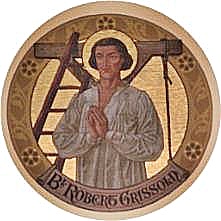 en.wikipedia.org
Blessed Nicholas Horner was an English Layman .
 en.wikipedia.org
Blessed William Knight was an English layman .
en.wikipedia.org
Blessed William Lampley was an English layman , a glover .
en.wikipedia.org
Blessed William Pike was an English layman .
 en.wikipedia.org
Robert Grissold - Wikipedia
Blessed Nicholas Horner was an English Layman .
Nicholas Horner - Wikipedia
Blessed William Knight was an English layman .
William Knight (martyr) - Wikipedia
Blessed William Lampley was an English layman , a glover .
William Lampley (martyr) - Wikipedia
Blessed William Pike was an English layman .
William Pike - Wikipedia
Tis_Bearself
Patron
The OP specifically asked for canonized saints only, so I didn’t mention Venerable Matt Talbot.
There are actually huge long lists of lay beati, venerables and Servants of God.
However, there is a lay canonized saint for addiction. St. Mark Ji Tianxiang was a Chinese doctor who had a family including wife, children and grandchildren, but he became addicted to opium after using it to treat an ailment he had. He didn’t realize he would end up addicted, and people didn’t understand addiction then. His opium use was viewed as a sin and he was considered an unrepentant sinner because he couldn’t stop using, so the priests barred him from receiving any sacraments until he stopped using. Unfortunately, his addiction and opium use continued for 30 years, so he was barred from the sacraments the entire time. He still remained a faithful Catholic though he couldn’t receive the sacraments.
Then the Boxer Rebellion happened, so he was arrested and martyred with 9 members of his family. He was actually calm about being martyred because he believed that it was the only way he could possibly be saved. He asked to be killed last and watched them behead the other 9 members of his family, then he was killed himself. Today he’s a canonized saint.
There are actually huge long lists of lay beati, venerables and Servants of God.
However, there is a lay canonized saint for addiction. St. Mark Ji Tianxiang was a Chinese doctor who had a family including wife, children and grandchildren, but he became addicted to opium after using it to treat an ailment he had. He didn’t realize he would end up addicted, and people didn’t understand addiction then. His opium use was viewed as a sin and he was considered an unrepentant sinner because he couldn’t stop using, so the priests barred him from receiving any sacraments until he stopped using. Unfortunately, his addiction and opium use continued for 30 years, so he was barred from the sacraments the entire time. He still remained a faithful Catholic though he couldn’t receive the sacraments.
Then the Boxer Rebellion happened, so he was arrested and martyred with 9 members of his family. He was actually calm about being martyred because he believed that it was the only way he could possibly be saved. He asked to be killed last and watched them behead the other 9 members of his family, then he was killed himself. Today he’s a canonized saint.
Last edited:
He was a great man .Anyway, not sure if anyone has mentioned Venerable Matt Talbot yet, but he was a secular Franciscan who died in Ireland in 1925, and many people now turn to him for help in overcoming addictions, as he did with alcohol.
This is a 1963 TV programme about the Venerable Matt Talbot made by RTE.
C
christofirst
Guest
Fair enough.
Okay, how about St. Benedict Joseph Labre. Has he been mentioned? He tried religious life several times, but it never worked out. He then became essentially a homeless person, wandering from church to church around Europe and Rome. His life was an inspiration for Dorothy Day and Peter Maurin when they started the Catholic Worker movement to help the outcasts of society.
Okay, how about St. Benedict Joseph Labre. Has he been mentioned? He tried religious life several times, but it never worked out. He then became essentially a homeless person, wandering from church to church around Europe and Rome. His life was an inspiration for Dorothy Day and Peter Maurin when they started the Catholic Worker movement to help the outcasts of society.
Tis_Bearself
Patron
I considered mentioning him, but like several of the other saints, he was a member of a third order (Franciscan tertiary).
The OP specifically asked for saints who were not members of religious orders. A tertiary could be seen as a member of a religious order.
The OP specifically asked for saints who were not members of religious orders. A tertiary could be seen as a member of a religious order.
H
HolySpirit1
Guest
St. Joan of Arc a very simple girl, with a very simple family , the Church at the time was against her and had her burned at the stake, and later became a saint.
Also her faith was shaken too, being pushed into renouncing her visions and what she had been called to do to try and save her life by signing a letter presented to her, which she did, and soon after regreted doing so deeply, and either had the paper destroyed or destroyed it herself.
Plenty of more out there I am sure who are not religious or clergy. Which is really good news I think, that becoming a saint, isn’t limited to clergy and religious. And that one doesn’t have to have this sparkling resume of a " holy life " in order to become a saint.
Also her faith was shaken too, being pushed into renouncing her visions and what she had been called to do to try and save her life by signing a letter presented to her, which she did, and soon after regreted doing so deeply, and either had the paper destroyed or destroyed it herself.
Plenty of more out there I am sure who are not religious or clergy. Which is really good news I think, that becoming a saint, isn’t limited to clergy and religious. And that one doesn’t have to have this sparkling resume of a " holy life " in order to become a saint.
P
poche
Guest
St Dominic Savio was a saint.
- Status
- Not open for further replies.