Bishop Slattery had some unique insights into this a couple of years ago:
What I would like to propose is that we recover the sung introit at Mass.
I know that for two generations now, Catholics have been expected to sing an opening hymn at Mass and in many parishes the faithful are regularly browbeaten to “stand up and greet this morning’s celebrant with hymn #so-and-so” which, depending upon the parish, might be taken from the red hymnbook, or the blue hymnbook, or the nicely disposable paperback missalette. So deeply has this ‘opening hymn mentality’ shaped our consciousness that most Catholics would be astounded to hear me say that hymns have no real place in Mass.
Hymns belong in the Liturgy of the Hours and in the common devotions of the faithful, but the idea that the parish liturgy committee should sit down sometime early in the month and look through a hymn book, trying to find pretty hymns which haven’t been overdone in the past three or four months, which explore the themes of the Sunday Masses and which brings the people together as a singing community is an idea completely alien to the spirit of the Catholic liturgy.
It is alien first of all
because the singing of hymns as Sunday worship was a Protestant innovation, better suited to their non-Sacramental worship than to the Mass, and alien secondly because an opening hymn introduces - at the very inception of the sacred action - that element of creative busy-ness, which is, as we have seen, antithetical to the nature of salvation as a gift we receive from God.
What belongs at the beginning of Mass is the sung introit, that is a sung antiphon and psalm. In the Catholic liturgical tradition, these are unique compositions in which a scriptural cento is set to a singular piece of music. The melody explores and interprets the text of the cento, while the composition as a whole illuminates the meaning to be discovered later in the readings of the day.
The Sung Introit
These sung introits have been an integral part of the Latin Rite, and remain so in the Extraordinary Form, where the schola or choir chants the more difficult antiphon, and the congregation sings the psalm. This gives the faithful both the chance to listen and respond, practicing, in effect, the basic elements of the Mass, listening and responding, listening, for example to the Word of God as it comes to us in the readings, and then responding to the Father’s initiative by offering to Him the obedience of Jesus.
Unfortunately these antiphons have never been set to music in the Novus Ordo. For forty years they have sat, lonely of notation, at the top of each page in the Sacramentary unable to be sung, until even the memory of the sung introit has passed away…
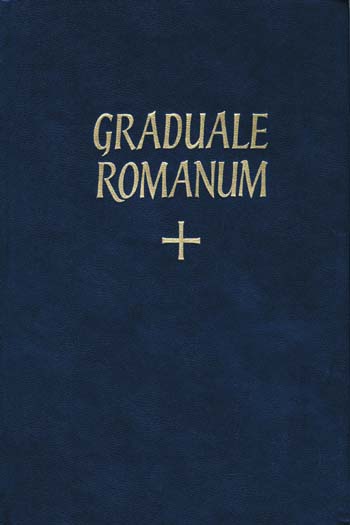
For me, I would be quite satisfied with any of the selections from this book:
And, before any pastor or music director selects a hymn with a melody based on the fourth movement of Beethoven’s 9th symphony, I would make it mandatory that they study the
actual text of Schiller’s lyrics (for which the melody was written)…and then to ask themselves the appropriateness of that musical setting within a Catholic Mass.
Another good resource for determining “good” with music:



