Are Orthodox Church Sacraments Valid?

  • Thread starter Thread starter pathetic_loser
  • Start date Start date
Status
Not open for further replies.
P

pathetic_loser

Guest
Please, I am not Catholic and would like to know the official Catholic view on this. Are Orthodox sacraments valid and can Orthodox Christians go to heaven. Now I know many of you want to say ‘yes they can’ out of politeness, but I really really want to know the truth. What is the most conservative opinion?

Thank you.
 
Yes, they are valid but illicit.

The Orthodox holy orders are real, so the eucharist is real, the priests are real, the baptism is real, the confession is real.

Orthodox can go to heaven, of course, but not if they know that the Catholic Church is the Church founded by Jesus Christ, and the true Church. This is true for anyone: if they know the Catholic Church is the true Church, but refuse to join out of obstinacy or pride, they are condemned. However, if an Orthodox thinks his church is the original, I believe salvation is very possible.

The new Catechism holds that salvation can be possible for Protestants; how much more so for Orthodox!

This is the faithful teaching of the Magisterium of the Catholic Church insofar as I know and understand it. Of course, schismatic “traditionalist Catholics” who reject Vatican II and consider the modern church to be apostate and the current Pope to be an antipope are going to hold a harsher position, but they’re not Catholics; they’re in schism with the Church. One of them telling you you’re going to Hell is about the same as a fundamentalist Protestant condemning all Catholics and Orthodox to Hell (or condemning every non-Calvinist to Hell).
 
I’ll go with what Khalid said about those Orthodox sacraments being valid. But, as far as going to Heaven is concerned, that’s a little harder to answer. As Khalid also said, the Catechism says that Protestants and even non-Christians can go to Heaven, but whether they really will or not is completely up to God, alone. We have no way of knowing for sure whether most Catholics will actually make it into Heaven or not. That’s all completely up to God’s Judgement and Mercy.
 
Khalid;8492221:
Yes, they are valid but illicit
What does this mean?
Actually, it means nothing.

Valid means ‘true’ or ‘real’. The term licity (legal) or illicit (not legal) is used by Latin Catholics to indicate that the Orthodox do their sacraments without the permission of the Supreme Pontiff at Rome.

However, Eastern Orthodox Catholics have never ever needed the permission of the bishop of Rome from Pentecost to the present day, since he never had such authority outside of his own Metropolitan See.

So what we have here is a legal fiction.

However, according to the opinion of the Roman Catholic church Orthodox Holy Mysteries (sacraments) are indeed valid, regardless. We are, of course, flattered :tiphat: . (But confidentially, we did not ask and did not need the Roman Catholic church to tell us this, we already knew 🙂 )

This is interesting, of course, because both churches affirm that the Holy Eucharist is a sacrifice, but it is not a reenacted event, it is one eternal cosmic sacrifice outside of time, which we ‘inside’ time can participate in.

So then, if the Orthodox liturgy is valid (regardless of permissions 😉 ) and the Roman Catholic liturgy is also valid, we are participating in the same cosmic eternal timeless event together, and in heaven we are already in communion before Christ God.

At least, that would be [theoretically] how some would see it.


http://www.speroforum.com/site/article_images/sampleBenedictBartholomew.jpg
 
That’s very interesting. I never drew the (obvious) conclusion that since we both partake of the Real Presence, we participate *directly *in the same mystical body of Christ, and are already together in Christ. Seeing it that way, I don’t see why reconciliation can’t be immediate. Most Western theologians have made peace with hesychasm, and some even with the essence-energies distinction, but we love our philosophy and Thomism (it’s what “proved” Catholicism to me - Thomism, that is, and more generally, intellectual rigour).

In light of that thought I will have to pray on the issue of my views and feelings towards Orthodoxy and our relationship with the Orthodox. Thank you for an insight I likely never would have had on my own (as I have thought on it many times, but never came close to that conclusion, which seems so obviously to follow from the premises at the most fundamental level, which puts my fallen faculties of thought to shame).

What am I talking about?! - I’m still technically Orthodox since I haven’t been confirmed a Catholic yet, just convinced of the truth of the Catholic Church. The last time I went to an Orthodox Church to talk to the priest about it - not that I had made up my mind at the time, only questions: I approached it as a confession, “Please forgive me for I have had these thoughts, but have not acted on them” - he excommunicated me (or at least barred me from communion, which is literally “excommunication”).

PS If possible please try to make the pictures in your signature a bit smaller, they are massive and probably taking up lots of bandwidth (probably 3 by 5 inches and 8 by 10, enough to fill up my screen in the vertical more than once).
 
Yes, they are valid but illicit.

The Orthodox holy orders are real, so the eucharist is real, the priests are real, the baptism is real, the confession is real.

Orthodox can go to heaven, of course, but not if they know that the Catholic Church is the Church founded by Jesus Christ, and the true Church. This is true for anyone: if they know the Catholic Church is the true Church, but refuse to join out of obstinacy or pride, they are condemned. However, if an Orthodox thinks his church is the original, I believe salvation is very possible.

The new Catechism holds that salvation can be possible for Protestants; how much more so for Orthodox!

This is the faithful teaching of the Magisterium of the Catholic Church insofar as I know and understand it. Of course, schismatic “traditionalist Catholics” who reject Vatican II and consider the modern church to be apostate and the current Pope to be an antipope are going to hold a harsher position, but they’re not Catholics; they’re in schism with the Church. One of them telling you you’re going to Hell is about the same as a fundamentalist Protestant condemning all Catholics and Orthodox to Hell (or condemning every non-Calvinist to Hell).
(speaking from a catholic pov)
THe Orthodox sacraments are both valid and licit. They are valid based on what has been said, but they are also licit because, as non-catholics, the code of canon law does not apply to them(us), and as such the concept of licitly and illicitly do not apply.
 
I like your answer brother Hesychios!
Actually, it means nothing.

Valid means ‘true’ or ‘real’. The term licity (legal) or illicit (not legal) is used by Latin Catholics to indicate that the Orthodox do their sacraments without the permission of the Supreme Pontiff at Rome.

However, Eastern Orthodox Catholics have never ever needed the permission of the bishop of Rome from Pentecost to the present day, since he never had such authority outside of his own Metropolitan See.

So what we have here is a legal fiction.

However, according to the opinion of the Roman Catholic church Orthodox Holy Mysteries (sacraments) are indeed valid, regardless. We are, of course, flattered :tiphat: . (But confidentially, we did not ask and did not need the Roman Catholic church to tell us this, we already knew 🙂 )

This is interesting, of course, because both churches affirm that the Holy Eucharist is a sacrifice, but it is not a reenacted event, it is one eternal cosmic sacrifice outside of time, which we ‘inside’ time can participate in.

So then, if the Orthodox liturgy is valid (regardless of permissions 😉 ) and the Roman Catholic liturgy is also valid, we are participating in the same cosmic eternal timeless event together, and in heaven we are already in communion before Christ God.

At least, that would be [theoretically] how some would see it.
I think this problem comes up with Roman Catholics because on one hand nothing could be valid in the Church without the Pope being a part of it, so many Roman Catholics think. So then how can it be that there are complete whole churches with 100% valid sacraments that have nothing to do with the pope, and some of them even say the pope is not even in the Church?! Even though I am not Roman Catholic I think the Roman Catholic answer should be that schismatics are a part of the Church. It may be hard for this to be understood but this is what Pope Steven taught when he disagreed with St Cyprian over this matter historically and in view of the rulings made at the 1st Ecumenical Council I think the church has said that that Cyprian was wrong and Pope Steven was right.

St Cyprian taught that apart from catholic unity there can be no grace of the Holy Spirit. Many people tend to think this way, it seems very logical. However, this view the Church has said is not the correct view. St Cyprian was wrong. Rome has said it and an Ecumenical Council has affirmed it. What ever way you may define “catholic unity”, the Roman catholic way, the Eastern Orthodox way, or some other way, it doesn’t matter. The Church has said that those who separate from catholic unity are still a part of the church! So, Orthodox Sacraments are valid.
 
I think this problem comes up with Roman Catholics because on one hand nothing could be valid in the Church without the Pope being a part of it, so many Roman Catholics think. So then how can it be that there are complete whole churches with 100% valid sacraments that have nothing to do with the pope, and some of them even say the pope is not even in the Church?! Even though I am not Roman Catholic I think the Roman Catholic answer should be that schismatics are a part of the Church. It may be hard for this to be understood but this is what Pope Steven taught when he disagreed with St Cyprian over this matter historically and in view of the rulings made at the 1st Ecumenical Council I think the church has said that that Cyprian was wrong and Pope Steven was right.

St Cyprian taught that apart from catholic unity there can be no grace of the Holy Spirit. Many people tend to think this way, it seems very logical. However, this view the Church has said is not the correct view. St Cyprian was wrong. Rome has said it and an Ecumenical Council has affirmed it. What ever way you may define “catholic unity”, the Roman catholic way, the Eastern Orthodox way, or some other way, it doesn’t matter. The Church has said that those who separate from catholic unity are still a part of the church! So, Orthodox Sacraments are valid.
I agree.

Schism is a separation of the human institution. The idea that schismatics are definitely not ‘part’ of the church is a later development, and I think promoted for political reasons. Thus Pope Eugene’s remarks.

However, the Roman Catholic church has had much more time to reflect on this and it presently has a better understanding.

The big problem is that the Orthodox see new formulations of theology in the west that are either unnecessary, or unrecognizable, which is very disappointing to them because Rome had always been so highly regarded. It has resulted in some degree of cognitive dissonance.

Now that there is schism, (no one really wanted that when it happened, I am convinced), the Orthodox are very reluctant to engage through concelebration once again. For one thing it will take convincing that the newer formulations are not errors, and not just because someone ‘said so’ and can’t be wrong. This will take a lot of serious scrutiny, and might never be accepted. If they are truly errors, the subject is no longer merely schism (thus the serious nature of the investigation, the stakes are high).

For their part, Roman Catholics usually can only conceive of a church where the bishop of Rome has final administrative authority, which is not the kind of authority Orthodox conceive he ever had.

It is like an awkward date, each party making faux pas and they cannot get together.
 
… If possible please try to make the pictures in your signature a bit smaller, they are massive and probably taking up lots of bandwidth (probably 3 by 5 inches and 8 by 10, enough to fill up my screen in the vertical more than once).
I am sorry Khalid.

It is not part of my signature, so it will not be repeated.

If the moderator has any interest in modifying the post I would be fine with it if the pictures were deleted.
 
Actually, it means nothing.

Valid means ‘true’ or ‘real’. The term licity (legal) or illicit (not legal) is used by Latin Catholics to indicate that the Orthodox do their sacraments without the permission of the Supreme Pontiff at Rome.

However, Eastern Orthodox Catholics have never ever needed the permission of the bishop of Rome from Pentecost to the present day, since he never had such authority outside of his own Metropolitan See.

So what we have here is a legal fiction.

However, according to the opinion of the Roman Catholic church Orthodox Holy Mysteries (sacraments) are indeed valid, regardless. We are, of course, flattered :tiphat: . (But confidentially, we did not ask and did not need the Roman Catholic church to tell us this, we already knew 🙂 )

This is interesting, of course, because both churches affirm that the Holy Eucharist is a sacrifice, but it is not a reenacted event, it is one eternal cosmic sacrifice outside of time, which we ‘inside’ time can participate in.

So then, if the Orthodox liturgy is valid (regardless of permissions 😉 ) and the Roman Catholic liturgy is also valid, we are participating in the same cosmic eternal timeless event together, and in heaven we are already in communion before Christ God.

At least, that would be [theoretically] how some would see it.

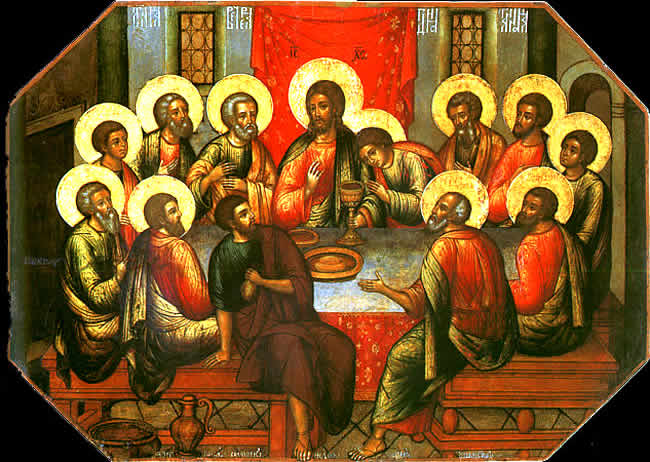
http://www.pc-freak.net/images/Simon_ushakov_Last_Supper_icon_1685.jpg
http://www.speroforum.com/site/article_images/sampleBenedictBartholomew.jpg
I like this post!
 
Please, I am not Catholic and would like to know the official Catholic view on this. Are Orthodox sacraments valid and can Orthodox Christians go to heaven. Now I know many of you want to say ‘yes they can’ out of politeness, but I really really want to know the truth. What is the most conservative opinion?

Thank you.
Catholics don’t have opinions on matters of canon law. Yes sacraments of the Orthodox Church are valid because Catholic law says they are alid, not because we took an opinion poll or worried about hurting someone’s feelings.

No one here is competent to say who is going to heaven and who is not, that privilege the Deity reserves to Himself.
 
Actually, it means nothing.

Valid means ‘true’ or ‘real’. The term licity (legal) or illicit (not legal) is used by Latin Catholics to indicate that the Orthodox do their sacraments without the permission of the Supreme Pontiff at Rome.

However, Eastern Orthodox Catholics have never ever needed the permission of the bishop of Rome from Pentecost to the present day, since he never had such authority outside of his own Metropolitan See.

So what we have here is a legal fiction.

However, according to the opinion of the Roman Catholic church Orthodox Holy Mysteries (sacraments) are indeed valid, regardless. We are, of course, flattered :tiphat: . (But confidentially, we did not ask and did not need the Roman Catholic church to tell us this, we already knew 🙂 )

This is interesting, of course, because both churches affirm that the Holy Eucharist is a sacrifice, but it is not a reenacted event, it is one eternal cosmic sacrifice outside of time, which we ‘inside’ time can participate in.***

So then, if the Orthodox liturgy is*** valid (regardless of permissions 😉 ) and the Roman Catholic liturgy is also valid, we are participating in the same cosmic eternal timeless event together, and in heaven we are already in communion before Christ God.

At least, that would be [theoretically] how some would see it.

I think this should win the post of the year award. Absolutely beautiful :).
 
Khalid:
What am I talking about?! - I’m still technically Orthodox since I haven’t been confirmed a Catholic yet, just convinced of the truth of the Catholic Church. The last time I went to an Orthodox Church to talk to the priest about it - not that I had made up my mind at the time, only questions: I approached it as a confession, “Please forgive me for I have had these thoughts, but have not acted on them” - he excommunicated me (or at least barred me from communion, which is literally “excommunication”).
Off-topic, but if you were Confirmed (Chrismated) in an Orthodox Church then you shouldn’t be Confirmed in the Catholic Church since it’s a one time Sacrament. All that would be required of you is a profession of Faith, namely your desire to be in the Catholic Church. The Orthodox Churches are viewed as so close to the Catholic (by the Catholic) that significant steps really aren’t required for transferring.

Peace and God bless!
 
Ghosty,
I believe that most Orthodox will impart the sacraments on Catholics as if they have never received any sacraments in the Catholic Church. That includes Charismatic. I’m sure you already know; however, there are many, as you know, that do not know.

Khalid,
Because you are Orthodox you would automatically transfer [lack of best term] to the Eastern Orthodox rite that corresponds to your heritage. But all you have to do is go to a local Latin Rite [aka as Roman [:rolleyes:] Catholic Church] parish and speak with the DRE or Pastor. I’d talk to the pastor. Personally, I’d stick with the Easter Rite, because it allows so much more options for you and your children, should you pursue that vocation - if not already.
 
Khalid:

Off-topic, but if you were Confirmed (Chrismated) in an Orthodox Church then you shouldn’t be Confirmed in the Catholic Church since it’s a one time Sacrament. All that would be required of you is a profession of Faith, namely your desire to be in the Catholic Church. The Orthodox Churches are viewed as so close to the Catholic (by the Catholic) that significant steps really aren’t required for transferring.

Peace and God bless!
I recite the Nicene Creed with the Filioque and pray for the intentions of the Holy Father - is that enough? (Seriously, not to be sarcastic): if there are any canon lawyers or presbyters on here, please let me know. I might re-post this in one of the larger forums to see if I can get the answer of a priest, and feel more assured in my soul (i.e. I know the Catholic Church is the one true church but I am not a member of it, therefore there is no hope for salvation until I am confirmed). Given that, I can go to Penance and take the Most Holy Sacrament in the Catholic Church without further ado? Or is there something I should say to the celebrant first? Or just recite the Nicene Creed with Filioque or the Apostle’s Creed along with everyone else?

The only reason I thought I knew is I had a girl friend (or more accurately “a friend of the opposite sex”) who was considering converting to Orthodoxy, and she was born a Catholic and baptized a Catholic, and the Orthodox wanted to chrismate her so she could join (but she never received first communion or confirmation in the Catholic Church as her family was pretty areligious, but I don’t know if the priest knew), and figured it would have been reciprocal.

I’m pretty certain that I was baptized and chrismated and received first communion as an Orthodox (as the Orthodox do all of these things at the same time when a child is only weeks old, if that much), but I have no record of it, nor any memory (as I was obviously too young to remember), nor do I have any living family that can tell me.

I don’t know whether they’d want to do conditional baptism/confirmation to be sure?
 
Khalid,
Because you are Orthodox you would automatically transfer [lack of best term] to the Eastern Orthodox rite that corresponds to your heritage. But all you have to do is go to a local Latin Rite [aka as Roman [:rolleyes:] Catholic Church] parish and speak with the DRE or Pastor. I’d talk to the pastor. Personally, I’d stick with the Easter Rite, because it allows so much more options for you and your children, should you pursue that vocation - if not already.
I am not married, nor do I have children (I feel a calling to the life religious or pastoral - and especially celibate: I figure if God has given me no desire for carnal relations and very little desire for marriage and a love for philosophy and theology, he wants me somewhere other than marriage).

One reason I’m transferring out of the Eastern Church is the lack of theology and philosophy (not just a disagreement with specific elements, such as the lack of filioque or the essence-energies distinction or the position of the Holy Father or the hesychastic prayer, but a disagreement over the very nature of the process used to come to those conclusions) and the attitude toward it present, with an overweening fideism. I have come to understand that the Eastern Catholic Church has just about the same opinion on such matters as does the Eastern Orthodox, and I owe my spiritual life, probably my fleshly life, and my belief in God to the theology and philosophy of the West, through Aristotle and St Thomas Aquinas.

From what I’ve seen, I’m considered ridiculously liberal, almost to the point of heresy, in the Orthodox Church, and I’m considered very conservative in the Catholic Church.

However, I am also lead to believe that the ECC is more conservative on the whole than the RCC with a more traditional liturgy (I would be a Melkite by heritage), which, based on some of the “horror stories” I have read of the NO Mass, with Evangelical-style pop music being played, “progressive” theology, “inclusive language” used even though it was rejected by the Vatican, half a dozen “ministers of communion”, and the absolutely horrible style of modern Catholic Church architecture (room with pews and windows down the side and stage in the center, with white walls and a big cross hanging behind the stage style). That’s one of the reasons I’ve not dared to go to a Catholic Church except one in the historical district of the city and when the Tridentine mass is being celebrated. It’s been generally historically-rooted/tradition-grounded/conservative enough for me.

If anyone has ever been to an traditional (no organs, no pews) Orthodox service, it is very tradition-grounded and very beautiful (the Divine Liturgy of St John Chrysostom), and the church architecture is outstanding. I can’t speak too much of these external elements, as they are almost necessary to be conducive to a reverent attitude of adoration; whitewashed walls with a cross hanging at one end aren’t (for that reason I’ve been scared to go to a service at a post-Conciliar church).

So there are a few questions there:
  1. Is the ECC supportive/accepting of the rational theology and philosophy of the West? 2) Is it anti-intellectual and fideistic, rejecting St Thomas Aquinas, like the Orthodox?
  2. Is the liturgy, etc. generally more conservative and grounded in tradition?
I probably need to talk to a priest about this in real life as I’m having trouble getting the thoughts in to words and anticipating the questions you, the reader, will ask in your mind, and answering them; the problem is, I can’t get within ten miles of a priest without transportation.
 
I agree.

Schism is a separation of the human institution. The idea that schismatics are definitely not ‘part’ of the church is a later development, and I think promoted for political reasons. Thus Pope Eugene’s remarks.

However, the Roman Catholic church has had much more time to reflect on this and it presently has a better understanding.

The big problem is that the Orthodox see new formulations of theology in the west that are either unnecessary, or unrecognizable, which is very disappointing to them because Rome had always been so highly regarded. It has resulted in some degree of cognitive dissonance.

Now that there is schism, (no one really wanted that when it happened, I am convinced), the Orthodox are very reluctant to engage through concelebration once again. For one thing it will take convincing that the newer formulations are not errors, and not just because someone ‘said so’ and can’t be wrong. This will take a lot of serious scrutiny, and might never be accepted. If they are truly errors, the subject is no longer merely schism (thus the serious nature of the investigation, the stakes are high).

For their part, Roman Catholics usually can only conceive of a church where the bishop of Rome has final administrative authority, which is not the kind of authority Orthodox conceive he ever had.

It is like an awkward date, each party making faux pas and they cannot get together.
Hesychios,why arent Catholics allowed to attend Orth.Liturgy for Sunday obligation,or why cant they take communion there?

Is it because If a church is seen to be in schism,then usually nobody is allowed to take Communion there? in the schismatic church…

Or is it because the Catholic Bishops know the Orthodox wont give communion to the catholics ?

Do you think as more time goes by and relations keep improving Communion at Orthodox and sunday obligation at Orth Divine liturgy may happen?
 
Clarifications on terminology.

RCC= Roman Catholic Church =really means=> Catholic Churchhttp://www.earlham.edu/%7Epeters/writing/therefor.gif ECC and RCC are one in the same…, thus the term Roman, to imply the location of the Holy See, Bishop of Rome.

Boy, I feel for you. You’ve chosen a difficult path. But I welcome it. The Latin Rite is in need of a return to more a more traditional state of the earlier years. However, I would advise caution in your discernment. There is still much resistence toward this direction. I would like to also add that the more modern look and feel of the Latin Rite is in part the cause of years of exposure to Protestant anti-Catholicism. I believe that the Church, particularly since VCII has taken the stance that it needs to reach out to those fallen away Catholics that have lost their identity after being exposed to many years and generations of this anti-Catholic rewriting of history and false accusations… at least a massive misunderstanding of salvation history combined with cultures.

I personally was drawn to Orthodoxy, and still am. But I did like you and after 18 years of fundamentalist Christianity I chose to return to the Catholic Church first and discern Orthodoxy on my journey. I love Orthodox theology and its simplicity. Anyway, I’m discerning the diaconate. [note: i used to be a Catholic seminarian…long story]. My point is that you will always find poor example no matter where you go. So, being patient is probably the best advice. You could look into one of the more conservative or traditional organizations for priests. However, I do not know the age requirements or the financial requirements to enter such orders. FSSP comes to mind. When I first became a practicing Catholic at age 14, I was initially drawn to the Traditional Church. Unfortunately, all of the Catholics I ran into cringed at it and when I went to the seminary I was deeply disappointed, particularly at what I saw in the lack of faithful formation, which has since improved I’ve heard from friends.

Good luck. My wife and I pray for vocations all the time. I particularly pray for those with your background to become priests.We need good men to lead the way.
 
I love Orthodox theology and its simplicity.
As a philosopher and amateur (Christian) theologian (as Islamic theology doesn’t count), I love the Byzantine (pun intended) and absolutely systematic nature of Catholic theology, especially that of the great Angelic Doctor himself.

I think that’s part of what Blessed John Paul II meant when he spoke of “both lungs” of the Church, that the traditionalism and mysticism of the East could act as a corrective for the liberalism and rationalism of the West, and that the rationalism, philosophy and theology and modernism of the West could act as a corrective to the over-traditional, fideistic mysticism of the East: that each church has gone too far in its respective direction, and together, they are balanced and perfected.

The Orthodox have taken traditionalism and conservatism possibly too far, and have definitely taken fideism and mysticism too far to an extreme, with much of the modern practice being based on it (hesychasm and the essence-energies distinction/Tabor light), and the Catholics have taken liberalism and rejection or at least discontinuity and radical reimagining of sacred Tradition too far, and could use some of the mysticism to balance out the legalism/rationalism.

Fideism is easily and rightly rejected once one realizes that the modern mechanistic philosophy is false, and, if the mechanistic philosophy is true, the Christian God can not exist, and blind faith is all that is possible. And then a realization that the Ancients were greater philosophers than us (scientists in the 21st century are asking and trying to answer questions the pre-Socratics answered 2700 years ago), and the Aristotelian realist philosophy (often noted as a type of “Real Essentialism”) as elaborated by St Thomas Aquinas is true, as it has the greatest descriptive power and correspondence with reality of all competing philosophies, and, that if the Aristotelian real essentialist philosophy is true, God is a necessary truth (it is impossible for God to not exist) and there is an absolute morality and a natural moral law that our reason can discover, and that only after our reason has brought us this far, and established that all of the truths of faith are true, and that revelation is possible, do we need to supplement with faith in trusted authority (the warrant for the authority is a book in itself) for truths accessible through divine Revelation alone, such as the Trinity.

Albeit there’s a good philosophical argument for the Trinity as well: essentially, if God is absolutely singular, the world was created out of tyranny and vanity instead of out of love (I don’t think anyone’s taken up this argument before).
 
Status
Not open for further replies.
Back
Top