Ask Me Anything: Muslim Edition

  • Thread starter Thread starter shazirah
  • Start date Start date
Status
Not open for further replies.
What would you say is the best method to learn Arabic as a secondary language? I’ve always been fascinated by Arabic but honestly have no idea where to begin.
first I think one needs to decide which type of Arabic you wish to learn as it is a diglossia language.
There are 3 options:
  1. one of the “dialects” of Arabic (there are 4 main groups: Levantine - spoken in the Levant, Egyptian, the Meghrebi group, and gulf) [it’s more complicated than this obviously] learn this if you want to SPEAK Arabic in conversation.
  2. modern standard Arabic (MSA) - learn this if you want to READ Arabic or listen to the news
  3. Quranic Arabic – learn this if you want to study the Quran.
2 and 3 are sort of similar but 1 is very different to 2 and the different “dialects” can be very different to each other. The first Arabic league meeting had to be conducted in French because different Arabs couldn’t understand each other!

I’m not a linguist but i like languages. I would not say learning Arabic is easy but it is certainly not insurmountable as some suggests.
The hardest thing i find about Arabic is some of the pronounciation of sounds (esp the gutturals) and the broken plurals.
Otherwise the grammar seem pretty simple (compared to the Romance languages) and the most elegant thing about Arabic (and other Semitic languages like Hebrew) is that it has the triconsonantal root system. It’s simply a beautiful system. you’ll find out that the words Islam, Muslim, Shalom (Hebrew), Jerusalem are all related by the root S-L-M.

Because I like languages myself, i leaned the alphabet in 3 days (you can just search some youtube videos to learn this) and I learned Quranic Arabic through this youtube video:


With a bit of effort Inshallah I’m sure you can learn Arabic.
I’m now learning Biblical Hebrew now, and it’s a bit easier than Arabic [as least don’t have to deal with broken plurals] also with less letters. Reading the Old Testament in Hebrew is just so much more satisfying for me now as I can appreciate the poetry of it.
 
The only thing required for a person to become a Muslim is to speak out loud and believe sincerely the shahada
A related question is how does one prove that he/she is a Muslim?
a Catholic can “prove” he/she is a Catholic by producing the baptismal certificate and confess to follow the teaching of the Catholic Church
A Prostestant can say she is a Christian by confessing Jesus is her own personal saviour. (I think)
so what about Muslims? is reciting the Shahada enough?
Hypothetically, can one “pretend” to be a Muslim by reciting the Shahada? [Please note I do NOT encourage ANYONE to do this, this is simply a HYPOTHETICAL question]
 
Most Muslims look on Catholicism as being a particular branch of Christianity. Christianity is sort of taken as a group by most Muslims, although people who are more educated in the beliefs will likely pick out sects of Christianity that are closer to Islam than others. I’m no where near that level of religious education, though. When I was growing up, I didn’t realize Christianity came in different flavors. When we moved back to the US, I thought the Methodists across the road were a completely different religion than the Baptists next door.
Respectfully thank you for your reply. Peace 🙂
 
The honest answer is that it’s complicated. The first four caliphs are acknowledged by almost everyone as being rightly guided, and so they were very important. The caliphates after Ali, when it became more about political dynasties, not so much. Because they were Islamic states, we call them caliphates, but they’re not considered the same thing as living under a state governed by a rightly guided Caliph. For traditionalists and ultra-orthodox, the return to a caliphate one day is pretty important, especially for Islamists who want to re-fuse religion and the state and for people interested in eschatology, because it’s thought that the caliphate will be restored before the end of the world.

For people like me, I think we can do without the caliphate. We kind of messed it up, so perhaps Allah being merciful decided to take the burden away.
 
I think they’re just as Muslim as the rest of us. Ultraorthodox and some traditionalists see them as heretics, but I think they just have different goals to mainstream Islam and a different interpretation. The only group I really have doubts about are the Druze, because they’re more of a syncretic faith, but even so I feel like that’s God’s business and not mine.

On a side note about kafir - it’s best to be careful about calling someone a kafir when you’re around the Muslim community, even if they are kafir. While using it as a technical term in religious discussion is fine, actually using it towards someone is considered derogatory. Especially with all these jihadi jerks these days calling everyone and their mother a kuffar, most Muslims try to avoid saying it in polite conversation. My brother once called one of his classmates a kafir and my mother went ballistic. Just in case you ever find yourself in that situation. 🙂
 
Technically speaking, the only proof anyone ever needs of being Muslim is to say that they’re a Muslim and confirm the shahada. Even a heretical Muslim is still a Muslim. In Islam, only God knows your heart. It’s possible to proclaim takfir, which is basically saying that someone has become so heretical or unrepentantly sinful that they have made themselves kafir, but if the person still insists that they’re Muslim, they’re Muslim and the accusation of kafir falls back on the accuser. So, it is possible for someone to pretend to be Muslim, because no one is allowed to question what’s in your heart but God. We would call someone who professes to be a Muslim but is suspected of doing so for insincere reasons a “munafiq” or a hypocrite. Even in cases where someone is accused of apostasy, if they will affirm the shahada, they can’t properly be considered an apostate by most interpretations of Islamic law.
 
When a Muslim encounters conflicting views of how a particular verse of Quran is interpreted, how does one decide which is correct?
 
How much time does a Muslim usually spend in a mosque?
Is it a requirement that Muslim must attend a mosque?
What if someone is homebound, does the mosque send people to visit them or can one just practice Islam at home without any involvement with the mosque?

Thanks!
 
The practice of Islamic theological debate can get super complicated and contentious at times. It’s a whole profession unto itself and learning all the precedents, proper translation of Koranic Arabic, and what is considered good practice is something that often requires extensive study. Islamic law is a lot like Judaic law. We have a lot of commentary to refer to and we look at the historic validity of the hadiths used in reasoning as well as how well respected historical sources were in their interpretations. One of the big schisms between Sunni and Shia boils down to exactly what hadiths are valid, so the way that Shia conduct their reasoning is often based on very different source information than Sunni. Usually, disagreements are settled through issuing fatwas.

For Muslims, behavior falls into a few basic categories: things that are obligatory, things that are commendable but not obligatory, things that are permissible, things that are not commendable but not prohibited, and things that are prohibited. The things that are obligatory and prohibited tend to be pretty clear and universal in Islam, but the middle categories are usually settled through the fatwas issued by qualified Islamic jurists. We just ignore the fatwas that we don’t feel are issued by reliable sources or we don’t feel are necessary to follow. If Mullah Jerkface issues a fatwa encouraging violence against non-Muslims, not only am I not obligated to follow it, I’m fully at liberty to do exactly the opposite and thumb my nose at any ridiculous enough to follow him. Kind of like how orthodox Jews have pretty concrete interpretations of the Law, but there are all kinds of grey areas that are settled by the rulings of the Rabbinical tradition that they happen to follow.
 
The average Muslim usually goes to mosque once a week or so for Friday prayers, but people in more traditional communities or who live in majority Muslim states may go daily. Women also typically do not go to mosque while menstruating or within 40 days of giving birth. Muslims are not required to be part of the greater community and attend a mosque, but it’s heavily encouraged because fellowship of believers is very important. A homebound person could practice their religion entirely at home, but imams are normally happy to visit people who can’t come to a mosque if they need to talk or ask questions and most mosque communities will have people who organize charitable or humanitarian efforts as part of helping the poor and the sick, especially if that person doesn’t have family to help care for them. My grandfather, even though he says he’s out to pasture now, still spends most of his days visiting people.
 
A fatwa is a decision given by a qualified Islamic jurist, called a mufti. Essentially, it’s given to elaborate on a point where there is conflict or where something isn’t covered under precedence. Like, when members of the Supreme Court write their position on a particular case and give their legal justifications, that’s kind of like a fatwah only in our case if you happen to think Justice Ginsberg is more authoritative than Justice Sotomayor, then you aren’t obligated to follow Sotomayor’s fatwas.
 
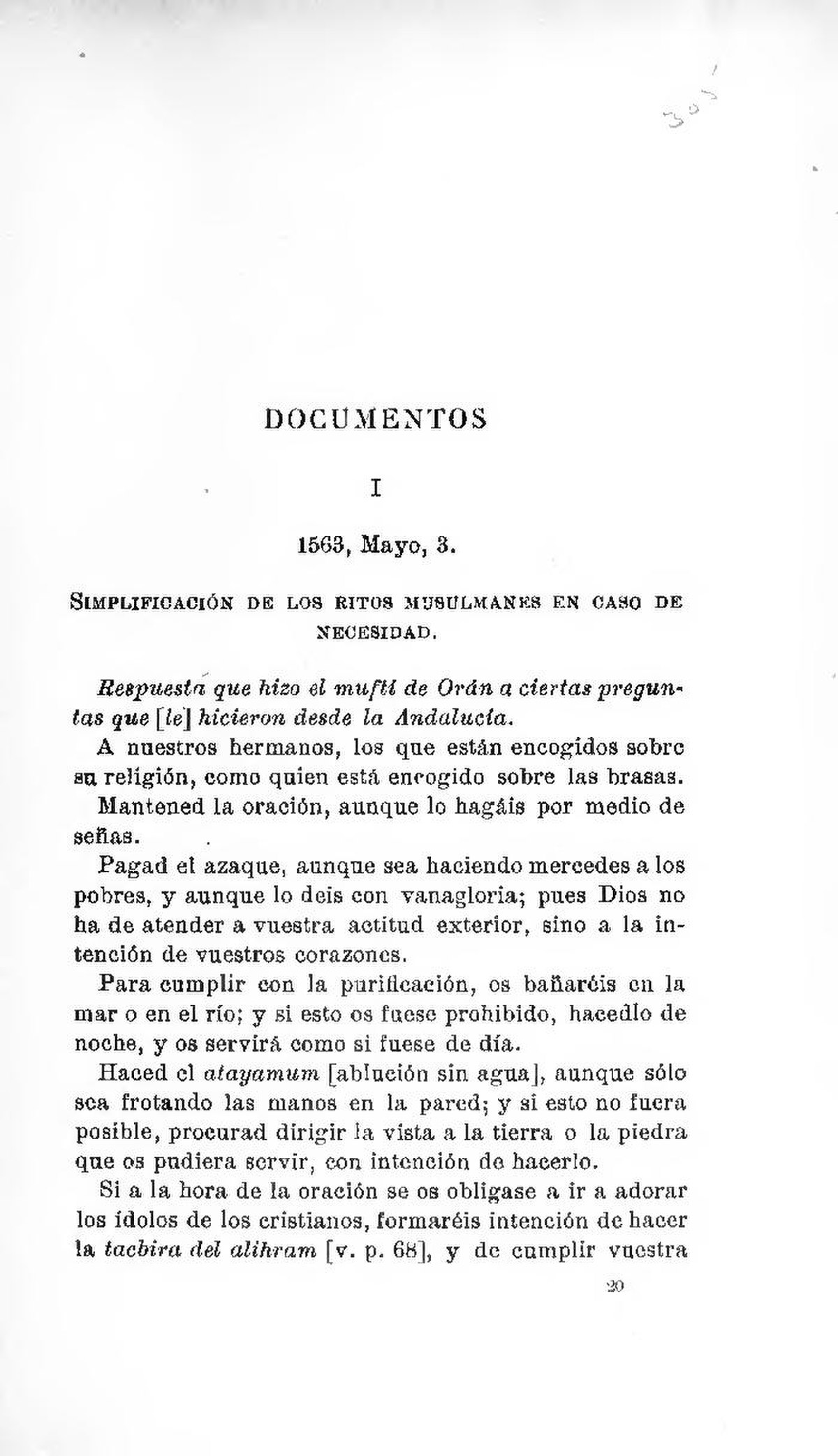
One historically interesting fatwa is the Oran Fatwa, a copy is kept in the Vatican library.


I think it demonstrates that Islam is flexible and able to adapt to crisis. Not as rigid as I previously thought. Do you agree, shazirah?
 
Did anyone see God dictating to Moses?
Yes. The whole nation of Israel.

Exodus 14:30 Thus the Lord saved Israel that day out of the hand of the Egyptians; and Israel saw the Egyptians dead upon the sea shore. 31 And Israel saw that great work which the Lord did upon the Egyptians: and the people feared the Lord, and believed the Lord, and his servant Moses.
Did anyone but Moses see the Burning Bush?
The entire nation of Israel heard God on the Mountain:

Exodus 20:18 And all the people saw the thunderings, and the lightnings, and the noise of the trumpet, and the mountain smoking: and when the people saw it, they removed, and stood afar off. 19 And they said unto Moses, Speak thou with us, and we will hear: but let not God speak with us, lest we die. 20 And Moses said unto the people, Fear not: for God is come to prove you, and that his fear may be before your faces, that ye sin not.
Did anyone see the Angel talking to Mary?
The story is credible because thousands saw Jesus bring people back to life and they knew that Mary was His Mother:

Luke 7:11 And it came to pass the day after, that he went into a city called Nain; and many of his disciples went with him, and much people. 12 Now when he came nigh to the gate of the city, behold, there was a dead man carried out, the only son of his mother, and she was a widow: and much people of the city was with her.

13 And when the Lord saw her, he had compassion on her, and said unto her, Weep not.
14 And he came and touched the bier: and they that bare him stood still. And he said, Young man, I say unto thee, Arise. 15 And he that was dead sat up, and began to speak. And he delivered him to his mother. 16 And there came a fear on all: and they glorified God, saying, That a great prophet is risen up among us; and, That God hath visited his people.

cont’d
 
Last edited:
cont’d with @shazirah
We don’t necessarily need eyewitness to believe and for good reasons. …
Yes, we do. And yours more than any other since you need seven eyewitnesses to believe anything in court, according to Sharia Law. So why did you set aside the necessity of witnesses for this unbelievable detail?
If you look at modern bodies of knowledge about eyewitness accounts, they’re pretty faulty. People are not perfect recorders of what they’ve seen and manipulate their testimonies for all number of reasons both innocent and sinister. Besides, the Biblical gospels were not all written by eyewitnesses and they copy from each other and change the order of things to suit a narrative.
Their differences in small details are evidence of their truthfulness. Police know that when taking testimonies, there will be differences. Such is the case in the Gospels.
Muslims don’t believe that the true Gospel is an account of the life of Jesus.
Muslims believe all kinds of things that they can’t support with evidence and they disbelieve many things that are proven with excellent evidence. So?
The Gospel that we believe in was given to Jesus before he ever attracted the first disciple and was a perfect revelation that was subsequently lost.
If it was lost, how do you know it existed? Oh, yeah, the angel that no one saw, told someone to reveal this to you.
Possibly, it could be the Q source that theoretically helped inform the Biblical gospels, but it bears only passing relation to Matthew, Mark, Luke, and John. Just as we believe that there existed a perfect revelation of the Torah to Moses that was subsequently changed through the centuries.
As I said, you believe all sorts of unbelievable stuff.

I’ve debunked your claims against eyewitnesses. And you’ve admitted that there were no eyewitnesses to the angel which purportedly revealed the Quran.

Here’s another question. Why did Uthman burn Mohamed’s Quran and substitute his own?
 
Regarding, the Burning Bush:
Now Moses was tending the flock of Jethro his father-in-law, the priest of Midian, and he led the flock to the far side of the wilderness and came to Horeb, the mountain of God. 2 There the angel of the Lord appeared to him in flames of fire from within a bush. Moses saw that though the bush was on fire it did not burn up. 3 So Moses thought, “I will go over and see this strange sight—why the bush does not burn up.”
Moses was in the wilderness. No one saw the burning bush but him. God gave him signs to take with him to prove himself, but no one actually saw the event itself happen.

Regarding Moses on the mountain, the verse you quoted doesn’t actually concern the dictation of the commandments.
34 The Lord said to Moses, “Chisel out two stone tablets like the first ones, and I will write on them the words that were on the first tablets, which you broke. 2 Be ready in the morning, and then come up on Mount Sinai. Present yourself to me there on top of the mountain. 3 No one is to come with you or be seen anywhere on the mountain; not even the flocks and herds may graze in front of the mountain.”
4 So Moses chiseled out two stone tablets like the first ones and went up Mount Sinai early in the morning, as the Lord had commanded him; and he carried the two stone tablets in his hands. 5 Then the Lord came down in the cloud and stood there with him and proclaimed his name, the Lord.
No one saw Moses receive the commandments. Islam also has a tradition of miracles, many of which would have been witnessed on a scale similar to acts in the New Testament. Many faiths claim miracles, in fact. Not witnessing the giving of the Koran is not grounds to say it is false, otherwise there is equal grounds to question the law of Moses.

Part 2 incoming.
 
Yes, we do. And yours more than any other since you need seven eyewitnesses to believe anything in court, according to Sharia Law. So why did you set aside the necessity of witnesses for this unbelievable detail?
Because we’re not talking about legal jurisprudence, we’re talking about history. Only the living can testify to what they saw. Since everyone who ever saw Jesus is long dead, we can’t ask them. We have to rely on historical accounts and techniques of verifying information. If we believed everything written as a historical eyewitness account, we would have to accept a number of things that we know for a fact aren’t true. We don’t accept every hadith that is attributed to Mohammed (peace be upon him) either, only those with reasonable historical validity. By the same standards we use for hadith, we don’t consider the gospels of the Bible historically valid over all, even if they contain valid portions of the original message.
Here’s another question. Why did Uthman burn Mohamed’s Quran and substitute his own?
Well, he didn’t. He burnt the Wahy Bayani commentaries, which were essentially annotated copies of the Koran as revealed to the Prophet (peace be upon him) produced by a few early companions that had notes jotted inline with the text. Uthman wanted to preserve the purity of the original revelation and also produce a translation in Korich true to the original source and not post hoc study versions.
If it was lost, how do you know it existed? Oh, yeah, the angel that no one saw, told someone to reveal this to you.
For the same reason we know other lost books exists. According to several hadiths, there is evidence that this book still existed in the Arabic world either at the time of the Prophet (peace be upon him) or that it was at least known of and had been lost not long before. There were many religious texts that were in circulation at that time in the Middle East that have either been lost or only exist as fragments now. We know about them because other writers mentioned them or quoted them, just as we know that some of the Christian gospels were drawing inspiration from other written works. What we cannot know, we take on faith because we believe, just as Christians do.
Muslims believe all kinds of things that they can’t support with evidence and they disbelieve many things that are proven with excellent evidence.
Something tells me that you’re not entering into this with a spirit of honest inquiry, my friend. 😉 If you have honest questions, please feel free to ask them. If you’re here to argue, like I said I can only respond as an average every day believer. I’m not a scholar or a religious historian. I can only testify to what I’ve learned, what I witness in my community, and what I observe in my life as a believer. You are free to disregard any or all of it as you wish.
 
Regarding, the Burning Bush:

…Moses was in the wilderness. No one saw the burning bush but him. God gave him signs to take with him to prove himself, but no one actually saw the event itself happen.
It doesn’t matter. Everyone saw Moses part the Red Sea. Everyone saw the Pillar of Cloud in the day and the Pillar of Fire in the night.

No one saw Mohamed’s purported angel.
Regarding Moses on the mountain, the verse you quoted doesn’t actually concern the dictation of the commandments.
It doesn’t matter. All the people saw Moses come out of the tent with his face glowing. Everyone saw the lightning and heard the thunder that spoke to Moses on the Mountain.

No one saw anything from Mohamed or his purported angel.
No one saw Moses receive the commandments…
Everyone saw plenty.
Islam also has a tradition of miracles, many of which would have been witnessed on a scale similar to acts in the New Testament.
That’s not true. Mohamed produced no miracles. Not a single one.
Many faiths claim miracles, in fact.
We’re not talking about many. We’re talking about Mohamed and Islam.
Not witnessing the giving of the Koran is not grounds to say it is false,
Yes, it is.
otherwise there is equal grounds to question the law of Moses.
No, there isn’t. There were thousands of witnesses to the events of the Exodus.
 
Yeah, I read about that in religious school growing up. 🙂 Islam is supposed to be adaptable in practice around certain core unmovable tenants, which makes the rigid behavior of some of the ultraorthodox folks sort of weird, imo.
 
Status
Not open for further replies.
Back
Top