J
jimboky
Guest
Why was Jesus Baptized, and where did John the Baptist get the authority?

Please remember the baptism by John the Baptist did not forgive sins.Why was Jesus Baptized, and where did John the Baptist get the authority?
To set the example for us AND to let US know how important it is TO US:thumbsup:=jimboky;13024908]Why was Jesus Baptized, and where did John the Baptist get the authority?

That’s not true in general of the Greek word for baptise.Jesus’ baptism was the Jewish ritual purification immersion known as a Tvilah. The tvilah had to be performed in running (living) water and special pools were constructed in areas without access to streams or lakes. The pool of water used is known as the mikveh.
https://encrypted-tbn2.gstatic.com/...8DWuCophTZN-9X7Eb_86KnDdMPIV5kt8US3RZ5PJLWYox
Modern Mikveh in a Synagogue
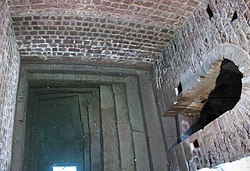
http://upload.wikimedia.org/wikiped...ad_Speyer_6_View_from_the_first_room_down.jpg
Ancient Mikveh
The word baptisma in Greek literally means wash.

However, the classical Greek use of the word is not necessarily a good explanation of the Biblical sense. The use of the English sense of washing is used throughout the NT when referring to Baptism. Even in the Old, when Moses commands the Israelites to be washed after the episode of the golden calf, it is the Original Hebrew Baptism.That’s not true in general of the Greek word for baptise.
The word for baptize in Greek generally means to plunge or submerge.
It is used of armies who jump into lakes up to their waists while marching, or of ships sinking, or of pikels being submerged in a jar of water. None of these things have to do with washing.
The Pharisees, had confounded the idea of being plunged/overwhelmed by the presence of God in the Exodus experience with the idea of washing. And it is only in one place in scripture, where baptism is compared to washing in English (it’s a hapax legomenon) – and done only in order to condemn the pharisees by showing they aren’t completing the plunging: “You baptize the outside of the cup, and dish, but the inside is full of filfh” ( Matthew 23:25 ) – whereas, if one had really “baptized” or plunged a dish, (like a sunken ship), it would be impossible for any part of it to have not been rinsed in the traditional meaning of baptize.
The idea of washing, really isn’t what the Greek word is about, but of complete submersion and being overwhelmed.
I think, in one work I read – possbily, Plato, he said something like “we can be baptized with wine”; referring to it’s effects and the tendency to dumped it on one’s self, once inebreated – because coordination gets lost. Eg: clearly, it has nothing to do with becoming ‘clean’ in that instance, but quite the opposite…
The Mikveh bath, on the other hand – is quite Jewish, and I would agree that it’s exactly as you say.
I’m not sure that’s entirely true. Though it’s not a mistake that should cost anyone their faith.However, the classical Greek use of the word is not necessarily a good explanation of the Biblical sense…
So the use of baptism is often described as washing throughout the Bible. My point being that washing is OK as an English equivalent of Baptism in the Bible.
Exactly my point!In the Golden calf incident, the Israelites had already been baptized into Moses in the sea, and in the Cloud; Therefore, I would hazard to say that the washing mentioned in those pages by Moses is not really baptism; but secondary ritual washing on account of sin.
 Secondary (your word not the Bible’s) ritual washing on account of sin. IOW, BAPTISM. That is the Baptism the Hebrews considered cleansing of sin. That is the reason for their continued use of Baptism/washing with new converts. It is to wash away the sin of idolatry of which Gentiles are presumed to be guilty. It is the foundation of Christian Trinitarian Baptism. And like the OT typology, when a convert comes into Judaism, the entire family must be washed/baptized, including infants. (Reform Jews notwithstanding)
And Johns authority would also be recognized from his father (a priest) and come from God.Semantics aside, Jesus’ baptism was a tvilah - ritual washing of the Hellenistic Jews.
It was something every Jew would have immediately recognized as a purification and preparation for ministry and sacrifice.
-Tim-
I hadn’t thought that about John’s father, that he was a priest. Thanks Deacon!And Johns authority would also be recognized from his father (a priest) and come from God.
I will keep you as my intention at Masses the rest of the week.I hadn’t thought that about John’s father, that he was a priest. Thanks Deacon!
Will you pray for me at Mass?
-Tim-
I ask you this–What good is the High Priest if He is not baptized but everyone else is. It is to fulfill righteousness, that is why He is baptized. He enters the Kingdom and Ascends through the same door we do–that’s what makes Him The Lord Our Righteousness. He becomes like us so that we may become like Him.Why was Jesus Baptized, and where did John the Baptist get the authority?
I don’t see how it is baptism.Exactly my point!
The ritual in numbers, regarding Moses, is a test and a curse; not a cleansing of individuals from sin – rather, it is more likely (in my eyes) a purging of evil individuals from their midst by cursing those who lied about their participlation in the rights of the Calf, and at the same time proving that the Calf is no god at all – for they ate it.That is the Baptism the Hebrews considered cleansing of sin.
Where in Jewish teaching, do they ever say – in the Talmud or elsewhere – that baptism washes away sins?That is the reason for their continued use of Baptism/washing with new converts. It is to wash away the sin of idolatry of which Gentiles are presumed to be guilty. It is the foundation of Christian Trinitarian Baptism. And like the OT typology, when a convert comes into Judaism, the entire family must be washed/baptized, including infants. (Reform Jews notwithstanding)