Breaking Seal of Confession

  • Thread starter Thread starter Pixle_Catholic
  • Start date Start date
Status
Not open for further replies.
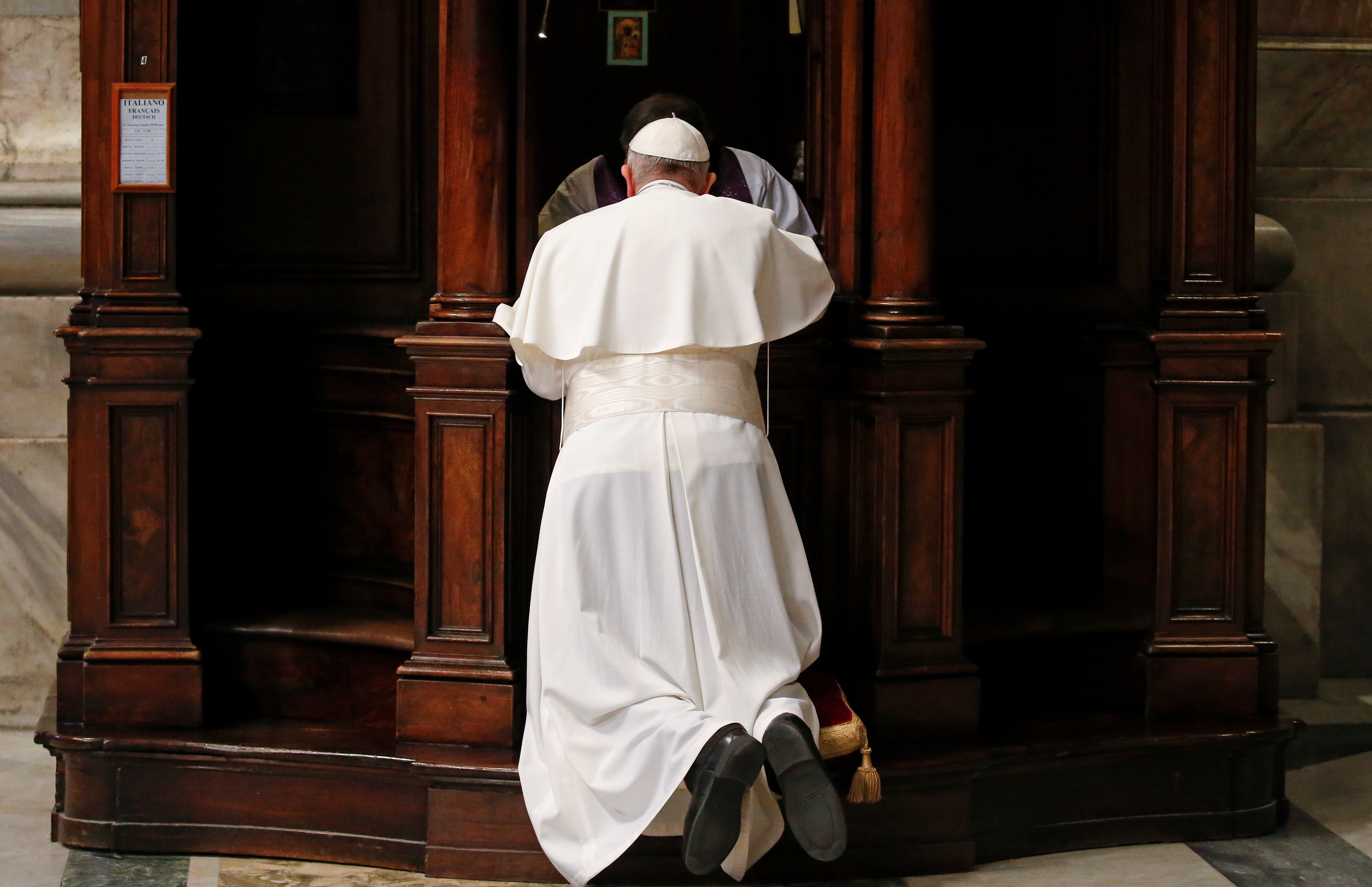
But how does the seal apply? I don’t get it. The sacrament did not occur. There was no confession. There was no sacrament.
How would the priest even know if this lunatic swearing to murder him tomorrow is Catholic?
Imagine an atheist terrorist enters the confessional and says “ah ahaha! I am not a Catholic! I reject and despise the concept of a sacrament! I have planted a nuclear device below the city and in exactly 30 minutes 30 million people will instantly die! But you can’t do anything because I am in the confessional! Haha!” I don’t buy it. No sacrament - no seal.

If, on the other hand, a penitent came in and said “Father, over the past year I murdered 12 priests, including many you knew and loved” - then of course the seal applies. I just don’t see why the seal applies if the sacrament is clearly not celebrated.
 
But how does the seal apply? I don’t get it. The sacrament did not occur. There was no confession. There was no sacrament.
How would the priest even know if this lunatic swearing to murder him tomorrow is Catholic?
Imagine an atheist terrorist enters the confessional and says “ah ahaha! I am not a Catholic! I reject and despise the concept of a sacrament! I have planted a nuclear device below the city and in exactly 30 minutes 30 million people will instantly die! But you can’t do anything because I am in the confessional! Haha!” I don’t buy it. No sacrament - no seal.

If, on the other hand, a penitent came in and said “Father, over the past year I murdered 12 priests, including many you knew and loved” - then of course the seal applies. I just don’t see why the seal applies if the sacrament is clearly not celebrated.

I would say it is similar to me as a lawyer.

I have many people who are not actual signed-up clients impart information to me. They may be family members of clients, witnesses, enquirers who end up not needing my services as a lawyer etc.

All of it is confidential regardless, because it is still all in the context of my profession and work as a lawyer. Not imparted simply to me as a private individual.
 
I think pretty much any priest is going to error on the side of caution to avoid any danger of this.

Let’s also remember that 99.9% of the time, sins confessed in Confession are boring and forgettable. The extremely rare instances where a priest would violate the seal would either be a tragic accident, flippancy, or an actually compelling reason that would make it a temptation.
 
Last edited:
And you are absolutely sure the priest did not have the permission of the penitent to write about the contents of the confession and/or that the penitent hadn’t discussed the contents of the confession outside the confessional with the priest? In either case, the seal would no longer apply.
Even if the penitent personally signed a contract with the priest in which the penitent wrote down his whole confession and gave Father the rights to talk about it, which is highly unlikely, it’s still bad form for a priest to make fun of a penitent and their sin, especially a penitent recognizable to the congregation. It leaves the wrong impression that an individual’s sin is a public matter and is funny.
 
Last edited:
NO! Never, under no circumstance the seal can be broken.
Do you understand the meaning of the word “seal”?

From the Merriam-Webster Dictionary:
“to fasten with or as if with a seal to prevent tampering”

“to close or make secure against access, leakage, or passage by a fastening or coating”

“to determine irrevocably or indisputably”

Peace!
 
And you are absolutely sure the priest did not have the permission of the penitent to write about the contents of the confession and/or that the penitent hadn’t discussed the contents of the confession outside the confessional with the priest? In either case, the seal would no longer apply.
False: it is impossible for anyone to “waive” the seal of the confessional. If I confessed a string of sins and handed Father a signed contract of permission to divulge my sins, that contract would be null and void; Father would be unable to betray me, no matter what.

And that’s a good thing.

The way to “waive” the seal is by mentioning things in a venue that is clearly not the Sacrament of Penance. If I sat next to Father at a parish dinner and regaled him with stories of my misadventures, then he would be under no obligation to keep them secret, even if I’d confessed them as sins earlier that afternoon.
 
Last edited:

 
Okay there’s too many posts to quote or reply to specifically but in answer to the questions raised:
  1. The seal applies to both the identity of the penitent and the detail of their confession; nothing else. Personally, I try to avoid small talk with the stole on. If some mentally ill person walks in and starts ranting with no intention of confession and/or seeking absolution then it’s not a confession and the seal doesn’t apply.
  2. A priest cannot use information obtained in the confessional to the detriment of the penitent. So if someone gives me a tip on a horse I’m free to place a bet on it. Similarly, going with entertaining murderous thoughts being sinful, I may not be able to report it to the police but I can decide tomorrow might be a good day to stay at home!
  3. An indirect violation is where the identity of the penitent isn’t directly disclosed but enough information if given that they can be identified. Whether somebody is in fact able to identify them is another matter but even running the risk is serious stuff. While I’m not a fan of emailing bishops about complaints, the seal of the confessional isn’t something to play fast and loose with. A priest can talk about confessions he’s heard in a very general way without a risk of identification (it’s easy enough) and can also use hypotheticals based on experiences but even the impression that he’s talking about an identifiable person is wrong and should be followed up.
  4. The seal cannot be waived. You can feel free to talk about your own confession all you want but for me even to discuss it with you requires you to being it up with me outside of the confessional. If and when you do that then the seal doesn’t apply.
 
Based on Father’s most recent post on this thread, I respectfully think you’re wrong on this. It seems to me my scenario would fall into the “mentally ill person who enters the confessional rambling without intent to make a confession” category, which Father states does not fall under the seal.
 
Another possible case I know of is that involving the commandant of Auschwitz in World War II, Rudolf Hoss. He was raised in a strict Catholic home, and once he suffered from an apparent breaking of the seal of the confession by a priest, and subsequently abandoned the faith. It’s not entirely sure whether the priest did break the seal, but the evidence is there an Hoss believed it. If he did break the seal the priest got away with it.
He brooded over this “monstrous” breach of trust for months. “My faith in the sacred priesthood had been destroyed,” he recalled, “And doubts began to arise
I read that book and that was very hard to read. But it was consolating to read that he had confession before death.
And in all that monstrous events we got at least one saint, Maximilian Kolbe!
 
Based on Father’s most recent post on this thread, I respectfully think you’re wrong on this. It seems to me my scenario would fall into the “mentally ill person who enters the confessional rambling without intent to make a confession” category, which Father states does not fall under the seal.
See, not all murderers are completely crazy or utterly impenitent, far from it.

I was thinking more of someone having those thoughts and disclosing them, perhaps.hoipng to dispel.them but too overcome.by - whatever - to complete the confession.

In other words at least an honest if unsuccessful attempt at confession.

Remember pruests are often ani ymous in the confessional. A person might not always be able to tell who they are insanely ranting to in there!
 
To answer several questions about the situation I mentioned in my original post.

The priest unkindly mocked both the penitent and the sin in an article he wrote for a blog.

Our bishop was made aware of the issue, not by me, but by other priests in the diocese.

The incident the priest related in his article occurred in a different diocese before he came to our diocese.

I debated about posting this back when it all came to light (within the past year) but when I saw this thread I decided to mention it because, sadly things like this still happen. Hopefully not very often.

The incident has upset many people in my diocese, both priests and laity. It isn’t the only incident with this priest but it is the worst one.
 
Is this biblical?

Not to gossip about other people’s sins Proverbs 11:13… that’s just foolish.

but I mean if someone confesses to you about something that is seriously harmful to themselves or worse someone else, is it biblical for a priest to remain silent, to not do anything to help… or does that not apply to the seal, like when a doctor knows someone is being abused?

Even attorney-client privilege has some limits. Like if a client tells his lawyer he’s planning on killing someone, or blowing up the Sears Tower.

When does Matthew 18:15-18 apply.

I’m not saying priest should go around telling people’s confessions, even if someone confessed they killed 100 people… but I’m talking more about if they confess they plan to kill 100 more shouldn’t a priest do something about it… help one of God’s children not commit the sin.

or maybe I’m misunderstanding that the seal of confession doesn’t mean a priest does nothing about what is being confessed, if they can help.
 
Last edited:
is it acceptable for the penitent to simply say outside the confessional “I’d like to talk about my confession” or “You can talk with so-and-so about my confession”?
In some ways it depends on what you’ve said (and obviously if your confession was from behind a screen). I have asked a penitent to approach me outside of the confessional after they confessed to having thoughts of self-harming - in that case, when they did it wasn’t necessary for them to specifically mention that “sin”, but if your confession has been more wide ranging, you need to tell the priest what it is you want to talk about - he can’t (and won’t) go where he’s not invited. Aside from that, you can’t give him permission to talk to someone else about your confession; you can however give him permission to talk about what you’ve discussed with him outside the confessional. This might seem like splitting hairs but it’s actually a very important distinction.
I was thinking more of someone having those thoughts and disclosing them, perhaps.hoipng to dispel.them but too overcome.by - whatever - to complete the confession.
Well if nothing else it’d certainly make for an awkward confession! I’d say it’s covered by the seal - even if a person is unable to receive absolution the seal still applies.
 
Hmm, that’s interesting. I never heard of this myth.
When I was in RCIA, our priest relayed this myth to us as if it were fact.

So unfortunately, the myth is alive and well out there.

I try not to stoke conversation about it because trust in the seal is so important, but probably one of the news stories that made me the angriest in my life, was about a priest (South American, I think) who apparently violated the seal of Confession… to tell a sexual abuser that he was being accused of sexual abuse.

Just, horrific. Anyway, so yeah. I know both that some people (even priests) say that the seal can’t be broken… while at the same time I know that it can.
 
Last edited:
Thank so Father for such a clear and comprehensive and yet concise explanation. Always glad when you chime in on a thread here.
 
To answer several questions about the situation I mentioned in my original post.

The priest unkindly mocked both the penitent and the sin in an article he wrote for a blog.

Our bishop was made aware of the issue, not by me, but by other priests in the diocese.

The incident the priest related in his article occurred in a different diocese before he came to our diocese.

I debated about posting this back when it all came to light (within the past year) but when I saw this thread I decided to mention it because, sadly things like this still happen. Hopefully not very often.

The incident has upset many people in my diocese, both priests and laity. It isn’t the only incident with this priest but it is the worst one.
Is the incident that Fr. Z refers to in this post what you are referring to:


Fr. Z was mainly talking about a post this priest wrote about how this priest wrote guidelines for his diocese that basically denied people the Sacrament of Anointing of the Sick, but he talks about an apparent violation of the seal that he wrote about on his blog as well (the link to the original post is dead, but it was up for awhile, I saw it myself). Fr. Z quoted the original text in his blog post (I won’t post it here, but you can see it at the link above). This story was out there publicly awhile ago and I figured it would have gotten picked up by enough sites to warrant some action, but apparently nothing ever happened.

It’s sad, but not surprising that nothing was done. I wonder how hard it would be for a priest who violates the seal to turn around and claim that it was just a hypothetical example, as long as no one who was directly involved comes out to contradict him.
 
To answer several questions about the situation I mentioned in my original post.
Thanks for the follow up. That clarifies my questions and concerns about this incident. It does seem that the seal was broken and it wasn’t kindly (even if that’s an justification).

Yes, this was a good thread to mention it again and I expect you’ve found the information here helpful.
 
Last edited:
Thank so Father for such a clear and comprehensive and yet concise explanation. Always glad when you chime in on a thread here.
Awww shucks… thanks @felsguy - always nice to be appreciated and to be able to help where I can!
Is the incident that Fr. Z refers to in this post what you are referring to:
Reading this - it could well be a hypothetical (and I hope like anything it is) but, if so, the priest should have made this absolutely explicit otherwise the effects are obvious - the integrity seal should never be in question.
I wonder how hard it would be for a priest who violates the seal to turn around and claim that it was just a hypothetical example, as long as no one who was directly involved comes out to contradict him.
In this case, all that would have been necessary to find out would have been to hang around near the presbytery before mass on a Sunday morning! it doesn’t take much for someone to come forward and say “I know who he’s talking about”. Still, even claiming it’s a hypothetical isn’t a get out of excommunication free card and something as sloppy as this should lead to the priest having his faculty to hear confessions withdrawn (admittedly not something which necessarily needs to be made public).
 
A priest cannot break the seal of confession, full stop. As far as I’m aware a priest can’t even say that they’ve heard a particular person’s confession.

I’m sure there have been priests who have broken the seal, but it wasn’t something they were permitted to do. It comes with an automatic excommunication.
Ditto! And no police officer or detective has any business trying to coerce or force a priest into divulging what he has heard in the confessional. I don’t doubt that some try, but they have no right doing that.

The seal is sacred and inviolate. Period.
 
Status
Not open for further replies.
Back
Top