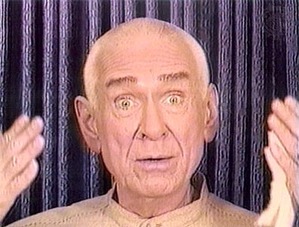
Can anyone here who believes in the Protestant Christian doctrine which allows for "Personal Interpretation of the Bible" explain this?

  • Thread starter Thread starter Jimmy_B
  • Start date Start date
Status
Not open for further replies.
J

Jimmy_B

Guest
Can anyone here, who believes-in, the Protestant, non-Catholic Christian doctrine, which allows for - “Personal Interpretation of the Bible”… explain this?

David Koresh and the non-Catholic “Christian” denomination, Branch Davidians

http://www.beyond.com.au/images/catalogue/mugshots - david koresh.jpg

Marshall Applewhite and the non-Catholic “Christian” denomination, Heaven’s Gate


Jim Jonesand the non-Catholic “Christian” denomination, the Peoples Temple

(Please Note: This uploaded content is no longer available.)

****Weren’t these tragic situations, created by bad…horrible… ****personal interpretations of the Bible?

My concern here is with the flawed doctrine of “personal interpretation”.

I know that the extreme cases above, do not represent the beliefs of most Protestant denominations; however, they do illustrate a point and that is that “personal interpretation” is a flawed doctrine, that can lead to disastrous results

Your Thoughts?
 
Can anyone here, who believes-in, the Protestant, non-Catholic Christian doctrine, which allows for - “Personal Interpretation of the Bible”… explain this?
Personal interpretation as you are defining it is a flawed thought. 😛
 
Personal interpretation is flawed. If everyone is allowed their own interpretation we end up with a lot of flawed doctrines. If the Church founded by Christ himself went corrupt as the Protestants point out than how do we know if any Protestant denomination hasn’t also gone corrupt. Then we get into an endless cycle of churches going corrupt and many people like Martin Luther supposedly rediscovering the true doctrine. This is why Christ established one church to guide his people and He will stay with His Church and guide it until the end of days.
 
The evangelical protestant reply would be that each of these examples is a case of a CULT masquerading as a bible-believing christian community. Embedded within the reply is that the individual assumes that their own comprehension of Scripture and discernment of the indwelling Holy Spirit is adequate to avoid becoming entangled in the next such tragedy. For most folks, that is actually a valid assumption. Unfortunately, not for all of them.
 
I think a better example of the problem of sola scriptura would be that of a whole series of ancient Christological heresies being revived and new ones emerging.

From my observances on forums around the web, the most common among Protestant Christians is the denial of the Trinity because it is not considered to have scriptural support. Now a good many orthodox Protestants obviously still are Trinitarian believers.

However, in my opinion, it becomes clear that, with the dissolution of a real, binding and living authority within Protestant Christianity, certain things that Catholicism and Protestantism share as central concepts of Christian Faith will be ever left open to debate and skepticism, in some cases paralyzing the minds of churches as they struggle to defend something to which they themselves can never give a definitive judgement.
 
that is true, the meaning of heresy is *opinion or doctrine at variance with the orthodox or accepted doctrine, esp. of a church or religious system. *, but with sola scriptura and personal interpretation, the definition of accepted doctrine can vary. Even if the early Church is proven without a doubt that it was Catholic, Protestants will still say that they are correct if the early teachings dont correspond with their personal interpretation of the Bible.
 
it becomes clear that, with the dissolution of a real, binding and living authority within Protestant Christianity, certain things that Catholicism and Protestantism share as central concepts of Christian Faith will be ever left open to debate and skepticism, in some cases paralyzing the minds of churches as they struggle to defend something to which they themselves can never give a definitive judgement.
Unfortunately, the Episcopal community appears to be an example of this.
 
Can anyone here, who believes-in, the Protestant, non-Catholic Christian doctrine, which allows for - “Personal Interpretation of the Bible”… explain this?

[snip, unformat]

Weren’t these tragic situations, created by bad…horrible… personal interpretations of the Bible?
I guess this thread hasn’t been around long enough to generate the standard Protestant answer, which would be to list lots of horrible tragedies in Catholic history and say they prove the corruptibility of popes and prelates’ teachings. I was raised protestant and never heard of a particular “doctrine” of “personal interpretation” of scripture. I think I know what you’re talking about, though, and I’ll see if I can explain it.
My concern here is with the flawed doctrine of “personal interpretation”.

I know that the extreme cases above, do not represent the beliefs of most Protestant denominations; however, they do illustrate a point and that is that “personal interpretation” is a flawed doctrine, that can lead to disastrous results
Indeed personal interpretation can lead to disastrous results, even when a person is genuinely trying as hard as they can to interpret Scripture correctly. But there isn’t a “doctrine” or official method of personal interpretation that I know of. The concept is closer to a responsibility. It’s not merely a belief that any Christian can interpret Scripture, it is a belief that each Christian is responsible to study and interpret Scripture. The aim isn’t mere understanding of Scriptural teachings. Instead, the Christian is supposed to compare their own thoughts, actions, and cultural views to what they find in Scripture and change what doesn’t match. The approach bears fruit over time, but there’s no stage at which the student of Scripture knows for sure they’ve got it all right. They just have to keep checking and letting the Holy Spirit pop questions into their minds about things He wants to correct.

You can see this working historically by comparing the history of Lutheran, Calvinist, and Anabaptist denominations. They feared, hated, and hunted each other in the beginning. Today you can hardly tell the difference theologically among many of them. All the wacko stuff they killed each other for has largely been abandoned because over the generations their descendants, studying Scripture, concluded that those differences weren’t so terribly critical. In my own life, I used to argue vociferously with people who disagreed with me on a particular issue, because I read Paul saying “Do not allow what you consider good to be spoken of as evil.” Years later it dawned on me that Paul wasn’t saying “make sure people know you think this thing they fear is okay” but rather “don’t cause your brother to stumble by insisting things are okay when he thinks they’re not.” In retrospect, it’s headsmackingly obvious :doh2: but at the time I was genuinely trying to do what I thought Scripture said to do.

There is one other aspect of “personal interpretation” that deserves mention. Sometimes the Holy Spirit does seem to give one person a specific interpretation of a particular passage that is only for them and not at all applicable or binding on any other believer. For example, in God’s Smuggler, Brother Andrew describes asking for a wife and children and suddenly “knowing” that God’s answer to him would be found in Isaiah 54:1.

Protestants in general acknowledge the validity of this sort of “personal interpretation,” but wouldn’t suggest anyone else interpret the passage in that way.
 
However, in my opinion, it becomes clear that, with the dissolution of a real, binding and living authority within Protestant Christianity, certain things that Catholicism and Protestantism share as central concepts of Christian Faith will be ever left open to debate and skepticism, in some cases paralyzing the minds of churches as they struggle to defend something to which they themselves can never give a definitive judgement.
I had to laugh when I read this. This is so close to how I think…

Switching around the words “Catholic” and “Protestant”, you would be very close to the view many Protestants have of Catholicism. Protestants don’t see Catholics as having a “living” authority, except in that we see it as “highly variable.” Except for those mainliners who have swallowed the postmodern koolaid and aren’t sure there is such a thing as truth or authority, Protestants in general view Scripture as a living authority because it speaks loudly and personally to each generation of believers. When a Protestant becomes convinced that “Scripture says so,” there is no more argument than when a committed Catholic reads that the Pope has said so in an encyclical. Protestants view the Vatican as never being able to definitively say what will always be the doctrine, because some future Magisterium might decide differently. The Scriptures, from the Protestant perspective, keep saying the same thing century after century. Might be boring, but at least it’s consistent.

I’m not actually disagreeing with your take on why there will always be debate between us. It’s just funny to see that we can describe each other in almost the same terms.

It seems to me that the strength of the Catholic authority structure is that an individual believer isn’t relying on their own intellect to be committed to a particular doctrine. They can accept that somebody who has really studied the issue knows what they’re talking about. The strength of the Protestant authority structure is that once convinced, Protestants are strongly, personally, and thoroughly convinced.
 
Protestants view the Vatican as never being able to definitively say what will always be the doctrine, because some future Magisterium might decide differently. The Scriptures, from the Protestant perspective, keep saying the same thing century after century. Might be boring, but at least it’s consistent.
Don’t accuse us of changing basic dogmas. While the Vatican may change practices such as Mass, or clear something up, our basic beliefs about faith and morals have remained the same since the beggining. I can also assure that doctrines declared infallible by the Pope will never change.

Protestants will never be able to definitively say what will always be the doctrine because some future generation of Protestants may decide differently. A good example of this is birth control. Before 1930 all Protestants Churches had figured out through the use of personal interpretation that birth control was wrong, but afterwards they changed their mind and now through the use of personal interpretation some Protestants figured out that there is actually nothing wrong with using it.
 
Protestants view the Vatican as never being able to definitively say what will always be the doctrine, because some future Magisterium might decide differently. The Scriptures, from the Protestant perspective, keep saying the same thing century after century. Might be boring, but at least it’s consistent.
AirLiner;4089724:
Don’t accuse us of changing basic dogmas.
Until I find a way to clearly settle what’s dogma and what ain’t, I wouldn’t even bother to try. It would be like trying to argue with my fellow Protestants over whether any “true” Christian ever believed this or that. It’s much too squishy an argument.

I just thought it was funny that Protestants and Catholics equally view each other as unable to make final definitive statements.
I can also assure that doctrines declared infallible by the Pope will never change.
Oh, I know that Catholics believe Catholics know what will always be believed, and I know that Protestants believe that Protestants know what will always be believed. It’s our views of each other I find humorous. I’m married to a Latin Rite Catholic, so I have extra opportunity to view the humor from both sides.
Protestants will never be able to definitively say what will always be the doctrine because some future generation of Protestants may decide differently. A good example of this is birth control. Before 1930 all Protestants Churches had figured out through the use of personal interpretation that birth control was wrong, but afterwards they changed their mind and now through the use of personal interpretation some Protestants figured out that there is actually nothing wrong with using it.
There’s better examples than that, even. Before about 1600 the various movements we lump together as Protestant saw each other as dangerous, nasty, and worthy of death. I must admit of my spiritual ancestors that they got quite a lot of killing each other done, too. It took generations of Scripture study to come to the conclusion that, hey, killing people just because they don’t agree with you is wrong. Certifiably, backed-up-by-scripture wrong. We may not be the brightest bulbs in the City-On-A-Hill, but we do work our way through things eventually.

I think Protestants will come back on the practice of contraception, although not for the same reasons the Vatican gives. There was a time when many Protestants rejected the use of wedding rings, because it was a Catholic thing and they were trying to rid their churches of Catholic things. Over time those churches realized that it was a pretty silly point of disagreement, but they had to accept wedding rings for their own reasons, not just bring it along as cultural baggage.

Personally, I think the reason that early Protestants killed each other so much was that they didn’t Protest enough. They had taken a chunk of Catholic culture with them when they left, one that had a very high view of spiritual authorities and secular authorities working together to smite the unbeliever. Eventually their descendants got rid of that part of the Catholic culture they dragged along with them. Now some Protestants are thinking that maybe we tossed out just a bit too much of cooperation with the State. There certainly were a lot of abuses before, but getting hammered down by your own government for public celebrations of your religion is a bit much.

I think something similar happened with contraception. Protestants brought it along with them as part of Catholic culture, but never really had to think about it until contraception technology made breakthroughs. Suddenly the whole culture was challenging it and they realized they didn’t have any particular reason of their own to believe contraception was unbiblical. Adaptability to local culture has always been both a strength and weakness of Protestantism. This time it certainly was a weakness. As the consequences have reverberated down through the years, however, a lot of Protestants are taking another look at contraception and asking what Scripture says. Like I say, we’re not the brightest bulbs in the heavenly city, and not the fastest either, but I’m pretty confident my Protestant brothers will come to similar conclusions to my own. 😃
 
Until I find a way to clearly settle what’s dogma and what ain’t, I wouldn’t even bother to try…
Hello Crazy Diamond,

"Until I find a way to…"

This is an interesting comment and it supports my remarks, where, I describe those who believe in the false, non-Catholic, Christian doctrine of, “Personal Interpretation of the Bible", as being members of the “Religion of One - Themselves” and belonging to the religion of “Their Own Intellect”.

Am I wrong?

Thank you for your comments.

Peace
 
Hello Crazy Diamond,

"Until I find a way to…"

This is an interesting comment and it supports my remarks, where, I describe those who believe in the false, non-Catholic, Christian doctrine of, “Personal Interpretation of the Bible", as being members of the “Religion of One - Themselves” and belonging to the religion of “Their Own Intellect”.

Am I wrong?

Thank you for your comments.

Peace
Okay, I’ll rephrase that: until I find a way to *know for sure what the Vatican thinks *is dogma and what ain’t…

I can understand the confusion. I hope that clears it up.
 
Okay, I’ll rephrase that: until I find a way to *know for sure what the Vatican thinks *is dogma and what ain’t…

I can understand the confusion. I hope that clears it up.
Hello again Crazy Diamond,

Here is a good place to start, the Catechism of the Catholic Church.

Peace 🙂
 
Hello again Crazy Diamond,

Here is a good place to start, the Catechism of the Catholic Church.

Peace 🙂
Thanks. If I run into anything that seems ambiguous there, how do I find out which thing the Catechism means?
 
Can anyone here, who believes-in, the Protestant, non-Catholic Christian doctrine, which allows for - “Personal Interpretation of the Bible”… explain this?
Easily explained - mental illness. Delusions of grandeur.

Strawman being erected again.
 
Easily explained - mental illness. Delusions of grandeur.

Strawman being erected again.
Hello O.S. Luke,

I missed you…Did you miss me? :flowers: :hug3:

Don’t be so hard on yourself. I don’t think that you are mentally ill, “strawman” maybe, confused… maybe…mentally ill, no. 😃

How about trying to defend the doctrine of “personal interpretation”…This ought to be good….:whistle:

Peace 🙂
 
The entire scriptures were personal revelation given to men of God.

Do you believe the bible is the inspired word of God?

Or do you lack the faith to believe the word of God?

I will send you the Spirit of Truth…
Let no man teach another here is God for all will know Him…
Christ in you is the hope of glory…

Why must you continue to use “training wheels” ?
 
Status
Not open for further replies.
Back
Top