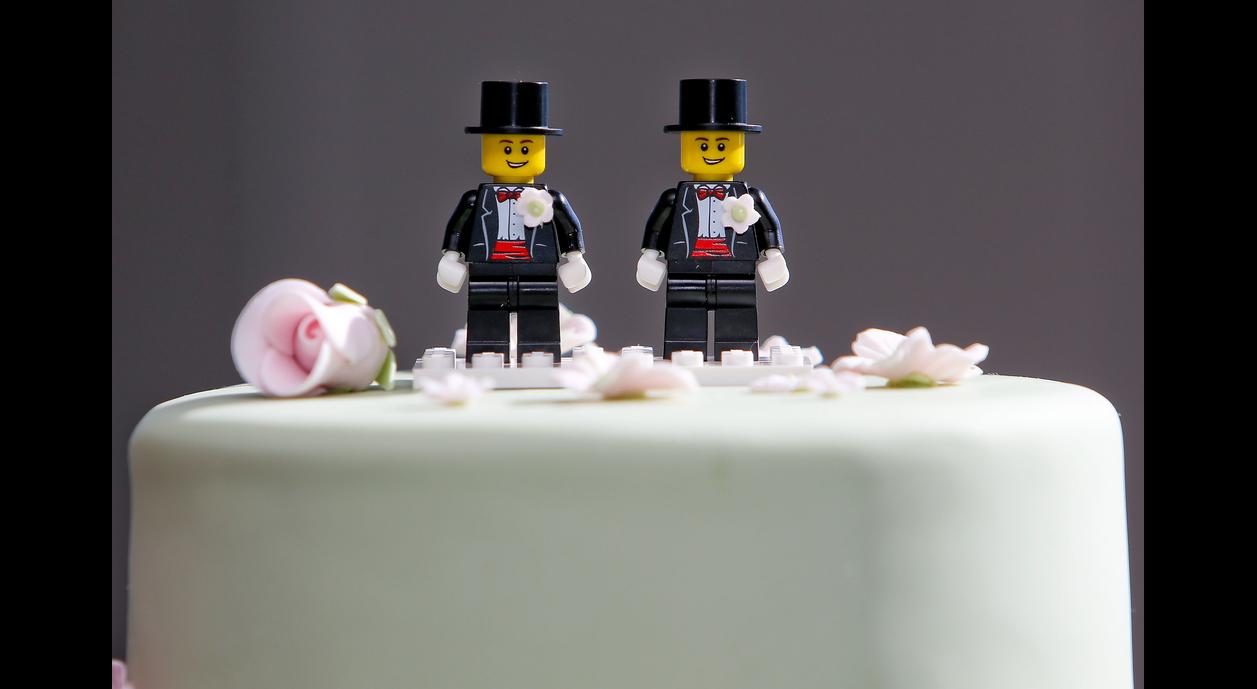
I’m saying that if you read the briefs, the opposing position was based on tradition and majority rule. I’d like to know what rational argument exists for denying the right to marry to same sex couples from a secular standpoint. I understand the religious position and do not care to argue it.
The book “What Is Marriage? Man and Woman: A Defense” by Sherif Girgis, Ryan T. Anderson and Robert P. George presents a full range of arguments in favor of traditional marriage from a secular standpoint. As I understand it, their arguments were presented to SCOTUS prior to the Obergefell decision.
In a nutshell, the book notes that there is one activity that human beings naturally engage in that has the potential to generate children. This act necessarily involves on man and one woman. Meanwhile, the care of children tends to be best when they are able to be raised in a home with their natural parents, who are in a permanent, exclusive relationship with one another. There tend to be differences in how mothers and fathers connect with their kids, and both parental relationships offer important benefits. While clearly there are unhealthy marriages out there, overall, children tend to thrive most in this environment.
Therefore, it is best if that specific act that can produce children occurs in the context of a permanent, exclusive commitment between the couple that will be engaging in that act. That way, if children result, they will enter into the ideal environment in which to be raised.
This means society has a vested interest in promoting the institution of marriage, which is not primarily an emotional relationship, but a permanent, exclusive sexual relationship between a man and a woman. It helps ensure ideal care and stability for the children by promoting the exclusive, permanent relationship between the parents.
Even in the case of infertile couples, there are multiple benefits to the fact that they are practicing sexual intercourse in the context of marriage. For one thing, sometimes they turn out not to be as infertile as originally expected. Trying to determine fertility prior to marriage would involve a significant intrusion by the state. Second, it is often the case that only one of the parties in the couple in question is infertile. If the couple is faithful to their marriage vows, this helps to ensure that one won’t be out fathering children or conceiving them without the other. Also, healthy marriages tend to serve as a role model for other healthy marriages. In many cases, infertile couples provide an ideal adoption environments with both a mother and a father.
There are other people out there who have various emotional attachments to one another, but because these couples are not engaging in the one natural activity that human beings engage in that can result in the conception of children, society simply doesn’t have the same vested interest in those relationships.
The book fleshes this all out more detail than I have time or space to go into here.