
You are using an out of date browser. It may not display this or other websites correctly.
You should upgrade or use an alternative browser.
You should upgrade or use an alternative browser.
- Status
- Not open for further replies.
W
Watcher_144
Guest

(Xinhua, 11/19/09) Belgium Prime Minister Herman Van Rompuy was chosen as EU’s first full-time president at a special summit Thursday night in Brussels.
Born in October 1947 in Brussels, Van Rompuy was educated at the Jesuit Sint-Jan Berchmans College in central Brussels, then studied philosophy and economics at the Catholic University of Leuven.
Before entering politics, Van Rompuy worked at the Belgian central bank from 1972 to 1975. He served as deputy prime minister and minister of budget from 1993 to 1999. He won high reputation for his work on dramatically driving down the country’s pubic debt.
After his party’s defeat in the 1999 Belgian general election, he became a member of the Chamber of Representatives. In 2004, he was designated Minister of State. As a senior member of the Christian Democratic and Flemish (CD&V, previously called CVP), Van Rompuy was elected as the president of the Chamber of Representatives in July 2007. In December 2008, he was appointed prime minister of Belgium, succeeding Yves Leterme.


youtube.com/watch?v=GWnTEHCkjJg

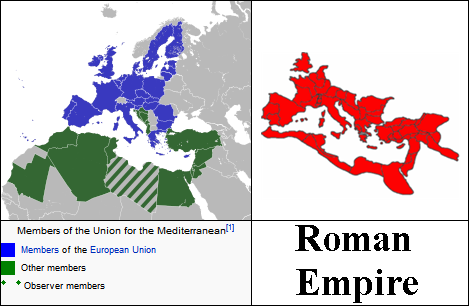


“COINCIDENCES” OF EUROPEAN FLAG
Designer Inspired by Virgin’s Image in Paris’ Rue du Bac
ROME, DEC 7 (ZENIT) - December 8 is a very special day for Europe: in 1955, on that day, the European Ministers’ delegates officially adopted the European flag designed by Arsene Heitz, who today is an octogenarian artist in Strasbourg.
The decision was taken following the 1950 European Council’s (one of the predecessors of today’s European Union) convocation of a competition to design the flag of the newborn European Community. Among many other artists, Heitz presented several designs, and one was chosen: 12 stars on a blue background.
Recently Heitz revealed to a French magazine the reason for his inspiration. At that time he was reading the history of the Blessed Virgin’s apparitions in Paris’ Rue du Bac, known today as the Virgin of the Miraculous Medal. According to the artist, he thought of the 12 stars in a circle on a blue background, exactly the way it is represented in traditional iconography of this image of the Immaculate Conception. In the beginning, Heitz saw it as a flight of fancy, among the many that run through an artist’s imagination; but the idea caught his attention, to the point that it became the subject of his meditation.
According to Javier Paredes, Professor of Contemporary History at the University of Alcala in Spain, in statements sent to ZENIT, “Heitz listens to God in his interior; in other words, he prays with his heart and his head. He says he is profoundly religious and devoted to the Virgin, to whom he never misses praying a daily Rosary, together with his wife. Because of this, he believes the inspiration not only from his artistic talents, but from the silent voices that Heaven always speaks to men of good will, among whom Heitz can undoubtedly be numbered. He is an artist who, virtually at the end of his life and at the zenith of his career, can proclaim with the guarantee of authenticity that he recalls that moment, that he is interested in very few but very important things, that he regards himself as a man who loves the whole world, but especially the Blessed Virgin, who is our Mother.”
Professor Paredes admits that “neither the stars nor the blue of the flag are particularly religious symbols, thus respecting the conscience of all Europeans, regardless of their beliefs.”
Indeed, he recalls that “when Paul M.G. Levy, first director of the Press and Information Service of the European Council had to explain to the Members of the Economic Community the meaning of the design, he interpreted the number of 12 stars as a ‘figure of plentitude,’ given that in the 50s there were not 12 members in that Council, nor in the European Community.”
“However, in Heitz’s soul the words of the Apocalypse were very present: ‘A great sign appeared in the Heavens: a Woman clothed with the sun and with the moon at her feet, and on her head a crown of twelve stars.’ And, perhaps without realizing it, the delegates of the European Ministers officially adopted the design proposed by Heitz on the feast of Our Lady: December 8, 1955,” explained Prof. Paredes. “That’s a lot of coincidences, so henceforth it should not be difficult for us to discover in the folds of the Europeans’ flag the smile and affection of Our Mother, the Queen of Europe, ready to lend a hand in that great challenge that St. Peter’s successor has proposed to us: to re-Christianize the Old Continent with the example of our lives and the testimony of our words.”
B
Brickmaker
Guest
???http://i244.photobucket.com/albums/gg36/Shlichus13/eu13.jpg
http://i244.photobucket.com/albums/gg36/Shlichus13/eu4-1.jpg
http://i244.photobucket.com/albums/gg36/Shlichus13/eu6-1.jpg
youtube.com/watch?v=GWnTEHCkjJg
http://i244.photobucket.com/albums/gg36/Shlichus13/eu5-2.jpg
http://i244.photobucket.com/albums/gg36/Shlichus13/eu3.png
http://i244.photobucket.com/albums/gg36/Shlichus13/eu8-1.jpg
http://i244.photobucket.com/albums/gg36/Shlichus13/eu9.jpg
G
garysibio
Guest
Here’s a link to an article I wrote about him on my blog: bibleandworldtoday.blogspot.com/2009/11/new-president-of-europe.html
L
ljubim
Guest
I am not sure what to think of this guy. He’s been called both a devout Catholic and an abortion advocate. Does anybody know where he stands on abortion??
G
garysibio
Guest
from “Meet the President of Europe”I am not sure what to think of this guy. He’s been called both a devout Catholic and an abortion advocate. Does anybody know where he stands on abortion??
Our paths crossed at intervals until 1990, when the Belgian Parliament voted a very liberal abortion bill. The Belgian King Baudouin (1930-1993), a devout Catholic who suffered from the fact that he and his wife could not have any children, had told friends that he would “rather abdicate than sign the bill.” The Belgian politicians, convinced that the King was bluffing, did not want the Belgian people to know about the King’s objections to the bill. I wrote about this on the op-ed pages of The Wall Street Journal and was subsequently reprimanded by the Belgian newspaper I worked for, following an angry telephone call from the then Belgian Prime Minister, a Christian-Democrat, to my editor, who was this Prime Minister’s former spokesman. I was no longer allowed to write about Belgian affairs for foreign newspapers.
In April 1990, the King did in fact abdicate over the abortion issue, and the Christian-Democrat Party, led by Herman Van Rompuy, who had always prided himself on being a good Catholic, had one of Europe’s most liberal abortion bills signed by the college of ministers, a procedure provided by the Belgian Constitution for situations when there is no King. Then they had the King voted back on the throne the following day. I wrote about the whole affair in a critical follow-up article for The Wall Street Journal and was subsequently fired by my newspaper “for grievous misconduct”. A few weeks later, I met Herman at the wedding of a mutual friend. I approached him for a chat. I could see he felt very uncomfortable. He avoided eye contact and broke off the conversation as soon as he could. We have not spoken since.
G
Gift_from_God
Guest
Oh, this guy. I would never vote for him because he apparently supports abortion. That’s what I heard from LifeSite
lifesitenews.com/ldn/2009/nov/09112308.html
lifesitenews.com/ldn/2009/nov/09112308.html
L
ljubim
Guest
Oh.  I guess that’s to be expected.
I guess that’s to be expected.
W
Watcher_144
Guest
(Haaretz, 12/2/09) The current holder of the rotating European Union presidency, Sweden, has put together a draft document calling for the division of Jerusalem between Israel and a future Palestinian state and implying that the EU would recognize a unilateral Palestinian declaration of statehood.
Haaretz has obtained a copy of the document (below) that has sparked criticism by Israel, which claims that such a move would further harm the chances of renewing the Mideast peace process.
(Please Note: This uploaded content is no longer available.)
(Rome Reports, 12/3/09) Cardinal Foley and others are hoping that a clear international agreement with a recognition of definitive borders be drafted so as to foster peace in this part of the world.
(Jerusalem Post, 12/2/09) Knesset members from across the political spectrum condemned a plan by the European Union that was reported on Tuesday to unilaterally declare Jerusalem as the capital of a Palestinian state.
The plan will reportedly be proposed at a monthly meeting of EU ministers next week in Brussels by Sweden, which holds the rotating presidency of the European Union.
“Jerusalem must never be divided, because it would only enhance the conflict and not solve it,” said Knesset Speaker Reuven Rivlin, whose family has lived in the capital for a century.
“Dividing the capital would create a volcanic eruption that would not be easy to stop. Splitting sovereignty would bring about complete chaos,” he said, adding that Israel had proven that adherents of Judaism, Islam and Christianity could live together in Jerusalem.
E
exoflare
Guest
(Please Note: This uploaded content is no longer available.)
http://www.thegamereviews.com/userfiles/image/paramount.jpg
ZOMG IT’S TEH CONSPIRACY !!!11

Now go back to watching Jack Van Impe.
W
Watcher_144
Guest
(Please Note: This uploaded content is no longer available.)EU Parliament Building:
(Please Note: This uploaded content is no longer available.)
This E.U. poster, known as the construction site poster, showed the Pieter Brueghel painting of the Babylonian
Tower of Babel with cranes resuming its construction where God had once intervened to halt the work.
(Please Note: This uploaded content is no longer available.)
(Please Note: This uploaded content is no longer available.)
(Please Note: This uploaded content is no longer available.)
(Please Note: This uploaded content is no longer available.)
W
Watcher_144
Guest
(Grecian)
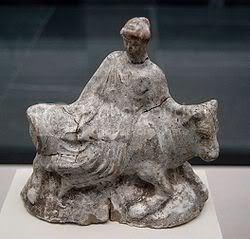
ca. 460bc–480bc
Europa being abducted by Zeus disguised as a bull.
(Babylonian)

ca. 1800bc -1750bc
British Museum: “The figure could be an aspect of the goddess Ishtar, Mesopotamian goddess of sexual love and war, or Ishtar’s sister and rival, the goddess Ereshkigal who ruled over the Underworld, or the demoness Lilitu, known in the Bible as Lilith. The plaque probably stood in a shrine.”
(Egyptian)

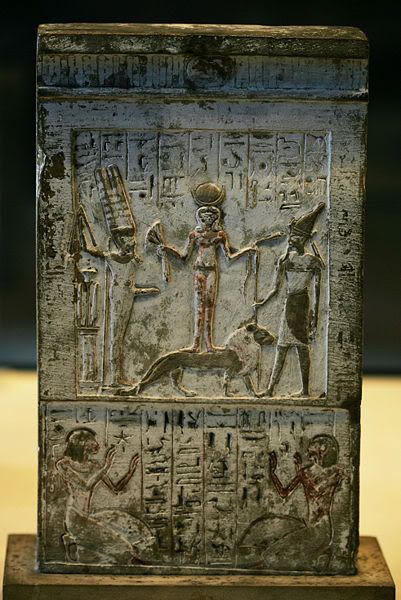
ca. 1300bc-1200bc
**“Despite her status as a fairly unknown deity, Qedeshet is a goddess with a unique genesis and history of development. She is neither a genuine egyptian, nor a genuine near eastern deity, but a result of an assimilation of various elements from both cultures. For this reason I call her a “Transfergottheit”. There are figurative and written sources depicting her, i.e. stelae, papyri, pendants and plaques from Egypt, especially Memphis and Deir el-Medina, and from the Syrian-Palestinian area. Although the goddess can be depicted alone, i.e. without other gods, she often appears with the male gods Min and Reshep. Iconographically the goddess Qedeshet is characterised by some unusual characteristics.
She is depicted anthropomorphic, nude and in most cases her face is shown “en face”. Usually she stands on a lion, holding flowers and serpents. In the triad constellation, the flowers are always orientated towards Min and the serpents always towards Reshep. Through her representation and also by her attributes and the kind of objects, which are dedicated to her, it can be established that she mainly was responsible for two spheres: the general protection (in life and afterlife) and for a special protection concerning the personal erotic sphere and/or love life.”**
-Kristina Lahn Dumke, Tenth International Congress of Egyptologists

(Assyrian)

ca. 800 bc
British Museum: “This is an apotropaic figure of Lamashtu, designed to ward off evil. Although she is usually described in modern works as a ‘demoness’, the writing of her name in cuneiform suggests that in Babylonia and Assyria she was regarded as a kind of goddess. Unlike the majority of demons, who acted only on the commands of the gods, Lamashtu practised evil apparently for its own sake and on her own initiative. There is a cuneiform incantation on the reverse to frighten her away.”
Plaque for protection against the female demon Lamashtu

ca. 934bc-612bc
Louvre Museum: “Intended to be hung over the patient’s bed, this plaque afforded protection from the terrible female demon Lamashtu, who appears on the front. She was believed to cause many illnesses. Her husband Pazuzu, shown on the back, is invoked to persuade her to go away and thus speed the patient’s recovery.”




W
Watcher_144
Guest
(Assyrian)
(Please Note: This uploaded content is no longer available.)
ca. 1000BC
Louvre Museum: “This bronze statuette is one of the finest representations of the figure. The inscription covering the back of the wings describes the demon’s personality:
“I am Pazuzu, son of Hanpa, king of the evil spirits of the air which issues violently from mountains, causing much havoc.””
“Wherein in time past ye walked according to the course of this world, according to the prince of the power of the air,Ephesians 2:2
the spirit that now worketh in the children of disobedience:”
from Dogme et Rituel de la Haute Magie by Eliphas Levi, Master Mason; Translation by A.E. Waite“the Baphomet of Mendes”
(Please Note: This uploaded content is no longer available.)
(Please Note: This uploaded content is no longer available.)The Magician tarot from the Rider-Waite deck displaying the Hermetic concept of “As Above, So Below”
-Emerald Tablet of Hermes Trismegistos;“That which is below is like that which is above that which is above is like that which is below to do the miracles of one only thing.”
Translation by Isaac Newton
E
exoflare
Guest
He’s one of those “Left Behind” type conspiracy nuts. Just ignore him.
W
Watcher_144
Guest
(The Age, 2/3/10) Italian Prime Minister Silvio Berlusconi has called for Israel to be ‘‘brought into the European Union’’, arguing that the western foundations of the EU should be ‘‘us and the Judaeo-Christian cultures’’.
At the beginning of his three-day visit to Israel and the occupied territories, Mr Berlusconi described bringing ‘‘Tel Aviv into Europe’’ as his personal dream and was greeted by feverish newspaper headlines in Israel that urged readers to ‘‘listen to our friend Berlusconi’’.
The Italian leader was accompanied by eight senior cabinet ministers for the high-level trade summit, revealing his commitment to strengthen Italy’s alliance with Israel.
The visit was warm, despite the fact that Italy is one of Iran’s biggest trading partners within the EU.
Israel has campaigned for further sanctions against Iran over its nuclear program.
Speaking to Israeli Prime Minister Benjamin Netanyahu on his arrival on Monday, Mr Berlusconi said his greatest desire was to bring Israel into the European Union.
‘‘Italy and Israel are two close nations and it is important that it is us, with our Judaeo-Christian cultures, who remain the foundation of European Western civilisation,’’ Mr Berlusconi said.
http://www.youtube.com/watch?v=lqovTGjYjM4
http://i244.photobucket.com/albums/gg36/Shlichus13/Farage.png
“I have no doubt that it is your intention to be the quiet assassin
of European democracy and of the European nation states.”
(BBC, 2/25/10) The head of the European parliament has summoned British Eurosceptic MEP Nigel Farage over his tirade against European Council President Herman van Rompuy.
Parliament President Jerzy Buzek is expected to reprimand Mr Farage at the meeting on Tuesday.
The UK Independence Party (UKIP) leader could face a suspension.
W
Watcher_144
Guest
(Please Note: This uploaded content is no longer available.)
(Please Note: This uploaded content is no longer available.)
(Please Note: This uploaded content is no longer available.)
(Please Note: This uploaded content is no longer available.)
(Please Note: This uploaded content is no longer available.)
(Please Note: This uploaded content is no longer available.)
(Please Note: This uploaded content is no longer available.)
(Please Note: This uploaded content is no longer available.)
(Please Note: This uploaded content is no longer available.)
W
Watcher_144
Guest
(Please Note: This uploaded content is no longer available.)
(Please Note: This uploaded content is no longer available.)
(Please Note: This uploaded content is no longer available.)
(Please Note: This uploaded content is no longer available.)
(Please Note: This uploaded content is no longer available.)
http://www.youtube.com/watch?v=OXnhjHtAWK0
i244.photobucket.com/albums/gg36/Shlichus13/hre18.png
(Please Note: This uploaded content is no longer available.)
(Please Note: This uploaded content is no longer available.)
(Please Note: This uploaded content is no longer available.)
(Please Note: This uploaded content is no longer available.)
http://www.youtube.com/watch?v=OXnhjHtAWK0
i244.photobucket.com/albums/gg36/Shlichus13/hre18.png
- Status
- Not open for further replies.