T

You are using an out of date browser. It may not display this or other websites correctly.
You should upgrade or use an alternative browser.
You should upgrade or use an alternative browser.
- Status
- Not open for further replies.
T
Theo520
Guest
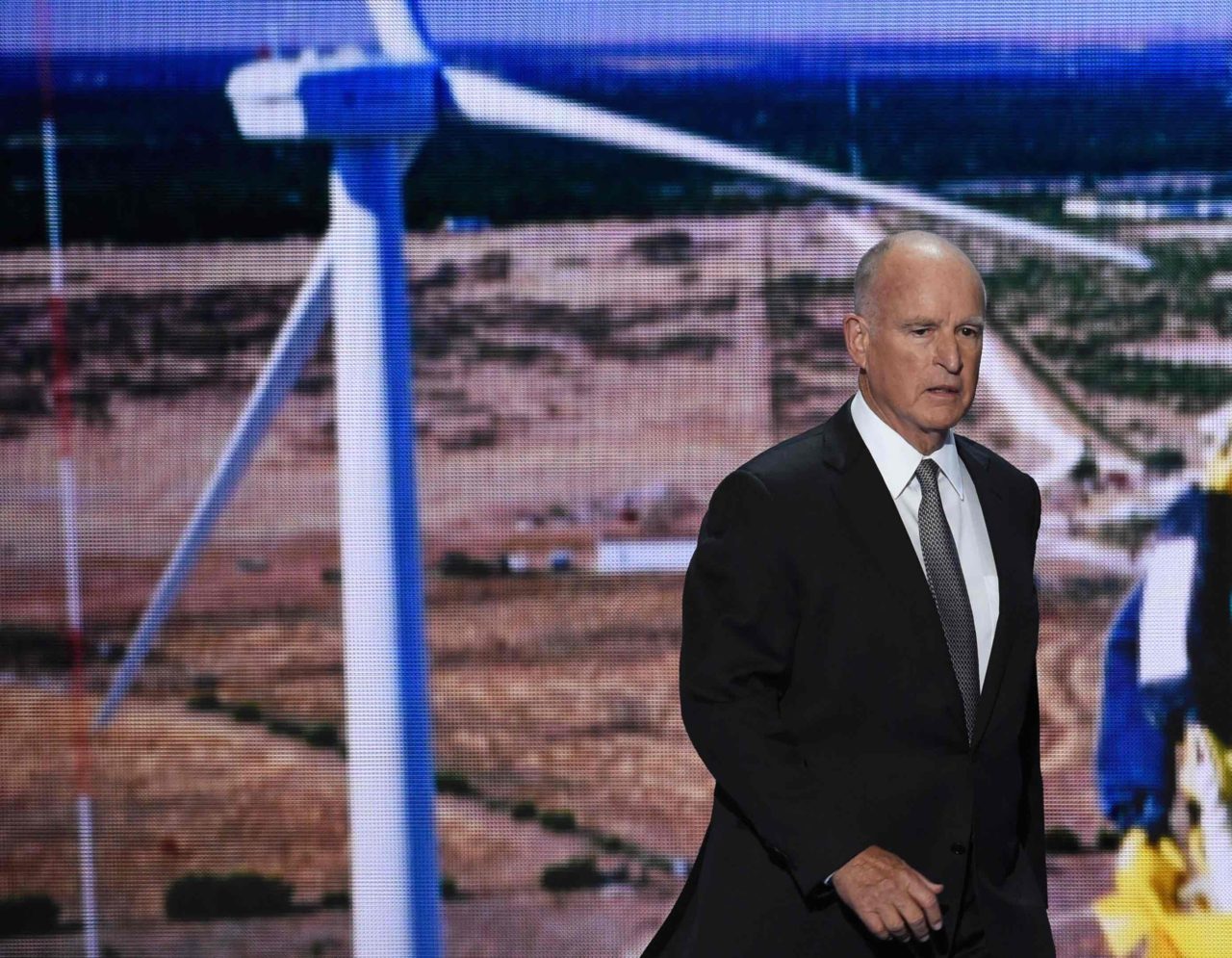
Ontario, Canada, to Dump Jerry Brown’s International Climate Change Pact
Gov. Jerry Brown’s international pact to tackle climate change is on the verge of imploding following the election of a new government in Ontario, Canada.
 www.breitbart.com
Gov. Jerry Brown’s international cap-and-trade pact to tackle climate change is on the verge of imploding following the election earlier this month of a new government in Ontario, Canada, that ran on the promise of dumping the very expensive climate change deal.
E
Ender
Guest
Well to start with, the assertion that the Antarctic ice sheet is melting may (surprise!) not be true at all. The study measured ice volume, but that the volume has decreased does not mean it is due to melting. In fact the authors suggested another cause: calving. That’s why they refer to the significance of the loss of “regional floating-ice shelves, which can provide a buffer to continental-ice sheets.”
It’s also useful to point to this comment:
This region [East Antarctica] has grown by an average of around 5 billion tons per year over the 25-year period, although margins of error could put that figure into the negative.
So, the margin of error is so great in their calculations they can’t even be certain whether an entire region of the Antarctic is gaining or losing ice? OK, there may be something here…although margins of error being what they are it’s a bit too soon to sell the beach condo.

LeafByNiggle
Well-known member
Does calving have a significantly different effect on the world than melting?LeafByNiggle:
Well to start with, the assertion that the Antarctic ice sheet is melting may (surprise!) not be true at all. The study measured ice volume, but that the volume has decreased does not mean it is due to melting. In fact the authors suggested another cause: calving. That’s why they refer to the significance of the loss of “regional floating-ice shelves, which can provide a buffer to continental-ice sheets.”
I don’t know where that comment came from or who made it or whether it actually implies what you say in its proper context.It’s also useful to point to this comment:
This region [East Antarctica] has grown by an average of around 5 billion tons per year over the 25-year period, although margins of error could put that figure into the negative.
So, the margin of error is so great in their calculations they can’t even be certain whether an entire region of the Antarctic is gaining or losing ice? OK, there may be something here…although margins of error being what they are it’s a bit too soon to sell the beach condo.
E
Ender
Guest
No. It does, however, convey a very different perspective on the cause. When people read “melting” the natural assumption (and surely the one intended by the writer) is that the cause is global warming. When we see “calving”, however it suggests a wide variety of possible causes. Given that the authors appear to implicate calving rather than melting it seems reasonable to assume the latter term was chosen not because it is accurate but only because it is suggestive.Does calving have a significantly different effect on the world than melting?
It’s in your own citation, so if you’re suspicious of the article it came from then it’s appropriate for the rest of us to feel the same.I don’t know where that comment came from or who made it or whether it actually implies what you say in its proper context.
LeafByNiggle
Well-known member
So your complaint here is over the choice of the words used in the headline. Fine. I get it. Perhaps the writer at MercoPress had a bias he wanted to express. I do not defend every headline decision made by the media.LeafByNiggle:
No. It does, however, convey a very different perspective on the cause. When people read “melting” the natural assumption (and surely the one intended by the writer) is that the cause is global warming. When we see “calving”, however it suggests a wide variety of possible causes.Does calving have a significantly different effect on the world than melting?
I referenced the article in the first place not support my point from the headline but from the data contained in the article.
I see it now. I was doing an exact text search including your [East Antarctica] qualifier. That’s why I didn’t find it before. Let’s look at the context:It’s in your own citation, so if you’re suspicious of the article it came from then it’s appropriate for the rest of us to feel the same.I don’t know where that comment came from or who made it or whether it actually implies what you say in its proper context.
So we have West Antarctica losing 160 billion tonnes per year and East Antarctica gaining a mere 5 billion tonnes per year. And course you are most concerned with the fact that the margin of error of the 5 billion tonnes is more than 5 billion tonnes. That margin of error is no threat to the 160 billion tonne measurement for West Antarctica. So the conclusion that Antarctica as a whole is losing ice faster than expected still stands.West Antarctica contributed the most ice loss from the continent, shedding nearly 160 billion tonnes each year since 2012. Although the general trend was of reduction, there was some increase in ice cover in East Antarctica.
This region has grown by an average of around 5 billion tons per year over the 25-year period, although margins of error could put that figure into the negative.
Last edited:
T
Theo520
Guest
I think the west antarctic lost sea ice while the east gained modest land ice, that difference is highly relevant.
E
Ender
Guest
Yes, he clearly did, and this is the level of reporting that we have to deal with. You cited the article, you live with the bias. Here, by the way, is another example of the bias:So your complaint here is over the choice of the words used in the headline. Fine. I get it. Perhaps the writer at MercoPress had a bias he wanted to express.
An international team of polar scientists found that melting in Antarctica has jumped sharply from an average of 76 billion tons per year prior to 2012, to around 219 billion tones each year between 2012 and 2017.
Well here’s what one of those polar scientists (Andrew Shepherd) said about that:
We’re pretty sure that some of the revised estimate of ice loss is due to better technology allowing us to detect ice losses in places that just weren’t seen before. But we also know that in West Antarctica in particular, the rate of ice thinning has continued to rise.
But attributing “some” (a not particularly scientific term) of the measured rise in ice loss to better technology is just not as useful as suggesting it is all due to some scary change in the climate.
cont…
E
Ender
Guest
cont…
What appears to be happening is that a warm water current has moved closer to the ice and is causing the accelerated ice loss…which is in fact melting, just from water, not air.
So the burning question in oceanography is “What’s caused the warm ocean current to move into that part of West Antarctica?”
The impression given is that this ice loss is new, increasing, and (implicitly) the fault of global warming. It just ain’t necessarily so…
…research indicates that in previous interglacials, the West Antarctic Ice Sheet collapsed over period as short as a few centuries. That would have added up to five metres of sea level rise to the world’s oceans in a relatively short period. Such rapid sea level rise – at rates upwards of 50 centimetre per century…
So, the West Antarctic ice sheet has collapsed before, which would be a real problem, but it’s not a problem we can effectively deal with if we don’t correctly identify the cause. And what the actual scientists said in no way supports the author’s conclusion:
“But the good news is that a reduction in emissions in line with the aspirations of the Paris Climate Agreement dramatically reduces the risk of flooding our coastlines in future decades and centuries.”
That’s just drivel, and utterly unsupported by any science at all.
If in fact the margin of measurement error is a fixed 5 billion tonnes that would be true. If, however, the error is a percent of the whole then it is not true. Beyond that, the science is actually very different from what is conveyed by the article.So we have West Antarctica losing 160 billion tonnes per year and East Antarctica gaining a mere 5 billion tonnes per year. And course you are most concerned with the fact that the margin of error of the 5 billion tonnes is more than 5 billion tonnes. That margin of error is no threat to the 160 billion tonne measurement for West Antarctica. So the conclusion that Antarctica as a whole is losing ice faster than expected still stands.
What appears to be happening is that a warm water current has moved closer to the ice and is causing the accelerated ice loss…which is in fact melting, just from water, not air.
So the burning question in oceanography is “What’s caused the warm ocean current to move into that part of West Antarctica?”
The impression given is that this ice loss is new, increasing, and (implicitly) the fault of global warming. It just ain’t necessarily so…
…research indicates that in previous interglacials, the West Antarctic Ice Sheet collapsed over period as short as a few centuries. That would have added up to five metres of sea level rise to the world’s oceans in a relatively short period. Such rapid sea level rise – at rates upwards of 50 centimetre per century…
So, the West Antarctic ice sheet has collapsed before, which would be a real problem, but it’s not a problem we can effectively deal with if we don’t correctly identify the cause. And what the actual scientists said in no way supports the author’s conclusion:
“But the good news is that a reduction in emissions in line with the aspirations of the Paris Climate Agreement dramatically reduces the risk of flooding our coastlines in future decades and centuries.”
That’s just drivel, and utterly unsupported by any science at all.
LeafByNiggle
Well-known member
I know what you are referring to, and you are right. Ice that is floating does not change the sea level when it melts, but ice that is on the land does. But there are two consequences to consider when floating ice melts.I think the west antarctic lost sea ice while the east gained modest land ice, that difference is highly relevant.
One is that after the ice melts and it added to the ocean as a whole, the temperature of that body of former ice warms. As it warms it expands, causing a slight rise in sea level.
But more important is the second point. Floating ice that is connected to the mainland of Antarctica acts as a block to slow the progress of glaciers that come from the land. When floating ice breaks away, the glaciers do speed up and the rate of loss of land ice increases.
T
Theo520
Guest
Found this quote highly relevant to criticism of the field of Cimate Change
Today’s scientists have substituted mathematics for experiments,
and they wander off through equation after equation,
and eventually build a structure which has no relation to reality.
Nikola Tesla
E
Ender
Guest
Although one would not automatically assume a connection between the newest Supreme Court nomination (Bret Kavanaugh) and climate change, there is reason for optimism in that regard based on past opinions. In his opinion overturning an EPA rule to regulate hydroflurocarbons on the basis of climate, Kavanaugh wrote (Mexichem Fluor, Inc v EPA, 2017)
However, EPA’s authority to regulate ozone-depleting substances under Section 612 and other statutes does not give EPA authority to order the replacement of substances that are not ozone depleting but that contribute to climate change. Congress has not yet enacted general climate change legislation. Although we understand and respect EPA’s overarching effort to fill that legislative void and regulate HFCs, EPA may act only as authorized by Congress.
Well now, it’s a comforting thought that bureaucracies - especially the EPA - are restricted to act only as authorized by Congress.
- Status
- Not open for further replies.