Constantine

  • Thread starter Thread starter OneTrueCathApos
  • Start date Start date
Status
Not open for further replies.
Why do non-Catholic Christians and others believe Constantine created the Catholic faith? Just thought I’d bring this up since I was having my coffee with friends who have said this…bizarre…:confused:
Just a slight correction. That would be Saint Constantine. 👍

They might say that out of ignorance and the fact that St. Constantine called the Council of Nicaea which clarified doctrine.🙂

In Christ,
Andrew
 
You know, some Protestants have nutty notions about the Catholic Church. This post proves they are not to be outdone. Are you really under the impression that this is what all Protestants believe? :rolleyes:

Christ started the Church - at Pentecost. Not Peter. Not Andrew. Not Luther. Not Calvin. Christ did. And true Catholics are not idol worshippers, or sun god worshippers. They are Christians.
And Protestants aren’t all “prideful, and arrogant, and out protesting”. They’re Christians, too, trying to worship as they believe proper.

Jon

Ah, but the answer to that is, that the very fact of not “coming home” to the “True Church” PROVES that Protestants must be all those bad things. 😦

Needless to say, people who reason in that way never apply their reasoning to their own religious positions. That is the fallacy of “poisoning the wells” - This form of it makes a reasoned defence of Protestantism impossible, by disqualifying the use of reason by Protestants in advance. So if people are Protestants, they can, by that “argument”, not possibly have good reasons to be Protestants; so their reasons must really be excuses for selfishness, pride or lust; which of course means that Catholics have even more reasons to be anti-Protestant. 😦

This kind of unreason is typical of Fundamentalism - Protestant and Catholic. It’s toxic, because it destroys the possibility of treating other people’s convictions with respect. So some Protestants & non-denominationalists, on their side, argue that RCs are “judicially blinded” so as to be idolaters & satanists; so, once more, no reasoned defence is possible: every denial can be countered as a lie of satan, who has deluded those reprobate Pope-worshippers. 😦

That attitude is not dead, unfortunately. As is clear, it makes possible the most disgraceful accusations, & makes disproving them impossible 😦 That is how powerful the fallacy of “poisoning the wells” can be. Needless to say, love either is trampled underfoot, or, is redefined, so that refusal to listen to others becomes a great virtue; even a duty required by God.

This has everything to do with the thread - for the events of Constantine’s reign are not difficult to interpret as an ossification of Christian feeling within a sectarian society. The result - only in the Church is there charity; heretics & schismatics (who were not really differentiated at that time) can, by definition, not have charity. But whatever the Church does, becomes charitable: including its policing of the various sects. One can go further, & suggest that it fell for one of the Temptations, & made a devil’s bargain so as to gain power in this world at the cost of its soul. This can be seen as a critical
point in a long process of accommodation to the world, resulting from the difficulties of moving from being a Jewish apocalyptic sect living in hope of an imminent Second Coming, to being a largely Gentile religion on earth for the long haul. The first Christians had a very strong sense of the ending of “life as we know it” by the coming of the Kingship of God; as the NT makes abundantly clear; by 300 if not earlier, this has been lost, or transformed beyond recognition. The difference between its immense importance in the NT & its later eclipse requires explanation.

This is not very flattering to the Church - but whether it is or not, is beside the point; which is, that the reign of Constantine does seem be of critical importance for the life of the Church in the Roman Empire, & to have been a Very Bad Thing for it in some extremely important ways. Maybe those who speak much of Constantine are sensing, however inadequately, the difference between the NT Church & the Church under Constantine.

 
Might I correct? Constantine did NOT legalize Christianity so to speak. He did, but, only for the Roman territories. Armenia and Ethiopia (both, note, are Apostolic), both made it their state religion in 301 A.D. Constantine basically decriminalized Christianity. I don’t think he made it the official state religion, but, he basically said if one is a Christian, they are free to believe it. Please, PLEASE correct this if I am wrong.

And, of COURSE Constantine became Christian! The Orthodox have a saints day for him! And St. Helen!
This is a great post!

It is so refreshing to see the facts presented so even-handedly 🙂

I was not aware that Ethiopia and Armenia adopted the Faith in the same year, that is something that intrigues me :hmmm:, it’s worth a look-see.
 
I have come to the conclusion that ‘Protestants’ believe the opposite of Catholics! No matter what the opposite!! Infant Baptism, Communion, Confession, etc ., all of our beliefs, praying, worshiping, even what we have IN the churches. It seems like there is no way of changing their minds sometimes, even when we can prove something they have it embedded in their minds the opposite. Sorry if this seems so negative but I have this friend-------- & she has run me down with trying to explain things & I know the whole time I 'm expaining something she is just thinking of something else to throw at me!!!
 
Constantine basically decriminalized Christianity. I don’t think he made it the official state religion, but, he basically said if one is a Christian, they are free to believe it. Please, PLEASE correct this if I am wrong.
You are 100% right. Theodosius made Christianity and esp. the Catholic faith state religon in 380.
That Christianity equals Catholic back then (ok, for you Catholics now as well) - and not Arianism or other “heresies” was established on the Nicean council 325, and Constanine invited to that one. Therefore, under Constantine’s reign of all early forms of Christianity the Catholic faith was chosen to be the true one (no, I won’t discuss whether it’s the earliest, the orignal or not, for I don’t care at all). So in a sense Constanine established the Catholic Church as the only representative for Christianity in the Roman Empire. Founding means something different. But he surely played an important part.
 
You are 100% right. Theodosius made Christianity and esp. the Catholic faith state religon in 380.
That Christianity equals Catholic back then (ok, for you Catholics now as well) - and not Arianism or other “heresies” was established on the Nicean council 325, and Constanine invited to that one. Therefore, under Constantine’s reign of all early forms of Christianity the Catholic faith was chosen to be the true one (no, I won’t discuss whether it’s the earliest, the orignal or not, for I don’t care at all). So in a sense Constanine established the Catholic Church as the only representative for Christianity in the Roman Empire. Founding means something different. But he surely played an important part.
The substance of your post is correct, however I need to make a few clarifications.

Constantine called the council of Nicea, just like he called the council of Arles in the west years before, because he felt that the church could help his foundation of a stable dynastic rule over the empire. He was actually right, it helped a lot.

Constantine did not pick and choose the doctrine of the church, the assembled bishops did that, he just wanted a consensus among them moving forward.

What they (the bishops) actually decided was something essentially Orthodox, not some thing like modern Latin Catholicism (which had much development ahead of it), and even less like modern Protestantism. Catholics get a bad wrap for Constantine among Protestants (and perhaps Jews as well) but in fact what emerged dominant out of that council was Holy Orthodoxy.

Orthodox know that Constantine was a work in progress, his personal life fell short (very short). He did not actually submit to a baptism until close to the end of his days (and that by a bishop with Arian sympathies :eek: ). But his conversion was genuine, that is clear.
 
I have come to the conclusion that ‘Protestants’ believe the opposite of Catholics! No matter what the opposite!! Infant Baptism, Communion, Confession, etc ., all of our beliefs, praying, worshiping, even what we have IN the churches. It seems like there is no way of changing their minds sometimes, even when we can prove something they have it embedded in their minds the opposite. Sorry if this seems so negative but I have this friend-------- & she has run me down with trying to explain things & I know the whole time I 'm expaining something she is just thinking of something else to throw at me!!!
I am sorry that your friend (?) treats you this way, but I am happy that you included it, as it clarifies for me why you might feel this way.

While you are right that there are (some) Protestants who seem this way, to say even they believe the opposite is an overstatement. Remember, all of us preach Christ crucified. Most all of us either use the creeds as statements of faith, or essentially believe what they say. While this is no where near full communion, it clearly is significant, and not opposite. And we should always be mindful of this link we have as Christians when we talk, and particularly when we disagree. IOW, how does Christ expect us to treat each other?

While the specific teachings may vary some, there are a significant number of Protestants who baptize infants, believe in the real presence, and have confession and absolution. Many of us have crucifixes, altars, baptismal founts, and some even have confessionals.

I will finish by sayng that honest Protestants will readily admit that we, as western Christians, owe much to the Catholic Church, and to the pre-schism Church. Others that won’t should read a little Church history.

Jon
 
Perhaps some here do not know the history of Constantine.
In the year 312, the night before the Battle of the Milvian Bridge, Constantine was commanded in a dream to place the sign of Christ on the shield of his soldiers. When Constantine and his army were on their march toward Rome, they observed a strange phenomonem in the sky. A cross of light and the words:
**“By this sign you will be victor” **Christ appeared to Constantine and instructed him to place the heavenly sign on the Battle standards of his army.
Whatever Constantine may have experienced, he attributed his victory to the power of “the God of the Christians” and committed himself to the Christian faith from that day on. 🙂
 
The substance of your post is correct, however I need to make a few clarifications.

Constantine called the council of Nicea, just like he called the council of Arles in the west years before, because he felt that the church could help his foundation of a stable dynastic rule over the empire. He was actually right, it helped a lot.

Constantine did not pick and choose the doctrine of the church, the assembled bishops did that, he just wanted a consensus among them moving forward.

What they (the bishops) actually decided was something essentially Orthodox, not some thing like modern Latin Catholicism (which had much development ahead of it), and even less like modern Protestantism. Catholics get a bad wrap for Constantine among Protestants (and perhaps Jews as well) but in fact what emerged dominant out of that council was Holy Orthodoxy.

Orthodox know that Constantine was a work in progress, his personal life fell short (very short). He did not actually submit to a baptism until close to the end of his days (and that by a bishop with Arian sympathies :eek: ). But his conversion was genuine, that is clear.
In those days, Baptism was given at a much later time.
 
Why do non-Catholic Christians and others believe Constantine created the Catholic faith? Just thought I’d bring this up since I was having my coffee with friends who have said this…bizarre…:confused:
Because they are ignorant of history. This is what they believe.

They believe Constantine founded the Church and made the Catholicism the official state religion. Both are incorrect.

The term Catholic Church was first used by St. Ignatius of Antioch in 110 AD in one of his Epistles. “Where there is Jesus Christ is, there is also the Catholic Church.” Constantine lived in 300 AD. Ignatius live much earlier. So the belief that Constantine founded the Catholic Church is false.

Constantine did two things, he issued the Eddict of Milan which ended Christian persecution in 312 AD, and form a Ecumenical Council in 325 AD to help settle a dispute of Arianism. Constantine did not made Christianity the official state relgion. It was Emperor Theodorius I in 381 AD who made Christianity the official religion of the Empire. As a result of that, the pagans were persecuted. This upset the bishops because they wanted non-Christians to be treated as neighbors.
 
In those days, Baptism was given at a much later time.
Well, that’s partly true. You’re thinkg of the idea that you’d go straight to Heaven if you were baptized on your deathbed, hence why St. Constantine had it done then. He was certainly a staunch defender of the faith. That idea wasn’t very widespread, but it was practiced.

But the authentic practice was to baptize infants and “entire households” as in the Book of Acts upon conversion. 🙂 I would not want to wait until my deathbed for baptism.:nope:

In Christ,
Andrew
 
Might I correct? Constantine did NOT legalize Christianity so to speak. He did, but, only for the Roman territories. Armenia and Ethiopia (both, note, are Apostolic), both made it their state religion in 301 A.D. Constantine basically decriminalized Christianity. I don’t think he made it the official state religion, but, he basically said if one is a Christian, they are free to believe it. Please, PLEASE correct this if I am wrong.

And, of COURSE Constantine became Christian! The Orthodox have a saints day for him! And St. Helen!

He gave it favoured status - but it was not made the faith of the Empire formally until 382, in its Catholic - i.e., not Arian - form. Maybe it’s worth mentioning that one of the reasons for the persecution of Christians in Persia in 341-2 was, that they were seen as “unreliable elements” who might take Rome’s side in its wars with Persia.​

Strange, how people overlook the Churches that were not in the Empire - like the Church in Babylonia 🙂 And Nubia & Georgia & Arabia.
 
Well, that’s partly true. You’re thinkg of the idea that you’d go straight to Heaven if you were baptized on your deathbed, hence why St. Constantine had it done then. He was certainly a staunch defender of the faith. That idea wasn’t very widespread, but it was practiced.

But the authentic practice was to baptize infants and “entire households” as in the Book of Acts upon conversion. 🙂 I would not want to wait until my deathbed for baptism.:nope:

In Christ,
Andrew
** It would be a mistake to interpret this as a lack of sincerity or commitment. In the 4th and 5th centuries, Christians often delayed their Baptisms until late in life.**
 

He gave it favoured status - but it was not made the faith of the Empire formally until 382, in its Catholic - i.e., not Arian - form. Maybe it’s worth mentioning that one of the reasons for the persecution of Christians in Persia in 341-2 was, that they were seen as “unreliable elements” who might take Rome’s side in its wars with Persia.​

Strange, how people overlook the Churches that were not in the Empire - like the Church in Babylonia 🙂 And Nubia & Georgia & Arabia.
Excellent post!

A great contribution.
 
Well, that’s partly true. You’re thinkg of the idea that you’d go straight to Heaven if you were baptized on your deathbed, hence why St. Constantine had it done then. He was certainly a staunch defender of the faith. That idea wasn’t very widespread, but it was practiced.

But the authentic practice was to baptize infants and “entire households” as in the Book of Acts upon conversion. 🙂 I would not want to wait until my deathbed for baptism.:nope:

In Christ,
Andrew
My personal belief is that St. Constantine likely felt some conflict within himself about what to do. I believe he took the sacrament of baptism VERY seriously but he also understood that he was an emperor, an occupation which often requires less than savory decisions for a man of ethics. Many of the Roman Christians up to that time simply dropped out or the political and military life upon their conversion. That was not an option for St. Constantine. Indeed the act of his conversion was linked to his ascendancy.

In my opinion I think St. Constantine held off on baptism because he probably felt that if he did it while actively taking to role of emperor. He would be putting his soul in danger. We have to remember that St. Constantine was a first, no one with his level of military, political and economic power had converted. This man ruled the western world and a good portion of the east. I’m not sure anyone understood the implications when he converted.

In addition it is my opinion that God did indeed want the ascendancy of Constantine. The Church had grown to large to letters amongst isolated bishops to keep the Faith orthodox. St. Constantine created the atmosphere which allowed ecumenical councils to form again, and preserve the Faith. But I digress. I just wanted to pipe in because I’ve always revered the emperor who I feel is rightly called the Great.
 
It was a dangerous time.

The empire had been through coups and wars, very short dynasties and treacheries. There were any number of young generals who might seize upon a good excuse to make a bid for the throne.

This was probably one of the few emperors in centuries who personally denied a divine status for himself. By this time the emperors had been the chief priests of the city for centuries, responsible for the cult of the Roman deities with many formal ceremonial duties.

Repudiating all of those traditional roles, and having to keep the ambitious from successfully plotting against him, must have been a daunting task. I imagine it was like doing a log-roll.
[IMG ]http://www.starinfo.com/images/roll-b-r.jpg[/IMG]

That is one reason why he had to build a new capital city. There were temples everywhere, the old priestly cults had strong followings in Rome (which he basically repudiated), and the mob would always be a danger.

Christianity was not numerous enough to actually dominate the whole empire. It had to be a coalition of moderate pagans, agnostics and Christians all loyal to the emperor. Everyone could see that the Christian church was in royal favor over any other cult, and it led to an explosion of interest in the church, although for some it was nothing but naked ambition. The level of sincerity and commitment to Jesus Christ was uneven, as it still is today.

This rapid change in the complexion of the Christian community did not go unnoticed by the traditional Christians. Many abandoned the cities in search of a more pure holy Christian environment, this gave rise to the monastic era and left us the writings of many desert Fathers.


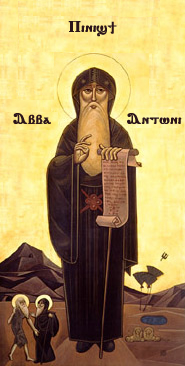
Saint Anthony of the Desert
Code:
 Chastise your soul with the thought of death, and through remembrance of Jesus Christ concentrate your scattered intellect.
St. Philotheos of Sinai

Do not be surprised that you fall every day; do not give up, but stand your ground courageously. And assuredly, the angel who guards you will honour your patience.
St. John of the Ladder
Code:
  It is by warfare that the soul makes progress.
Abba John the Short
Code:
 We should zealously cultivate watchfulness, my brethren; and when, our mind purified in Christ Jesus, we are exalted by the vision it confers, we should review our sins and our former life, so that shattered and humbled at the thought of them we may never lose the help of Jesus Christ our God in the invisible battle.
St. Hesychios the Presbyter

Our holy fathers have renounced all other spiritual work and concentrated wholly on this one doing, that is, on guarding the heart, convinced that, through this practice, they would easily attain every other virtue, whereas without it not a single virtue can be firmly established.
St. Symeon the New Theologian
Code:
 Even if we have thousands of acts of great virtue to our credit, our confidence in being heard must be based on God's mercy and His love for men. Even if we stand at the very summit of virtue, it is by mercy that we shall be saved.
St. John Chrysostom
 
Was Constantine really all that bad? I came across a site about his Mom (S. Elena), but it also mentions some good things he did (here: mexconnect.com/articles/1422-santa-elena-discoverer-of-the-holy-cross). Of course he was a sinner, but I don’t think people realize how much good he did & what some of his beliefs really were. People don’t seem to be sure when infant baptism started, but some say before Constantine’s time & some say getting baptized when grown like Constantine was still the norm…
 
Was Constantine really all that bad? I came across a site about his Mom (S. Elena), but it also mentions some good things he did (here: mexconnect.com/articles/1422-santa-elena-discoverer-of-the-holy-cross). Of course he was a sinner, but I don’t think people realize how much good he did & what some of his beliefs really were. People don’t seem to be sure when infant baptism started, but some say before Constantine’s time & some say getting baptized when grown like Constantine was still the norm…
I don’t think anyone said he was bad.

And if you’re a Catholic your Church teaches (as does mine) that infant baptism has been practiced since the very beginning.
 
I don’t think anyone said he was bad.

And if you’re a Catholic your Church teaches (as does mine) that infant baptism has been practiced since the very beginning.
I don’t remember if anyone on this thread really said that he was bad, but what I meant was that some people out there think bad of him & I’m sure he did some bad things in his (only human, right?). Well you know what I mean, but thanks.
 
Status
Not open for further replies.
Back
Top