
You are using an out of date browser. It may not display this or other websites correctly.
You should upgrade or use an alternative browser.
You should upgrade or use an alternative browser.
- Status
- Not open for further replies.
I think the following post helps us to understand the question better.have always understood — and that doesn’t mean I’ve been right — that something very similar to kosher-for-Passover matzoh was used at the Last Supper. I know what the Eastern Christians say about leavened bread representing the leaven that is Christ, but I’ve never understood how this wasn’t an illicit departure from the original matter for the Eucharist. I accept it on faith, and I’m not saying their Eucharist is invalid — it certainly is valid — I’ve just never understood how it was “okay” for them to introduce this.
Exactly, I have heard it debated in the past whether or not leavened or unleavened bread was used at the last supper, supposing that the last supper may not have actually been a Passover meal, but a meal celebrated in preparation of Passover.In this thread is it presumed that the Last Supper was a Passover meal, in agreement with the Synoptic Gospels, but apparently not with John’s Gospel?
Gospel of John very well does allude to this:
John 18:28-29
28 Then led they Jesus from Caiaphas unto the hall of judgment: and it was early; and they themselves went not into the judgment hall, lest they should be defiled; but that they might eat the passover.
29 Pilate then went out unto them, and said, What accusation bring ye against this man?“
As we can see the Jews did not want to enter the judgment hall, for fear of being made unclean to celebrate the Passover meal, this indicates that Passover had not yet arrived.
The fact is that leavened or unleavened bread may have been used, in the end both are allowed (depending on Rite) with very good reason.
Last edited:
B
BartholomewB
Guest
They can’t both be right. It’s one or the other. On balance, I think the evidence tends to favor the Synoptic view. In John’s account of the supper, there are several clues that he is, in fact, describing a Passover meal, despite what he said earlier about the timing.In this thread is it presumed that the Last Supper was a Passover meal, in agreement with the Synoptic Gospels, but apparently not with John’s Gospel?
Actually the Synoptic Gospel’s dont clearly state weather the last supper is 100% definitively a Passover meal, only that they prepared the upper room for the Passover.They can’t both be right. It’s one or the other. On balance, I think the evidence tends to favor the Synoptic view. In John’s account of the supper, there are several clues that he is, in fact, describing a Passover meal, despite what he said earlier about the timing.
This allows for the view that the last supper may have been a meal being shared whilst preparing for the Passover.
John’s Gospel account referencing the approaching Passover isn’t before the last supper, as you suggest, but after the last supper at the start of Our Lord’s Passion, when they take Our Lord to be judged before Pilot, please see my previous post quoting the gospel of John.
Last edited:
B
BartholomewB
Guest
See Jesus’ words in Luke 22:15:Actually the Synoptic Gospel’s dont clearly state weather the last supper is 100% definitively a Passover meal, only that they prepared the upper room for the Passover.
This allows for the view that the last supper may have been a meal being shared whilst preparing for the Passover.

Luke 22:14-16 RSVCE - - Bible Gateway
Yes, thank you for the correction.John’s Gospel account referencing the approaching Passover isn’t before the last supper, as you suggest, but after the last supper at the start of Our Lord’s Passion, when they take Our Lord to be judged before Pilot,
Last edited:
Yes, let’s look shall we?See Jesus’ words in Luke 22:15:
Your link wasn’t working, so take a look here:
Luke 22:14-16 NRSVCE - - Bible Gateway
*Edit, my link is same as yours and isn’t working on iPhone,

Here is the words of the text:
Luke 22:14-16 New Revised Standard Version Catholic Edition (NRSVCE)
14 When the hour came, he took his place at the table, and the apostles with him. 15 He said to them, “I have eagerly desired to eat this Passover with you before I suffer; 16 for I tell you, I will not eat it until it is fulfilled in the kingdom of God.”Yes Jesus says that He has: “eagerly desired to eat this Passover with you before I suffer”,
But if we look at verse 16 He says: “for I tell you, I will not eat it until it is fulfilled in the kingdom of God.”
The way this is worded, it is somewhat ambiguous, no?
I mean, sure He talks about desiring to eat “this Passover”, but, for example I know in the past I’ve looked at my wife and said “I’m so excited to eat this Thanksgiving with all of our family”, and I said it the Sunday before Thanksgiving, In excitement for the approaching holiday.
But in verse 16 He is pretty clear when He says “for I tell you, I will not eat it until it is fulfilled in the kingdom of God.”
He doesn’t say “I will not eat it again…”, He says “I will not eat it…”
Furthermore the Gospel of John seems pretty clear that the Passover was approaching, during the Passion of Our Lord:
John 18:28-29
28 Then led they Jesus from Caiaphas unto the hall of judgment: and it was early; and they themselves went not into the judgment hall, lest they should be defiled; but that they might eat the passover.
29 Pilate then went out unto them, and said, What accusation bring ye against this man?“
Considering how crystal clear the Gospel of John is, I think it is reasonable to say that both beliefs are acceptable, hence why I said earlier:
Peace brother.The fact is that leavened or unleavened bread may have been used, in the end both are allowed (depending on Rite) with very good reason.

Last edited:
O
otjm
Guest
So is there anything in Jewish Law at the time which says that both cannot be true?
To wit: assuming for the moment (and I do not intend to cast doubt) that “eat” Is not an exact translation what happened?
To wit: assuming for the moment (and I do not intend to cast doubt) that “eat” Is not an exact translation what happened?
- Could there have been a Passover Meal which preceded the exact date of the Jewish Passover - as in any specific rule? If so, could Christ, in His authority, celebrate it in a bifurcated manner, starting the day before the official Passover, and completing it on the next day? There are four cups of wine in the Passover meal. It has been said that He did not drink form the 4th cup, but that His last statement on the Cross - “I thirst” references His death as the 4th cup. And that would consist of the ending of the Passover meal, and the commencement of the New Covenant.
IMHO, the best way to harmonize the Gospel Of John’s account of the last supper with the Synoptic Gospel’s account, is as I’ve shown in my previous post, to assume that the last supper was a meal that was had during the preparations for the approaching holiday.So there seem to be two choices with the “conflicting” Gospel accounts;
The timeline John presents is that the last supper took place on what we would call Thursday night, but the Jewish custom of that time was the new day started when the sun went down, so for example:
Our Monday would start morning, afternoon, night in that order.
For Jews in that time Monday would start night(our Sunday night), morning, afternoon (when the sun sets, Tuesday begins), in that order.
It gets a bit confusing, I know.
Back to topic, so the last supper took place on what we would call Thursday night (to them, it would’ve been the beginning of Friday: Friday night), the next morning (Friday morning) is when they would’ve been taking Our Lord before Pilate, it is at this point that John notes that the Passover is approaching, John would probably be the best source on what happened at this particular moment, because as far as we know, John is the only apostle that was present.
Taking all of this into consideration, it is most probable that the Passover began Saturday night (our Friday night) at the earliest.
So could Christ have celebrated the Passover early?could Christ, in His authority, celebrate it in a bifurcated manner, starting the day before the official Passover
Absolutely he could have.

Did he? I honestly don’t know.

Either way, I think the Church really demonstrates her wisdom by allowing for both, leavened and unleavened bread.

B
BartholomewB
Guest
On the Last Supper in John, please take a look at this comment I posted a couple of years ago:
 Conflicting narratives regarding the crucifixion and resurrection accounts of Jesus Apologetics
For example was Jesus crucified on Passover according to Synoptic gospels or on the day before it according to the gospel of John? The question of the date of the Last Supper in relation to Passover is not as clear cut as it may seem. There are passages in John’s account which raise the possibility that he may, in fact, be in full agreement with the synoptics on this point. Joachim Jeremias has looked at this question very closely (The Eucharistic Words of Jesus, pp. 44-55) and I find his argu…
These are good points that Jeremias raises, I have read his work on the matter before.On the Last Supper in John, please take a look at this comment I posted a couple of years ago:
For example was Jesus crucified on Passover according to Synoptic gospels or on the day before it according to the gospel of John? The question of the date of the Last Supper in relation to Passover is not as clear cut as it may seem. There are passages in John’s account which raise the possibility that he may, in fact, be in full agreement with the synoptics on this point. Joachim Jeremias has looked at this question very closely (The Eucharistic Words of Jesus, pp. 44-55) and I find his argu…
May I ask that you read the following in its entirety:
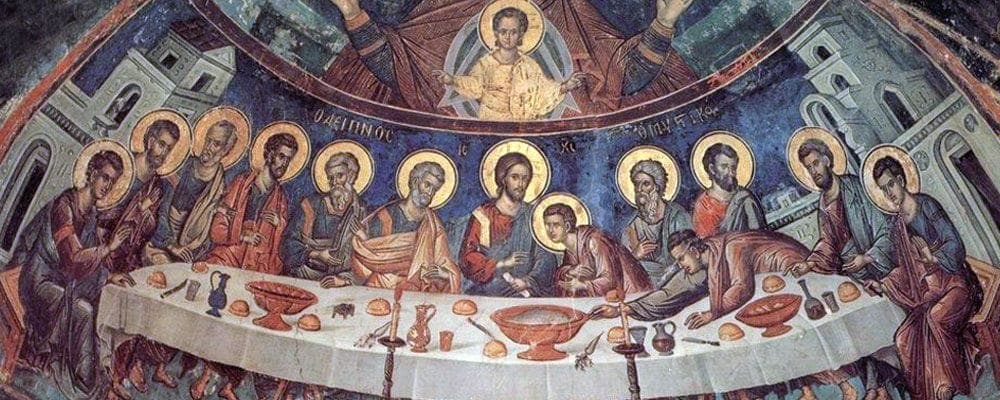
Was the Mystical Supper a Passover Meal?
What was this meal the Lord ate with his disciples in the Upper Room? A Seder? A Chabûrah? The short answer is... neither!
 orthodoxwitness.org
Here are some of Fr Emmanuel’s very strong arguments:
“In the first place, it is very obvious that this meal could not have been a seder , a Passover meal, because it took place not on Friday evening, the beginning of the Jewish Sabbath, but on Thursday evening. This is clear from the narratives of the holy Evangelists Matthew and Mark. They both place it on the night of the Lord’s betrayal and arrest”
“St. John the Evangelist notes that the Jews who led the Lord from Caiaphas to the praetorium did not want to go in, “so that they might not be defiled, but might eat the Passover” (John 18:28). St. John even marks the day and the time the Lord appeared before Pilate: “It was the day of Preparation of the Passover; it was about the sixth hour” (John 19:14). They then rushed to crucify and bury the Lord Jesus, because of the impending Passover (see John 19:31 and 42).
“The erudite and holy Archbishop Theophylact of Bulgaria solves this issue, saying that, “‘The first day of Unleavened Bread’ means Thursday, the day before the feast of Unleavened Bread. For the unleavened bread was eaten on Friday.”
This explanation is confirmed by the learned Archimandrite Kallinicos, who also quotes a Christian scholar of Jewish descent, to the effect that since the people began the preparations of collecting the bread and preparing the unleavened bread, it was called the first day of unleavened bread.
Another Western scholar writes, “The reasonable conclusion is, that, in a popular way of speaking, a day before the legal day had acquired the name of ‘First day of Azyma ’ and not unfitly, if on that day early arrangements were commenced for the complete exclusion of leaven from the houses.”
Continued…
Last edited:
…Continued
“Consider also the following: many preparations were made for the Mystical Supper, but no mention is anywhere made of any lamb. It does not seem that they had the traditional and mandatory lamb for a Passover meal. How could they, since no lambs were allowed to be slaughtered on the day before the Passover.“
“All these elements surrounding this meal (including the artos eaten, mentioned above) point to the conclusion that this was not a typical Passover meal.”
“The Lord’s Supper was a startling new kind of meal, because the food He offered in its course was something totally new under the sun. Indeed it was a Passover meal: not the old Passover, but the new Passover.”
“Our Lord Himself took a specific Jewish worship practice, one that had been revealed by God, filled it with the new meaning of the New Covenant, and transformed it into Christian communion.”
Sorry I know that I quoted quite a bit there, thanks for sticking with me here.
Although I think that Fr Emmanuel jumps to the conclusion that only leavened bread was used, far to easily, the entirety of his argument against the last supper being a Passover meal is quite strong.
Consider the possibility that the first day of unleavened bread started with preparations.
Also if the last supper was a Passover meal, why no mention of the bitter herbs and roasted lamb?
I think that perhaps Fr Emmanuel hits the nail on the head when he says: “The Lord’s Supper was a startling new kind of meal, because the food He offered in its course was something totally new under the sun. Indeed it was a Passover meal: not the old Passover, but the new Passover.”
“Consider also the following: many preparations were made for the Mystical Supper, but no mention is anywhere made of any lamb. It does not seem that they had the traditional and mandatory lamb for a Passover meal. How could they, since no lambs were allowed to be slaughtered on the day before the Passover.“
“All these elements surrounding this meal (including the artos eaten, mentioned above) point to the conclusion that this was not a typical Passover meal.”
“The Lord’s Supper was a startling new kind of meal, because the food He offered in its course was something totally new under the sun. Indeed it was a Passover meal: not the old Passover, but the new Passover.”
“Our Lord Himself took a specific Jewish worship practice, one that had been revealed by God, filled it with the new meaning of the New Covenant, and transformed it into Christian communion.”
Sorry I know that I quoted quite a bit there, thanks for sticking with me here.
Although I think that Fr Emmanuel jumps to the conclusion that only leavened bread was used, far to easily, the entirety of his argument against the last supper being a Passover meal is quite strong.
Consider the possibility that the first day of unleavened bread started with preparations.
Also if the last supper was a Passover meal, why no mention of the bitter herbs and roasted lamb?
I think that perhaps Fr Emmanuel hits the nail on the head when he says: “The Lord’s Supper was a startling new kind of meal, because the food He offered in its course was something totally new under the sun. Indeed it was a Passover meal: not the old Passover, but the new Passover.”
B
BartholomewB
Guest
Yes, I fully agree with you there. I have never studied Greek, but I have seen it said by reliable authorities that the word artos can be used equally of leavened and unleavened bread.Although I think that Fr Emmanuel jumps to the conclusion that only leavened bread was used, far to easily,
More surprising, however, is the point he tries to make about Thursday and Friday. Each month in the Jewish calendar began at the new moon, which can happen on any day of the week. Consequently, the 14th day of the month can also fall on any day of the week. The date of Passover, each year, is the 14th of Nisan. In one year it could have fallen on a Tuesday, in another year on the Sabbath, and so on. The fact that the Last Supper was held on a Thursday evening tells us nothing at all about whether or not it was a Passover meal.
Last edited:
Yes I agree, thank you for pointing this out.More surprising, however, is the point he tries to make about Thursday and Friday. Each month in the Jewish calendar began at the new moon, which can happen on any day of the week. Consequently, the 14th day of the month can also fall on any day of the week. The date of Passover, each year, is the 14th of Nisan. In one year it could have fallen on a Tuesday, in another year on the Sabbath, and so on. The fact that the Last Supper was held on a Thursday evening tells us nothing at all about whether or not it was a Passover meal.
But I think the rest of Fr Emmanuel’s argument is pretty solid.
And again the Gospel of John is pretty darn clear on the matter, whereas the Synoptic Gospels leave, at the very least, room for a little ambiguity.
B
BartholomewB
Guest
I think we can all agree that this sentence from your link is correct:
The Lord’s Supper was a startling new kind of meal, because the food He offered in its course was something totally new under the sun. Indeed it was a Passover meal: not the old Passover, but the new Passover.
But that doesn’t really answer the original question. Jesus instituted the Eucharist at the Last Supper. The Eucharist is a new kind of meal. So, yes, the Last Supper can properly be described as “a new kind of meal.” But the question remains: Did Jesus institute the Eucharist in the course of a Passover meal, or in the course of some other kind of meal that was not a Passover meal?
Fr. Hatzidakis has not given a satisfactory answer to this last question. He evidently believes that it was not a Passover meal, but as far as I can see, he presents no conclusive evidence to support that belief, bearing in mind that he is definitely wrong about the Thursday/Friday business and I strongly suspect he is wrong, too, about artos/azymos.
The Lord’s Supper was a startling new kind of meal, because the food He offered in its course was something totally new under the sun. Indeed it was a Passover meal: not the old Passover, but the new Passover.
But that doesn’t really answer the original question. Jesus instituted the Eucharist at the Last Supper. The Eucharist is a new kind of meal. So, yes, the Last Supper can properly be described as “a new kind of meal.” But the question remains: Did Jesus institute the Eucharist in the course of a Passover meal, or in the course of some other kind of meal that was not a Passover meal?
Fr. Hatzidakis has not given a satisfactory answer to this last question. He evidently believes that it was not a Passover meal, but as far as I can see, he presents no conclusive evidence to support that belief, bearing in mind that he is definitely wrong about the Thursday/Friday business and I strongly suspect he is wrong, too, about artos/azymos.
Thanks, I absolutely agree.I think we can all agree that this sentence from your link is correct:
The Lord’s Supper was a startling new kind of meal, because the food He offered in its course was something totally new under the sun. Indeed it was a Passover meal: not the old Passover, but the new Passover.
Honestly we have presented fully all evidence that we know of, on both sides of the argument, and I am not sure that any one answer is going to 100% satisfy everybody.But the question remains: Did Jesus institute the Eucharist in the course of a Passover meal, or in the course of some other kind of meal that was not a Passover meal?
On one side of the argument, John’s Gospel clearly states that the Passover was approaching during Our Lord’s Passion and the seeming ambiguity of the Synoptic Gospels on the same topic, among other points (including no mention of bitter herbs, and roasted lamb, things that are included in the Passover meal).
On the other side of the argument, the Synoptic Gospels seemingly confirm that the last supper was indeed a Passover meal, and one must take into consideration brother Jeremiahs study, which admittedly does show many parallels (including bread and wine being a focal point of the meal) between the last supper and a Passover meal, among other points.
Looking at these two arguments one must take all things into consideration and draw their own conclusions, because as I said, there is no one answer that will 100% satisfy this question.
I could honestly see this coming to a brick wall earlier, hence why I said:
Hopefully those seeking answers to these questions, look carefully at both sides of the argument and draw their own conclusions to answer this question, individually for themselves.Either way, I think the Church really demonstrates her wisdom by allowing for both, leavened and unleavened bread.
B
BartholomewB
Guest
Yes, I agree entirely with that. This is one of those cases where there is no such thing as certain knowledge, only the balance of probabilities. Personally, I have no objection to considering the possibility that John 18:28 may contain mistaken information about the timing. Any conscientious Jew, particularly any priests and Levites on duty at the Temple, would naturally hold back from entering “unclean,” i.e. Gentile, premises at any time, not only at Passover. It’s not the kind of thing that would be permissible on weekdays, say, but not on the Sabbath. It would be wrong at any time. And to commit such an act of impiety in full view of the crowds of pilgrims would be scandalous, whether they did that on a Thursday, on a Friday, or any other day.Honestly we have presented fully all evidence that we know of, on both sides of the argument, and I am not sure that any one answer is going to 100% satisfy everybody.
Absolutely agreed.Yes, I agree entirely with that. This is one of those cases where there is no such thing as certain knowledge, only the balance of probabilities
- Status
- Not open for further replies.