Divergence in patrimony during the East-West schism

  • Thread starter Thread starter Elizium23
  • Start date Start date
Status
Not open for further replies.
E

Elizium23

Guest
I would like to know if there are any examples of liturgical or other customs that were part of the shared patrimony with the Latin Church before the East-West Schism, and diverged at some point, evolving to become a distinctly Eastern tradition.

By way of example, it has been mentioned in another thread that all (most?) music in the Church was a cappella, and 1300 years ago, the Roman Rite introduced the organ, which slowly became part of our distinct patrimony and tradition. I would like to hear examples from the other side. I am particularly interested in the Byzantine Rite, but all kinds of answers would be welcome.
 
The prothesis (aka proskomedia) - the gifts being prepared before the main liturgy begins, and left prepared and veiled upon a side altar. Still present in the Dominican Rite in the west, but long gone by Trent for most of the West, and thus not part of the Trent approved Roman Missal.

Incensation as a requisite part of the mass. The low mass allowed for, but didn’t require it; the modern OF missal also allows for but does not require incense.

The Trisagion - it appears to have been lost between 800 and 1000 AD in the west, but might not have been part of the everyday liturgy (The last example of it in the west I’ve read about is a partial of the liturgy for Easter).

A screen or curtain between the altar and the nave - the altar rail is a vestigial form of it.

Married presbyters and deacons - Rome had them even into the 12th C. Rome’s restored the allowance to ordain married men into the diaconate.

Married Bishops - The West stopped by the 600’s; the east about the same, except for certain small regional churches.

Deaconesses - Rome stopped ordaining them by 600 (removing them from being clerics), the east by around 1000. Note that the Greek and Russian Orthodox have reinstated the order of deaconess as a monastic use. The Coptic Orthodox have non-ordained deaconesses, installed much like Roman acolytes are now. None of the currently in union churches use deaconesses.

Ordination of minor orders: The Romans stopped ordaining minor orders (Ordained Acolyte, Ordained Lector) in the 1960’s, changing it from ordination to institution, and no longer conferring clerical status; by canon law, an instituted acolyte or instituted lector is a layman. All the Eastern Churches retain the minor orders, and retain ordination of them.

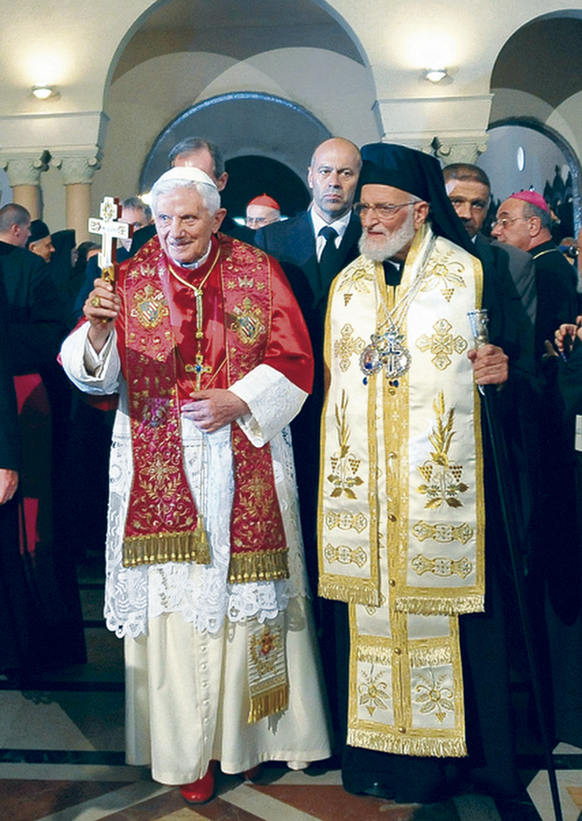
The Blessing Cross - Early illustrations show the use of a hand cross in the Roman liturgy.
 
The prothesis (aka proskomedia) - the gifts being prepared before the main liturgy begins, and left prepared and veiled upon a side altar. Still present in the Dominican Rite in the west, but long gone by Trent for most of the West, and thus not part of the Trent approved Roman Missal.
What exactly would a Dominican prothesis look like? Doesn’t the main part of the prothesis involve preparing the prosphora? But don’t the Dominicans use unleavened bread that’s already prepared? I’m just a little confused 😛
 
The prothesis (aka proskomedia) - the gifts being prepared before the main liturgy begins, and left prepared and veiled upon a side altar. Still present in the Dominican Rite in the west, but long gone by Trent for most of the West, and thus not part of the Trent approved Roman Missal.

Incensation as a requisite part of the mass. The low mass allowed for, but didn’t require it; the modern OF missal also allows for but does not require incense.

The Trisagion - it appears to have been lost between 800 and 1000 AD in the west, but might not have been part of the everyday liturgy (The last example of it in the west I’ve read about is a partial of the liturgy for Easter).

A screen or curtain between the altar and the nave - the altar rail is a vestigial form of it.

Married presbyters and deacons - Rome had them even into the 12th C. Rome’s restored the allowance to ordain married men into the diaconate.

Married Bishops - The West stopped by the 600’s; the east about the same, except for certain small regional churches.

Deaconesses - Rome stopped ordaining them by 600 (removing them from being clerics), the east by around 1000. Note that the Greek and Russian Orthodox have reinstated the order of deaconess as a monastic use. The Coptic Orthodox have non-ordained deaconesses, installed much like Roman acolytes are now. None of the currently in union churches use deaconesses.

Ordination of minor orders: The Romans stopped ordaining minor orders (Ordained Acolyte, Ordained Lector) in the 1960’s, changing it from ordination to institution, and no longer conferring clerical status; by canon law, an instituted acolyte or instituted lector is a layman. All the Eastern Churches retain the minor orders, and retain ordination of them.

The Blessing Cross - Early illustrations show the use of a hand cross in the Roman liturgy.
Never have deaconesses been considered clerics in the Church, East or West. I believe it was the Council of Nicea which explicitly stated that deaconesses are still to be numbered among the laity.
 
What exactly would a Dominican prothesis look like? Doesn’t the main part of the prothesis involve preparing the prosphora? But don’t the Dominicans use unleavened bread that’s already prepared? I’m just a little confused 😛
As with the Byzantine prothesis, there are specific prayers over the bread, wine, and water; the chalice is filled.

In sequence:
Lavabo (Washing of the celebrant’s hands)
Cleaning of the Chalice
Stacking of the chalice, purificator, paten, host, pall and veil
Vesting
Procession to the altar
removal of the veil, paten, pall, and purificator
Filling of the chalice
Adding the water
Paten and pall replaced on the chalice
Return to the foot of the altar for the prayers of the foot of the altar

Note that the Dominican Missal is essentially the circa 1200 Roman Missal…
And the host is not fractioned until later.

media.musicasacra.com/dominican/rt.pdf
 
The Blessing Cross - Early illustrations show the use of a hand cross in the Roman liturgy.
Perhaps this will make a comeback. His Holiness looked rather natural blessing with it …

 
Status
Not open for further replies.
Back
Top