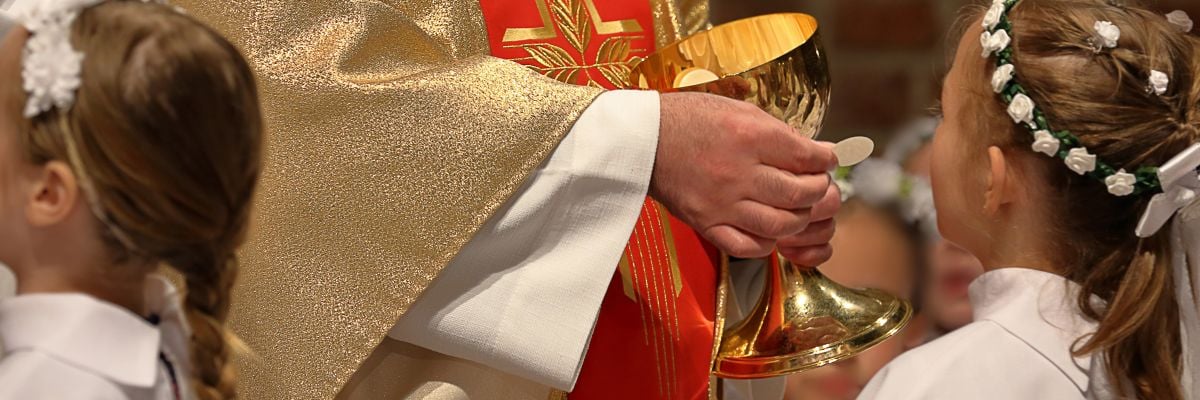
Do bishops have authority to prohibit Communion on the tongue?

  • Thread starter Thread starter savedbychrist
  • Start date Start date
Status
Not open for further replies.
You are confusing extraordinary and ordinary magisterium. Bishops have obedience to the Pope in his extraordinary magisterial authority. Yes. But this extraordinary authority is specifically in the Pope’s position as head of the college of bishops. The curia has no extraordinary authority.
If the bishop attempts to do so in defiance, then the priests have a duty to resist that and follow the directives of the Holy See, and lay people maintain their canonical rights
This is completely false. Priests, on their own have no canonical right to resist their bishops outside of excomunicable offenses, instances of sin, or illegal activity. Their very ministry inherently depends upon the episcopate. They have no right of canonical judgement against their bishop. Now, if the Pope endorsed Redemptionis Sacramentum as head of the college of bishops, then it would be universally binding. But this is not the case. It was put out by a single office which has, in the past, had to walk back documents and directives after consulting the pope. In the end, obey the bishop unless it has been contradicted by either an ecumenical council, ex cathedral statement, or direct statement of the pope specifically in his office of collegial head.
 
Last edited:
From Catholic Answers Q & A

Can a Bishop Prohibit Receiving Communion on the Tongue?


This is the talk from Bishop Athanasius Schneider who says nothing about disobeying your bishop, except to say the same thing as the Catholic Answers apologist above, that a bishop can not deny you to receive communion on the tongue.


I fully believe that the best thing one can do during this health crisis, who wants to follow the normative way of the Church and receive on the tongue and the bishop has asked his parishioners not to, would be to make spiritual communions until this crisis is over.
 
Last edited:
They have no right of canonical judgement against their bishop. Now, if the Pope endorsed Redemptionis Sacramentum as head of the college of bishops, then it would be universally binding. But this is not the case.
Then there is no point having a Roman Curia in that case. Even if this is the case however, thankfully the General instruction of the Roman Missal which is universal and of Papal authority also says “The communicant replies, Amen, and receives the Sacrament either on the tongue or, where this is allowed, in the hand, the choice lying with the communicant.”

Hence we are still protected by this in any case and a priest does certainly have a right to obey the Roman Missal even if that sometimes sadly results in resistance of his bishop. It’s not just about the priest, it’s about the rights of the laity also and a good priest respects the rights of his flock
 
considering that the majority of people are right handed then the majority of people should not receive in the left hand at least and yet that is what happens in the majority of cases still for some reason
A very simple and logical reason - being right-handed, it is easier and safer to use the right hand to pick up the Host from the other palm.
I really don’t understand how that could be confusing.
 
It ought to be a mandate all the time. Jesus said take this and eat. He did not say stick out your tongue. St Justin the martyr described receiving in the hand in the early times.
 
It ought to be a mandate all the time. Jesus said take this and eat. He did not say stick out your tongue. St Justin the martyr described receiving in the hand in the early times.
In all charity, Scripture also says He gave it to them. They were also the start of the priesthood so they would have had the privilege of handling His body and blood.

You are correct, definitely agree, they did receive in the hand in the early days though, they did not pick the host up with their fingers but brought it up to their mouths with the palm of their hands. The Church in her wisdom to stop abuses happening at that time required the laity to receive on the tongue.

Pope John Paul II even in his time was bothered by abuses happening from receiving in the hand:

However, cases of a deplorable lack of respect toward the eucharistic species have been reported, cases that are imputable not only to the individuals guilty of such behavior but also to the pastors of the church who have not been vigilant enough regarding the attitude of the faithful toward the Eucharist. Dominicae Cenae 11.9

God bless 🙂
 
Because that bishop over “6000 miles away” is usually right to be honest.
This is a matter of being objective, and this bishop is right because he promotes the universal law of the church and that is why we give weight to an auxiliary bishop 6000 miles away
Begging the question, a lot. But the Church does not work like this and authority will rest with the local bishop to limit any cult of personality, or choose your own bishop based on agreement with your opinions.
The directives of the Holy See therefore means that a bishop cannot suspend reception on the tongue.
There has been no such directive. If one’s own bishop (only) does not see that Redeptionis Sacramentum was not written to address a pandemic situation (duh), then that is his prerogative, and an indication that he is not insanely inflexible. I can’t help but think of the Pharisees who forgot that the Law was written for Man, not the other way around. Canon Law, the GIRM, and all instructions are given for the good of the Church. The Church does not live to serve any of these. Nor does it even make sense for the curia to reverse its earlier directives now, then reverse them back when things change again, nor even assume all areas have the same risk at the same time. Bishops make these decisions for their diocese.
 
Last edited:
A very simple and logical reason - being right-handed, it is easier and safer to use the right hand to pick up the Host from the other palm.
I really don’t understand how that could be confusing.
As I said above in response to a similar question earlier above:
Actually, in the ancient but rare practice, the fingers never picked up the host, but rather the host was received in the right hand which was then lifted to the mouth and taken by the mouth.

As Bishop Schneider has said: “The Holy Eucharist was received on the palm of the right hand and the faithful were not allowed to touch the Holy Host with their fingers, but they had to bow down their head to the palm of the hand and take the Sacrament directly with their mouth”
 
@MagdalenaRita
No problem. I agree their is a lack of reverence and more importantly understanding and belief. I am all for more education but reverence can be expressed either way. I think it would be good if we all did it the same way. I was confirmed in about 1949 and still know my Latin prayers. So I am not a new comer!
 
Posts like this is why certain issues are do much more divisive in our Church than they should be. No charity or understanding of others.
 
Again, you cite nebulous ‘rights of the laity’. Where are you getting these so called rights to disobey the bishop of a diocese? They certainly a aren’t part of canon law. Even if they were, the judgement, execution and legislation of those rights fall to the bishop to exercise. If he believes it is pastorally prudent to temporarily suspend a specific action, then it is within his purview.

Can. 391 §1. It is for the diocesan bishop to govern the particular church entrusted to him with legislative, executive, and judicial power according to the norm of law.

§2. The bishop exercises legislative power himself. He exercises executive power either personally or through vicars general or episcopal vicars according to the norm of law. He exercises judicial power either personally or through the judicial vicar and judges according to the norm of law.

The bishop’s personal decree is part of that norm of law through his legislative power.
 
Last edited:
the Church does not work like this and authority will rest with the local bishop to limit any cult of personality, or choose your own bishop based on agreement with your opinions.
Nobody is suggesting that Bishop Schneider has authority over other diocese, or that we can choose our own Bishop. It just so happens to be that He is promoting the Universal law of the Church and because of that what he says does stand (which usually is the case with Bishop Schneider) as opposed to it being the case because he has decided that it is. It’s not about his authority, it’s rather about him making clear what has already been decided by a higher authority than Himself or our local bishop.
I can’t help but think of the Pharisees who forgot that the Law was written for Man, not the other way around.
Some think that we no longer need to follow formal laws as a result of the new covenant, even newly established laws. On the contrary, Our Lord tells us that “unless your righteousness surpasses that of the Pharisees and the teachers of the law, you will certainly not enter the kingdom of heaven.” (Matthew 5:20) and hence we after protected by the law even more so now than we were in the old covenant.

It is true that this is inconvenient and it would be easier for bishops if they could be flexible, but in order to protect the faithful and stop bishops from misusing such flexibility, such exceptions do not exist for the greater good of the faithful.
Nor does it even make sense for the curia to reverse its earlier directives now, then reverse them back when things change again
Sadly, this is not ideal, but for the reasons mentioned above, this reverse and revert would be necessary for such decisions to be made. The law is set firm because otherwise such flexibility would be misused by some bishops and this could seriously effect the life of the church depending on how far it went.
 
Last edited:
@Paul_Edwards
I have never heard that. Who does Bishop Schneider attribute for that information? I have read Justin the martyr and don’t remember reading that.
 
Who does Bishop Schneider attribute for that information?
A lot of His information is form St Cyril of Jerusalem assuming your referring to communion on the right hand. This will be more clear if you read his interview Christus Vincit: Christ’s Triumph over the Darkness of the Age
 
It is true that this is inconvenient and it would be easier for bishops if they could be flexible, but in order to protect the faithful and stop bishops from misusing such flexibility, such exceptions do not exist for the greater good of the faithful.
Uh, apparently they do. Most have made that exception because most teach a consistent pro-life ethic. Life trumps disciplines. In our culture of death, the last thing the Church needs it to allow legalism and hypocrisy to show the life has less value than changeable rules.
One Sabbath Jesus was going through the grainfields, and as his disciples walked along, they began to pick some heads of grain. 24 The Pharisees said to him, “Look, why are they doing what is unlawful on the Sabbath?”

25 He answered, “Have you never read what David did when he and his companions were hungry and in need? 26 In the days of Abiathar the high priest, he entered the house of God and ate the consecrated bread, which is lawful only for priests to eat. And he also gave some to his companions.”

27 Then he said to them, “The Sabbath was made for man, not man for the Sabbath.
 
Last edited:
Where are you getting these so called rights
One is actually from the Roman Missal itself, as mentioned above
“The communicant replies, Amen, and receives the Sacrament either on the tongue or, where this is allowed, in the hand, the choice lying with the communicant .”

No Cleric, not even a Cardinal can make alterations to what’s in the Missal at his personal judgement. Yes we all agree with Can. 391 but sadly not every bishop fulfills their duty properly and that’s why we have the Roman Pontiff who is a higher source of appeal
 
Recently due to the coronavirus, many dioceses around the globe has mandated Communion in the hand
In our parish, it’s recommended, not mandated.

I doubt children are taught about receiving on the tongue any more. It may be that the two methods ought simply to be made equivalent options.
 
40.png
paperwight:
Well, exactly. On the contrary, it makes perfect sense for the nondominant hand to receive, as then the dominant one can be used to pick up the Host.
Actually, in the ancient but rare practice, the fingers never picked up the host, but rather the host was received in the right hand which was then lifted to the mouth and taken by the mouth.

As Bishop Schneider has said: “The Holy Eucharist was received on the palm of the right hand and the faithful were not allowed to touch the Holy Host with their fingers, but they had to bow down their head to the palm of the hand and take the Sacrament directly with their mouth”
Well, which scenario actually occurred? Or were both ways acceptable?

It is my understanding that the host was NOT “received in the right hand which was then lifted to the mouth and taken by the mouth,“ as you stated above, but, as Bishop Schneider mentioned. It is my understanding that the host was placed into a communicant’s hand and the communicant bent over into a bow as his head met his palm and he moved the host into his mouth with his tongue and lips.
 
Status
Not open for further replies.
Back
Top