Does Darwin's theory of evolution contradict Catholicsm?

  • Thread starter Thread starter theCardinalbird
  • Start date Start date
Status
Not open for further replies.
So to say “How did they know…” misses the point. They didn’t “know” anything–but by pure chance mutation certain changes appeared, and if they were helpful, these changes became established–remember the 12 hour lifespan. It wouldn’t take long.
Hold your horses. If the answer is somehow these bacteria know how to multiply and replicate itself, there will be no need for scientific study and me asking for an explanation.

The first hurdle no one wants to attempt is how did non-life became life. Big numbers of non-life does not become life no matter how you assemble it or for how long.

After this hurdle, how/where did the very first live bacteria get the instruction to replicate itself? How did the DNA/RNA information arose so that the cell is ready for replication? We are talking about gradual natural process to arrive at a complete functional biological factory. How did the DNA/RNA
come together? Read Stephen Meyer’s Signature in the Cell to understand the complexity of this simple idea. Imagine this: gradual assembling of a live cell with biological program coded for replication via natural forces. There is no DNA/RNA information in raw nature. Nature doesn’t do programming. Nature doesn’t know how to tell the very first cell that became alive " go and reproduce yourself". The very first cell doesn’t know how to do that without that information. The very first cell with that bio program doesn’t know how to execute that program. I think too many of us belittle the complexities of nature and just take it for granted. There is no partially assembled live bacteria from 1 % that slowly get build up to 100% alive bacteria. This is binary. A live bacteria vs none. There is nothing to evolve from “none”.

The starting point of evolution always ignore these first 2 steps and always invariably invoke large numbers as if the very first large population bacteria pop into existence from nowhere, alive and kicking and raring to go with everything in place.
 
40.png
Erikaspirit16:
So to say “How did they know…” misses the point. They didn’t “know” anything–but by pure chance mutation certain changes appeared, and if they were helpful, these changes became established–remember the 12 hour lifespan. It wouldn’t take long.
Hold your horses. If the answer is somehow these bacteria know how to multiply and replicate itself, there will be no need for scientific study and me asking for an explanation.

The first hurdle no one wants to attempt is how did non-life became life. Big numbers of non-life does not become life no matter how you assemble it or for how long.

After this hurdle, how/where did the very first live bacteria get the instruction to replicate itself? How did the DNA/RNA information arose so that the cell is ready for replication? We are talking about gradual natural process to arrive at a complete functional biological factory. How did the DNA/RNA come together?
We are probably looking at self-replicating/repeating chemical reactions as the predecessor to any life forms. It didn’t get “instruction” to replicate itself, the chemical soup was such conditions that such things occurred. After billions of years and many trillions of repetitions, the chemical reactions became more complicated. Rather than just replicating themselves, they were causing other things to occur around them, too. (Not every self-replicating chemical reaction suddenly started doing this, but of the trillions of repetitions and varying conditions, some of these more complicated systems arose). Certain processes allowed more complicated reactions and systems, things fell into different niches, and you have the emergence of life.
Read Stephen Meyer’s Signature in the Cell to understand the complexity of this simple idea. Imagine this: gradual assembling of a live cell with biological program coded for replication via natural forces. There is no DNA/RNA information in raw nature. Nature doesn’t do programming. Nature doesn’t know how to tell the very first cell that became alive " go and reproduce yourself". The very first cell doesn’t know how to do that without that information. The very first cell with that bio program doesn’t know how to execute that program. I think too many of us belittle the complexities of nature and just take it for granted. There is no partially assembled live bacteria from 1 % that slowly get build up to 100% alive bacteria. This is binary. A live bacteria vs none. There is nothing to evolve from “none”.

The starting point of evolution always ignore these first 2 steps and always invariably invoke large numbers as if the very first large population bacteria pop into existence from nowhere, alive and kicking and raring to go with everything in place.
That’s really the wrong way of looking at how these types of things developed. The bacteria didn’t know. It’s just chemical reactions occurring within them, becoming more and more sophisticated and specialized over time.
 
Also, it must be stated, the origin of life is a separate field of study from evolution. Even if we scratched out abiogenesis and God created fully-formed lifeforms on Earth, that doesn’t change the fact that life has continued to evolve and is continuing to evolve through these processes, as the historical record and our study of reproduction/allele drift within populations over time shows.
 
What seems strange to me is that genetic information is added.
How are you measuring “information”. We can observe processes today that increase both Shannon and Kolmogorov information in DNA. Do you have any evidence that those simple information-increasing processes were not operative in the past?
Practically speaking mutations that I’m aware of are all changes in expression of pre existing information.
No they are not. Some are, like a point mutation; others add new information, such as chromosome duplication. A point mutation can have an effect on the organism, such as the HbC and the Apo A-I Milano mutations, which are both point mutations.

You need to define how you are measuring “information” here. And you need to define it in an objective, measurable way.

rossum
 
The first hurdle no one wants to attempt is how did non-life became life.
That is abiogenesis. Scientists are still working on that. They have made much progress, but do not have the full answer yet. I would advise you against trying to fit your God into that particular gap. It is closing steadily, and as the gap closes, any God that tries to fit into it can only get smaller.
After this hurdle, how/where did the very first live bacteria get the instruction to replicate itself?
Any bacteria that could not reproduce itself has no living descendants, obviously. Only bacteria that could reproduce themselves can possibly have any living descendants. Every single one of your ancestors for billions of generations succeeded in reproducing. Every single one. Not one failure. Once a simple reproducer arose (a lipid bilayer sack with some RNA (probably) inside it) then it would spread copies of itself. Bacteria that could not reproduce would not spread copies.

In summary: "If your parents didn’t have any children, then the chances are that you won’t either. 😀

rossum
 
No, it is macroevolution: the two species do not interbreed because of the different breeding seasons. Not interbreeding is a sign of a new species.
They still belong to the “insect” family/kingdom taxonomy. Even in human populations we can have gene defects that may cause sterility if certain male/female combinations occur. But they are still human even if they couldn’t interbreed. But we humans can do IVF, surrogate, adoption to overcome this difficulty. I don’t have access to the article details you quoted. But previous research shows that DDT resistant insects didn’t really evolved. There have always been DDT resistant variants out in the field. Those non resistant died out and DDT resistant variants flourish. The genes didn’t mutated from a non-resistant to a resistant one. No new information entered the genes. Not sure whether that article you quoted could be of similar situation.

For macro evolution, I am talking more about how the very first single cell organism was able to differentiate to so many branches of various lifeforms within 4 billion years time allotted for nature to act upon. You have the plant kingdom, fungi, animals etc. and further subdivisioning. You need massive (name removed by moderator)uts of information to do that and nature just does not contain such information in itself e.g. plans to build body parts, specialised functions etc. As the earth cools, we should be seeing increased entrophy, i.e. increase disorder. Increase in lifeforms with increasing complexity is an increase in order, increase in information content, the reverse. Unnatural to say the least.

And we are still constrained by the 4 billion years cap in association with Haldane’s Dilemma.
 
They still belong to the “insect” family/kingdom taxonomy.
So, you have no problem with humans, chimps and gorillas sharing a common ancestor because they all belong to the hominidae/mammal taxonomy. What about the “life on earth” taxonomy which includes all bacteria, arche, eukaryotes and viruses?

Any two organisms will be related at some level of the hierarchy, that is the effect of common descent and if part of the evidence we have for common descent.
You need massive (name removed by moderator)uts of information to do that and nature just does not contain such information in itself
The information (name removed by moderator)ut comes from the environment. Evolution can be seen as a process which copies information from the environment into the genomes of organisms living in that environment. The Arctic environment contains the information, “White things are more difficult to see against a snowy background”. Hence land animals living in the Arctic have white coats. A little further south, there is the additional information, “Snow falls in winter but not in summer”. Some animals living a bit further south have white winter fur and brown summer fur. Evolution has copied information from the local environment into the local population
As the earth cools, we should be seeing increased entrophy, i.e. increase disorder.
Yes, overall entropy is increasing, but with an energy (name removed by moderator)ut that increase can be reversed locally. Your fridge does exactly that; cut the power and the entropy of the interior increases. Restore the power and the entropy of the interior decreases (though the entropy at the generator increases). Living organisms use an energy (name removed by moderator)ut to do exactly that. Most use the Sun (directly or indirectly) though a few use chemical sources of energy.

There is a classic piece from a creationist poster on this very subject:
One of the most basic laws in the universe is the Second Law of Thermodynamics. This states that as time goes by, entropy in an environment will increase. Evolution argues differently against a law that is accepted EVERYWHERE BY EVERYONE. Evolution says that we started out simple, and over time became more complex. That just isn’t possible: UNLESS there is a giant outside source of energy supplying the Earth with huge amounts of energy. If there were such a source, scientists would certainly know about it.

– Source: God or Big Bang/Evolution: Where do we Come From? | Page 6 | Smashboards
Hint: Yes there is such a source and yes, scientists know about it.

rossum
 
Last edited:
God created all things from nothing so we have the universe and the planet we live on. God created all life form from nothing but we do not know how God did that only man when retelling the creation story only wanted us to know that God did it effortlessly out of love. man is the only life form that can think and reason not other life form can. Only man knows that there is something far greater then himself a God who created because it was revealed to him at some point in time. All other life forms do not know God and have no understanding that something greater then they are exists. How life evolved no one really know other then theories that have been promoted yet, not completely proven one way or the other. is it really important to know how God created or that God did create? Would knowing how God exactly created help one in salvation? is not in some way Gen. a beginning of salvation history? I think science helps one to better understand God in His awesomeness. Can we really know the mind of God and how he created other then to try and explain how life evolved. Does science take away from God? I think not.
 
You need to define how you are measuring “information” here. And you need to define it in an objective, measurable way.
True. I don’t know how exactly to define it. But I have a sense of what it is.
How are you measuring “information”. We can observe processes today that increase both Shannon and Kolmogorov information in DNA. Do you have any evidence that those simple information-increasing processes were not operative in the past?
What does this mean? What do you mean by those types of information?
No they are not. Some are, like a point mutation; others add new information, such as chromosome duplication. A point mutation can have an effect on the organism, such as the HbC and the Apo A-I Milano mutations, which are both point mutations.
Is it new information or just a duplication and corruption? I don’t understand the specifics of this but it sounds like if you copied a file on your computer and in doing so it added a duplication of one section. If this happened in a text file it would be useless noise. It wouldn’t add a new meaningful paragraph. If it was an image file it might make it impossible to display. It wouldn’t add some some other complete, identifiable image, like a flower, into the original image.
 
Is it new information or just a duplication and corruption? I don’t understand the specifics of this but it sounds like if you copied a file on your computer and in doing so it added a duplication of one section. If this happened in a text file it would be useless noise. It wouldn’t add a new meaningful paragraph. If it was an image file it might make it impossible to display. It wouldn’t add some some other complete, identifiable image, like a flower, into the original image.
From a strictly empirical perspective, it’s not “new” information at all or even information as such. There’s a chemical change in the DNA, which causes different proteins to form which will cause other chemical changes.
 
Most mutations are harmful and often lethal. Then of those that aren’t harmful, some are benign (more on them later.) Finally the rarity of a mutation that is immediately useful is, well, rare. Hence why it would seem most mutations would be bad, because most are. But when a good one or a benign one comes about, it stays in the gene pool.

And someone mentioned how DDT-resistant flies didn’t adapt to DDT after the fact, but were already immune, exactly! A large part of evolution occurs in preadaptation. That is mutations which are benign that become useful when the environment changes. Those that survive pass it on with lack of the trait dying out. If there weren’t pre-adapted individuals, the species would just die out because an organism cannot evolve. (Grow a tail right now if you want to prove me wrong.) Populations over time with the passing of genetic material evolve.
 
40.png
Techno2000:
As far as I can see lions are still producing lions and tigers are still producing
tigers, same with Horses and donkeys .
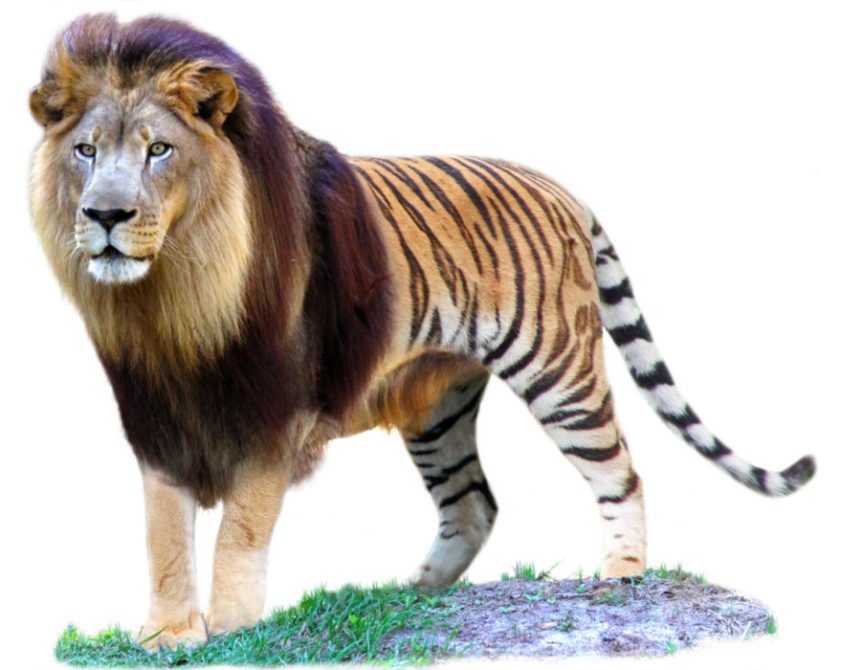
A liger is the offspring of a male lion and a female tiger. A tigon is the offspring of a male tiger and a female lion. In both cases the females are fertile while the males are not.

With mules (the offspring of a horse and a donkey) they are almost always infertile, with rare exceptions: Morocco’s Miracle Mule.

This shows that lions and tigers are in the process of separating, while horses and donkeys are closer to completing the process.

rossum
That just show some animals can be crossbred, evolution is supposed to take billions of years… not 5 minutes of mating and what about all the animals that can’t be crossbred?
 
A liger is the offspring of a male lion and a female tiger. A tigon is the offspring of a male tiger and a female lion. In both cases the females are fertile while the males are not.
LIGERS and TIGONS

“Crossing the species line” does not generally occur in the wild, because “it would result in diminished fitness of the offspring,” said Ronald Tilson, director of conservation at the Minnesota Zoo in Apple Valley.

Since lions and tigers do not exist in the same areas, this is not something that happens in the wild. It is done in captivity by disreputable carnies to produce a freak that ignorant people will pay to see. These cats suffer from many birth defects and usually die young.

“We’ve had 3 out of 24 that, for all practical purposes, were normal but developed as they grew older some kind of neurological disorder,” Hutcherson said.

 
40.png
rossum:
40.png
Techno2000:
As far as I can see lions are still producing lions and tigers are still producing
tigers, same with Horses and donkeys .
A liger is the offspring of a male lion and a female tiger. A tigon is the offspring of a male tiger and a female lion. In both cases the females are fertile while the males are not.

With mules (the offspring of a horse and a donkey) they are almost always infertile, with rare exceptions: Morocco’s Miracle Mule.

This shows that lions and tigers are in the process of separating, while horses and donkeys are closer to completing the process.

rossum
That just show some animals can be crossbred, evolution is supposed to take billions of years… not 5 minutes of mating and what about all the animals that can’t be crossbred?
I think rossum’s point is that lions and tigers share a common ancestor. The ancestors of the tiger and lion populations today once belonged to the same population that’s since diverged into two different species (not all at once, or even in a “straight” path, mind). However, they haven’t diverged so far as to having incompletely infertile couplings, which could eventually happen.
 
Last edited:
I don’t know how exactly to define it. But I have a sense of what it is.
Unfortunately I am not you, so it will be difficult for me to discuss your own personal measure of information. That is why science requires objective repeatable measures, not subjective finger-in-the-air measures.
What do you mean by those types of information?
See Shannon information and Kolmogorov information. Yes, this is rocket science I’m afraid.
Is it new information or just a duplication and corruption?
We are back to the definition of “information” again. Both Shannon and Kolmogorov information measures are unchanged. The function of the protein transcribed from the DNA has changed somewhat in both cases. HbC is more resistant to malaria than the standard HbA non-mutated protein. Apo A-I Milano is better able to deal with fatty acids in the blood than the standard non-mutated protein, Apo A-I.
If this happened in a text file it would be useless noise.
Duplication is not always useless, it can help herbicide resistance in plants:
Another way weeds fight off Roundup is through sheer numbers. Earlier this year an international team of scientists reported their discovery of how Palmer amaranth resists glyphosate. The plants make the ordinary, vulnerable form of the enzyme. But the scientists discovered that they have many extra copies of the gene for the enzyme–up to 160 extra copies, in fact. All those extra genes make extra copies of the enzyme. While the glyphosate may knock out some of the enzymes in the Palmer amaranth, the plants make so many more enzymes that they can go on growing.

Source: How To Make A Superweed.
If you think of the DNA as a single production line, then duplicating the DNA gives you two parallel production lines, and double the production rate. In some cases this is helpful.

rossum
 
All I wanted to knows is there any animal today that has some kind of appendage (fin, feather, scale,etc ) visible growing out of its body that we can say is changing into something new.
 
All I wanted to knows is there any animal today that has some kind of appendage (fin, feather, scale,etc ) visible growing out of its body that we can say is changing into something new.
That’s… that’s not how it works.
 
40.png
Techno2000:
All I wanted to knows is there any animal today that has some kind of appendage (fin, feather, scale,etc ) visible growing out of its body that we can say is changing into something new.
That’s… that’s not how it works.
I know it happens so slooow that you can’t see how it works.
 
40.png
Wesrock:
40.png
Techno2000:
All I wanted to knows is there any animal today that has some kind of appendage (fin, feather, scale,etc ) visible growing out of its body that we can say is changing into something new.
That’s… that’s not how it works.
I know it happens so slooow that you can’t see how it works.
This isn’t even an appeal to time. I’m not saying “you correctly understand how it works but you’re not accounting for time.” I’m just flat out stating your description is not how evolution works, whether in an instant or over five trillion years.
 
All I wanted to knows is there any animal today that has some kind of appendage (fin, feather, scale,etc ) visible growing out of its body that we can say is changing into something new.
No. An appendage today will die when the animal it is attached to dies. That animal’s offspring will have their own appendages, which will be very slightly different; for example, are your hands bigger or smaller than your parent of the same sex?

If there is a slight advantage to larger/smaller hands, then over the generations hands will tend to get larger on average, or smaller on average. If hands are sized about right, then there will still be variations between individuals, but the average will stay the same from generation to generation.

Evolution applies to populations, not individuals, so you need to look at a population over many generations to see changes. “Individuals reproduce; populations evolve.”

rossum
 
Status
Not open for further replies.
Back
Top