
Easter Monday?

  • Thread starter Thread starter filfilksq
  • Start date Start date
Status
Not open for further replies.
F

filfilksq

Guest
Hello everyone, I hope a) that it’s ok for a non-Catholic to post a question and b) that I’m posting in the correct forum.

I am currently reading a historical account of the Muslim conquest of Mesopotamia written by an early Arab historian (9th century). In his description of the capitulation of a specific city in Syria, he lists the terms laid out by the conquering general. One of these terms was that the Christian inhabitants of the city would not openly celebrate Easter Monday.

I was raised Roman Catholic, but I cannot recall much mention of Easter Monday or any activities traditionally associated with that day. So now I am trying to get a better idea of the history of that day’s observances, but am not coming up with much beyond Wikipedia. I assume since it was talking about Syria/Mesopotamia, I need to be looking towards Eastern Catholicism or Byzantine Catholicism (please forgive my terms if they are wrong)?

There is a footnote in my text that suggests a correlation between the observance of Easter Monday and the Muslim prayer vis a vis rain, but aside from a couple of mentions on the Wikipedia page about Easter Monday that talk about spraying/sprinkling/dumping water on people I’m not seeing any kind of connection (or why Easter Monday would be singled out, kwim?).

If someone here could offer any information or point me in the right direction to find some, it would be most appreciated.

Thanks!

Kate

(and sorry again if I’m out of line)
 
Easter Monday is a public celebration at my Orthodox parish…but now that I think about it I can’t remember why. I know we have Liturgy (which isn’t done everyday like it is in the Roman tradition) and then we have a huge brunch at a local restaurant. We often have clergy visiting from different parishes to celebrate with us.

My best guess is that the day after a major Feast is often also given special treatment in honor of the principle role-player in the aforementioned feast. Thus, the day after Pentecost is the Synaxis of the Holy Spirit. Maybe this is something similar, but I can’t remember.
 
I can’t comment on the Eastern praxis, but in the Roman Rite we actually do celebrate Easter Monday (as well as Easter Tuesday, Easter Wednesday etc). The great feast of Easter is so central to the Church’s life that she extends the feast across eight days - the Easter Octave - starting with Easter Sunday through to the Second Sunday of Easter (also called Divine Mercy Sunday). The gloria, which is not ordinarily sung on weekdays, is sung every day of the Octave.
 
That’s when we celebrate Sham el-Nessim in the Coptic Church. I think that’s a pre-Christian thing, though, because it dates back to ancient times when the pre-Christian Egyptians would celebrate the harvest. Muslims apparently celebrate it in Egypt, too. It’s the day after Easter. Here is a video in Arabic explaining its origins (there is a short description in English in the video info).

I don’t know exactly how the Syriac Orthodox celebrate this day, but they apparently do have some special celebration for it – this Malankara lectionary shows particular readings for the whole week following Easter, which would start with what other churches call “Easter Monday”.

Since Syria at the time would’ve been a mix of Byzantine and Syriac Orthodox, it seems that the conquerors would have taken notice of this celebration and sought to stop it.

Edit: The term “Bright Week” is also used by the Coptic Orthodox Church, not just the Easterners (don’t know about the Syriacs, though). See, for instance, its celebration in Glastonbury.
 
Haha. I like that. As my Palestinian (EO) friend has put it to me in the past, when I was still Roman Catholic: “It is the same Christ; He is just a few days older for you guys.” 😃
 
Yes, definitely. The Cadbury company even primes us that it will be “chocolate egg time” soon (or that it’s already upon us, so we better hurry up and buy before they take all their eggs and go home): youtube.com/watch?v=Yw_gEyg7Nt8
 
Hello everyone, I hope a) that it’s ok for a non-Catholic to post a question and b) that I’m posting in the correct forum.

I am currently reading a historical account of the Muslim conquest of Mesopotamia written by an early Arab historian (9th century). In his description of the capitulation of a specific city in Syria, he lists the terms laid out by the conquering general. One of these terms was that the Christian inhabitants of the city would not openly celebrate Easter Monday.

I was raised Roman Catholic, but I cannot recall much mention of Easter Monday or any activities traditionally associated with that day. So now I am trying to get a better idea of the history of that day’s observances, but am not coming up with much beyond Wikipedia. I assume since it was talking about Syria/Mesopotamia, I need to be looking towards Eastern Catholicism or Byzantine Catholicism (please forgive my terms if they are wrong)?

There is a footnote in my text that suggests a correlation between the observance of Easter Monday and the Muslim prayer vis a vis rain, but aside from a couple of mentions on the Wikipedia page about Easter Monday that talk about spraying/sprinkling/dumping water on people I’m not seeing any kind of connection (or why Easter Monday would be singled out, kwim?).

If someone here could offer any information or point me in the right direction to find some, it would be most appreciated.

Thanks!

Kate

(and sorry again if I’m out of line)
The Byzantine Catholic Church celebrates that week following the Pascha with no fasting, and it is like one continuous day of joyous celebration. Some parishes continue the tradition of leaving the Royal Doors open all week (the tomb is empty!).

There is sprinkling with holy water that week. See:

saintelias.com/ca/feastday/pascha.php
 
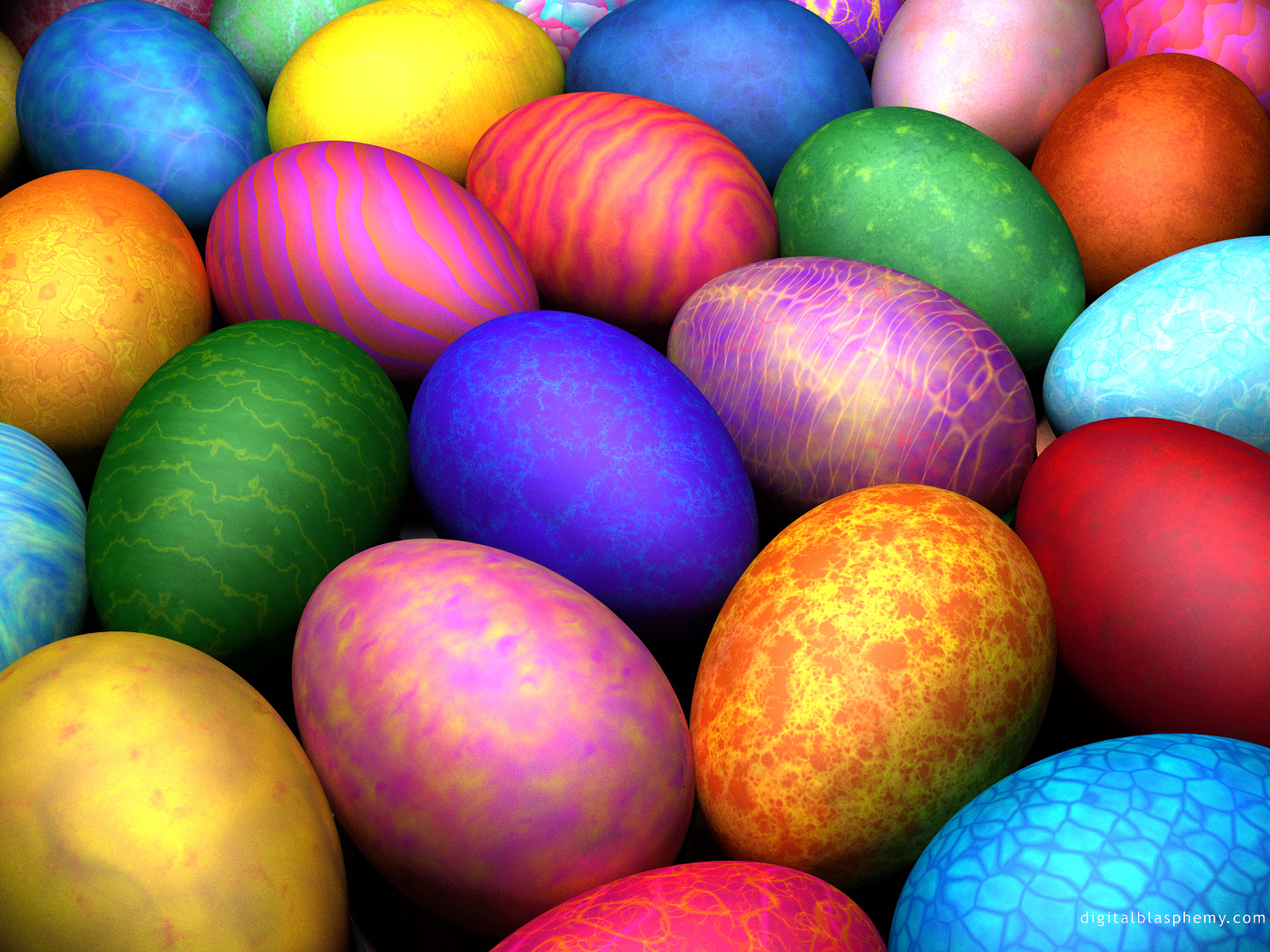
It is ridiculous how much Easter (and Christmas) have become so commercialised in the UK with no original reference to the Christian feasts they celebrate. This year it seemed only weeks after Christmas 2011 that Easter eggs appeared in the shops. I am surprised we can still call it Easter because many places in UK object to Christmas and talk of stupid things like Winter Festival.
 
It is ridiculous how much Easter (and Christmas) have become so commercialised in the UK with no original reference to the Christian feasts they celebrate. This year it seemed only weeks after Christmas 2011 that Easter eggs appeared in the shops. I am surprised we can still call it Easter because many places in UK object to Christmas and talk of stupid things like Winter Festival.
It certainly is. Here in the states, in Seattle, “Spring Spheres” has replaced “Easter Eggs”. But, children unraveled the disguise:
But the third graders had other ideas. “When I took them out of the bag, the teacher said, ‘Oh look, spring spheres’ and all the kids were like ‘Wow, Easter eggs.’ So they knew,” Jessica said.

 
Easter Monday is a public celebration at my Orthodox parish…but now that I think about it I can’t remember why. I know we have Liturgy (which isn’t done everyday like it is in the Roman tradition) and then we have a huge brunch at a local restaurant. We often have clergy visiting from different parishes to celebrate with us.

My best guess is that the day after a major Feast is often also given special treatment in honor of the principle role-player in the aforementioned feast. Thus, the day after Pentecost is the Synaxis of the Holy Spirit. Maybe this is something similar, but I can’t remember.
I know Easter Monday is a huge thing in Anglo-countries. In the British Commonwealth nations today, it is still listed as a holiday, but here in Canada it is a government holiday but not a general public holiday. So if you work for a government office or government owned company, or a bank, then you have the day off. If you are in a private company, it is a regular day. Also no school.

Perhaps your practice in your parish is sort of an abbreviated Bright Week?
 
It certainly is. Here in the states, in Seattle, “Spring Spheres” has replaced “Easter Eggs”. But, children unraveled the disguise:
But the third graders had other ideas. “When I took them out of the bag, the teacher said, ‘Oh look, spring spheres’ and all the kids were like ‘Wow, Easter eggs.’ So they knew,” Jessica said.

Political Correctness Renames Easter Eggs (updated with Colbert report) | Orange Juice Blog
And in my company right now, we have no reservations in having a Diwali Festival celebration, but you can’t have a Christmas Party called a “Christmas” Party. 🤷
 
Thanks so much for this discussion and everyone’s comments…

I guess I’m not really understanding why the observation of Easter Monday was so much more dire than, for example, Easter Sunday or Good Friday, kwim? Maybe it’s a case of you had to be there at the time to get it. I’ve a few scenarios swirling around my brain but each one seems like a stretch. Maybe it wouldn’t be a stretch to someone living there at the time.

Dz: thanks for the links, I especially enjoyed the Egyptian one; I lived in Egypt for a while long ago (abt 20 years back), and my landlady was Coptic. Nice lady.

Thanks again,

Kate
 
And in my company right now, we have no reservations in having a Diwali Festival celebration, but you can’t have a Christmas Party called a “Christmas” Party. 🤷
Wow, you can honor goddess Lakshmi but not Our Lord. Do you suppose Diwali it has become secular or the office does not know what it is?
 
Status
Not open for further replies.
Back
Top