
T
Thomas48
Guest
This was a very good read I found on our dear friend, Shlomo3Amrooh’s blog “Qadishat”. I took the liberty to share it on our Eastern Catholicism thread.
Original Source: qadishat.com/2013/10/episcopal-headwear.html
Just as the biretta is worn in the Latin Church and the kamilavkion in the Greek Church, so too, do the Oriental Churches have distinct clerical headwear. Today, we’re looking at non-liturgical headwear for bishops.
The reader will notice in the following photos that many of those of Middle Eastern origin are rather similar, yet remain quite distinct. Both the similarity and distinction come from the dress codes imposed by the Arab and Ottoman overlords. The Arabs and Ottomans maintained a rule that each sect’s clerical clothing had to have its own distinguishing characteristics. Hence we have the slight variations among the Maronite tobiyye, Syriac Orthodox koub’ono, Coptic Orthodox 'emmeh, Assyrian Church of the East kosita, and the Chaldean shash. In regard to the shash, it’s very much a shame that the current Catholicos-Patriarch, Mar Louis-Raphael, refuses to wear it.
Both the Syriac Catholic Church and Coptic Catholic Church each have slightly different variations of the Greek kamilavkion, the Syriacs without a veil, and the Copts with a veil. In keeping with the imposed Ottoman rules, neither is identical to the Greek style. The adoption of a variant of the Greek kamilavkion, rather than a variant of either the koub’ono or 'emmeh, appears to have come about along with their union with Rome.
It’s interesting to note that the only ones who seem to have escaped the Ottoman restrictions were the Melkites, and it’s likely that the historical circumstances of their own union with Rome explain why.
The churches in India were, of course, never affected by the Ottomans, but the Syro-Malabar Church was for some 400 years directly affected by Rome. For many years, the Latin biretta was used in the Syro-Malabar Church, but recently, under the guidance of Major-Archbishop Mar George Allencherry, things have changed a bit. While it’s still essentially a biretta, at least it’s now of a uniquely Syro-Malabar style. The Syro-Malankara hold the distinction of being the only Oriental Church in union with Rome to have maintained the same episcopal headwear as their Orthodox brethren.
http://www.texansforpeace.org/endth...photosofIraqis/CardinalDellyVatican112407.jpg
Chaldean Patriarch-emeritus Mar Emmanuel III in red shash
https://encrypted-tbn0.gstatic.com/...5D7l99aEGdGG3FmfenwxoWZEm8cB0dYAF28_wpCBEFm-0
Maronite Patriarch-Emeritus Mor Nasrallah in black tobiyye
http://www.tajaddod-youth.com/wp-content/uploads/2011/09/Patriarch-Rai.jpg
Maronite Patriarch Mor Bichara in red tobiyye
http://i.picresize.com/images/2014/09/20/PoBKI.jpg
Syro-Malabar Major-Archbishop Mar George in red Syro-Malabar biretta
http://www.caedm.ca/Portals/0/pastoral scene/Baselios_Cardinal_Cleemis.jpg
Syro-Malankara Castholicos Mor Basilios Cleemis in red-topped koub’ono
http://upload.wikimedia.org/wikiped...20px-Moran_Mor_Ignatius_Joseph_III_Younan.jpg
Syriac Catholic Patriarch Moran Mor Ignatios Yowsef III in kamilavkion (without veil)
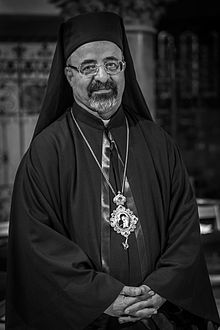
Coptic Catholic Patriarch Ibrahim Isaac Sidrak in kamilavkion (with veil)
Original Source: qadishat.com/2013/10/episcopal-headwear.html
Just as the biretta is worn in the Latin Church and the kamilavkion in the Greek Church, so too, do the Oriental Churches have distinct clerical headwear. Today, we’re looking at non-liturgical headwear for bishops.
The reader will notice in the following photos that many of those of Middle Eastern origin are rather similar, yet remain quite distinct. Both the similarity and distinction come from the dress codes imposed by the Arab and Ottoman overlords. The Arabs and Ottomans maintained a rule that each sect’s clerical clothing had to have its own distinguishing characteristics. Hence we have the slight variations among the Maronite tobiyye, Syriac Orthodox koub’ono, Coptic Orthodox 'emmeh, Assyrian Church of the East kosita, and the Chaldean shash. In regard to the shash, it’s very much a shame that the current Catholicos-Patriarch, Mar Louis-Raphael, refuses to wear it.
Both the Syriac Catholic Church and Coptic Catholic Church each have slightly different variations of the Greek kamilavkion, the Syriacs without a veil, and the Copts with a veil. In keeping with the imposed Ottoman rules, neither is identical to the Greek style. The adoption of a variant of the Greek kamilavkion, rather than a variant of either the koub’ono or 'emmeh, appears to have come about along with their union with Rome.
It’s interesting to note that the only ones who seem to have escaped the Ottoman restrictions were the Melkites, and it’s likely that the historical circumstances of their own union with Rome explain why.
The churches in India were, of course, never affected by the Ottomans, but the Syro-Malabar Church was for some 400 years directly affected by Rome. For many years, the Latin biretta was used in the Syro-Malabar Church, but recently, under the guidance of Major-Archbishop Mar George Allencherry, things have changed a bit. While it’s still essentially a biretta, at least it’s now of a uniquely Syro-Malabar style. The Syro-Malankara hold the distinction of being the only Oriental Church in union with Rome to have maintained the same episcopal headwear as their Orthodox brethren.
http://www.texansforpeace.org/endth...photosofIraqis/CardinalDellyVatican112407.jpg
Chaldean Patriarch-emeritus Mar Emmanuel III in red shash
https://encrypted-tbn0.gstatic.com/...5D7l99aEGdGG3FmfenwxoWZEm8cB0dYAF28_wpCBEFm-0
Maronite Patriarch-Emeritus Mor Nasrallah in black tobiyye
http://www.tajaddod-youth.com/wp-content/uploads/2011/09/Patriarch-Rai.jpg
Maronite Patriarch Mor Bichara in red tobiyye
http://i.picresize.com/images/2014/09/20/PoBKI.jpg
Syro-Malabar Major-Archbishop Mar George in red Syro-Malabar biretta
http://www.caedm.ca/Portals/0/pastoral scene/Baselios_Cardinal_Cleemis.jpg
Syro-Malankara Castholicos Mor Basilios Cleemis in red-topped koub’ono
http://upload.wikimedia.org/wikiped...20px-Moran_Mor_Ignatius_Joseph_III_Younan.jpg
Syriac Catholic Patriarch Moran Mor Ignatios Yowsef III in kamilavkion (without veil)

Coptic Catholic Patriarch Ibrahim Isaac Sidrak in kamilavkion (with veil)