
Easterners, what do YOU believe about the Papacy?

  • Thread starter Thread starter ConstantineTG
  • Start date Start date
Status
Not open for further replies.
I don’t think anyone questions the primacy of the Pope even in the early Church. But what this shows that universal jurisdiction and supreme authority obviously did not exist back then. Even St. Peter was taken to task by St. Paul as shown in the Epistles. Clearly St. Paul respected St. Peter as a person and as a leader of the Church. But there is no indication that all the other Apostles were to bow down and obey St. Peter no matter what.
Thank you for seeing my point
 
If you’re an Eastern Catholic, what you believe about the Papacy should be no different from what any other Catholic believes.
 
Hmmmm… very interesting.

You know, this is a good example of questioning what the Pope was speaking. Especially since this was in the early stage of the church. The development of the Church needed questioning to make sure that it set the right guidelines for the Church. Just like in the First Council of Jerusalem. This still doesn’t say that Cyprian denied the Chair of Peter. He was just arguing a point that seemed to make more since than the Pope requested. He still respects the Chair.

On this article philvaz.com/apologetics/num44.htm

you will find the main idea of the story of him and Stephen. You will also read quotes from his work *De Unitate *.
I think those epistles and conciliar documents speak for themselves. I don’t need a Catholic apologist speaking for them and reading meanings into them which are not there, most especially his highly questionable interpretation of Firmilian. Firmilian, being a true successor to his predecessor Polycrates, took an incredibly dim view of the Roman see’s claim to authority, after Victor’s failed attempt to change the quartodeciman observance of Easter (something which he in fact mentions in the epistle) sometime in the decade of 190-199. Not only that, but his claim that we can learn from Firmilian’s epistle that it was widely accepted that the bishop of Rome derived authority from his claim to being a successor to Peter is anything but clear. Firmilian in fact denies Stephen’s claim to having this authority, when he writes:But that they who are at Rome do not observe those things in all cases which are handed down from the beginning, and vainly pretend the authority of the apostles; any one may know also from the fact, that concerning the celebration of Easter, and concerning many other sacraments of divine matters, he may see that there are some diversities among them, and that all things are not observed among them alike, which are observed at Jerusalem, just as in very many other provinces also many things are varied because of the difference of the places and names. And yet on this account there is no departure at all from the peace and unity of the Catholic Church, such as Stephen has now dared to make; breaking the peace against you, which his predecessors have always kept with you in mutual love and honour, even herein defaming Peter and Paul the blessed apostles, as if the very men delivered this who in their epistles execrated heretics, and warned us to avoid them. Whence it appears that this tradition is of men which maintains heretics, and asserts that they have baptism, which belongs to the Church alone.

It is clear that for Firmilian, one’s authority is derived from his faithfulness to the tradition of the apostles, not from any particular succession, which is why he felt free to encourage Cyprian to oppose Stephen.
 
The topic of the forum is what do YOU believe about the Papacy? I believe in the traditional Roman understanding of the Papacy. I did not exactly set out to prove that this is a historically accurate leadership model but it is what I believe.

As regards to the Great Western Schism, that is an anomaly because your not going to generally have 3 popes who can equally make a good claim to be the Pope. Of course there have been bad times in the history of the papacy.

I think in retrospect I would say that I just don’t like bad church politics in general and it happens in every church. But what I like about the Papacy is that there is somebody who in general is understood to be the final earthly authority within the Church who can calm and end all arguments. Maybe there have been times when we don’t quite know who is supposed to be the Pope but in general we do know who the Pope is.
 
As regards to the Great Western Schism, that is an anomaly because your not going to generally have 3 popes who can equally make a good claim to be the Pope. Of course there have been bad times in the history of the papacy.

I think in retrospect I would say that I just don’t like bad church politics in general and it happens in every church. But what I like about the Papacy is that there is somebody who in general is understood to be the final earthly authority within the Church who can calm and end all arguments. Maybe there have been times when we don’t quite know who is supposed to be the Pope but in general we do know who the Pope is.
To be fair, you’re right. The papacy is as much disproven by the Great Western Schism as is the episcopacy by the Meletian Schism.
 
I don’t think anyone questions the primacy of the Pope even in the early Church. But what this shows that universal jurisdiction and supreme authority obviously did not exist back then.
Definitely possible.
Even St. Peter was taken to task by St. Paul as shown in the Epistles. Clearly St. Paul respected St. Peter as a person and as a leader of the Church. But there is no indication that all the other Apostles were to bow down and obey St. Peter no matter what.
Actually, St. Paul corrected St. Peter for hypocritical conduct, not for doctrinal error.
 
What do I as an Eastern Catholic think about the papacy? Frankly, I don’t really think about it at all. In my day-to-day, week-to-week, and year-to-year life as an Eastern Catholic, the Pope - along with his weekly catechesis and other statements - has very little effect on me.

That being said, I do enjoy reading the writings of both Pope Benedict and Pope John Paul II, but that’s about as far as it goes.
 
A heavily Latinized version of the rite exists today, as a museum piece in a few chapels in central Spain,
Not meaning to nit-pick, but I think we should say that the Mozarabic Rite has been Romanized, i.e. elements of the Roman Rite have been imported into it.
 
If you’re an Eastern Catholic, what you believe about the Papacy should be no different from what any other Catholic believes.
I agree, but what does any other Catholic believe?

Perhaps if they were to come around to what some Eastern Catholics have believed and continue to believe the schism would come to an end. 🙂

The Papacy has changed over time, no one denies that, the changes are actually pretty well documented. So what the average Catholic believes about it has had to change as well. Some don’t move along as fast as others, and Eastern Christians are quite conservative by nature.

That Zoghby Initiative might be good for the average Catholic to adopt universally, no more developments, no more doubts, perhaps no more schism.
 
I agree, but what does any other Catholic believe?

Perhaps if they were to come around to what some Eastern Catholics have believed and continue to believe the schism would come to an end. 🙂

The Papacy has changed over time, no one denies that, the changes are actually pretty well documented. So what the average Catholic believes about it has had to change as well. Some don’t move along as fast as others, and Eastern Christians are quite conservative by nature.

That Zoghby Initiative might be good for the average Catholic to adopt universally, no more developments, no more doubts, perhaps no more schism.
The problem is what most Eastern Catholics believe is not really what the Catholic Church teaches.
 
What do I as an Eastern Catholic think about the papacy? Frankly, I don’t really think about it at all. In my day-to-day, week-to-week, and year-to-year life as an Eastern Catholic, the Pope - along with his weekly catechesis and other statements - has very little effect on me.

That being said, I do enjoy reading the writings of both Pope Benedict and Pope John Paul II, but that’s about as far as it goes.
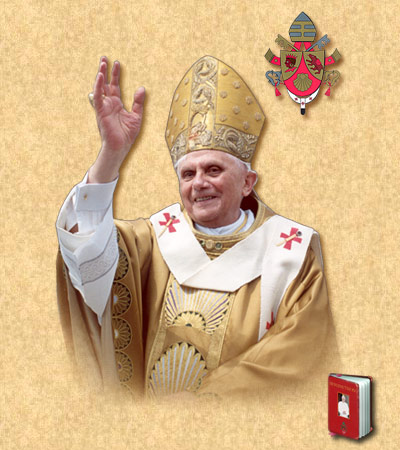
I tend to think “Hey, it’s the Pope! I love that guy!”

http://wp.patheos.com.s3.amazonaws.com/blogs/thecrescat/files/2011/09/pope17.jpg
 
They are still the parent Church. For example the Ukrainian Catholic Church has always offered to give way to the Ukrainian Orthodox Patriarch if they would come into Communion with the Catholic Church.
What about the Maronites? They have no mother church outside of the Catholic communion. What about the Syro-Malabar? One could argue that the Assyrian Church is in some way their “mother church”, but an argument could also be made that they are a distinct tradition that has been influenced by the “imperialism” of both the ancient Assyrian Church and in more recent centuries, the Latins… not to mention that they constitute the vast majority of East Syriac Christians in the world… What about the Melkites? The legitimate canonical patriarch of the Melkites reconciled with Rome in the 18th century…Constantinople then appointed their own “Orthodox patriarch” in his place…how is the Greek Orthodox Church of Antioch the “mother” of the Melkite Greek Catholic Church?
 
What about the Maronites? They have no mother church outside of the Catholic communion. What about the Syro-Malabar? One could argue that the Assyrian Church is in some way their “mother church”, but an argument could also be made that they are a distinct tradition that has been influenced by the “imperialism” of both the ancient Assyrian Church and in more recent centuries, the Latins… not to mention that they constitute the vast majority of East Syriac Christians in the world… What about the Melkites? The legitimate canonical patriarch of the Melkites reconciled with Rome in the 18th century…Constantinople then appointed their own “Orthodox patriarch” in his place…how is the Greek Orthodox Church of Antioch the “mother” of the Melkite Greek Catholic Church?
I don’t know, ask the Melkites why they want to be reabsorbed to the Antiochian Church is union is established.
 
Status
Not open for further replies.
Back
Top