
Evidence "incompatible" with Faith ignored?

  • Thread starter Thread starter CutlerB
  • Start date Start date
Status
Not open for further replies.
C

CutlerB

Guest
I went to Bible study (Anglican) yesterday, which quite a few people attended. The topic for the evening was “Faith” with some references from the Gospels. The main ones we looked at were the the parts in the Synoptics where Our Lord basically says to the Apostles “Have faith and you will move mountains”. The references were Mt 17:19-21; Mk 9:28-29; Lk 17:5-6.

An atheist, who attends church on Sundays and is a mathematician from Cambridge, regularly comes along. I’m not sure why he does either, but I digress.

Anyhow, though he generally takes a literalistic interpretation of Scripture (possibly because of his fundamentalist background), he recognised Jesus was probably not really trying to say “Come on, have faith and move that hill out of the way.” One of the lovely elderly English ladies in the group was rather sad at that, since she wanted to move a tree in her garden. 🙂

So everyone shared their thoughts and experiences they felt connected to these verses. Someone brought up a question about what we thought about the “simple faith” some people have. By that was meant the attitude like “I don’t understand all of the doctrines and why they are what they are, I just believe and don’t dig into the details”. On and on the discussion went, until the atheist among us said something along the lines of:
It’s been shown that the more people commit to a belief, the more likely they are to ignore evidence that goes against that belief * *
He said this in response to an experience one of the people shared, that he tries to live as good as he can according to what he feels God is calling him to do and abide by, and he feels fulfilled.
I was wondering: What do you think about the atheist’s statement? Are you aware of such “studies”, have you experienced what he is describing, or would it even be relevant to the question of prayer and Existence of God if it were true?
 
I remember reading about that study a while back. The idea had to do with notions of opinion, in which one group of people might hold one opinion strongly, another group might hold the opposing opinion strongly, and a third group might fall somewhere in the middle, either holding neither opinion or holding one weakly. It was found that, at the extremes of the spectrum (i.e., strong belief one way or the other), people were more likely not to take into consideration the arguments that supported the other side: having already made up their minds, they tended to be less interested in entertaining the arguments that supported the side that they had rejected. Those who hadn’t made up their minds, or weren’t strongly invested in one side of the argument, were more willing to listen to a variety of points of view.

I’m not certain that your friend can make the leap from the context of the study to the question of religious faith quite so blithely. After all, there’s a great deal of difference between the question “should U.S. immigration policy be changed in order to allow greater numbers of Hispanic immigrants?” and the questions “does God exist?” or “does prayer ‘work’ in a clinical sense?”. It would seem to me that questions of belief – as opposed to questions of fact and opinion – aren’t the domain of the study in question… 😉

(Edited to add: I found a reference to the researcher who conducted the study. It has to do with cognitive dissonance: when a person has already made up their mind, and a fact is presented which contradicts one’s decision, that fact tends to be ignored. Is your friend really presenting facts to disprove articles of faith? That seems to be a contradiction in terms…)
 
I think he was referring to confirmation bias.

I observed a very graphic example of this just the other day while taking my mom shopping. As we drove, she remarked that all the cars these days were red. I replied that I didn’t think that was true. She stuck by her guns and each time we passed a red car she’d say, “See another red car!”, while completely ignoring the many more non-red cars we also passed while she looked for red ones. Finally we pulled into the shopping center parking lot containing hundreds of cars and she again pointed out all the red cars and again completely ignored the fact that they were, literally, surrounded by non-red ones. I’m not necessarily singling her out; we all fall victim to confirmation bias.
 
I have heard of something like this, and psychology research has been conducted on something called cognitive filtering. When people examine contentious issues, say, global warming, government fiscal policy, or gun control, there is a flood of information available, too much to absorb, and much of it contradictory. So it is thought that people tend to unconsciously select the statements and arguments that fit their world view. It is easier to understand and remember the bits that are compatible with your values and lifestyle.

This sounds similar to the previous two posters’ descriptions of cognitive dissonance and confirmation bias. I am not sure if these are different things, or just a difference in terminology. Someone more familiar with psychology could explain better. 🙂

I have thought of this more in the area of politics and government policy, but I suspect some of the same principles apply in the areas of faith and religion. Some people may, by virtue of their upbringing, find it easy to believe in God. Some people may believe that God has certain attributes (punishing vs. forgiving, distant vs. near, etc.) according to the way they were brought up, or life experiences that made a strong impression on them.

Those are just my unstudied thoughts on the matter. I am not an expert in this area.
 
I went to Bible study (Anglican) yesterday, which quite a few people attended. The topic for the evening was “Faith” with some references from the Gospels. The main ones we looked at were the the parts in the Synoptics where Our Lord basically says to the Apostles “Have faith and you will move mountains”. The references were Mt 17:19-21; Mk 9:28-29; Lk 17:5-6.

An atheist, who attends church on Sundays and is a mathematician from Cambridge, regularly comes along. I’m not sure why he does either, but I digress.

Anyhow, though he generally takes a literalistic interpretation of Scripture (possibly because of his fundamentalist background), he recognised Jesus was probably not really trying to say “Come on, have faith and move that hill out of the way.” One of the lovely elderly English ladies in the group was rather sad at that, since she wanted to move a tree in her garden. 🙂

So everyone shared their thoughts and experiences they felt connected to these verses. Someone brought up a question about what we thought about the “simple faith” some people have. By that was meant the attitude like “I don’t understand all of the doctrines and why they are what they are, I just believe and don’t dig into the details”. On and on the discussion went, until the atheist among us said something along the lines of:

He said this in response to an experience one of the people shared, that he tries to live as good as he can according to what he feels God is calling him to do and abide by, and he feels fulfilled.

I was wondering: What do you think about the atheist’s statement? Are you aware of such “studies”, have you experienced what he is describing, or would it even be relevant to the question of prayer and Existence of God if it were true?
Many times, the question is raised here about something that “I heard somebody say.” The appropriate action is to ask that person where those studies are. The Church, through the Bible, which is God’s divine revelation to us, tells us to follow Christ and be like Him. Jesus said very specific things about our relationship to Him. We are all different but part of the same Body. I know lapsed Catholics who believe that as long as they live a version of a good life then that is all they need to do. To one of my friends, I basically said, “Weren’t you raised Catholic like me and with traditions related to your faith? So why have you changed? Who convinced you?”

Either we believe Jesus lived, died and rose again and was True God and true man or we don’t. It is very simple, but then these intellectual sounding arguments, which all deny God’s Catholic Church, and its authority, reduce us and/or God to something other than what the Church teaches.

God bless,
Ed
 
I went to Bible study (Anglican) yesterday, which quite a few people attended. The topic for the evening was “Faith” with some references from the Gospels. The main ones we looked at were the the parts in the Synoptics where Our Lord basically says to the Apostles “Have faith and you will move mountains”. The references were Mt 17:19-21; Mk 9:28-29; Lk 17:5-6.

An atheist, who attends church on Sundays and is a mathematician from Cambridge, regularly comes along. I’m not sure why he does either, but I digress.

Anyhow, though he generally takes a literalistic interpretation of Scripture (possibly because of his fundamentalist background), he recognised Jesus was probably not really trying to say “Come on, have faith and move that hill out of the way.” One of the lovely elderly English ladies in the group was rather sad at that, since she wanted to move a tree in her garden. 🙂

So everyone shared their thoughts and experiences they felt connected to these verses. Someone brought up a question about what we thought about the “simple faith” some people have. By that was meant the attitude like “I don’t understand all of the doctrines and why they are what they are, I just believe and don’t dig into the details”. On and on the discussion went, until the atheist among us said something along the lines of:

He said this in response to an experience one of the people shared, that he tries to live as good as he can according to what he feels God is calling him to do and abide by, and he feels fulfilled.

I was wondering: What do you think about the atheist’s statement? Are you aware of such “studies”, have you experienced what he is describing, or would it even be relevant to the question of prayer and Existence of God if it were true?
These types of gatherings are nothing but a source for propagating error. No one is free to interpret Scripture according to their private " lights. " That is why Christ established His Church. That is the Church’s job. That is why non-Catholic Christianity is in such disarray.
Stick to the Catechism of the Catholic Church, and avoid free ranging discussions.

And of course, we could all live more faithfully to the Gospel. How are Atheists any better ?

Linus2nd.
 
Unfortunately this “trait” seems to be very prevalent amongst the very people that should NOT display it.
“SCIENTISTS” They are supposed to embrace the “Scientific Method” which goes:

Observe Phenomena
Postulate Theory governing or explaining said phenomena
Devise tests, make observations, collect data
Correlate Theory against the Data/Observations obtained
Make Corrections to Theory to adjust for variance between theoretical results vs Measured Results.

This is a grosso modo what the METHOD entails and yet over and over we see “scientists” that disregard the method and espouse themselves to a “theory” like it was the Gospels.

At least with the Gospels we know how much it cost to the persons that wrote them. They were Martyred.
I wonder how many “scientists” would shed their blood for their fancy “theories”.

Just my :twocents:

Peace 👍
 
I went to Bible study (Anglican) yesterday, which quite a few people attended. The topic for the evening was “Faith” with some references from the Gospels. The main ones we looked at were the the parts in the Synoptics where Our Lord basically says to the Apostles “Have faith and you will move mountains”. The references were Mt 17:19-21; Mk 9:28-29; Lk 17:5-6.

An atheist, who attends church on Sundays and is a mathematician from Cambridge, regularly comes along. I’m not sure why he does either, but I digress.

Anyhow, though he generally takes a literalistic interpretation of Scripture (possibly because of his fundamentalist background), he recognised Jesus was probably not really trying to say “Come on, have faith and move that hill out of the way.” One of the lovely elderly English ladies in the group was rather sad at that, since she wanted to move a tree in her garden. 🙂

So everyone shared their thoughts and experiences they felt connected to these verses. Someone brought up a question about what we thought about the “simple faith” some people have. By that was meant the attitude like “I don’t understand all of the doctrines and why they are what they are, I just believe and don’t dig into the details”. On and on the discussion went, until the atheist among us said something along the lines of:
It’s been shown that the more people commit to a belief, the more likely they are to ignore evidence that goes against that belief * *
 
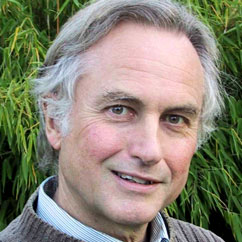
He wouldn’t happen to look like this, would he?


Confirmation bias can be a real problem. Of course, that atheist is probably as guilty as any. Speaking for myself, I can safely say I have been wrong more than a few times, but I do try to avoid confirmation bias, usually. Though I doubt anyone can truly be called “objective” on any issue, much less personal and subjectively affective ones like religion, philosophy, politics, etc.

However, I can safely say this much: that the Resurrection is probably the best explanation for the contents of the Gospels and the Epistles, because despite discrepancies, of which there are probably more than a few (such as the details of the Resurrection morning), in general it really seems like missing the forest for the tree-branches to say the discrepancies outweigh the idea that these guys really believed a man not only was the “son of God” (whatever that means), not only that he “worked miracles”, not only that he preached eloquently, but that he rose from the dead.

Physically.


Suffice to say people who have been brutally executed do not physically rise again. It would not have taken much to put down such a notion - just open the guy’s tomb. What? You mean the body isn’t there? Clearly it was stolen.

Is that so? Why, then, did ten of the Twelve (excluding John and Judas Iscariot) die for a self-made theft? Or something which was probably a delusion of the mind? Do ten people all share the same disease when no one else in Capernaum or Galilee does? Does even one man die for a hoax he has made up unless he is mentally ill?

Well, then, I think we can conclude the Resurrection is a probable reality.

The other thing I think certain is this: that the Catholic Church (speaking also of the Orthodox, who like us share views on the sacraments, the episcopacy, apostolic succession, etc.) was, is, and will be the only Church Jesus Christ founded. Any Christian body which rests on “sola scriptura” is untenable simply because sola scriptura is a contradiction in reality, a work of fantasy built on air. It is impossible to prove (because to do so one must go beyond the Bible), but it is very easy to disprove, whereas Apostolic tradition, both oral and written, is not only evidenced in almost every Christian writing since the beginning, but also has its roots in Jewish oral and written Torah.

Beyond that, I couldn’t tell you much else. Not much else is fundamentally important about the faith. The rest is detail work.
 
It’s been shown that the more people commit to a belief, the more likely they are to ignore evidence that goes against that belief * *
That is common for anyone.
Every one us takes a single seed of information and grows deep and involved roots with them. If the seed is bad then you have dig out every entwined and branched root. It’s a very violent, tedious, and painful experience.
http://i1139.photobucket.com/albums/n541/Juggernaut007/roots2_zps30118ad2.jpeg
It’s easier to deny the truth then get the shovel and start cutting out roots especially when they go to the heart of the tree.
 
Oh, I don’t know. Converts have done it before, in both directions. I think we only feel it will be painful. Not think, feel. Like, feeeel.

As for myself, I’m convicted the feelings really don’t matter either way. It’s very simple. Either Christ rose from the dead, or He didn’t. And either His Church was imperishable from the beginning - thus it is Catholic - or it never was because He never rose.
 
These types of gatherings are nothing but a source for propagating error. No one is free to interpret Scripture according to their private " lights. " That is why Christ established His Church. That is the Church’s job. That is why non-Catholic Christianity is in such disarray.
Stick to the Catechism of the Catholic Church, and avoid free ranging discussions.

And of course, we could all live more faithfully to the Gospel. How are Atheists any better ?

Linus2nd.
Sure, there is the opportunity for error to be spread, but there is also the opportunity to spread the truth. Its just like here on Catholic Answers. Anyone can write in and errors can be spread. And yet, it is a forum for the truth because presented with the truth and also lies, people can for the most part tell which is the more credible. have a little faith that when people get together to discuss the faith that the truth will eventually come to light.
 
I believe we should always try to understand as much one can.

And if one realizes that doctrines (like pre-determination or Biblical inerrancy) have blasphemous consequences, one ought to reject them.

But if one cannot understand a doctrine like the trinity which doesn’t appear to be absurd or even unlikely, one is allowed to accept it by faith.

Lovely greetings from Germany.
Liebe Grüsse aus Deutschland.

Lothars Sohn - Lothar’s son
lotharlorraine.wordpress.com
 
I believe we should always try to understand as much one can.

And if one realizes that doctrines (like pre-determination or Biblical inerrancy) have blasphemous consequences, one ought to reject them.

But if one cannot understand a doctrine like the trinity which doesn’t appear to be absurd or even unlikely, one is allowed to accept it by faith.

Lovely greetings from Germany.
Liebe Grüsse aus Deutschland.

Lothars Sohn - Lothar’s son
lotharlorraine.wordpress.com
Liebe Grüße aus Hamburg! 🙂
 
Hallo Cutler B,

ich bin selber Lothringer und hätte nie gedacht, jemanden aus Hamburg hier zu treffen 🙂

Lovely greetings from Germany.
Liebe Grüsse aus Deutschland.

Lothars Sohn - Lothar’s son
lotharlorraine.wordpress.com
 
Status
Not open for further replies.
Back
Top