Fr. Loya -- EC churches are not diaspora

  • Thread starter Thread starter DadDave
  • Start date Start date
Status
Not open for further replies.
Nice to hear of this kind of progress. I’ve been to three Ruthenian Divine Liturgies; and love each one I’ve gone to. You’re kind of right, in that, the liturgies are something some Roman rite catholics are missing out on, IMO. As far as ethnic identity retention, I don’t think I get that vibe from the parish I’ve been going to. Then again, I’m a language junkie, so I don’t mind trying my hand at singing the Slavonic versions of hymns.
Portland? That’s my pastor’s old parish.

And we do mostly in English. I love the Slavonic, though.
 
Sadly, many ECs only switch to “missionary mode” when they realize immigrants form the motherland aren’t coming in droves and the succeeding generations are more secular. They only start doing this when the parishes are on the last ropes. It may be too late.
Quite so.

I believe this has hurt Orthodox parishes as well.
 
Quite so.

I believe this has hurt Orthodox parishes as well.
I think any ethnic parish would have this problem. The FSSP in Vancouver for example, took over a German Roman Catholic ethnic parish.
 
I think any ethnic parish would have this problem. The FSSP in Vancouver for example, took over a German Roman Catholic ethnic parish.
There are a lot of examples of this kind of thing.

Mother Cabrini founded an order of missionary sisters, apparently with the intent of evangelizing far off less-than-Christian places like China.

The Pope instead, commanded her to the USA, to tend to the Italian diaspora. I think that although she did much good in that capacity, she must have been frustrated.

Tending to the diaspora makes one a caretaker. Yes, it is important work, it is very important in light of the temptations one is exposed to in new lands. Yes, many migrants are attracted by new ideas and different ways of living … even other forms of worship and different beliefs. Someone has to help them stay true.

But it can be that the caretaking of the diaspora as a mission might overshadow the task of bringing the Gospel faith to the native peoples. The clergy and laity alike need to be aware of this and fight against the tendency to ignore the neighbors.

Ignoring the neighbors is easy enough to do when the pews are full, but that is when the community is at it’s strongest and most vital. That is when they should be working the street and bringing others to Liturgy.

Since we as a class tend not to do these things, we have only ourselves to blame when the bishop closes the doors.
 
There are a lot of examples of this kind of thing.

Mother Cabrini founded an order of missionary sisters, apparently with the intent of evangelizing far off less-than-Christian places like China.

The Pope instead, commanded her to the USA, to tend to the Italian diaspora. I think that although she did much good in that capacity, she must have been frustrated.

Tending to the diaspora makes one a caretaker. Yes, it is important work, it is very important in light of the temptations one is exposed to in new lands. Yes, many migrants are attracted by new ideas and different ways of living … even other forms of worship and different beliefs. Someone has to help them stay true.

But it can be that the caretaking of the diaspora as a mission might overshadow the task of bringing the Gospel faith to the native peoples. The clergy and laity alike need to be aware of this and fight against the tendency to ignore the neighbors.

Ignoring the neighbors is easy enough to do when the pews are full, but that is when the community is at it’s strongest and most vital. That is when they should be working the street and bringing others to Liturgy.

Since we as a class tend not to do these things, we have only ourselves to blame when the bishop closes the doors.
In the case of the FSSP, it is good that they are the ones who took over an ethnic German parish. But what if the parish is sold to a non-Catholic or non-Orthodox group? Or worse, secular? I know that one of the parishes of our eparchy is on-lease to the OCA. That is not a bad thing. But not too long ago they closed one of the parishes just outside the metropolis. I don’t know who bought the parish, I know that it was definitely sold.
 
Thanks Dad Dave for the link to Fr. Loya’s talk. In the relevant portion he comments on remarks that Cardinal Sandri made in a homily during the recent ad limina visit of US Eastern Catholic bishops, as reported by the Catholic News Service article in an article headlined:** Eastern Catholics have much to offer US church, cardinal tells bishops. **catholicnews.com/data/stories/cns/1201976.htm
Eastern Catholics “are a bridge” supporting Catholics in their homelands with prayers, advocacy and financial support while at the same time enriching the United States with their cultural and religious identity…
Fr. respond by saying that our self -perception is somewhat different. We do not see ourselves as a diaspora. While our homelands are elsewhere, and we do try to support them, we are, at the same time, our own church here. He then talks about the meaning of sui juris.

But the word “diaspora” was introduced into the discussion by Fr. Loya, not the Cardinal. Moreover, Cardinal Sandri spoke to U.S. bishops from the Chaldean, Ruthenian, Maronite, Ukrainian, Armenian, Melkite, Syriac and Romanian Catholic churches – only the Ruthenian bishops are part of a US based sui juris church. Finally, however the members of the Ruthenian church see contact with the homeland, it should be realized that others may have a far greater sense of urgency, and perhaps are still in the early stages of the immigrant experience, when the thought of a return to the homeland still loom large. Cardinal Sandri in fact did allow for different attitudes of different churches
The arrival of new immigrants, many fleeing persecution in places like Iraq, have increased the size of several of the Eastern churches, like the Chaldean Catholic Church. But the cardinal said other Eastern churches, whose membership is composed largely of people who have been in the United States for several generations, “are experiencing a dramatic fall” in their numbers. “You are not immune to the same corrosive effect on morals and family life as are your fellow Latin Catholics,” Cardinal Sandri said.
Overall, I have to say that I don’t get Fr. Loya’s point. The Cardinal was not talking about a diaspora, and while allowing for a range of different relations to the homeland, was certainly clear on the point that many have been long integrated into the fabric of life in the US. And he was certainly clear on the value of the value of ECCs in the US.

Not a thing here about Latins claiming territory, holding other churches status as serving a diaspora destined for enculturation and assimilation. Not a thing.

 
The ecclesiastical paradigm of the Eastern Churches is simple: one autocephalous Church per country. It seems to me that the Protestant Reformation was partly about the restoration of this autonomy to the nascent nation-states of Christian Europe in the face of an increasingly monolithic and consolidated Latin Church.
I am not sure that what you describe can properly be called the ecclesiastical paradigm of the Eastern Churches. It is now close to this in some areas,now, but this situation developed realtively recently, long after the after the Protestant Reformation, during the decline of the Ottoman Empire.
… it makes little sense not to consolidate tiny Churches that are not distinguished by different Rites or vernacular.
Makes sense to me.
 
It would have been a little challenging to do so until relatively recently, given the suppression of the Mother Church in the Communist era.
. Absolutely.
I think I’m a little younger than you, yet I’ve heard plenty of talk about Mukachevo and Presov over the years.
Sure. In the early days communication was hard but interest great. By the time I arrived, we were in the Communist era in Czechoslovakia there was very little contact. And we were very busy becoming Americans; ethnicity was less pronounced. Now travel is easy. Moreover, we at our leisure look at website of churches in our homeland, and view pictures of pilgrimages there. Seminarians travel back and forth. There are many, healthy contacts. But they are fraternal not ecclesiastical.

More to the point:
I never heard any suggestion that our church was somehow provisional until the enculturation of the community.
 
The ecclesiastical paradigm of the Eastern Churches is simple: one autocephalous Church per country. It seems to me that the Protestant Reformation was partly about the restoration of this autonomy to the nascent nation-states of Christian Europe in the face of an increasingly monolithic and consolidated Latin Church…
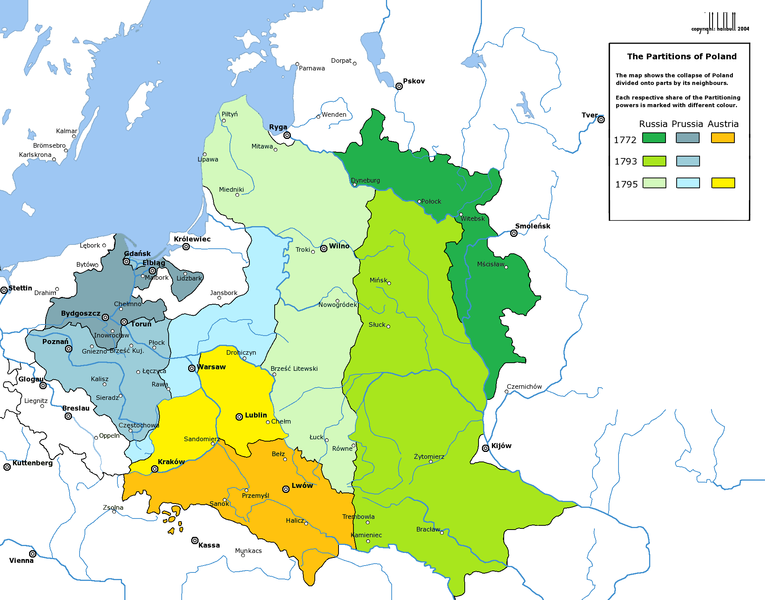
This is worth exploring. When the borders changed of Poland-Lithuania, partitioned into three, would the Church in partition then ideally changed from one to three: Russia, Prussia, and Austria?


When Yugoslavia changed to independent nations, would the following then ideally be the Churches?

1 - Macedonia 1991 (originally part of Serbia)
2 - Slovenia 1992 (originally part of Austria-Hungary)
3 - Croatia 1992 (originally part of Austria-Hungary)
4 - Bosnia & Herzegovina 1992 (originally was Austria-Hungary)
5 - Montenegro 2006 (originally Boka Kotorska was Austria-Hungary)
6 - Serbia 2006 (originally part of Serbia)
7 – Kosovo (from Serbia) 2008 (originally part of Serbia)
8 – Vojvodina region (Vojvodina was Austria-Hungary)
 
Was it I think +Father Alexander Schmemann of blessed memory who says we are all in the diaspora since we are not yet in the Kingdom of God. I found it a very useful perspective, and worth recognizing, apart from what Fr Tom is addressing, or as part of what he addresses.
 
My dear brother, I do believe the notion of territoriality is still very much an issue within the Catholic Communion. I would argue that it has likely doomed the Ruthenian Church to near obscurity, perhaps extinction.

While I might not blame the Latins for inventing the concept, I would say that it is very much alive. Discussion of “controversial” aspects of differences in discipline, particular with regard to mandatory celibacy vs. the married priesthood, are laced with references to practice “outside the canonical territories of the churches of origin”.
Yes and no.

Respect for canonical territory is of course crucial for good order; it also reflects a certain practicality. I could not possibly expect to fly to another country, with no Grek Catholic presence, and expect to have a Greek Catholic bishop installed. It would important that I was there not on vacation, but planning to immigrate permanently, and the there were others so that we reach some critical mass. As that reality was taking shape, it would be natural that existing ordinaries would be in authority. With time, that might give way to the erection of a Greek-Catholic eparchy. That is what we have lived through in the US.

The idea that the slow pace of development ecclesiastical structure that matched the Greek Catholic reality in the US, and lingering issues of “territory” has doomed the Ruthenian church is faulty, IMO - the time line is all wrong. It hasn’t been a stimulus by any means, but a generation after Cum Data, the BCC in the US was enjoying a golden age and our seminary was overflowing. Our decline in numbers over the past fifty years tracks other groups, like ACROD or even the OCA, who have not faced the “lacing” that you describe.

I think that Cardinal Sandri has a better take with his comments on our facing the same issues as others in secularization of American culture and its " … corrosive effect on morals and family life". We also have been facing the re-settlement of members of tight communities in the north-east, who are spreading throughout the US. That is a great challenge for a small church; it has lead to additional losses as individuals go elsewhere.
This re-analysis doesn’t make the problems go away, but, I think, it is important to have the right diagnosis of the problem in order to respond to it effectively.
 
This sounds awfully familiar 😃
Seems like the OCA, Antiochian Orthodox, and Greek Orthodox, do a better job of bringing in converts to the Byzantine tradition. From my experience. Where I live we have both a Antiochian Orthodox Church and a UGCC within 10 miles of each other. And the Antiochian Orthodox Church is packed. The UGCC is rarely packed if at all. Plus the Antiochian Orthodox Church celebrates Vespers, Matins, Akathists, Paraclesis, etcc. The UGCC just Sat, and Sun, Divine Liturgy and certain feast days.
 
Seems like the OCA, Antiochian Orthodox, and Greek Orthodox, do a better job of bringing in converts to the Byzantine tradition. From my experience. Where I live we have both a Antiochian Orthodox Church and a UGCC within 10 miles of each other. And the Antiochian Orthodox Church is packed. The UGCC is rarely packed if at all. Plus the Antiochian Orthodox Church celebrates Vespers, Matins, Akathists, Paraclesis, etcc. The UGCC just Sat, and Sun, Divine Liturgy and certain feast days.
I was at the OCA parish this past Sunday and I met a number of Ukrainians. I go to a Ukrainian Catholic parish. It is telling if a Ukrainian tells you he doesn’t want to go to a Ukrainian Church because it is too ethnic. Makes me question why a Filipino immigrant to Canada is in a Ukrainian parish.
 
Seems like the OCA, Antiochian Orthodox, and Greek Orthodox, do a better job of bringing in converts to the Byzantine tradition. From my experience. Where I live we have both a Antiochian Orthodox Church and a UGCC within 10 miles of each other. And the Antiochian Orthodox Church is packed. The UGCC is rarely packed if at all. Plus the Antiochian Orthodox Church celebrates Vespers, Matins, Akathists, Paraclesis, etcc. The UGCC just Sat, and Sun, Divine Liturgy and certain feast days.
I’ve been to several Greek Orthodox parishes that were very ethnic in nature. Try a Serbian or Moscow Patriarchate parish. For me that has not been an issue, considering many of these communities have survived precisely because of that identity through serious oppression. I won’t disagree that the UGCC like several of the ethnic Orthodox jurisdictions needs to work a bit harder on the English liturgies.
 
Seems like the OCA, Antiochian Orthodox, and Greek Orthodox, do a better job of bringing in converts to the Byzantine tradition. From my experience. Where I live we have both a Antiochian Orthodox Church and a UGCC within 10 miles of each other. And the Antiochian Orthodox Church is packed. The UGCC is rarely packed if at all. Plus the Antiochian Orthodox Church celebrates Vespers, Matins, Akathists, Paraclesis, etcc. The UGCC just Sat, and Sun, Divine Liturgy and certain feast days.
Christian converts may find dogmas on the primacy and teaching authority of the Supreme Pontiff difficult to believe in, coming from a non-Catholic upbringing.
 
Status
Not open for further replies.
Back
Top