Fr Miscamble defending atomic bomb

  • Thread starter Thread starter CatholicAggie19
  • Start date Start date
Status
Not open for further replies.
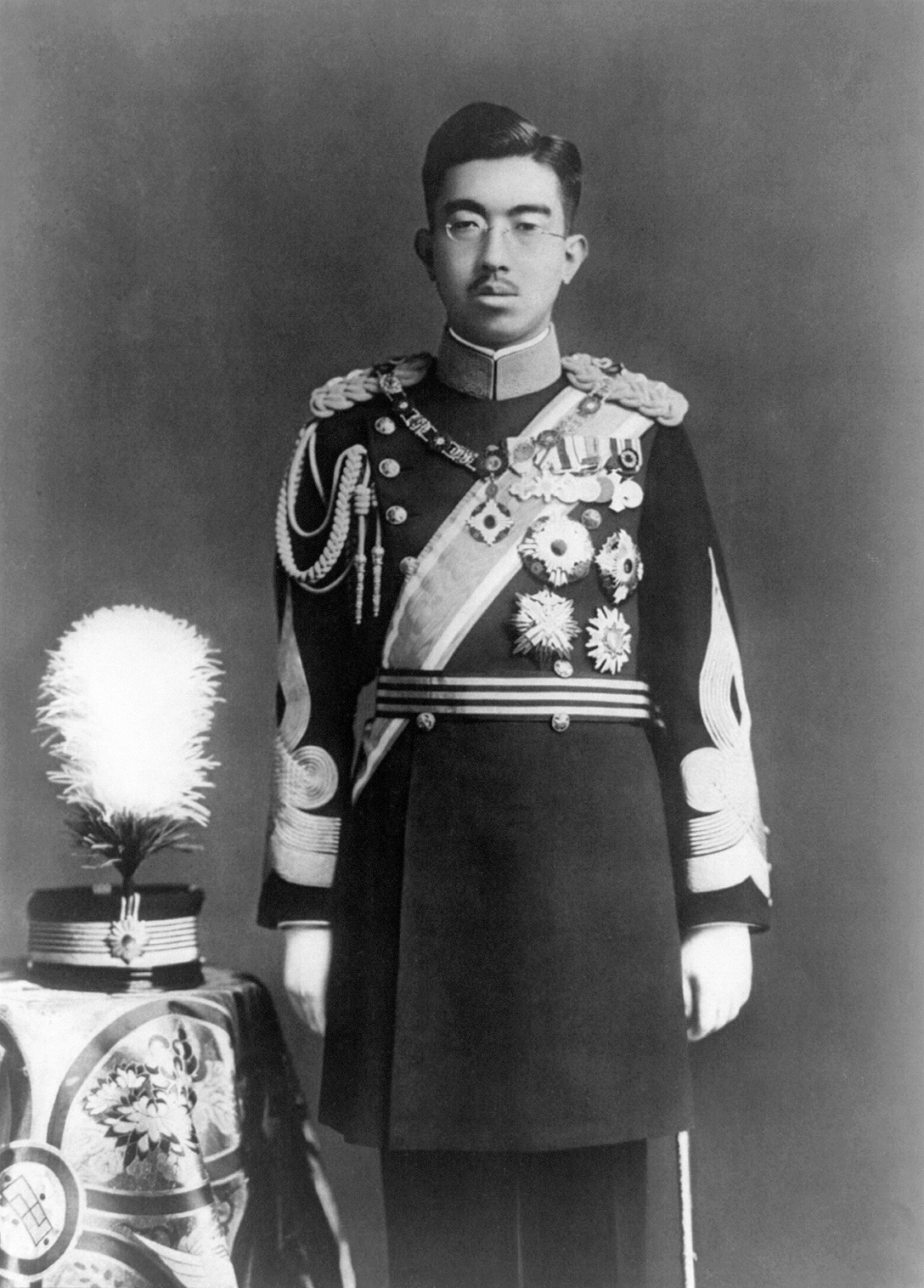
I often wonder why Truman didn’t drop one over the ocean or on an uninhabited island, and tell Hirohito, “Watch this. If you don’t surrender, this will happen to you.”
That is a thought that I have had. Why not give fair warning to the Japanese high command----by dropping it where they could see it’s destructive power and giving them 1 or 2 weeks to come to the table? Or if you were to use the bomb, why not against an island that was mainly a military fortress like Iwo Jima (of course, we had captured Iwo by the time the bomb was operational, but there must have been other island strong points similar that weren’t invaded)? Aside from the unfortunate Koreans and other forced laborers, Iwo was pretty much occupied by military targets only. We had bypassed a number of remote islands heavily fortified by the Japanese in the Pacific—there were targets that were mainly occupied by Japanese forces and few, if any civilians. Dropping the bomb on a Japanese held island and then allowing the Japanese to “inspect” the island afterwards and what the bomb did to the prepared defenses and military forces stationed there could have given the Japanese fair warning of what could be used on the home islands while minimizing non-combatant casualties. You could even offer to evacuate any Japanese soldiers (in the interest of common humanity) who wished to leave in advance of the a-bomb demonstration as long as they maintained a cease fire. Showing what the bomb could do to even the most powerful fortifications would at the very least alert the Japanese high command that even their best defenses would be completely useless with the bomb. This is completely hypothetical, but if I was President, I would want to give ample warning to the Japanese before using it on the home islands.
 
We did, of course, demonstrate what the bomb would do. 1890 feet above and 800-900 feet NE of the aiming point, the Aioi Bridge, at the juncture of the Ota and the Motoyasu Rivers. It quite vividly illustrated not what the bomb might do, but what it, in fact, did do. The Japanese could stand in the middle of the 5-6 sq. miles of what it did do and contemplate. They did not surrender.

On this question, the first thing I always suggest is Newman/TRUMAN AND THE HIROHSIMA CULT, chap.4.

Three bombs were available, as of the first 3 weeks in Aug. IOW, one on hand was not used.
 
Last edited:
I don’t know if this was mentioned before, but didn’t the U.S. send airplanes to drop leaflets warning Japanese civilians to get out of their cities because a new, powerful weapon was going to be used against them?
 
Some say the world will end in fire,

Some say in ice.

From what I’ve tasted of desire

I hold with those who favor fire.

But if it had to perish twice,

I think I know enough of hate

To say that for destruction ice

Is also great

And would suffice

Robert Frost
 
Last edited:
Generic warning leaflets were dropped over around 30 cities in the period before Hiroshima, warning the Japanese to evacuate: some of the cities on the leaflet, and possibly others, would be destroyed by bombing. No mention was made of an atomic bomb, or any other specific warning. Radio warning were broadcast from Saipan with the information. After Hiroshima a 2nd set of leaflets were dropped, with a specific mention of the bomb, a photo of the mushroom cloud, and the Soviet declaration of war, and warned of more atomic bombs to follow. It is not known if any of these reached Nagasaki before the 2nd bomb.
 
Last edited:
Generic warning leaflets were dropped over around 30 cities in the period before Hiroshima, warning the Japanese to evacuate: some of the cities on the leaflet, and possibly others, would be destroyed by bombing. No mention was made of an atomic bomb, or any other specific warning. Radio warning were broadcast from Saipan with the information. After Hiroshima a 2nd set of leaflets were dropped, with a specific mention of the bomb, a photo of the mushroom cloud, and the Soviet declaration of war, and warned of more atomic bombs to follow. It is not known if any of these reached Nagasaki before the 2nd bomb.
Ironically nicknamed “LeMay leaflets” even though there were few people who loved bombing cities more than General LeMay

Here is one (Please Note: This uploaded content is no longer available.)
 
Because the Kamikaze pilots may have “lost all semblance of humanity” (which is debatable), we are justified in killing elderly people, women, and children? Weren’t these civilians also “truly innocent”?

Now it did shorten the War and save American lives, as many claimed including Truman. But look at the cost to humanity.
 
Last edited:
Saved many lives. All ages, sexes, nationalities, civilian/military, Allied/Japanese/other nationalities in the Theater. All these being, collectively/ individually, humanity.

I think I have mentioned that, before.
 
Last edited:
Now it did shorten the War and save American lives, as many claimed including Truman.
This is not a proven fact. It is an opinion, which, of course, you are entitled to. Others believe that the USSR’s declaration of war and military offensive against Japan were the motivating factors together with Truman’s indication that the Japanese would be allowed to preserve their emperor if they wished to do so.

If you were to read Russian history books about Japan’s surrender, you would find a much different perspective than what is accepted as fact in the USA.

Fr. Miscamble is completely wrong in his assessment of Truman’s options, one of which would have been to wait just a week or two to allow the USSR’s devastating declaration of war to have its effect while, at the same time, offering the same assurances concerning Japan’s ability to have say in its postwar government.
Truman knew that the USSR’s military offensive was imminent in August, 1945, and that this would have a devastating effect on the Japanese leadership, but he chose to go ahead with the nuclear attacks anyway. In my opinion, his decision to use the bombs at that particular moment was motivated by his desire to steal the credit for Japan’s surrender from the USSR. His ploy seems to have worked very well, at least in the USA.

http://www.doug-long.com/byrnes.htm
 
Last edited:
“Alleged”. It is to smile. How’s the Bix reading coming along?

Good surveys on the question of the bomb or the Soviets or interaction may be found in a number of places. I’lll pick Kort/COLUMBIA GUIDE TO HIROSHIMA AND THE BOMB, Part II, key question 7.
 
As I have said before, the very fact that the war-criminal Hirohito was not even arrested, much less indicted or convicted, speaks for itself. The idea that this outlaw was necessary for the allied occupation of Japan is just so much US propaganda designed to cover up the fact that Truman did, indeed, specify terms which could be interpreted by the Japanese as allowing Japan’s imperial dynasty to continue.

 
Last edited:
Yep. Haven’t read a word of Bix.

As the last part of the second sentence, you are improving. Though, again the reply to the Japanese query was done by Byrnes and it was indeed (as was the original in the Potsdam Declaration) capable of being interpreted as allowing what ever was the freely and democratically expressed desires of the Japanese, as to their form of government, after the Occupation forces had left town.

Always remembering that nothing was said as to what would or would not be done, with respect to either the throne as an institution, or as to the Emperor specifically, as an individual.

Save that he was rapidly employed issuing letters to the military, to behave themselves, to be carried to various parts of the Japanese holdings, still extant (China in particular)in the hands of his royal brothers. As we wanted done, so it was done.
 
Last edited:
The fact is that if Truman or MacArthur had decided to go after Hirohito in 1945, (like the way MacArthur went after General Yamashita following the massacres in Manila, even though Yamashita did not have direct control of the troops under Admiral Iwabuchi in Manila), it very well could have caused bloodshed and a civil uprising on a massive scale. The fact that the US allowed the Emperor to remain as a figurehead while basically turning Japan into a non-militarized state with MacArthur as transitional governor was a huge success for humanity in general

Also, the Emperor admitted on Jan. 1, 1946 that claims of his divinity were mythical and renounced all claim to divinity and Shinto was abolished as the national religion (on 12/15/45), all peacefully.

Hirohito might have deserved to be tried as a war criminal, but instead, MacArthur/Truman et al. used prudential judgment and allowed him to continue to serve as a figurehead, but the authority passed to a democratic government to run Japan.

The fact of the matter is that both Japan and ( first West, now all of) Germany have been stable, peaceful members of the international community for more than seventy years speaks volumes about the wisdom of Allied post war governance.

Now, if the US continued to use such good prudential judgment in dealing with foreign affairs in the decades since, we might have many less problems to deal with now. But some of the decision making in reforming Japan and Germany was truly inspired, and the results speak for themselves.

(Later attempts at “spreading democracy” or whatever justification the US government used for later interventions from Iran in 1953 to Vietnam (from late 1940s to 1973/1975) to Iraq in 2003 are more dubious and were often disasters)
 
Last edited:
thanks for your reply. Even if what you say is true, it does not in any way prove that Truman had no other option than to initiate nuclear war upon Japan in August of 1945 or that his decision to do so saved any lives at all. Truman could have publicly aquiesced to the Japanese request to allow their emperor to remain in office, an act which he subsequently allowed MacArthur to undertake. And he could have waited for the imminent Russian attack to have its effect on Japan’s leadership.
 
Last edited:
Nothing much to add here. Though I will put in General Homma’s name. (Taylor/A TRIAL OF GENERALS).

Heck, there is something to add. Dower’s magisterial/Pulitzer Prize (plus half a dozen other awards). winning EMBRACING DEFEAT: JAPAN IN THE WAKE OF WWII.

And to observe that Bix also won the Pulitzer, for his book on Hirohito.
 
Last edited:
that’s my story and i am sticking to it ------(must have last word)
 
Status
Not open for further replies.
Back
Top