Help Understanding Catholic Statement

  • Thread starter Thread starter Hiskid1973
  • Start date Start date
Status
Not open for further replies.
H

Hiskid1973

Guest
“our salvation depends upon practical acts of kindness to others”

Thanks…It was said to a loner who didn’t have many friends…

I know our good works or lack of them affect the rewards we receive…
I know about the sheep/ goat references…What if it’s shy, lonely maybe emotionally troubled
saint of the Lord(sheep)…I know good works to others flow from a grateful growing and maturing follower of Christ…Thanks …May this be a year of great growth and maturity to you in the Lord…
 
It would help to know the context of this statement. From which document does it come? Who made this statement?
 
“our salvation depends upon practical acts of kindness to others”

What if it’s shy, lonely maybe emotionally troubled
saint of the Lord


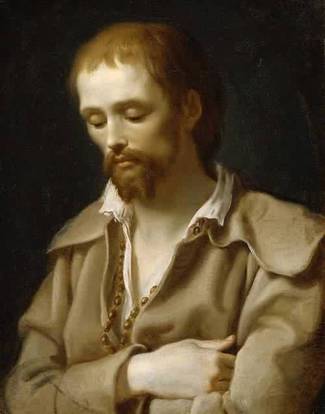
Saint Benedict Joseph Labre

As a young man, Benedict Joseph made a number of unsuccessful attempts at monastic life. He tried his vocation with the Trappists, with the Cistercians, and with the Carthusians, but, in every instance, after a few months or a few weeks, he was rejected as being unsuitable. Benedict Joseph was endearing in his own way. He was a gentle young man, tortured by scruples of conscience, and sensitive. He was completely honest, humble, candid, and open. He was cheerful. But, for all of that, he was a misfit. There was an oddness about him. He was drawn irresistibly to monastic life and, at the same time, rejected from every monastery in which he tried his vocation.

When he was twenty-two years old, Benedict Joseph left the Abbey of Sept-Fons, still wearing his Cistercian novice’s habit, with a rosary around his neck, and a knapsack on his back. His only possessions, apart from the clothes he wore, were his two precious rosaries, a New Testament, a Breviary for reciting the Divine Office, and The Imitation of Christ.

Walking all the way to Rome, begging as he went, he became a consecrated vagabond, a pilgrim vowed to ceaseless prayer. He walked from one shrine to another, visiting the Holy House of Loreto, Assisi, Naples, and Bari in Italy. He made his way to Einsiedeln in Switzerland, to Paray-le-Monial in France, and to Compostela in Spain. He lived on whatever people would give him, and readily shared what little he had. He observed silence, praying constantly. He was mocked, abused, and treated like a madman. Cruel children pelted him with garbage and stones.

On April 16, 1783 Benedict Joseph collapsed on the steps of the Church of Santa Maria dei Monti. It was the Wednesday of Holy Week. He was carried to a neighbouring house where he received the last sacraments, and died. He was thirty-five years old. No sooner did news of his death reach the streets than a huge throng gathered crying, “È morto il santo! – The saint is dead!” Benedict Joseph was buried beneath the altar in a side chapel of Santa Maria dei Monti.

Benedict Joseph Labre was dead but a few months when more than 136 miraculous healings were attributed to his intercession. Present in Rome at the time of his funeral was an American Protestant clergyman from Boston, The Reverend John Thayer. The experience of Benedict Joseph’s holy death converted Thayer. He was received into the Catholic Church, ordained to the priesthood, and died in Limerick, Ireland in 1815. Excerpts from here.
Further reading about Saint Benedict Joseph Labre here and here.

Patron Saint of: bachelors, beggars, hoboes, homeless people, insanity, mental illness, mentally ill people, people rejected by religious orders, pilgrims, tramps, unmarried men.

 
It would help to know the context of this statement. From which document does it come? Who made this statement?
It wasn’t a document it was a response to a fellow forum member who struggles with being a loner, not any friends…I responded to the person and saw someone else respond with that statement as part of their response…I didn’t want say any ting in the thread…It just sorta just struck me…
 
“our salvation depends upon practical acts of kindness to others”

Thanks…It was said to a loner who didn’t have many friends…

I know our good works or lack of them affect the rewards we receive…
I know about the sheep/ goat references…What if it’s shy, lonely maybe emotionally troubled
saint of the Lord(sheep)…I know good works to others flow from a grateful growing and maturing follower of Christ…Thanks …May this be a year of great growth and maturity to you in the Lord…
Many, many, of us have been shy, lonely, troubled, etc…, either at some point in our lives, or as an ongoing state - and we can be good Catholics! That would describe myself both as a teenager, and also at this period in my life (early 50’s), with a period of “sociability” in between.

I think the worst advice to people in this state is “Get out of yourself, go and make friends”.

However, one can always make small acts of kindness. We just make them to strangers, relatives, and not-so-close friends.

Sometimes we might feel that because we have no friends, or are emotionally troubled, that our acts of kindness are somehow worthless (“Who would want the kindness of someone who can’t make any friends of their own?”). Absolutely not!
 
“our salvation depends upon practical acts of kindness to others”

Thanks…It was said to a loner who didn’t have many friends…

I know our good works or lack of them affect the rewards we receive…
I know about the sheep/ goat references…What if it’s shy, lonely maybe emotionally troubled
saint of the Lord(sheep)…I know good works to others flow from a grateful growing and maturing follower of Christ…Thanks …May this be a year of great growth and maturity to you in the Lord…
Well since you say in a follow up post that this comes from a comment made by a Catholic on this forum, then your post title seems to be in error.
This is not a “Catholic Statment” (Church teaching) but rather a statement by a Catholic (who may or may not know his fiath that well)…

Also, since you bolded the word, “depends” I am making an assumption that your concern relates to the idea of works being necessary for salvation. If I am wrong don’t hesitate to correct me.

Now - down to brass tacks and how a shy “loner” type can perform “practical acts of kindness to others…” Assuming that this person is not agoraphobic and never leaves the house there are any number of chariable acts that can be done.
Holding the door for someone,
Not parking in the nearest spot to the door and leaving it for someone else.
Letting another go in front in a checkout line.
Devoting ones self to prayer ( a big one)

These are just a few small things that one can do - going completely unnoticed by the world, but building treasure in heaven.

Peace
James
 
Thanks Edmund for sharing your story…I just thought the salvation “depends” remark was pretty extreme…Almost like you “blow it” and it’s no heaven for you…I didn’t know if that’s a typical Catholic train of thought…I know our good works flow from Christ’s working in us…Other than the the person who wrote it displays a very godly faith.
 
Hi James, thanks for your comment> I said catholic and opposed to a protestant or orthodox.
I guess after you pointed it out I could have said “a catholic’s statement” Sorry about that…
Yes it was a “works” statement…
 
Hi James, thanks for your comment> I said catholic and opposed to a protestant or orthodox.
I guess after you pointed it out I could have said “a catholic’s statement” Sorry about that…
Yes it was a “works” statement…
No biggie, I jsut wanted to be clear so that we knew it was from an individual and not a “teaching”. Hopefully the rest of my post helped to show that, so long as we are rightly disposed toward God, there are many-many things that we can do for our neighbor.
Gets back to St Francis’ famous statement…Preach the Gospel always. When necessary use words.

Peace
James
 
we think we feel we act. Our good works are proof of our faith, proof of our thoughts, proof or our feelings. If we do not have good works our faith is a delusion.

We can not proove our faith to god by works. we proove our faith to ourselves by good works.

That is why faith without works is dead. Or to paraphrase faith without good works is a belief system of desception.

faith/good works…the 2 go hand in hand.
 
Status
Not open for further replies.
Back
Top