
How to fight gluttony? Obedience?

  • Thread starter Thread starter in_servitude
  • Start date Start date
Status
Not open for further replies.
I

in_servitude

Guest
In my past, I’ve been significantly overweight (80lbs over). I’ve tried so many different ways to get the weight off. These days, it seems like I tend to hover around 30lbs overweight.

This Lent - I decided to try something different - strict obedience to my hunger. I would eat if and ONLY if I felt the pangs of hunger.

No counting of calories, no regimented exercise, no banning of this or that foods.

My question is: Isn’t this just one of the ways that we are to be obedient to God?

At the start of this, I didn’t eat for almost 2 days. I was wondering if God was going to test me by not allowing me to feel any hunger for the duration of Lent. But, after about 2 days, the hunger pangs showed up. As the days progressed, there would be meals where I wasn’t able to eat at all since I was not hungry (and I figure that I had eaten too much at the previous meal). So, I would have to skip the meal since I wasn’t feeling those hunger pangs. Now, I didn’t exactly enjoy skipping that meal - since I very much enjoy the sensation of eating tasty foods. I started to limit my food at each meal so that I would be more likely to be hungry by the next time I was to eat.

I didn’t do this for weight loss or weight control. Rather, my intention was to add another dimension of obedience to my life.

Are we not called to be obedient to our bodies in this manner? Or, am I just dealing with my own personal baggage in my own personal way?
 
Did you say that you didn’t eat at all for two days? If you’re trying to lose a lot of weight quickly, you really should be consulting a doctor to make sure you’re doing it in a healthy way.

And I don’t think that we are called to be constantly fasting. There may be some who are called to be constantly fasting; there are days when we are all required to do this, but there are also feast days when we can just enjoy food for food’s sake.
 
In my past, I’ve been significantly overweight (80lbs over). I’ve tried so many different ways to get the weight off. These days, it seems like I tend to hover around 30lbs overweight.

This Lent - I decided to try something different - strict obedience to my hunger. I would eat if and ONLY if I felt the pangs of hunger.

No counting of calories, no regimented exercise, no banning of this or that foods.

My question is: Isn’t this just one of the ways that we are to be obedient to God?

At the start of this, I didn’t eat for almost 2 days. I was wondering if God was going to test me by not allowing me to feel any hunger for the duration of Lent. But, after about 2 days, the hunger pangs showed up. As the days progressed, there would be meals where I wasn’t able to eat at all since I was not hungry (and I figure that I had eaten too much at the previous meal). So, I would have to skip the meal since I wasn’t feeling those hunger pangs. Now, I didn’t exactly enjoy skipping that meal - since I very much enjoy the sensation of eating tasty foods. I started to limit my food at each meal so that I would be more likely to be hungry by the next time I was to eat.

I didn’t do this for weight loss or weight control. Rather, my intention was to add another dimension of obedience to my life.

Are we not called to be obedient to our bodies in this manner? Or, am I just dealing with my own personal baggage in my own personal way?
Please, please seek the advice of a nutritionist or physician/nurse practioner who has specialized training in nutrition before you go without eating for 48 hours again. That this is seriously unhealthy and potentionally damaging behavior cannot be understated.

Also, please seek the advice of a spiritual director, as well as a counselor who can help you explore body image acceptance and dieting recovery issues.

Luna
 
That’s a curious practice. Did it have any impact on your weight?
 
Please, please seek the advice of a nutritionist or physician/nurse practioner who has specialized training in nutrition before you go without eating for 48 hours again. That this is seriously unhealthy and potentionally damaging behavior cannot be understated.

Also, please seek the advice of a spiritual director, as well as a counselor who can help you explore body image acceptance and dieting recovery issues.

Luna
Sound advice. I think that many of our Protestant brethren (and probably some ascetics, as well) will fast from all food for up to a week. Definitely consult a nutritionist before attempting one that long so you can prevent a sodium inbalance

I tried xerophagy (veggies only) for a week once. I couldn’t make it past the 4th day.
 
I have lost around 80 pounds over the last three years, and at this point, I am going up and down by 10 pounds, and can’t seem to get going on losing the last 30 pounds. Right now, I have a terrible stomach ache because I ate six pieces of apple cinnamon bread this afternoon–around 600 calories, and it hurts, and it makes me very depressed that I can still do this kind of thing. Nuts to those who say that once we establish a good habit, it will stick. Not true.

So I understand all the struggles that the OP is going through, and sympathize.

I don’t understand why the OP equates eating only when hungry with obedience to the Lord. There is no command to “eat only when hungry,” is there? And we are not commanded what specifically we should eat, either, so by the OP’s logic, it would be OK to eat nothing but Peeps and Mt. Dew when hungry.

It seems to me–and remember, I’ve been there and I’m still there, although less of me is there than used to be!–that as Christians, we need to learn to respect God’s creation, and that means respecting our bodies.

Respect would mean eating a well-balanced diet that makes us healthy, not unhealthy. Not eating for 2 days is generally not healthy.

IMO, to not respect our bodies would be disobedience.

Personally, I would not use “hunger” as a gauge of when to eat. For many of us with food issues, it is difficult for us to tell when we are “hungry.” In fact, even though my stomach feels terrible right now, I am actually thinking that maybe the pain is because I need to eat something. That’s how warped I am when it comes to hunger.

The dietician that I worked with taught me that the best thing for people to do is plan all of our food each day. Many of us with weight/food issues have learned to eat “by our emotions.” and what we need to do is stop listening to our hearts and start listening to our brains.

If we plan all of our food, even our snacks, we remove anxiety about “what shall we then eat?” and we stop listening to emotions that tell us to go ahead and eat the donuts or pizza or candy. Instead, we are able to relax knowing that at a certain time, we shall be eating a certain food (and hopefully, that food is something that will make us healthy as well as satisfy our taste buds).

D
 
I’d be careful about using Lent as a weight-loss program.
 
Hey-I used Lent to give up cigarettes 3 years ago-and it worked. 🙂 Still don’t smoke.😛
 
I think there is a balance to be reached in fighting gluttony. I think there really is something to only eating when hungry, but that it also needs to come with some balance and common sense. Going two days without eating anything is not healthy, in fact, I’ve heard that going on crash diets like that can have a negative impact on future weight loss as it can trick the body into thinking it needs to store up fore future ‘famines’. Mind you, I’m no expert in this so my information about that could be off. So, while I agree that not eating for two days is a bad idea, especially if one already has weight issues, I think the general idea of trying to time your eating around your hunger makes a lot of sense. I’ve recently begun to realize that that might just be the missing piece to my way of eating. I amfar from bein overweight, but I’ve also definitely been packing on some pounds over he past few years. I also have not even felt hunger for most of my life and I’ve beun to realize hat eating for me has definitely become linked to my emotions as a comforting thing as opposed to a means of receiving necessary nourishment. Basically, what I’m trying to get at with this long-winded post, :o is that it’s a really good idea to bring hunger back into ones life as a means of knowing how much to eat, but at the same time, if somebody already has swift issues, whether over or under eating, they should not try to judge this by themselves as it is quite possible that there natural ‘hunger sensors’ are a little off balance. Also, this doesn’t mean that people should only ever eat when they are hungry, or that it would be wrong to eat something for the pleasure of it now and again, but if one is eating such that they are never hungry, they could probably do with a reexamination of their eating habits. Although, again, if trying to follow ones own hunger, people should always be on the lookout for goingto far and depriving themselves of needed nourishment. If one starts to become underweight, or go daya without eating etc hat is a sign of a deeper problem that should be addressed immediately and somebody who finds such things happening should not try to fix their eating on their own as it could lead to malnourishment and all sorts of other issues.
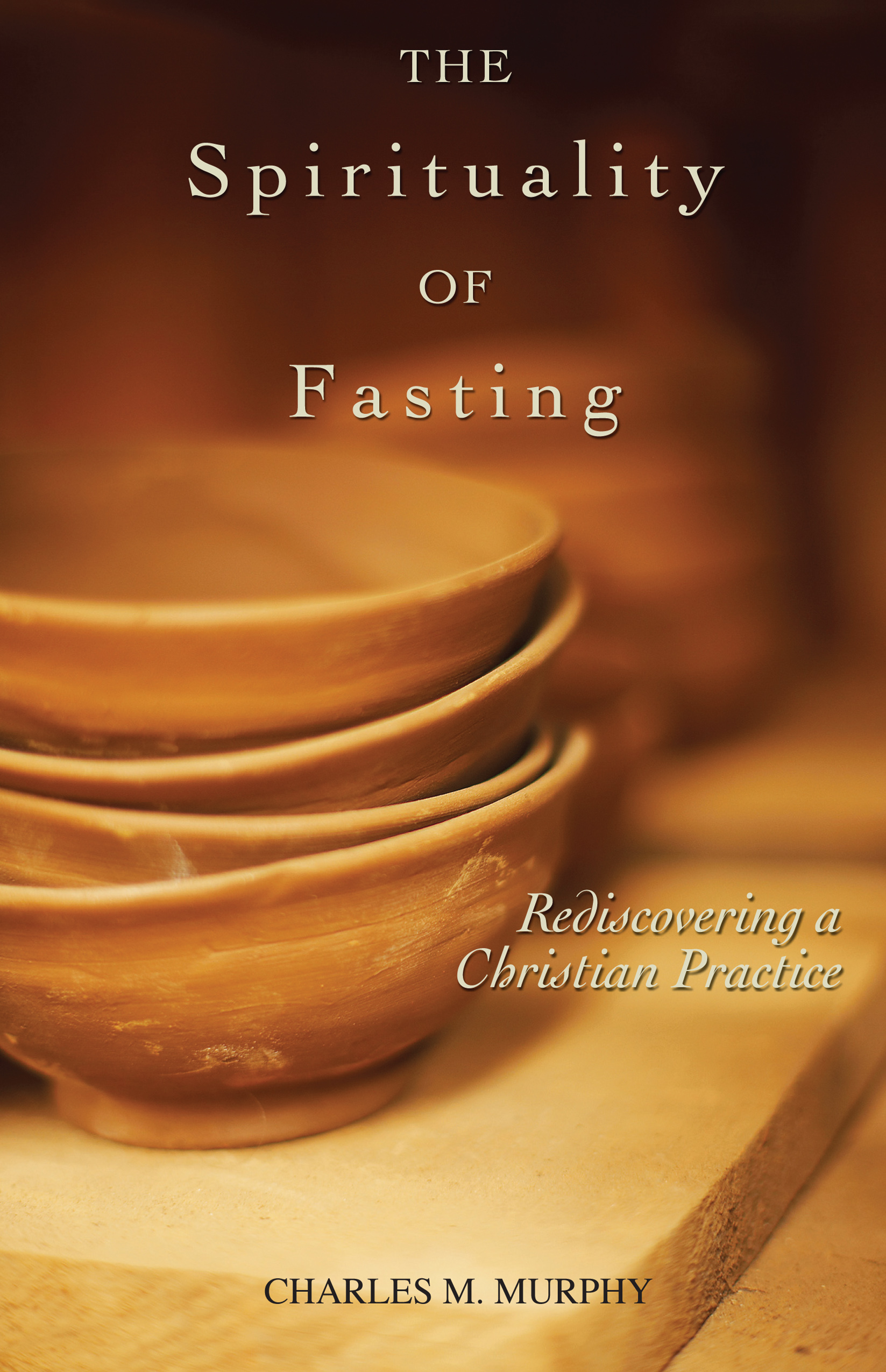
 
My suggestion is that you stop looking for diets and also stop using spiritual justifications to diet. I share your kind of problems and like any other form of sin we must surrender to God and understand the ways to surrender to him. I encourage and read the book The Spirituality of Fasting: Rediscovering a Christian Practice. It might help you renounce to food because you are becoming detached from the material needs. Our will will never be strfong enough unless we are aligned with God’s will.
 
Did you say that you didn’t eat at all for two days? If you’re trying to lose a lot of weight quickly, you really should be consulting a doctor to make sure you’re doing it in a healthy way.

And I don’t think that we are called to be constantly fasting. There may be some who are called to be constantly fasting; there are days when we are all required to do this, but there are also feast days when we can just enjoy food for food’s sake.
I was a little concerned when I started this thread because there are sooooo many different things to consider when it comes to food intake. Each person has their own situation. For me, however, going without food for two days is not a health issue. I’m actually pretty healthy, but I’m overweight by 30 lbs or so.

I also agree that we are not all called to be constantly fasting. But, in this case, if I was hungry, then I would eat. If I wasn’t - then I didn’t.

Also - one more important thing - people that starve themselves can get to a point where they stop feeling hunger. I’m not doing that at all. And - that’s not what I was doing. I don’t advocate doing that.
 
Please, please seek the advice of a nutritionist or physician/nurse practioner who has specialized training in nutrition before you go without eating for 48 hours again. That this is seriously unhealthy and potentionally damaging behavior cannot be understated.

Also, please seek the advice of a spiritual director, as well as a counselor who can help you explore body image acceptance and dieting recovery issues.
I agree with you. I have been talking with my doctor about this. He is somewhere between agnostic/atheist - so he didn’t get the fasting part. But, he didn’t have concerns, except to say that people that are fat and fit (exercise) are better off than those that are thin and inactive.

I also agree with you regarding the spiritual director. I did go over this with her, and she was supportive. It’s important that something like this be coupled with prayer.

I’ll also mention that there were other days that would show up where I would eat very little because I just wasn’t all that hungry. In those cases, it was probably just a few hundred calories of bread.

Question: Should we eat something because we know we need the nutrients? Or, do we follow what our hunger tells us?

From what I can see here - you’d say that following our hunger is not the answer.
 
My suggestion is that you stop looking for diets and also stop using spiritual justifications to diet. I share your kind of problems and like any other form of sin we must surrender to God and understand the ways to surrender to him. I encourage and read the book The Spirituality of Fasting: Rediscovering a Christian Practice. It might help you renounce to food because you are becoming detached from the material needs. Our will will never be strfong enough unless we are aligned with God’s will.
https://www.avemariapress.com/dynamicmedia/files/4f12d3f4fb6949183831f2002d7b417f/1-59471-243-3.jpg
Excellent recommendation! 👍
 
That’s a curious practice. Did it have any impact on your weight?
I didn’t do it for the weight loss. But, recently, my wife insisted that I get on a scale and make a measurement. My weight did drop some - around 10lbs. At this point, I’m a good 20lbs overweight.

In my opinion, if a person offers their obedience to God saying, “I’ll will obey my hunger. I will eat only when I feel hungry.” It does not make sense to me to expect a benefit like having less weight to lug around. I just means that I was being obedient.

After the Lent season was over, I was wondering if this is something that I should do all the time. Should I always obey my hunger? Is that proper?
 
I am finding some success with avoiding high carbohydrates food. It does seem to prevent food cravings for me, and I have lost weight. You do have to exercise some self control also of course. I think it depends on the person. But I am losing weight for my health as well as for my spiritual life.
 
After the Lent season was over, I was wondering if this is something that I should do all the time. Should I always obey my hunger? Is that proper?
It would probably be better physiologically to eat regularly but restrainedly. Basically, use a smaller plate, fill it one time and when you’re done, you’re done. That way your body learns to obey you instead of the reverse.
 
It would probably be better physiologically to eat regularly but restrainedly. Basically, use a smaller plate, fill it one time and when you’re done, you’re done. That way your body learns to obey you instead of the reverse.
I agree with this, I think it would be wrong to the role between the nutritive parts of us to the rational parts, in other words, if we know what sort of nutrition we should be receiving but then deny it to ourselves because we do not feel hungry. Although I still think that there is a place for hunger, I realized that I tend to overeat a little and that it is because my eating has purely become habitual and has nothing to do with whether I am hungry or not. This is also not a good thing so I think there needs to be some sort of balance. I’m convinced that at least in my case the fact that hunger has had so little to do with when and why I eat has been a large contributing factor to the fact that I have now begun to rely on food as a source of comfort. I think there is a midlle ground that each person needs to work out around their own particular situation, but that either extreme, subjecting oneself completely to ones hunger or removing it completely from the equation are both very bad ideas.
 
I have lost around 80 pounds over the last three years, and at this point, I am going up and down by 10 pounds, and can’t seem to get going on losing the last 30 pounds. Right now, I have a terrible stomach ache because I ate six pieces of apple cinnamon bread this afternoon–around 600 calories, and it hurts, and it makes me very depressed that I can still do this kind of thing. Nuts to those who say that once we establish a good habit, it will stick. Not true.

So I understand all the struggles that the OP is going through, and sympathize.
Yes - all sounds very familiar.
I don’t understand why the OP equates eating only when hungry with obedience to the Lord. There is no command to “eat only when hungry,” is there? And we are not commanded what specifically we should eat, either, so by the OP’s logic, it would be OK to eat nothing but Peeps and Mt. Dew when hungry.
Well, I think that if a person did eat nothing but Peeps and Mt. Dew, they will start to crave something else. Maybe I’m wrong. But, I do think that we get odd cravings for certain foods because our bodies know that there is a certain nutrient that we require.

The reason why I think that eating when hungry equates with obedience is because we (most of us, anyway) were given a very good system for regulating our intake. That is how we were created. Babies seem to get this. But, people like us (that use food for things other than nutrition) become broken. In my own personal case, I know I use food to avoid feeling something else that is negative. If I’m watching a video at home, and there comes a point that is difficult to watch (someone’s feelings are hurt, for example), I will desire to run to the kitchen to grab a bite to eat.

I view that behavior as broken.
It seems to me–and remember, I’ve been there and I’m still there, although less of me is there than used to be!–that as Christians, we need to learn to respect God’s creation, and that means respecting our bodies.
Respect would mean eating a well-balanced diet that makes us healthy, not unhealthy. Not eating for 2 days is generally not healthy.
IMO, to not respect our bodies would be disobedience.
I agree with that, too. I will add to that - respecting what our bodies are telling us that it needs is also a part of that equation.
Personally, I would not use “hunger” as a gauge of when to eat. For many of us with food issues, it is difficult for us to tell when we are “hungry.” In fact, even though my stomach feels terrible right now, I am actually thinking that maybe the pain is because I need to eat something. That’s how warped I am when it comes to hunger.
Yes - I’ve come a long way in my efforts. In the past, I do swear that I had no idea what hunger really meant. Today, however, I have learned what a hunger pang really is. If you’re naturally skinny - you probably have no idea what I’m talking about.
The dietician that I worked with taught me that the best thing for people to do is plan all of our food each day. Many of us with weight/food issues have learned to eat “by our emotions.” and what we need to do is stop listening to our hearts and start listening to our brains.
If we plan all of our food, even our snacks, we remove anxiety about “what shall we then eat?” and we stop listening to emotions that tell us to go ahead and eat the donuts or pizza or candy. Instead, we are able to relax knowing that at a certain time, we shall be eating a certain food (and hopefully, that food is something that will make us healthy as well as satisfy our taste buds).
That is probably a good coping mechanism. The goal should be, I would think, that we’d learn to live without regimenting everything. But, if it is needed to overcome some brokenness - then I think that’s fine. I would suggest that adding prayer to the process is a good idea.
 
Well, I think that if a person did eat nothing but Peeps and Mt. Dew, they will start to crave something else. Maybe I’m wrong. But, I do think that we get odd cravings for certain foods because our bodies know that there is a certain nutrient that we require.
I have done it before, so I know. I could literally eat nothing but sugar all day long. A few years ago, I was drinking 6-8 20 oz. Mt. Dews per DAY, and often more if we went to a restaurant and I ordered a free-refill fountain soft drink.

I can easily eat two twelve-packs of Peeps, and want more.

And I could do this day after day. When I was younger, I often did. Now that I am older, I will eventually get sick.

I think that hyper craving for sweets runs in families. My grandfather weighed 300 pounds, had Type II Diabetes, and could devour entire cakes and pies.

My father has kept his weight down his entire life, and at age 80, lost an additional 50 pounds so that he would be in line with the doctor’s weight/height charts. Up until a few years ago, he kept a “candy drawer” filled to the top with all kinds of candy, and he routinely grabbed out handfuls of the candy and ate it. He has gotten rid of that.

But he hasn’t lost his craving for sweets.

A few months ago, I took my dad to a lodge banquet (I was playing piano for their choir). The dinner was steak, potatoes, green beans, salad, rolls–really good stuff, and my dad ate his usually small healthy–sized helpings of each course. Then they brought out the cake–a delicious cake. I went up to get a small piece for myself and my dad. He finished his slice, and I asked him if he wanted anything else. And what did he ask for? “Do they have any more of that cake?” So I went up and brought him back a bigger piece, and he ate the whole thing. So much for losing your cravings if you practice moderation. And so much for the myth that men don’t like sweets!
The reason why I think that eating when hungry equates with obedience is because we (most of us, anyway) were given a very good system for regulating our intake. That is how we were created. Babies seem to get this. But, people like us (that use food for things other than nutrition) become broken.
I agree with this, and I like the word “broken.” It’s a good way to describe people who have food issues. So many people (thin people) think that fat people just need to stop eating so much. Well, if only it were that simple! Do the thin people honestly think that fat people don’t realize that? And do they think we don’t want to eat less and get healthy? Most of us want desperately to eat only when we are physically hungry, and to eat moderate portions, and to not indulge often in foods that have no nutritional value. But something’s wrong.

When you see people who have 20-30 pounds to lose, that’s not much, and with a good diet and exercise regime, most people can take that off in six months.

But when you see people who are a hundred pounds or more overweight, and who just keep eating and eating, surely, SURELY the logical conclusion is that there is something wrong with that person’s eat-o-meter! They are “broken”, as you put it so well. It HURTS to be 100 pounds overweight. I can kind of imagine how painful it must feel to be 200 or 300pounds overweight. The joints, the stomach, the bowels, the constant headaches, the aching muscles, the painful feet, the swollen ankles and calves (often they will leak in large people), the swollen fingers–how tragic.

So rather than handing them yet another diet, or sending them down to the gym (which for someone who is morbidly obese is probably going to do more harm than good unless a really knowledgeable trainer or physical therapist intervenes–you can’t start walking when you are putting a thousand pounds or more of force on the knee joints! That’s going to destroy the knee joints!)–I think that doctors and scientists ought to keep researching what’s “broken” in morbidly-obese people, and try to find a means to fix it other than telling them to “eat less and exercise.” They would if they could. But they can’t.

Like I said, great word–“broken.”
 
Status
Not open for further replies.
Back
Top