I Love that God is Love, but

  • Thread starter Thread starter spockrates
  • Start date Start date
Status
Not open for further replies.
S

spockrates

Guest
I hate not knowing what that means! However, I’m thinking it will be fun discovering the meaning. Perhaps someone would enjoy trying to help me figure this out? Saint John the Apostle wrote:

Whoever does not love does not know God, because God is love.

(1 John 4:8)

What I wonder and long to know is this: What is the love that God is, and is it different from the love that God wants us to express?

🙂
 
God desires us to be in union with Him. This means that the love that God is, is the same love that He wishes us to express.
**
From the Catechism of the Catholic Church:
1766 “To love is to will the good of another.” All other affections have their source in this first movement of the human heart toward the good.
**
1 Corinthians 13: 4-13

Love is patient, love is kind. It is not jealous, [love] is not pompous, it is not inflated, it is not rude, it does not seek its own interests, it is not quick-tempered, it does not brood over injury, it does not rejoice over wrongdoing but rejoices with the truth. It bears all things, believes all things, hopes all things, endures all things.
Love never fails. If there are prophecies, they will be brought to nothing; if tongues, they will cease; if knowledge, it will be brought to nothing. For we know partially and we prophesy partially, but when the perfect comes, the partial will pass away. When I was a child, I used to talk as a child, think as a child, reason as a child; when I became a man, I put aside childish things. At present we see indistinctly, as in a mirror, but then face to face. At present I know partially; then I shall know fully, as I am fully known. So faith, hope, love remain, these three; but the greatest of these is love.
 
Download Pope Benedict’s encyclical “God is Love”.I studied it a few years back in my women’s small faith group. 👍
 
The thread where we were discussing this seems to have disappeared…I recall posting something there but I could not reconstruct it now…😦

Something that I should perhaps mention it that “Love is not Logical”…So your Vulcan alter ego might have trouble with this.
If you can get your ears bobbed for this (meaning don’t expect pure logic and philosophy to cover it) then you might have a chance of grasping it.

The best way that I can describe Love is this.
Love is that which creates, builds up, promotes, embraces, seeks the good of the other. Love is all of these things and when we do these things then we are Loving as God Loves.

Peace
James
 
Download Pope Benedict’s encyclical “God is Love”.I studied it a few years back in my women’s small faith group. 👍
Thanks Jeanne. What do you remember about our pope’s encyclical?
 
God desires us to be in union with Him. This means that the love that God is, is the same love that He wishes us to express.
**
From the Catechism of the Catholic Church:
1766 “To love is to will the good of another.” All other affections have their source in this first movement of the human heart toward the good.
**
1 Corinthians 13: 4-13

Love is patient, love is kind. It is not jealous, [love] is not pompous, it is not inflated, it is not rude, it does not seek its own interests, it is not quick-tempered, it does not brood over injury, it does not rejoice over wrongdoing but rejoices with the truth. It bears all things, believes all things, hopes all things, endures all things.
Love never fails. If there are prophecies, they will be brought to nothing; if tongues, they will cease; if knowledge, it will be brought to nothing. For we know partially and we prophesy partially, but when the perfect comes, the partial will pass away. When I was a child, I used to talk as a child, think as a child, reason as a child; when I became a man, I put aside childish things. At present we see indistinctly, as in a mirror, but then face to face. At present I know partially; then I shall know fully, as I am fully known. So faith, hope, love remain, these three; but the greatest of these is love.
Thanks JP. I suppose that if I asked Saint Paul the Apostle, “What is love?” and he answered, “Love is patient, kind, not envious, not boastful, etc.,” I’d then have to say something like: “You have not answered my question, sir. For you have given me many examples of love, but you have not told me what one thing these examples have in common.”

It would be similar to a child asking, “What is color?” and her teacher answering, “Red, white, blue and purple.” The teacher would be saying what colors there are, but he would not be saying what color is. You see?

That being said, the Catechism seems more like an explanation of color, than a list of colors. For it seems to explain what the common denominator is for each example Paul gives. So would you say that “to will the good of others” is what love is and is what all examples of love are?
 
The thread where we were discussing this seems to have disappeared…I recall posting something there but I could not reconstruct it now…😦

Something that I should perhaps mention it that “Love is not Logical”…So your Vulcan alter ego might have trouble with this.
If you can get your ears bobbed for this (meaning don’t expect pure logic and philosophy to cover it) then you might have a chance of grasping it.

The best way that I can describe Love is this.
Love is that which creates, builds up, promotes, embraces, seeks the good of the other. Love is all of these things and when we do these things then we are Loving as God Loves.

Peace
James
Good to see you again, James! Yes, the other discussion thread is lost, but perhaps this one will help me find the truth I seek.

🙂

Not sure I understand how something illogical can possibly be true, but I suppose some truth can be so deep that it is beyond understanding. Your definition, however is not at all hard to understand. Love is that which seeks the good of others. No enigma there!

Though it might be a little vague. For I’m not sure who these others are who are the recipients of this good. Please tell me the scope of this thing we call love. Would you say love is to seek the good of every other, or is it reserved for some, but withheld from others?
 
With all due respect, Spockrates, please do your own homework. If you are looking for answers, go in depth. Don’t look for the sound bite.
 
I read this and found it very enlightening…it just sort of clicked.

God is love right? So that means that

To seek love = to seek God.
To long for love = to long for God.
To be loved = to be with God.

Ultimately, in whatever we do, we’re searching to loved and accepted. And when we get to the core of THAT, we’re really searching for the unity with God that our hearts long for. So if you think about it, “God is love” can mean that He is what we long for, whom we desire, and who is the only one that can satisfy our restless hearts. We’re searching for Him whether we know it or not. I hope I helped 🙂
 
With all due respect, Spockrates, please do your own homework. If you are looking for answers, go in depth. Don’t look for the sound bite.
Thanks for the advice, JP. I will do my homework, but please bear with me to answer a question or three about that work: Do you believe a picture can be worth a thousand words?
 
I read this and found it very enlightening…it just sort of clicked.

God is love right? So that means that

To seek love = to seek God.
To long for love = to long for God.
To be loved = to be with God.

Ultimately, in whatever we do, we’re searching to loved and accepted. And when we get to the core of THAT, we’re really searching for the unity with God that our hearts long for. So if you think about it, “God is love” can mean that He is what we long for, whom we desire, and who is the only one that can satisfy our restless hearts. We’re searching for Him whether we know it or not. I hope I helped 🙂
Well said, Erric! Yes, I completely agree, and I think you are helping, but I’m not there yet. It’s as though I’m a lost driver asking how to get to Love’s Town, and you’ve shown me the general direction by pointing with your finger and saying, “It’s that way.”

If you have the time, please give me more specific directions: Would you say something I myself possess is the same as what I am? For example, I if I have great wealth, am I wealth, or am I merely a wealthy man? Or if I’m I have great physical strength and athletic skill, am I strength, or am I perhaps a professional athlete? Or if I have an exceptional understanding of the science of physics, am I understanding, or am I a knowledgeable physicist?
 
Good to see you again, James! Yes, the other discussion thread is lost, but perhaps this one will help me find the truth I seek.

🙂
I hope so.
Not sure I understand how something illogical can possibly be true, but I suppose some truth can be so deep that it is beyond understanding.
I would say it is less about some truth being understandable as it is about it’s being understandable within the context of a given set of parameters. The parameters of “logic” can simply be a hindrance rather than a help in some cases.
Your definition, however is not at all hard to understand. Love is that which seeks the good of others. No enigma there!
Why do you only mention one aspect of the definition I provided? That IS an enigma…😉
Though it might be a little vague. For I’m not sure who these others are who are the recipients of this good. Please tell me the scope of this thing we call love. Would you say love is to seek the good of every other, or is it reserved for some, but withheld from others?
Further defining - as it pertains to Godly Agape Love - only diminishes it. It only introduces “imperfection” into it.

Peace
James
 
I hope so.
Seems we share a common hope. As Socrates said: “My goal is mainly to convince myself. Persuading others is secondary to me.” I’m here to convince myself of the truth, with the help of thoughtful people like yourself. I’m also seeking the joy of the discussion. I do miss our conversations, James.

🙂
I would say it is less about some truth being understandable as it is about it’s being understandable within the context of a given set of parameters. The parameters of “logic” can simply be a hindrance rather than a help in some cases.
I don’t understand how that might be true. Will you give me one example of how logic hinders, rather than helps?
Why do you only mention one aspect of the definition I provided? That IS an enigma…😉
It’s a matter of category, my friend. Every definition you provided seems to me to be a subcategory of the category to seek the good of another. The subcategories are to me not definitions, but examples. Each is an instance defined as seeking the good of another. Don’t you agree?
Further defining - as it pertains to Godly Agape Love - only diminishes it. It only introduces “imperfection” into it.
Peace
James
Which is more a hinderance to understanding a word–a vague definition, or a precise definition of that word? I’m thinking that a precise definition, as long as it is accurate, better helps one understand a word. Isn’t this what Saint Paul the Apostle had in mind when he said this?

I want you…to know this love that surpasses knowledge—that you may be filled to the measure of all the fullness of God.

(Ephesians 3:19)
 
Seems we share a common hope. As Socrates said: “My goal is mainly to convince myself. Persuading others is secondary to me.” I’m here to convince myself of the truth, with the help of thoughtful people like yourself. I’m also seeking the joy of the discussion. I do miss our conversations, James.

🙂
Well I hope that I do not disappoint.
I don’t understand how that might be true. Will you give me one example of how logic hinders, rather than helps?
I don’t know if I can give an example of how “logic” hinders but perhaps I can give an example, only very crudely you understand, of how a “given set of parameters” hinders.
…Describe the color blue to a person blind from birth…The parameters associated with color mean that any normal way of describing it will be meaningless and what descriptors you might be able to use will have to appeal to other senses and really only hint at the true nature of the color blue.

In a similar way “knowledge” is limited without experience. You might be able to describe a Sunset viewed from a mountain top…but such descriptions will always fall short of the actual experience.

Preconceptions can also play a part. For example if I show you a painting of a horse in a field and ask you what you see, what is your likely response…“I see a horse in a field”…when in fact you DON’T see a horse in a field. What you see is dried chemicals covering a piece of stretched cloth and organized in a way that represents a horse in a field.

So - you see - there are a number of different ways in which “parameters” (and expectations) can limit the ability to “see” and to understand something.

as I say - the above are crude…Please don’t take me to task on the particulars
It’s a matter of category, my friend. Every definition you provided seems to me to be a subcategory of the category to seek the good of another. The subcategories are to me not definitions, but examples. Each is an instance defined as seeking the good of another. Don’t you agree?
Actually no I don’t agree. Your assumption that some are subcategories of others incorrectly interprets my intent. Each needs to be embraced both on it’s own and in conjunction equally with the others. No hierarchy…
Which is more a hinderance to understanding a word–a vague definition, or a precise definition of that word? I’m thinking that a precise definition, as long as it is accurate, better helps one understand a word.
Sometimes it depends on the word…what it is trying to describe - how important the experiential and emotional factors are etc…
I have given you what I consider to be a very precise definition of Agape Love as I understand it. You consider it vague. Why do you think we have the disconnect?
Isn’t this what Saint Paul the Apostle had in mind when he said this?
I want you…to know this love that surpasses knowledge—that you may be filled to the measure of all the fullness of God.
(Ephesians 3:19)
Good quote…So tell me - how does one “precisely define” that which surpasses all knowledge?

Peace
James
 
Well I hope that I do not disappoint.
👍
I don’t know if I can give an example of how “logic” hinders but perhaps I can give an example, only very crudely you understand, of how a “given set of parameters” hinders.
…Describe the color blue to a person blind from birth…The parameters associated with color mean that any normal way of describing it will be meaningless and what descriptors you might be able to use will have to appeal to other senses and really only hint at the true nature of the color blue.
Describing the colors blue and red to a deaf, dumb and blind kid: Put an ice cube in one hand, then sign the letters B-L-U-E in her other hand. Remove the ice cube and put a hot potato (not too hot, mind you!) in her hand. When she drops it, sign the letters R-E-D in her other hand. Will she understand what the experience of seeing the colors blue and red with her eyes is? No. Will she have a better understanding of what comes to mind when someone not blind sees a blue sky and a red flame? Yes, I believe so.
In a similar way “knowledge” is limited without experience. You might be able to describe a Sunset viewed from a mountain top…but such descriptions will always fall short of the actual experience.
Agreed. As Saint Paul the Apostle writes:

12 Now we see but a poor reflection as in a mirror; then we shall see face to face. Now I know in part; then I shall know fully, even as I am fully known. 13 And now these three remain: faith, hope and love. But the greatest of these is love.

(1 Corinthians 13)

So, yes, I understand that now I shall never see the full truth about love. But I have to ask: Should this blindness of mine prevent me from trying to see as much as I’m able? Should my deafness keep me from trying to hear what God is telling me about himself? Should my dumbness hold me back from trying to put in words what the words God is love might really mean? In short, should I be content with remaining deaf, dumb and blind?

🤷
Preconceptions can also play a part. For example if I show you a painting of a horse in a field and ask you what you see, what is your likely response…“I see a horse in a field”…when in fact you DON’T see a horse in a field. What you see is dried chemicals covering a piece of stretched cloth and organized in a way that represents a horse in a field.
So - you see - there are a number of different ways in which “parameters” (and expectations) can limit the ability to “see” and to understand something.
as I say - the above are crude…Please don’t take me to task on the particulars
Yes, but if I am making a horse’s arse out of myself by thinking the thing that looks like a horse is a horse when it is not, would I be wrong to ask you whether you thought the thing I think is a horse really is a horse, and why you thought so. This is what I’m doing with love, even now. Please let me explain. When John writes,

Whoever does not love does not know God, because God is love.

(1 John 4:8)

I suspect that he means this:

Whoever does not love does not know God, because God is [perfectly loving].

(1 John 4:8)

It’s like when Simon and Garfunkel sang, “I am a rock; I am an island.” They did not mean their skin was made of marble and their toes were sandy beaches. They were using figures of speech to create a beautiful picture of their states of being. So I wonder if this is what Saint John the Apostle is doing. You see?
Actually no I don’t agree. Your assumption that some are subcategories of others incorrectly interprets my intent. Each needs to be embraced both on it’s own and in conjunction equally with the others. No hierarchy…
True, it’s not a hierarchy. But isn’t it a broad description with several more specific examples? I’m thinking
  • that which creates
  • that which builds up
  • that which promotes
  • that which embraces
are all examples of “that which seeks the good of the other”. They are all defined as “that which seeks the good of the other”. Creating, building up, promoting and embracing are all ways of seeking the good of the other. Don’t you now see? Moreover, these four are in no way complete. For you might seek my good by
  • being kind
  • being gentle
  • being patient
  • forgiving me
and by countless other ways. Yet every way is defined one way: Seeking my good. Can you think of any way of loving that is not defined as seeking the good of another?
Sometimes it depends on the word…what it is trying to describe - how important the experiential and emotional factors are etc…
I have given you what I consider to be a very precise definition of Agape Love as I understand it. You consider it vague. Why do you think we have the disconnect?
What is unclear to me is what you mean by the words the other. Is this love of which you speak that which is given to all, to many, or to a select few. Is it wrong for me to ask?
Good quote…So tell me - how does one “precisely define” that which surpasses all knowledge?
Peace
James
As precisely as God allows!

😉

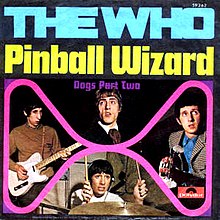
You do have a point that I’ll never know the God of love as fully as I’d like until I see him face-to-face. But I think he’d hope that I not give up trying to know him as well as I am able. Or maybe I should be content with being deaf, dumb and blind and take up pinball?



😃
 
I hate not knowing what that means! However, I’m thinking it will be fun discovering the meaning. Perhaps someone would enjoy trying to help me figure this out? Saint John the Apostle wrote:

Whoever does not love does not know God, because God is love.

(1 John 4:8)

What I wonder and long to know is this: What is the love that God is, and is it different from the love that God wants us to express?

🙂
Its the same-as His creation, made in His image, we’re meant to be emanations or expressions of His nature anyway. He’s the source of love. To be in His presence is to literally know love, engulfed in it as if it were tactile, and to know it on an unimaginable scale that brings total acceptance, peace, joy, and well-being as an immediate consequence.
 
Agreed. As Saint Paul the Apostle writes:

12 Now we see but a poor reflection as in a mirror; then we shall see face to face. Now I know in part; then I shall know fully, even as I am fully known. 13 And now these three remain: faith, hope and love. But the greatest of these is love.

(1 Corinthians 13)

So, yes, I understand that now I shall never see the full truth about love. But I have to ask: Should this blindness of mine prevent me from trying to see as much as I’m able? Should my deafness keep me from trying to hear what God is telling me about himself? Should my dumbness hold me back from trying to put in words what the words God is love might really mean? In short, should I be content with remaining deaf, dumb and blind?
No need to remain deaf dumb and blind…However - the best way to understand Love is actually to see feel and hear it. Not in “definition” that one can read but in living it out.
And to know how to Live it out…Read the Gospels. It’s all there.
Yes, but if I am making a horse’s arse out of myself by thinking the thing that looks like a horse is a horse when it is not, would I be wrong to ask you whether you thought the thing I think is a horse really is a horse, and why you thought so. This is what I’m doing with love, even now. Please let me explain. When John writes,
Whoever does not love does not know God, because God is love.
(1 John 4:8)
I suspect that he means this:
Whoever does not love does not know God, because God is [perfectly loving].
(1 John 4:8)
It’s like when Simon and Garfunkel sang, “I am a rock; I am an island.” They did not mean their skin was made of marble and their toes were sandy beaches. They were using figures of speech to create a beautiful picture of their states of being. So I wonder if this is what Saint John the Apostle is doing. You see?
Yes I see…but what I need you to see is that “figures of speech” are the best that we can do in defining love. You seek a precise definition…The only way you will find it is to take the “figures of speech” and the examples one sees in the NT and in the Saints and then “go and do likewise”…Only in this way will one be able to gain a “precise understanding” of Agape.
True, it’s not a hierarchy. But isn’t it a broad description with several more specific examples?
Nope
I’m thinking
  • that which creates
  • that which builds up
  • that which promotes
  • that which embraces
are all examples of “that which seeks the good of the other”. They are all defined as “that which seeks the good of the other”. Creating, building up, promoting and embracing are all ways of seeking the good of the other. Don’t you now see?
Yes - I see and they can validly be used in that way…However they are not limited to that either.
I can take any of these items and, with just a little thought, see how the others are examples of that one.
Likewise I can apply each item in ways that do not directly involve “the other” (as in another person).
God is Love = God is that which creates (not destroy)
God is Love = God is that which builds up (not tear down)
God is Love = God is that which promotes (not detracts)
God is Love = God is that which embraces (order - not disorder)
God is Love = God is that which seeks the good of the other (not selfish at the expense of another)
Moreover, these four are in no way complete. For you might seek my good by
  • being kind
  • being gentle
  • being patient
  • forgiving me
Well perhaps but then I can say that
being kind = building up
being gentle = embraces
being patient = embraces and promotes and builds up
Forgiving = promotes and builds up and embraces.
and by countless other ways. Yet every way is defined one way: Seeking my good. Can you think of any way of loving that is not defined as seeking the good of another?
no - nor can I think of any way of loving that does not embrace, create, build up or promote…
What is unclear to me is what you mean by the words the other. Is this love of which you speak that which is given to all, to many, or to a select few. Is it wrong for me to ask?
This perfect Love is available to all and the one who Loves perfectly gives it freely to all and those who do not love perfectly give it to as many as they can in as many ways as they are able and seek, through practice to come to perfection in this perfect Love…as we are called to do in Mt 5:48…
As precisely as God allows!
And the precision is discovered in the doing…
You do have a point that I’ll never know the God of love as fully as I’d like until I see him face-to-face. But I think he’d hope that I not give up trying to know him as well as I am able. Or maybe I should be content with being deaf, dumb and blind and take up pinball?
Just remember that in MT 25:31-46 we see that we are judged, not on what we “know” but on what we do.
The one who does the Will of God - whether brilliant or ignorant - will be saved.

Peace
James
 
Status
Not open for further replies.
Back
Top