The Catechism of the Council of Trent (available online) says that the majesty of God can be outraged "by attempting to form a representation of the Deity, as if He were visible to mortal eyes, or could be reproduced by colours or figures. ‘Who’, says Damascene, ‘can represent God, invisible, as He is, incorporeal, uncircumscribed by limits, and incapable of being reproduced under any shape.’ "
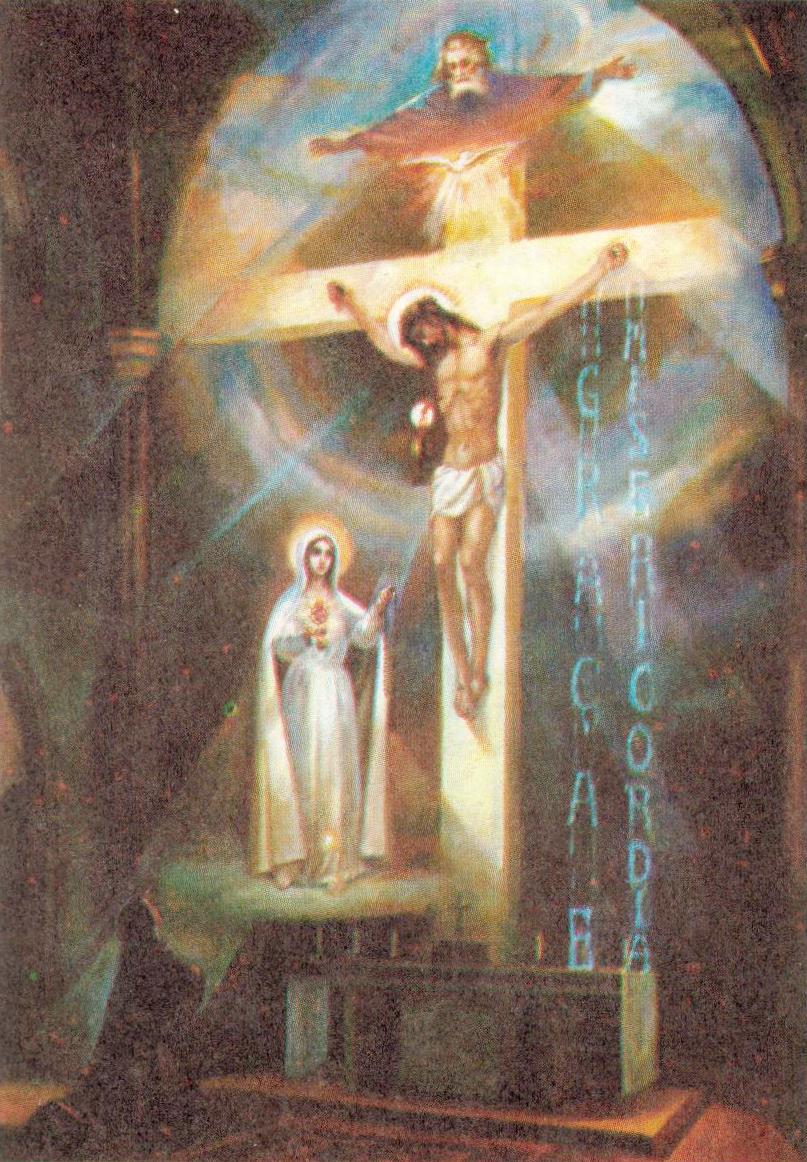
The catechism goes on to say, “To represent the Persons of the Holy Trinity by certain forms under which they appeared in the Old and New Testaments no one should deem contrary to religion or the law of God. For who can be so ignorant as to believe that such forms are representations of the Deity? forms, as the pastor should teach, which only express some attribute or action ascribed to God. Thus when from the description of Daniel God is painted as the Ancient of days, seated on a throne, with the books opened before Him, the eternity of God is represented and also the infinite wisdom, by which He sees and judges all the thoughts and actions of men.”
**And so the Catholic Church understands the prohibition to be against (1) worshiping all images and (2) making images of the essence or substance of God, but not of the Persons of God. **
The distinction between the essence and Persons of God, a note concerning which may help here, is discussed in the Fourth Lateran Council: “We, however, with the approval of this sacred and universal council, believe and confess with Peter Lombard that there exists a certain supreme reality, incomprehensible and ineffable, which truly is the Father and the Son and the holy Spirit, the three persons together and each one of them separately. Therefore in God there is only a Trinity, not a quaternity, since each of the three persons is that reality – that is to say substance, essence or divine nature – which alone is the principle of all things, besides which no other principle can be found. This reality neither begets nor is begotten nor proceeds; the Father begets, the Son is begotten and the Holy Spirit proceeds. Thus there is a distinction of persons but a unity of nature. Although therefore the Father is one person, the Son another person and the Holy Spirit another person, they are not different realities, but rather that which is the Father is the Son and the holy Spirit, altogether the same; thus according to the orthodox and catholic faith they are believed to be consubstantial.”
May the grace of our Lord Jesus Christ be with your spirit!
Pete

 Great post! And don’t you also love John of Damascus’ statement about images, and the accusation of worshiping “matter”: I do not worship matter. I worship the Godl, who became matter for my sake.
 This is great. Thanks.