Recently a friend told me that percussion instruments/guitars were not proper to liturgical music. I have read through several documents which say that the Organ is to be given preeminence, however I was wondering if anyone was aware of any authoritative documents from the Congregation for Divine Worship or someone else that specifically mentioned which instruments are not proper and should not be used in liturgical music.
There are no instruments that are “banned”
Breaking (old) news: all instruments besides the organ are “banned” unless officially authorized by the local authority. Some instruments are just unfit and simply cannot be allowed into the liturgy. And yes, there are authoritative documents stating this.
Where common sense does not suffice (is it not revolting to have drums and an electric guitar let a cacophonic noise be heard where the angelic choirs sing their eternal Sanctus, taking the place that is proper of the Gregorian schola cantorum and the sacred organ?), the Instruction
Musicam Sacram on music in the sacred liturgy (by the Congregation for Divine Worship and the Discipline of the Sacraments) and the Constitution on the Sacred Liturgy
Sacrosanctum Concilium solemnly promulgated by the Holy Father Paul VI, clearly state:
By sacred music is understood that which, being created for the celebration of divine worship, is endowed with a certain holy sincerity of form.
The following come under the title of sacred music here: Gregorian chant, sacred polyphony in its various forms both ancient and modern, sacred music for the organ and other approved instruments, and sacred popular music, be it liturgical or simply religious.
Other
approved instruments. Let’s read some more:
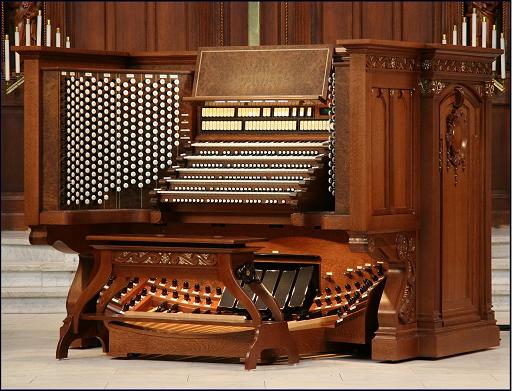
In the Latin Church the pipe organ is to be held in high esteem, for it is the traditional musical instrument which adds a wonderful splendor to the Church’s ceremonies and powerfully lifts up man’s mind to God and to higher things.
But other instruments also may be admitted for use in divine worship, with the knowledge and consent of the competent territorial authority …] This may be done, however, only on condition that the instruments are suitable, or can be made suitable, for sacred use, accord with the dignity of the temple, and truly contribute to the edification of the faithful.
Did the local bishop approve in written the use of percussion instruments, guitars (specifying if they are standard or electric), et cetera? I highly doubt it.
The point is very clear: given decision and consent from the Ordinary, only instruments suitable to sacred use can be employed, instruments fitting with the high dignity of the House of God, whose voice edifies the faithful - edification is not entertainment or amusement, it is lifting up the soul beyond the worldly.
Think I’m just voicing my personal opinion? Let’s read some more, then.
those instruments which are, by common opinion and use, suitable for secular music only, are to be altogether prohibited from every liturgical celebration
Some instruments are, in fact,
to be altogether prohibited from liturgical celebrations - banned, cast out, anathematized. Doesn’t take a motu proprio to state that electric guitars, percussion instruments, and the like, no matter how often we find them in churches, are
not suitable for sacred music.
Keep them for non-liturgical events. Keep them for the local Christian rock ecumenical music festival. Keep them for youth group socials. Just don’t bring them into the Sanctuary - unless you want to see the Mass attendance drop even lower than the current 20-something%.
I am involved with youth groups. I always have people ask me whether more traditional songs could be introduced.
When we added a keyboard set to “organ” (we talk of a small college chapel) and the notes of
Immaculate Mary inundated the hearts of all at the end of Mass, people felt it - and everyone joined the chant. Attendance went up.
Same when the (spoken) Holy, holy, holy Lord and the (spoken) Lamb of God were replaced with the (chanted) Sanctus and the (chanted) Agnus Dei. Some of the older people present had tears in their eyes as they could say: “I recognize this, deep in my heart!” Their soul was singing: “I will approach the altar of God, who brings joy to my youth”. And the younger faithful were captivated by the dignity of a hymn that was ancient and mysterious, yet simple and living.
Contrary to popular belief, people - especially young people - will not settle for the banal, and they do
not want to see worldly things in liturgical context. They want, long for, and demand the liturgy to elevate them to a higher realm. They truly want the liturgy to be a moment when we forget ourselves and lift up our hearts to the Lord, singing the hymn of God’s glory with Angels and Archangels, with Thrones and Dominions, and with all the hosts and Powers of heaven.
Am I criticizing the presence of drums, electric guitars, gongs, et cetera currently used in some liturgical celebrations? God forbid! Keep them, play them, do whatever Christ allows you to do. However, the life of the saints teaches us one big lesson: never settle for less. Give the best to the living God. And we can do better than percussion instruments and guitars. Oh yes we can.
Video - how simple and awesome: a modest church, a modest organ, a modest congregation, a heavenly hymn.
What takes years to learn, months to build, and weeks to install…




 If we do, then we can make something amazing happen…we can either fundraise and get ourselves a