Is Catholicsm and Islam compatible?

  • Thread starter Thread starter theCardinalbird
  • Start date Start date
Status
Not open for further replies.
What is the definition of heresy?

Only by defining heresy can we then apply its meaning to Islam.

Yet, by the same token, Islam applies its “infidel” principles to all non-Islam.

…so we could go on another merry-go…

Maran atha!

Angel
 
I’m quite pedestrian, could you explain how I made a revolting statement?

How do you know that the person is actually a Priest, have you inquired directly?

Yet, my statement goes to the finality of having all three religions Worship one and the same God (Yahweh) but not that they are necessarily compatible since each religious group has a distinct understanding of Who God is and what has been His Revelations about Who He Is and what His Followers must Believe and Do as part of His Fellowship.

How is that egregious?

Maran atha!

Angel
 
The Church has articulated that both the Jews and the Muslims worship with us the God of Abraham. Period. The laity are to assent – and that is it. No discussion. No argument. End of topic.
Yet, just because the Church understand this does not mean that all three religious groups are compatible–that is the question posed in the OP.

That is the argument that does not allow a blanket statement.

It is similar to the argument of non-Catholics about the Coming of the Holy Spirit. Clearly Scriptures differentiate the Apostles and those with them (200) from all men of Faith that were found in Israel at the time of the event.

If we simply use a blanket statement, then all men in Israel were Blessed with the Grace of the Holy Spirit at Pentecost. Yet, we know from the developing incident that only these (Apostles and the people gathered with them) were directly impacted by the Coming of the Holy Spirit as others were ushered into the Faith through an indirect ‘laying of the hands.’

Maran atha!

Angel
 
Muhammad is preaching Christ NOT crucified. Not only he contradicted the Gospel but his teaching nullifies what Jesus had done on the cross and which really matters.

The person who wants to give a message that deny the crucifixion CANNOT be the God whom we worship
This is exactly why Christianity and Islam cannot be compatible!

Maran atha!

Angel
 
The intent of the Declaration appears to be finding mutual ground by not allowing differences to stand in the way. The urging “… that a sincere effort be made to achieve mutual understanding…” would appear to set the tone for the statement as a whole.
Exactly!

It is about opening venues to ecumenism.

It is simplistic to say that I reject Jesus’ Divinity but I worship Him nonetheless as a “good man” or “good rabbi” or “prophet.”

If I reject the Son, I reject the Father!

Maran atha!

Angel
 
Do you believe that Mohammed is God’s Prophet? Yes or no.
Do you believe that Mohammed saw an Angel sent by the God of Israel? Yes or no.

If not, then Muslims are worshipping afigment of Mohammed’s imagination.
 
Does this make the heresy of the Ishmaelites not diabolical? No, and Mohammed is still a figure for the Antichrist, for he fits perfectly our Lord’s description. The antichrist may still proclaim that God is God; he is described as going to the Jewish temple after all, of course he declares himself God over Jesus, who is true God.
This is exactly what people refuse to accept.

It is an argument that answers itself.

Yes, I can Believe in the God of Abraham. No, I cannot reject Who, What, and When He Reveals about Himself.

If Yahweh God has Revealed that He Himself will Come to the Temple (the Immanuel) and that He Himself will Live amongst man, how can I reject the Divinity of the Word Who Existed with God and as God from the Beginning?

Maran atha!

Angel
 
I have known many Catholics who wrongly attribute moral flaws to God. We’ve all heard thing like "God caused that little 2 year old girl to have cancer. " It doesn’t mean they believe in a different God. It means they have a flawed belief about God. Do you see the difference here?
Yet you are making a comparison about personal understanding and belief with the religious body, the Church.

There are people assuring children that they will go to Heaven and meet their dead pets; there are people claiming that all of their dead-loved ones will meet them in Heaven; there are people claiming that they will have romantic relationships in Heaven… just because fools rush in does not make it so!

What the Church holds is true: all three religious bodies have one common Belief in the One True God, Yahweh; yet, that does not make all three religious bodies compatible and congruent.

Maran atha!

Angel
 
So, I enjoy books by Robert Spencer; there are a lot of books that are applicable.
Edward Feser has some informative comments on what can be legitimately allowed as “diversity of opinion” among Catholics. I think he is right on in terms of the right of Catholic laity to form their own opinions about the compatibility between Catholicism and Islam, generally. Robert Spencer is Catholic, by the way, (specifically Melkite Greek Catholic,) and he, too, is entitled to research that compatibility and report on what he concludes as a sincere researcher.
What a pope or ecclesiastical document has to say about Islam thus seems obviously to fall into what, in the post linked to above, I labeled category 5 statements, i.e. statements of a prudential sort on matters about which there may be a legitimate diversity of opinion among Catholics. A Catholic ought seriously and respectfully to consider statements of this category which concern Islam, but is under no obligation to assent to them. Hence, questions such as whether Islam is inherently more prone to generate terrorism than other religions are, whether Islam is compatible with liberal democracy, how many Muslim immigrants ought to be allowed into a country and under what circumstances, etc. are in the nature of the case questions about which good Catholics can legitimately disagree. Even the question of whether Christians and Muslims refer to the same thing when they use the word “God” – and I certainly believe that they do – cannot be a matter of orthodoxy. There is nothing contrary to binding Catholic doctrine in claiming that Muslims worship some pagan tribal deity, even if (I would argue) this claim is false, ungrounded, and too often driven by emotion rather than clear thinking.

(A critic might say: “But hasn’t the Church pronounced on all sorts of non-Catholic doctrines, such as socialism and communism, various heresies, etc.? So why can’t she pronounce on what counts as authentic Islam?” But such an objection rests on confusion. When (for example) Pope Leo XIII condemned what socialists say about private property, he wasn’t saying “Every Catholic is obligated to believe that one of the tenets of socialism is the rejection the institution of private property.” Rather, he was saying “Every Catholic must accept the institution of private property.” His point was not authoritatively to define what counts as authentic socialism but rather authoritatively to condemn certain errors which happen to have been widely associated with socialism and which are at odds with Catholic teaching. If it somehow turned out that socialists don’t really reject private property after all, that wouldn’t affect Leo’s teaching, because the point of his teaching was to tell Catholics that they ought to uphold private property, not to give a lesson in political science about the history and tenets of socialism.)

Continued…
 
Last edited:
So, while it is perfectly legitimate for Msgr. Swetland to disagree with Spencer’s analysis of Islam, it seems to me manifestly unjust, and indeed outrageous, for him to label Spencer a “dissenter” – as if Spencer ought to be lumped in with the likes of Hans Küng and Catholics for Choice!

But it is worse than that. When a prominent orthodox Catholic theologian and churchman like Msgr. Swetland confidently (but falsely) asserts that taking a positive view of Islam and rejecting opinions like Spencer’s are nothing less than matters of binding Catholic doctrine, he threatens to give grave scandal. For some Catholics who sincerely think that Spencer’s views are well-supported might mistakenly conclude that the Church requires the faithful to accept falsehoods, and may for that reason even consider leaving the Church. And some non-Catholics otherwise attracted to Catholicism might refrain from entering the Church, on the mistaken supposition that doing so would require them to assent to something they sincerely believe to be false. (Judging from the YouTube combox discussion the radio debate between Spencer and Swetland has generated, some people are drawing exactly these sorts of conclusions.)

Edward Feser: Is Islamophilia binding Catholic doctrine?
 
You need more than a simple yes or no response.
Wrong.

I am stating a fact. Something upheld by the Catholic Church to be a fact. Something that experts know is a fact.
So, I enjoy books by Robert Spencer; there are a lot of books that are applicable.

Each one has its own perspective.

Here is a video:

There have been many Catholic authors who have written extensively on the issue of Islam.

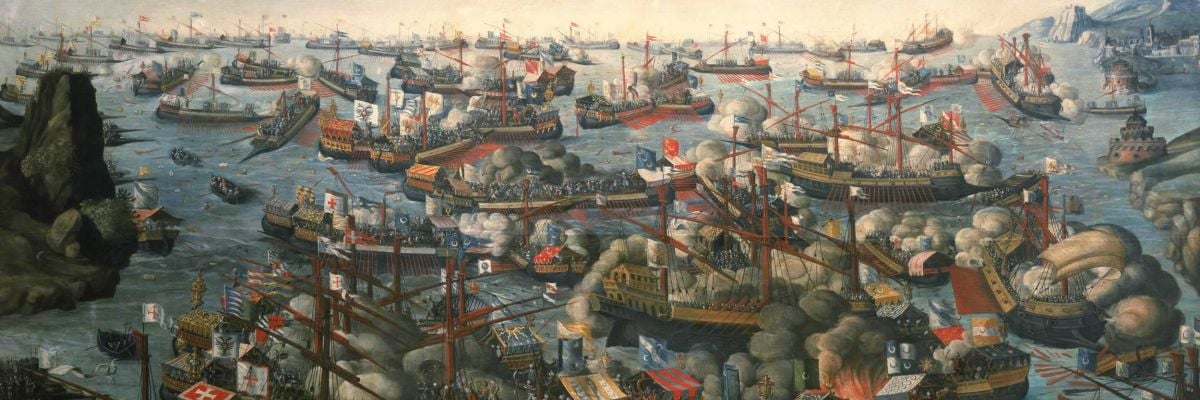
Churches named “Our Lady of Victory” are there celebrating the world’s largest naval battle.

At Lepanto.

Catholic Answers even published a fabulous article about it.

At Lepanto … which is near Greece.
I am not going to waste my time watching a 45 minute vide.

Lepanto has nothing to do with this.

Your posts are foolishness. There were battles between Islam and Christianity. No kidding. What do you want, some kind of prize?

It does not change the fact that Christians and Muslims worship the same God of Abraham.

Grow up already and learn some critical thinking skills.
 
40.png
Don_Ruggero:
The Church has articulated that both the Jews and the Muslims worship with us the God of Abraham. Period. The laity are to assent – and that is it. No discussion. No argument. End of topic.
Yet, just because the Church understand this does not mean that all three religious groups are compatible–that is the question posed in the OP.

That is the argument that does not allow a blanket statement.

It is similar to the argument of non-Catholics about the Coming of the Holy Spirit. Clearly Scriptures differentiate the Apostles and those with them (200) from all men of Faith that were found in Israel at the time of the event.

If we simply use a blanket statement, then all men in Israel were Blessed with the Grace of the Holy Spirit at Pentecost. Yet, we know from the developing incident that only these (Apostles and the people gathered with them) were directly impacted by the Coming of the Holy Spirit as others were ushered into the Faith through an indirect ‘laying of the hands.’

Maran atha!

Angel
Now, finally, you are beginning to think reasonably.

Read the thread.

Get back to me when you finally notice the obvious.
 
40.png
Kei:
Does this make the heresy of the Ishmaelites not diabolical? No, and Mohammed is still a figure for the Antichrist, for he fits perfectly our Lord’s description. The antichrist may still proclaim that God is God; he is described as going to the Jewish temple after all, of course he declares himself God over Jesus, who is true God.
This is exactly what people refuse to accept.

It is an argument that answers itself.

Yes, I can Believe in the God of Abraham. No, I cannot reject Who, What, and When He Reveals about Himself.

If Yahweh God has Revealed that He Himself will Come to the Temple (the Immanuel) and that He Himself will Live amongst man, how can I reject the Divinity of the Word Who Existed with God and as God from the Beginning?

Maran atha!

Angel
Now, you digress.

So much for critical thinking. You were on the right track. Somehow you got turned around.
 
40.png
FrDavid96:
I have known many Catholics who wrongly attribute moral flaws to God. We’ve all heard thing like "God caused that little 2 year old girl to have cancer. " It doesn’t mean they believe in a different God. It means they have a flawed belief about God. Do you see the difference here?
Yet you are making a comparison about personal understanding and belief with the religious body, the Church.
No. I am explaining simple reasoned thinking. Reasoning. Not jumping to conclusions.
There are people assuring children that they will go to Heaven and meet their dead pets; there are people claiming that all of their dead-loved ones will meet them in Heaven; there are people claiming that they will have romantic relationships in Heaven… just because fools rush in does not make it so!

What the Church holds is true: all three religious bodies have one common Belief in the One True God, Yahweh; yet, that does not make all three religious bodies compatible and congruent.

Maran atha!

Angel
So close. So close.

If you would remove the blinders from your eyes, you just might see it.
 
What is the definition of heresy?

Only by defining heresy can we then apply its meaning to Islam.

Yet, by the same token, Islam applies its “infidel” principles to all non-Islam.

…so we could go on another merry-go…

Maran atha!

Angel
Indeed, you should learn the definition of heresy.

By labeling Muslims as “heretics” you actually acknowledge that Christians and Muslims worship the same God.
 
That is why I asked what the definition of heresy is.

A non-Believer cannot be found heretical!

Maran atha!

Angel
 
I provided the rationale for why we can rightly say Muslims adore the one God in my two posts earlier in the thread and how we can say we are talking about the same being (and also what further, if anything, can be inferred from this–not much).

I may have missed it in the long thread, but can anyone provide a quote from a saint or some authoritative document from the Church that say Muslims are idolaters or worship a false god?

Everything that I have seen classifies them as infidels (since they are unbaptized and do not receive the true revelation of God with faith), but distinguishes them from those who worship false Gods.

There are of course the two Vatican II documents already cited many times in the thread. Nostra Aetate bases its declaration on a letter from St. Gregory VII to a Muslim ruler saying the same.
Almighty God, who wishes that all should be saved and none lost, approves nothing in so much as that after loving Him one should love his fellow man, and that one should not do to others, what one does not want done to oneself. You and we owe this charity to ourselves especially because we believe in and confess one God, admittedly, in a different way, and daily praise and venerate him, the creator of the world and ruler of this world.
Catechism of St. Pius X:
12 Q. Who are infidels?
A. Infidels are those who have not been baptised and do not believe in Jesus Christ, because they either believe in and worship false gods as idolaters do, or though admitting one true God, they do not believe in the Messiah, neither as already come in the Person of Jesus Christ, nor as to come; for instance, Mohammedans and the like.
St. John of Damasus, in an otherwise scathing take on Islam, says they were idolaters until Muhammed came, and now they believe a heresy (never once does he say they worship a false god or devil) and by denying the Word they mutilate God and not an inanimate object (or create new god):
And so down to the time of Heraclius they were very great idolaters. From that time to the present a false prophet named Mohammed has appeared in their midst. This man, after having chanced upon the Old and New Testaments and likewise, it seems, having conversed with an Arian monk, [101] devised his own heresy…

He says that there is one God, creator of all things, who has neither been begotten nor has begotten…

It would be far better for you to say that He has an associate than to mutilate Him, as if you were dealing with a stone or a piece of wood or some other inanimate object. Thus, you speak untruly when you call us Hetaeriasts; we retort by calling you Mutilators of God.’
continued…
 
Last edited:
continued from above

Here, Francisco Suarez, the famous Counter-Reformation Thomist, says that Muslim worship of God is not evil, unlike the worship of idols:
St. Thomas, however, rightly distinguishes two kinds of religious practices: there are those which go against reason and against God insofar as he can be recognized through nature and through the natural powers of the soul, e.g., the worship of idols, etc. Others are contrary to the Christian religion and to its commands not because they are evil in themselves or contrary to reason as, for example, the practices of Jews and even many of the customs of Mohammedans and such unbelievers who believe in one true God.
Catholic Encyclopedia
As in ecclesiastical language those who by baptism have received faith in Jesus Christ and have pledged Him their fidelity and called the faithful, so the name infidel is given to those who have not been baptized. The term applies not only to all who are ignorant of the true God, such as pagans of various kinds, but also to those who adore Him but do not recognize Jesus Christ, as Jews, Mohammedans;
 
Last edited:
So … if I believe that Jesus is God, the Son of God, then am I an infidel?
 
Status
Not open for further replies.
Back
Top