John Chrysostom Commentary
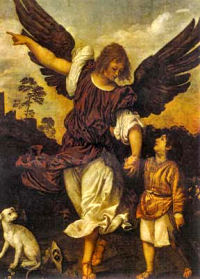
The water, however did not heal by virtue of its own natural properties, (for if so the effect would have followed uniformly,) but by the descent of an Angel: For all Angel went down at a certain season into the pool, and troubled the water. In the same way, in Baptism, water does not act simply as water, but receives first the grace of the Holy Spirit, by means of which it cleanses us from all our sins.
And the Angel troubled the water, and imparted a healing virtue to it, in order to prefigure to the Jews that far greater power of the Lord of the Angels, of healing the diseases of the soul. But then their infirmities prevented their applying the cure; for it follows, Whosoever then first after the troubling of the water stepped in, was made whole of whatsoever disease he had.
But now every one may attain this blessing, for it is not an Angel which troubles the water, but the Lord of Angels, which works every where. Though the whole world come, grace fails not, but remains as full as ever; like the sun’s rays which give light all day, and every day, and yet are not spent. The sun’s light is not diminished by this bountiful expenditure: no more is the influence of the Holy Spirit by the largeness of its outpourings. Not more than one could be cured at the pool; God’s design being to put before men’s minds, and oblige them to dwell upon, the healing power of water; that from the effect of water on the body, they might believe more readily its power on the soul.
He did not, however, proceed immediately to heal him, but first tried by conversation to bring him into a believing state of mind. Not that He required faith in the first instance, as He did from the blind man, saying, Believe you that I am able to do this? for the lame man could not well know who He was. Persons who in different ways had had the means of knowing Him, were asked this question, and properly so. But there were some who did not and could not know Him yet, but would be made to know Him by His miracles afterwards.
And in their case the demand for faith is reserved till after those miracles have taken place: When Jesus saw him lie, and knew that he had been a long time in that case, He said to him, Will you be made whole? He does not ask this question for His own information, (this were unnecessary,) but to bring to light the great patience of the man, who for thirty and eight years had sat year after year by the place, in the hope of being cured; which sufficiently explains why Christ passed by the others, and went to him. And He does not say, Do you wish Me to heal you? for the man had not as yet any idea that He was so great a Person. Nor on the other hand did the lame man suspect any mockery in the question, to make him take offense, and say, Have you come to vex me, by asking me if I would be made whole; but he answered mildly, Sir, I have no man, when the water is troubled, to put me into the pool; but while I am coming, another steps down before me. He had no idea as yet that the Person who put this question to him would heal him, but thought that Christ might probably be of use in putting him into the water. But Christ’s word is sufficient, Jesus said to him, Rise, take up your bed, and walk.
Behold the richness of the Divine Wisdom. He not only heals, but bids him carry his bed also. This was to show the cure was really miraculous, and not a mere effect of the imagination; for the man’s limbs must have become quite sound and compact, to allow him to take up his bed. The impotent man again did not deride and say, The Angel comes down, and troubles the water, and he only cures one each time; do You, who are a mere man, think that you can do more than an Angel? On the contrary, he heard, believed Him who bade him, and was made whole: And immediately the man was made whole, and took up his bed, and walked.