Lets talk ad orientem

  • Thread starter Thread starter JimG
  • Start date Start date
Status
Not open for further replies.
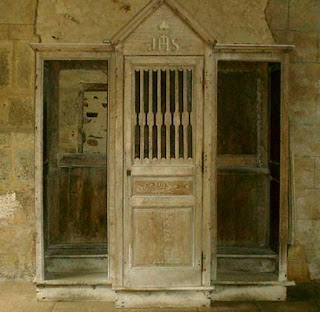
At some parishes I’ve frequented, they hear confessions before Mass, sometimes extending through the beginning of it. It can’t be helped if you’re given a penance to recite.
 
Last edited:

According to CARA - the Center for Applied Research in the Apostolate - and paralleled by Pew research, church attendance peaked in about 1957. And that is not just the Catholic Church; it included the mainline Protestant churches also; all started to decline in attendace starting in about 1957.

So where was the US in 1957? 6 years of war ending in 1945; approximately 407,00 military and 12,000 civilian deaths, and approximately 670,000 wounded. Then the Korean war of 3 more years, 36,574 in theater casualties and 103,284 wounded; and an additional approximately 18,000 deaths out of theater.

It should come as no surprise that people flocked to church - Catholic or otherwise, having gone through such carnage. And a minor example of such an uptic occured more recently with 9/11; there was a clear upsurge of attendance of several percent (CARA date).

It may seem improbable to you that “something was wrong”, but Sacrosanctum Concilium itslerrf sets out what the bishops wished to do. You might read the document, with attention to paragraphs 11, 14, 21, 34, 48 and 50.

In fact 50 states: “For this purpose the rites are to be simplified, due care being taken to preserve their substance; elements which, with the passage of time, came to be duplicated, or were added with but little advantage, are now to be discarded; other elements which have suffered injury through accidents of history are now to be restored to the vigor which they had in the days of the Holy Fathers, as may seem useful or necessary.”

Given your comment to me about antiquarianism, I would direct you to this paragraph in particular, understanding all but four of the 2,151 bishops in attendance signed it and St. Paul XI promulgated it. And by the way, facts such as the document itself are not “rhetorical strategy”.
 
I am sure that is true in most places, to a greater or lesser degree. The problem is, that while there are some variances in Mass, it is harder to have variances in architecture. The altar is where the altar is, at least for us. Ad orientem is not possible for us, as an example.
I wasn’t implying that anyone should have any say in a parish they do not attend but there is no reason to say that a Catholic who likes tradition should not be able to say anything about their own parish or the Catholic church in general.
For the love of us who prefer the OF, could you traditionalists PLEASE leave our rite alone? You have the EF Mass. If you don’t like the OF, feel free to attend the EF. I do NOT want the EF forced on me by incremental reversion. I want the OF to be celebrated with reverence and relevance.
Traditionalists attend the OF Mass also and the OF Mass belongs to all Catholics, even those who like some of the old traditions. It is traditionalist’s rite also. Many OF priests are very traditional. The OF Mass is their rite also and NO, not everyone has access or the physical ability to attend the EF. Some people do not even have the physical ability to attend Mass at all.

It is great and wonderful that the Mass you attend is celebrated with reverence and relevance as I have heard you say before but please keep in mind that that is not the case for everyone. Very few people are able to attend the type of Mass you describe in your posts.
It is being disingenuous to suggest that Sacrosanctum Concilium had this in mind.
I did not mention Sacrosantum concilium at all.
And I do NOT want the OF bashed continually on this forum.
CAF is a discussion forum and people should have a rite to discuss as long as they stay within the rules and stay respectful of others comments and I have not bashed the OF, I attend the OF and I have not heard anyone bash the OF in this thread. Maybe they have but I have not read it, nor have I bashed it with anything I said. There are priests who are beginning to say the Mass ad orientum and because of that there is no reason why it can’t be discussed and commented on.

I could ask also that the EF not be bashed, which happens ALOT here at CAF or how about better yet, no bashing the Holy Sacrifice of the Mass at all.

God bless. 🙂
 
Last edited:
Exactly. As I mentioned, when we attended the old Mass AKA TLM or EF today, at a low Mass, it was much more contemplative than the current OF. One could follow along with a missal, and especially in parishes with a school, of which there were many, mimeo (remember mimeographs) copies of the Mass parts, parish devotions, Novenas, saints’ devotions, etc. Long familiarity with the Mass in families (and since the Mass was in Latin, it didn’t matter if the families’ languages were German, French, Slavic, Spanish. . .or Tagalog, Vietnamese, or Swahili for that matter, people were accustomed to see and ‘hear’ the words, and Catholic education, which was generally speaking considered then (and even now) to be more in depth and broader ranging than public school education, had even the ‘peasants’ who seem to populate the ‘anecdotal evidence’ perfectly well aware of what was said and done at Mass.

Oh, it was indeed a richer experience, especially for children.
From one’s infancy one was a part of the Mass. One learned to be quiet, to listen for God’s voice ‘in one’s interior’. One learned awe and reverence watching the priest’s careful (not 'too mannered or rigid) gestures. One smelled the incense, heard the bells, saw the many figures all striving for unity in word, and deed. One pondered the great stained glass windows, and the statues, some ‘glorious’, some intimate and ‘child-friendly’. One absorbed the rhythm of the liturgical year. . .the symbols of the colors, the soothing familiarity of knowing that this gospel marked this feast, this season. . .and above all, something that this generation might find astonishing. . .the QUIET. The peace (not the torpidity or the lack of knowledge OR the 'wanting to get out), but the silence and peace of Mass. Dipping one’s finger in the font for the holy water, silently walking to the pew, genuflecting to the tabernacle, then kneeling on the hard but somehow ‘just right’ kneeler, pulling out one’s beads to tell a rosary, head bowed, lights flickering, and not a WORD or even a whisper as the people around did the same, composing themselves in prayer and waiting the start of Mass.

It was one of the most noticeable aspects of a Catholic church–the stillness, the lights, the quiet. . .one knew that the people there BELIEVED in ‘sacred space’ and in a love that involved preparing for God in order to be at one’s best for Him.
 
[/quote]

John Paul 2 Wanted Confession DURING Sunday Mass

 
Instruction Redemptionis Sacramentum On certain matters to be observed or to be avoided regarding the Most Holy Eucharist - #76
4. On the Joining of Various Rites with the Celebration of Mass
[76.] Furthermore, according to a most ancient tradition of the Roman Church, it is not permissible to unite the Sacrament of Penance to the Mass in such a way that they become a single liturgical celebration. This does not exclude, however, that Priests other than those celebrating or concelebrating the Mass might hear the confessions of the faithful who so desire, even in the same place where Mass is being celebrated, in order to meet the needs of those faithful.[158] This should nevertheless be done in an appropriate manner.
" [158] Cf. Pope John Paul II, Apostolic Letter (Motu Proprio), Misericordia Dei , 7 April 2002, n. 2: AAS 94 (2002) p. 455; Cf. Congregation for Divine Worship and the Discipline of the Sacraments, Response to Dubium: Notitiae 37 (2001) pp. 259-260."

Reply to a question about hearing confessions during Mass Congregation for Divine Worship and the Discipline of the Sacraments (October 2001) [Official Latin text in Notitiae, nos. 419-420]
 
Last edited:
I am surprised at the number of people who have never read the document.
 
the QUIET.
I haven’t attended an EF Mass since Vatican II, since I have always attended the local parish, which has used the OF since it was instituted. But one of the things I recall from the old Mass was just that–the prayerful silence, before, during, and after Mass. People talked in the vestibule but once we entered the church, everyone was silent, usually kneeling and praying.

I don’t think that the language made much difference to me. I had wanted the Mass in English, but I had thought that it would be the English translation from my missal. Instead we got the initial ICEL translation, which was banal, not uplifting. But the most noticeable change was the lack of silence and the fact that where before, the sanctuary had been a sacred space, with only priest and servers, now it seemed a behive of activity, with numerous people coming and going: lectors, deacons, readers, chanters, EMHC’s.

But the OF was not left alone. For decades, it was always being changed and tinkered with. But at my parish, we’ve finally gotten it right. It’s reverent, The sanctuary is not filled with people, and the latest translation is good. Our pastor has limited the use of EMHC’s, and they do not enter the sanctuary. The servers are well trained, and after the final exit procession and song, everyone kneels to recite a prayer.

So even though it may have taken some decades to get things right, I’m happy with the OF as we now have it. If we had gone directly from the EF to what we have now at my parish, I think that there would have been little complaint.

I’m not sure that the congregation pays better attention now than before. Try asking someone as they leave church which Eucharistic Prayer was used.
 
It is great and wonderful that the Mass you attend is celebrated with reverence and relevance as I have heard you say before but please keep in mind that that is not the case for everyone. Very few people are able to attend the type of Mass you describe in your posts.
Yes I understand that Mass is not always celebrated with reverence but that’s not the OF’s fault nor the Council’s fault. This also occurred prior to Vatican II. The very wonderful Iibrarian I work for at the abbey, an 81 y.o. Benedictine monk and priest, told me that when he was in seminary in the '50s, he was an altar server and one priest was so fast, that he hadn’t even finished chanting the Sanctus when the priest finished the Consecration. And that’s with the Roman Canon too. It is naive to think that the EF Mass is the answer to the issue of irreverence. That said, yes the Mass at the abbey is wonderful, Gregorian chant, the works. But most of the parish Masses I’ve been to, when chanting with our schola, are fine. The red is done, the black is said. Not all priests are fine singers, not all are great homilists but for the most part all is done correctly. Yes there are misses and abuses here and there. But that’s got zero to do with which liturgy is used.
I did not mention Sacrosantum concilium at all.

(Please Note: This uploaded content is no longer available.) OraLabora:
Whether you mentioned it or not, counting saying the Rosary as full, active participation is completely contrary to the plainly stated intent of Sacrosanctum Concilium. This needed to be pointed out.
I could ask also that the EF not be bashed, which happens ALOT here at CAF or how about better yet, no bashing the Holy Sacrifice of the Mass at all.
I don’t bash it, but clearly the bishops who signed off on SC thought it needed revision. So it’s quite fair for me to say… it needed revision.
Oh, it was indeed a richer experience, especially for children.
Surely you jest. I was a kid in the '60s before the new Missal was promulgated in 1970. One way to kill a young boy’s interest in anything, is to bore him. And bore me the Mass did. I had ants in my pants and couldn’t WAIT for it to be over. And I suspect I’m not the only young lad to have felt that way. Couldn’t hear what was going on, couldn’t understand what I did manage to hear, just had to stand, sit and kneel, and somehow pray and avoid thinking about how I’d rather be out on my bike or tinkering with my model trains, which was always a futile exercise.

Once in a while the choir would sing beautifully and I would take notice, but for the most part the Mass just killed me with boredom. I guess that’s why I never became a priest 🤣
 
But one of the things I recall from the old Mass was just that–the prayerful silence, before, during, and after Mass. People talked in the vestibule but once we entered the church, everyone was silent, usually kneeling and praying.
It still happens as such in my home parish. You hear people quietly shuffling in, the clink of coins in the missallette donation box, and little else, and people proceed to their pews and kneel. The abbey is in fact a bit more problematic because it attracts tourists and in spite of the “silence” signs plastered all over the place, some people seem unaware of the concept. I’ve had to ask people to be quiet.

But I have been to parishes, curiously very near my own, where it seems to be social hour before Mass, with lots of yakking and gossiping. Go figure.
 
Last edited:
Yes I understand that Mass is not always celebrated with reverence but that’s not the OF’s fault nor the Council’s fault. This also occurred prior to Vatican II.
I completely agree and I’m sure there were some abuses before Vatican II, not as many because the rubrics were stricter but I myself, did not blame anything on the OF, as I said I attend the OF, so I am not sure if it is someone else’s post you were meaning to address.
Whether you mentioned it or not, counting saying the Rosary as full, active participation is completely contrary to the plainly stated intent of Sacrosanctum Concilium. This needed to be pointed out.
I posted a video of priest explaining 7 ways a person could participate in the Latin Mass, one of which he said was praying the rosary and that said there are times at a very reverent OF Mass that I attend occasionally where the music is sung by a choir and very beautiful and at times in Latin and difficult to sing along. At that time very few people sing along but rather are in prayer or contemplation and yes at that time or other times at any Mass where there is a quiet time for meditation, I do pray to the Blessed Mother asking her “to Jesus through Mary” with Hail Mary’s. I ask her to pray for me before I approach her Son. There is nothing wrong with that as the Blessed Mother is very present at every Mass.
I don’t bash it, but clearly the bishops who signed off on SC thought it needed revision. So it’s quite fair for me to say… it needed revision.
I’m sorry, my bad but I am not quite sure what you are saying here but the Mass should never be bashed, neither form.
 
Last edited:
understanding all but four of the 2,151 bishops in attendance signed it
When you have statements that appear contradictory (Latin is to be preserved, vernacular may be used) what’s there not to like?
 
I got to go to Confession right before Mass this morning, because the FSSP priest very kindly heard confessions right before Mass. If there are two priests available, I think it would be very kind and indeed saintly of them to make confession available during Mass, when the people are there.
 
Last edited:
Sacrosanctum Concilium, which you noted due to a link you have read.

I am not focusing on people on either side of this issue - most seem to have never read it, or any of the other documents.
 
I’m sorry, I don’t know exactly what you’re referring to as ‘out of line’. Certainly if I am so, I apologize.
 
Hmm, OK, I really did not mean to be offensive; on a second reading I think maybe I expressed poorly what I will try to be clearer with --and I’ll erase the other post, to boot: What I am trying to say is that maybe you were not bored etc because of "the Latin Mass’, maybe you were simply bored because you were a young child in a setting where you could not ‘do what you wanted to do’. IOW, Mass, school, whatever, a child of elementary school age may be bored not because of the intrinsic nature of what he is doing, but simply because he isn’t doing what he wants.
 
Well, ProVobis, here is what is said:
36. 1. Particular law remaining in force, the use of the Latin language is to be preserved in the Latin rites.
  1. But since the use of the mother tongue, whether in the Mass, the administration of the sacraments, or other parts of the Liturgy, frequently may be of great advantage to the people, the limits of its employment may be extended. This will apply in the first place to the readings and directives, and to some of the prayers and chants, according to the regulations on this matter to be laid down separately in subsequent chapters.
  2. These norms being observed, it is for the competent territorial ecclesiastical authority mentioned in Art. 22, 2, to decide whether, and to what extent, the vernacular language is to be used; their decrees are to be approved, that is, confirmed, by the Apostolic See. And, whenever it seems to be called for, this authority is to consult with bishops of neighboring regions which have the same language."
I have never seen anything official in the past as to a specific decision, either from a local archbishop or the USCCB saying or implying that we were at “none”. As to where anyone goes with this; I don’t know.
 
I loved school and loved learning and was good at it.

What I hated, and most boys my age hated, was boredom.
 
Status
Not open for further replies.
Back
Top