
Looking for Adam

  • Thread starter Thread starter grannymh
  • Start date Start date
Status
Not open for further replies.
I’m not sure if we are on the same page when we are thinking about what Jesus did when he restored the relationship between God and Man.

skip

Of course the teaching has it that Adam and Eve were immortal and they could have stayed that way through obedience as you said.
The reason we are not on the same page regarding “life everlasting after death” is the fact that Adam’s human nature includes a decomposing anatomy destined to die like all the other material anatomies found in nature. Personally, I never thought about that until a CAF poster nailed me regarding the difference between being immortal and the gift of immortality. Adam and Eve had a normal material decomposing anatomy because their unique human nature “united” the material and spiritual worlds into a single nature. (CCC 355 & CCC 364-365; Genesis 1: 27)

Adam and Eve were not created immortal. It is because of God’s extra gift of immortality that they, via Adam’s living in obedience to God, would escape the normal creature death.

Being immortal means that there is no possibility of human death. The gift, emphasis on the word gift, of immortality means that one does not have to die. This gift is above what would be normal for a human. Please Google preternatural gifts. Father John A. Hardon, S.J., now deceased, is usually quoted when it comes to the Catholic meanings of preternatural gifts.

Here is a brief definition of preternatural gifts. catholicculture.org/culture/library/dictionary/index.cfm?id=35763
PRETERNATURAL GIFTS
“Favors granted by God above and beyond the powers or capacities of the nature that receives them but not beyond those of all created nature. Such gifts perfect nature but do not carry it beyond the limits of created nature. They include three great privileges to which human beings have no title–infused knowledge, absence of concupiscence, and bodily immortality. Adam and Eve possessed these gifts before the Fall.”

Because the preternatural gift of immortality was way beyond Adam’s own human nature, it is part of Adam’s original relationship with God. Genesis 2: 15-17 explains the circumstances of this gift. CCC 376 refers to the necessity of Adam remaining in the original relationship (divine intimacy) with his Creator. Genesis 3: 19 refers to one of the results (loss of the preternatural gift of immortality) of Adam’s broken relationship. The preternatural gifts, over and beyond normal human nature, were not restored by Jesus Christ.

A lot of us wonder about the Garden of Eden with the organic fruit tree. Even CCC 396 says:
The “tree of the knowledge of good and evil” symbolically evokes the insurmountable limits that man, being a creature, must freely recognize and respect with trust.

When someone symbolically evokes a truth, the key is to choose a recognizable reality. What could be more real than a hungry human in need of nourishment? Eating is enjoyable. What could be more real than an everyday garden? The knowledge of good and evil was everywhere in the author’s life, especially when the One God is compared to the various gods in surrounding populations. When captivity is compared to freedom.

Sometimes, it is too easy to get caught up in figurative language. We may lose sight of some everyday realities which were prominent in the author’s life and in our own need for nourishment. With all the attacks on the reality of Adam, the necessity of a real garden disappears. When the Garden of Eden is seen as a real place on planet earth, then the reality of Adam becomes apparent.

One further creative thought about the “Knowledge of Good and Evil.” In keeping with some excellent nitty-gritty explanations, I wonder if the good simply disappears when one chooses evil. I know that the good of the state of Sanctifying Grace aka Adam’s state of Original Holiness, disappears when we freely choose the state of Mortal Sin. Certainly, mortal sin can be inviting like Genesis 3: 6. Maybe the Genesis Tree of the Knowledge of Good and Evil exists in our own personal garden. Small clarification. This does not mean that we are Adam and Eve nor are we necessarily like Adam and Eve. It simply means that we are human – Genesis 1:27.
 
Oops, yep, I put my foot in it when I said they were immortal. Yes they had the gift of immortality, which they lost on sinning, ok thanks for explaining it in detail.

*Because the preternatural gift of immortality was way beyond Adam’s own human nature, it is part of Adam’s original relationship with God. Genesis 2: 15-17 explains the circumstances of this gift. CCC 376 refers to the necessity of Adam remaining in the original relationship (divine intimacy) with his Creator. Genesis 3: 19 refers to one of the results (loss of the preternatural gift of immortality) of Adam’s broken relationship. The preternatural gifts, over and beyond normal human nature, were not restored by Jesus Christ.
*

So when we say Jesus restored what Adam lost, what was it that Jesus restored?

When we die, I was under the impression that there was a possibility that if we die pleasing in God’s eyes we would see God and be in heaven, eternal life. Death is not the end, but a new beginning…
Life everlasting, body and soul in the resurrection.

When I said I didn’t think the garden was on this earth, I didn’t mean that it did not exist, just that it may have been somewhere other than earth, no one has found it, but then we did have a flood and it could have been washed away to make way for the new in Noah and his family.
Maybe the Genesis Tree of the Knowledge of Good and Evil exists in our own personal garden. Small clarification. This does not mean that we are Adam and Eve nor are we necessarily like Adam and Eve. It simply means that we are human – Genesis 1:27.
Good yeah, so we aren’t like A&E, we will never know what it was like to have freedom from suffering and death in this human life we live. Man was created to suffer or else we wouldn’t be here, we all have a lesson to learn I think.
Really I have no idea ATM.
 
So when we say Jesus restored what Adam lost, what was it that Jesus restored?

Jesus restored Adam’s privilege of sharing in God’s Divine Nature. Privilege as in having a special advantage over all the creatures mentioned in the beginning verses of chapter 1, book of Genesis.

First, we need to understand that human nature uniquely unites both the spiritual world and material world. This union is not two natures united but rather the union forms a single nature. This dramatic difference in kind between humans and animals is seen in the shift from Genesis 1: 25 to Genesis 1: 26. We know we have a spiritual soul and that because we are in the image of God we are able to interact with God through prayer and obedience. Adam had the privilege of sharing in the Divine life of God. He was in the state of Sanctifying Grace aka Adam’s state of Original Holiness.

Second, from God’s position, there is only one way that Adam can remain in the state of Original Holiness, sharing in the nature of God. He had to live in free submission (obedience) to his Creator. Adam disobeyed God. As a consequence, Adam was deprived of his state of Original Holiness and Justice. His human nature was still the union of the spiritual and material worlds. Adam, remaining a complete human person, lost the privilege of being in the State of Sanctifying Grace. It is this state of deprivation aka the contracted state of Original Sin which is transmitted to descendants.

Third, there have been some good posts about the fact that Adam was not Divine and therefore he could not restore his original relationship with God. He could still pray, still ask God for mercy, and still live an obedient life. Or he could still reject God. As been posted, The Divine Second Person of the Blessed Trinity, True God and True Man is needed.

The difficulty from our point of view, is that Adam was dead when Jesus, through His obedience, opened the gates of heaven. We can assume that Adam and Eve repented. In fact, there is a tradition that they are saints with a feast day. Thus, Adam’s privilege of sharing in God’s life was not only restored, he was now in the presence of the Beatific Vision.

For Adam’s descendants, Baptism, by imparting the life of Christ’s grace, erases Original Sin making present the beautiful state of Original Holiness aka state of Sanctifying Grace. (CCC 404-405)

When we try to answer the question “So when we say Jesus restored what Adam lost, what was it that Jesus restored?” We need to see Adam in the state of Sanctifying Grace and then we need to see him deprived of that state. We need to look at the reality of Adam as the father of all of us. We need to see “the whole human race is in Adam ‘as one body of one man.’” (CCC 404)

When we ask what did Jesus restore, we need to consider this quote in CCC 412.
St. Leo the Great responds, “Christ’s inexpressible grace gave us blessings better than those the demon’s envy had taken away.”

Those blessings are found in the Catholic Church.
We need to rejoice because of our Redeemer Jesus Christ. 1 Corinthians 15: 55
Where, O death, is your victory?
Where, O death, is your sting?
 
The immortality of Adam.

Yes, I agree Adam’s physical nature was not built in such a way that it would life forever.
The PRETERNATURAL GIFTS are extras that God would bestow if Adam had not sinned.

The CCC doesn’t say exactly how the Church came to conclude that immortality was a PRETERNATURAL GIFT, but from the narrative it helps me to remember the part about the tree of life.

The tree of life has a symbolic representation with the spiritual result of immortality by eating it; or becoming one with it. So, note that this is an external element from the nature of Adam and Eve. That they needed to have this for an immortal life in Eden and was not anything taken out of them, but they were simply never allowed to eat of it’s fruit.
 
This thread about Adam and his spouse Eve is based on granny’s curiosity. 😃

For example:

What would be found in the first three chapters of Genesis?
Is the science of agriculture there?
Would the creative minds of Adam and Eve give them a beneficial edge when they started housekeeping in the wild?
What exactly is the original relationship between the first human and his Maker?
Why is the stupid Original Sin a big deal?
And the really big question – What in the world does the figurative language affirm?

A dollar to a donut is that answers can be found both in the first three chapters of
Genesis and in the teachings found in the universal Catechism of the Catholic Church, Second Edition.

Here are my three favorite established truths. I list them because I do not intend to debate them.
  1. God as Creator exists.
  2. God as Creator interacts personally with each individual human.
  3. Every individual human has the inherent capacity to interact with God as Creator.
I am confident that eventually the above questions and additional questions will be answered in some fashion. Curiosity killed the cat, but satisfaction brought it back.

Blessings,
granny

The search for truth is worthy of the adventures of the journey!
Agriculture, Genesis:
2:8 And the Lord God planted a garden eastward in Eden; and there he put the man …
2:9 And out of the ground made the Lord God to grow every tree that is pleasant to the sight, and good for food; …
2:15 And the Lord God took man, and put him into the paradise for pleasure, to dress it, and keep it.

3:17 … cursed is the ground for thy sake; in sorrow shalt thou eat of it all the days of thy life; …
3:18 … and thou shalt eat the herb of the field;
3:19 In the sweat of thy face shalt thou eat bread, …
3:23 Therefore the Lord God sent him forth from the garden of Eden, to till the ground …

4:2 And Abel was a keeper of sheep, but Cain was a tiller of the ground.

Death and sin from it, are the big deal:

Original Sin, Genesis:
16 And he commanded him, saying: Of every tree of paradise thou shalt eat: 17 But of the tree of knowledge of good and evil, thou shalt not eat. for in what day soever thou shalt eat of it, thou shalt die the death.

And from the epistle of Paul, Romans 5, original sin lead to death to sin again:
12 Wherefore as by one man sin entered into this world, and by sin death; and so death passed upon all men, in whom all have sinned. 13 For until the law sin was in the world; but sin was not imputed, when the law was not. 14 But death reigned from Adam unto Moses, even over them also who have not sinned after the similitude of the transgression of Adam, who is a figure of him who was to come.

We were created for the glory of God:
Isaiah 7 And every one that calleth upon my name, I have created him for my glory, I have formed him, and made him.
 
May we all prepare our souls
for the true celebration of Christmas


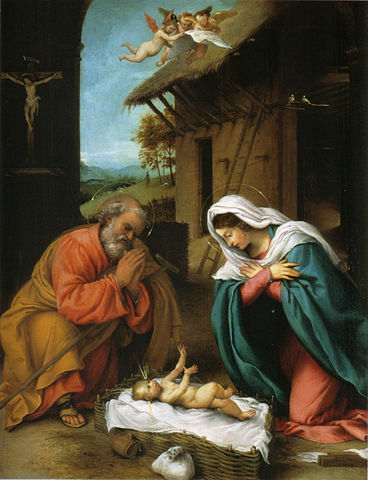
Lorenzo Lotto, 1523
 
The immortality of Adam.

Yes, I agree Adam’s physical nature was not built in such a way that it would life forever.
The PRETERNATURAL GIFTS are extras that God would bestow if Adam had not sinned.

The CCC doesn’t say exactly how the Church came to conclude that immortality was a PRETERNATURAL GIFT, but from the narrative it helps me to remember the part about the tree of life.

The tree of life has a symbolic representation with the spiritual result of immortality by eating it; or becoming one with it. So, note that this is an external element from the nature of Adam and Eve. That they needed to have this for an immortal life in Eden and was not anything taken out of them, but they were simply never allowed to eat of it’s fruit.
They are preternatural because they are not exclusive to divinity, but also not natural. Those preternatural gifts are extensions of nature. Modern Catholic Dictionary defines preternatural (excerpt): “Favors granted by God above and beyond the powers or capacities of the nature that receives them but not beyond those of all created nature.”

One source is ST. PIUS V 1566-1572, Errors of Michael du Bay (BAII), Condemned in the Bull “Ex omnibus afflictionibus,” Oct. 1, 1567 for teaching this, which is untrue:

1001 1. Neither the merits of an angel nor of the first man still in the state of integrity are called grace.

And from PIUS VI 1775-1799, Constitution, “Auctorem fidei,” Aug. 28, 1794, condemned:

1516 16. The doctrine of the synod about the state of happy innocence, such as it represents it in Adam before his sin, comprising not only integrity but also interior justice with an inclination toward God through love of charity, and primeval sanctity restored in some way after the fall; in so far as, understood comprehensively, it intimates that that state was a consequence of creation, due to man from the natural exigency and condition of human nature, not a gratuitous gift of God, false, elsewhere condemned in Baius [see n. 1001 ff.], and in Quesnel [see n. 1384 ff.], erroneous, favorable to the Pelagian heresy.

Denzinger, Sources of Catholic Dogma
 
This thread about Adam and his spouse Eve is based on granny’s curiosity. 😃

For example:

What would be found in the first three chapters of Genesis?
Is the science of agriculture there?
Would the creative minds of Adam and Eve give them a beneficial edge when they started housekeeping in the wild?
What exactly is the original relationship between the first human and his Maker?
Why is the stupid Original Sin a big deal?
And the really big question – What in the world does the figurative language affirm?

A dollar to a donut is that answers can be found both in the first three chapters of
Genesis and in the teachings found in the universal Catechism of the Catholic Church, Second Edition.

Here are my three favorite established truths. I list them because I do not intend to debate them.
  1. God as Creator exists.
  2. God as Creator interacts personally with each individual human.
  3. Every individual human has the inherent capacity to interact with God as Creator.
I am confident that eventually the above questions and additional questions will be answered in some fashion. Curiosity killed the cat, but satisfaction brought it back.

Blessings,
granny

The search for truth is worthy of the adventures of the journey!
Thinking about the first question in post 1 –
“What would be found in the first three chapters of Genesis?”

I wonder how many people remembered that the future reality of Christmas
can be found in Genesis 3: 15

From the universal *Catechism of the Catholic Church, Second Edition. *
Refer to footnote 304, Genesis 3: 9 & Genesis 3: 15
**410 **After his fall, man was not abandoned by God. On the contrary, God calls him and in a mysterious way heralds the coming victory over evil and his restoration from his fall. This passage in Genesis is called the *Protoevangelium *(“first gospel”): the first announcement of the Messiah and Redeemer, of a battle between the serpent and the Woman, and of the final victory of a descendant of hers.

**411 **The Christian tradition sees in this passage an announcement of the “New Adam” who, because he “became obedient unto death, even death on a cross”, makes amends superabundantly for the disobedience, of Adam. Furthermore many Fathers and Doctors of the Church have seen the woman announced in the *Protoevangelium *as Mary, the mother of Christ, the “new Eve”. Mary benefited first of all and uniquely from Christ’s victory over sin: she was preserved from all stain of original sin and by a special grace of God committed no sin of any kind during her whole earthly life.

Links to the Catechism.
usccb.org/beliefs-and-teachings/what-we-believe/catechism/catechism-of-the-catholic-church/

scborromeo.org/ccc.htm

Adam, by his Original Sin, had freely destroyed humankind’s original relationship with the Creator. Is it a coincidence that we are looking for Adam at the same time God is looking for Adam in the Garden?
Genesis 3: 9
The Lord God then called to the man and asked him: Where are you?

Genesis 3: 15
I will put enmity between you and the woman, and between your offspring and hers; They will strike at your head, while you strike at their heel.*

Scripture link. usccb.org/bible/genesis/3

While we celebrate the birth of Jesus Christ, True God and True Man, we can see the future in the top left corner of this painting. When we look for Adam, we find Original Sin. When we listen to God’s words of supreme love, we find Jesus Christ as a precious Baby.
John 3: 16
For God so loved the world that He gave* His only Son,
so that everyone who believes in Him might not perish but might have
eternal life.

Scripture link. usccb.org/bible/john/3


Lorenzo Lotto, 1523
 
The search for truth is worthy of the adventures of the journey!
Hi Granny!

Yes it is!

And let me add that you are a wonderful vehicle in that search for truth. Thank you for all you do here on the CAF, Granny. I don’t know if I am going to continue with this forum business, but if I do not continue, I want to thank you so much for challenging me, helping me sort out my own explanations for truth as I read it from the CCC and so many priests and others who have taught me so much.

In fact, no one has exposed me to so much of the CCC as you have, dear Granny. You do great work here, and though I disagree with you on a few issues, you are “tops” in my book.

I wish you the best, may God bless you and your family, and may your 2016 be one of great health and continued joy.

Have a very, very, merry Christmas!

Love

One sheep
 
Regarding Adam :

What is the difference between the gift of immortality (which Adam was given freely)
and Eternal life (given freely to us, by Jesus Christ)

Adam was mortal, but with the gift of immortality he would not suffer or die as a human being.

What does Jesus restore to us that Adam lost, (which has been covered before in previous posts, but bare with me :D)

The grace to live in friendship with God, a supernatural Grace, which can only come from God, but not the same as Adam had to begin with. We have to learn all about God, suffer and die, so a completely different restoration. And the obvious there is no gift of immortality, but a hope that we will be resurrected at the second coming of Christ if we are found in his friendship, sanctifying grace.

Adam was holy, he did not need to be made holy, he only need to remain holy.
We on the other have to be made holy, it’s like back to front in a way.

So we are looking for Adam, but how to look for Adam?
 
Regarding Adam :

What is the difference between the gift of immortality (which Adam was given freely)
and Eternal life (given freely to us, by Jesus Christ)

Adam was mortal, but with the gift of immortality he would not suffer or die as a human being.

What does Jesus restore to us that Adam lost, (which has been covered before in previous posts, but bare with me :D)

The grace to live in friendship with God, a supernatural Grace, which can only come from God, but not the same as Adam had to begin with. We have to learn all about God, suffer and die, so a completely different restoration. And the obvious there is no gift of immortality, but a hope that we will be resurrected at the second coming of Christ if we are found in his friendship, sanctifying grace.

Adam was holy, he did not need to be made holy, he only need to remain holy.
We on the other have to be made holy, it’s like back to front in a way.

So we are looking for Adam, but how to look for Adam?
Regarding this question – “What is the difference between the gift of immortality (which Adam was given freely) and Eternal life (given freely to us, by Jesus Christ)”

My personal opinion is that the gift of immortality only refers to Adam’s decomposing material anatomy. In contrast when I think about Eternal life, I think about being in the presence of the Beatific Vision after bodily death. So, the next question would be – How would Adam get to heaven and the Beatific Vision if he did not commit Original Sin? Sorry folks. We do not have the answer.

Again, this is my personal opinion. I do not consider Adam’s “how” as being very important in the grand scheme of life. Original Sin happened. Instead of moaning and groaning, we need to concentrate on the Sacraments Jesus freely gave us. The best of all is that Jesus freely gives Himself in the Holy Eucharist.
 
I understand eternal life is our resurrected bodies, free from wound-ness, concupiscence, always in the presence of God, and so can only be holy. I’m not sure if we are to be considered human, spirit or other after death. Also, will we have the ability to choose, I think we are taught that we won’t be able to choose God or not after death, our decision has to be made in this life.

We shall be like God, so…

I’ll assume Adam/Eve were to be like God, they too were free from wounded -ness, concupiscence, but not in the presence of God, that was to come.

Even in their holy state, they still could not get it quite right…I wonder why…

When you look for Adam you find Christ, look for Eve, you find Mary…

Out of bad comes Good.
Maybe that’s all we need to know.
 
They are preternatural because they are not exclusive to divinity, but also not natural. Those preternatural gifts are extensions of nature. Modern Catholic Dictionary defines preternatural (excerpt): “Favors granted by God above and beyond the powers or capacities of the nature that receives them **but not beyond those of all created nature.” **
I would like to know what “**those” **are in the part I put in bold. I would love an explanation of that which is in bold.

You probably have read Father John A. Hardon, S.J. in this link.
I now printed it, but have no clue when I can actually study it. Perhaps, you have some favorite points.
therealpresence.org/archives/God/God_013.htm

When I find Adam, I find an amazing intelligent person. I also find the author of the first three chapters of Genesis to be an amazing intelligent person. In this thread’s opening post, there is this question – “Would the creative minds of Adam and Eve give them a beneficial edge when they started housekeeping in the wild?” As my Irish Mother would say. There is method in her madness.

Comments like the following from Simpleas, post 52, urge us to go deeper into the preternatural gifts. We can use an investigation without prejudice. There must be something about Adam and Eve’s human nature that I am missing.
From post 52.
"I’ll assume Adam/Eve were to be like God, they too were free from wounded -ness, concupiscence, but not in the presence of God, that was to come.

“Even in their holy state, they still could not get it quite right…I wonder
why…”

Here is an interesting point on the front page of Father Hardon’s thesis.
therealpresence.org/archives/God/God_013.htm

“From the viewpoint of modern paleontology and ethnology, which posit man in ancient times as crude and undeveloped, we seem to face a contradiction to the present thesis. If primitive man was also “primitive,” how square this with the dogma that the first man was superlatively gifted with powers of mind and body?”

Seems to me that finding Adam has given us a dilemma.
 
I would like to know what “**those” **are in the part I put in bold. I would love an explanation of that which is in bold.

You probably have read Father John A. Hardon, S.J. in this link.
I now printed it, but have no clue when I can actually study it. Perhaps, you have some favorite points.
therealpresence.org/archives/God/God_013.htm

When I find Adam, I find an amazing intelligent person. I also find the author of the first three chapters of Genesis to be an amazing intelligent person. In this thread’s opening post, there is this question – “Would the creative minds of Adam and Eve give them a beneficial edge when they started housekeeping in the wild?” As my Irish Mother would say. There is method in her madness.

Comments like the following from Simpleas, post 52, urge us to go deeper into the preternatural gifts. We can use an investigation without prejudice. There must be something about Adam and Eve’s human nature that I am missing.
From post 52.
"I’ll assume Adam/Eve were to be like God, they too were free from wounded -ness, concupiscence, but not in the presence of God, that was to come.

“Even in their holy state, they still could not get it quite right…I wonder
why…”

Here is an interesting point on the front page of Father Hardon’s thesis.
therealpresence.org/archives/God/God_013.htm

“From the viewpoint of modern paleontology and ethnology, which posit man in ancient times as crude and undeveloped, we seem to face a contradiction to the present thesis. If primitive man was also “primitive,” how square this with the dogma that the first man was superlatively gifted with powers of mind and body?”

Seems to me that finding Adam has given us a dilemma.
The preternatural gifts (these are not supernatural) of Adam and Even are integrity (absence of concupiscence), bodily immortality and infused knowledge. Because there was freedom from concupiscence, the fall occurred with dominion over spiritual and animal passion. The fall was through pride.
 
The preternatural gifts (these are not supernatural) of Adam and Even are integrity (absence of concupiscence), bodily immortality and infused knowledge. Because there was freedom from concupiscence, the fall occurred with dominion over spiritual and animal passion. The fall was through pride.
Thank you.

If I am understanding correctly, pride would not be part of concupiscence. This possibility leads us to the fact that Adam is a rational creature with freedom to determine his actions. In other words, the gift of infused knowledge is simply knowledge which can be acted upon.

Another thought. Animals normally do not spend time deciding if their instinct for survival is really beneficial to them personally. On the other hand, Adam was presented with the yes/no option (obedience) for survival. Having rational tools, Adam could evaluate the option of obedience in relationship to his own personal goals. These goals could include the benefit of a better survival proposition. Adam could consider that the option of infinite knowledge would be beneficial. Or Adam could consider that infinite knowledge would be fun to have. The first sentence in CCC 397 is Adam’s first bad choice.

I need to pause here because if pride is not taken away by the preternatural gifts, then it is reasonable that Adam would not be free from pride. Here, we also need to consider that there is a good side to reasonable pride.

I also need to pause here so that I can emphasis that the above and the below are my personal thoughts.

Personally, I think it is a good idea to go back to CCC 1730-1732. And then study CCC 397, first sentence. Studying all of CCC 397-398 is a good idea.

Links to the universal Catechism of the Catholic Church, Second Edition.
usccb.org/beliefs-and-teachings/what-we-believe/catechism/catechism-of-the-catholic-church/

scborromeo.org/ccc.htm

Comments? Questions? New Thoughts? New Ideas?

We found Adam in a Garden where God interacted with him. We can’t quit now. 😃
 
Thank you.

If I am understanding correctly, pride would not be part of concupiscence. This possibility leads us to the fact that Adam is a rational creature with freedom to determine his actions. In other words, the gift of infused knowledge is simply knowledge which can be acted upon.

Another thought. Animals normally do not spend time deciding if their instinct for survival is really beneficial to them personally. On the other hand, Adam was presented with the yes/no option (obedience) for survival. Having rational tools, Adam could evaluate the option of obedience in relationship to his own personal goals. These goals could include the benefit of a better survival proposition. Adam could consider that the option of infinite knowledge would be beneficial. Or Adam could consider that infinite knowledge would be fun to have. The first sentence in CCC 397 is Adam’s first bad choice.

I need to pause here because if pride is not taken away by the preternatural gifts, then it is reasonable that Adam would not be free from pride. Here, we also need to consider that there is a good side to reasonable pride.

I also need to pause here so that I can emphasis that the above and the below are my personal thoughts.

Personally, I think it is a good idea to go back to CCC 1730-1732. And then study CCC 397, first sentence. Studying all of CCC 397-398 is a good idea.

Links to the universal Catechism of the Catholic Church, Second Edition.
usccb.org/beliefs-and-teachings/what-we-believe/catechism/catechism-of-the-catholic-church/

scborromeo.org/ccc.htm

Comments? Questions? New Thoughts? New Ideas?

We found Adam in a Garden where God interacted with him. We can’t quit now. 😃
Also from the Catechism of the Catholic Church:

1872 Sin is an act contrary to reason. It wounds man’s nature and injures human solidarity.

And from Baltimore Catechism No. 3:

Q. 296. What is pride?

A. Pride is an excessive love of our own ability; so that we would rather sinfully disobey than humble ourselves.

Q. 297. What effect has pride on our souls?

A. Pride begets in our souls sinful ambition, vainglory, presumption and hypocrisy.

Q. 252. Which were the chief causes that led Eve into sin?

A. The chief causes that led Eve into sin were: (1) She went into the danger of sinning by admiring what was forbidden, instead of avoiding it. (2) She did not fly from the temptation at once, but debated about yielding to it. Similar conduct on our part will lead us also into sin.

Baltimore Catechism No. 4 has this on pride:

"Pride" is an inordinate self-esteem. Pride comes under the First Commandment; because by thinking too much of ourselves we neglect God, and give to ourselves the honor due to Him. Of what have we to be proud? Of our personal appearance? Disease may efface in one night every trace of beauty. Of our clothing? It is not ours; we have not produced it; most of it is taken from the lower animals-wool from the sheep, leather from the ox, feathers from the bird, etc. Are we proud of our wealth, money or property? These may be stolen or destroyed by fire. The learned may become insane, and so we have nothing to be proud of but our good works. All that we have is from God, and we can have it only as long as He wishes. We had nothing coming into the world, and we leave it with nothing but the shroud in which we are buried; and even this does not go with the soul, but remains with the body to rot in the earth. Soon after death our bodies become so offensive that even our dearest friends hasten to place them under ground, where they become the food of worms, a mass of corruption loathsome to sight and smell. Why, then, should we be so proud of this body, and commit so much sin for it, pamper it with every delicacy, only to be the food of worms? This does not mean, however, that we are not to keep our bodies clean, and take good care of them. We are bound to do so, and could not neglect it without committing sin. The one thing to be avoided is taking too much care of them, and neglecting our soul and God on their account. The followers of pride are: conceit, hypocrisy, foolish display in dress or conduct, harshness to others, waste of time on ourselves, etc.
 
Regarding concupiscence, we are told A&E were free from it :

Theologians call this tendency to sin “concupiscence.” The word concupiscence is defined as a strong desire, a tendency or attraction, usually arising from lust or sensual desires. It is, morally speaking, the tendency to go off course.

So they are free from it, how is it they go off course?

There must have been a desire within…Pride…that provoked the temptation and eventually giving in to that temptation.

*In the original innocence of our human nature, there was perfect harmony between body and soul. *

Again, perfect harmony between body and soul?

*St. Thomas Aquinas taught clearly that concupiscence is a consequence of original sin. Once human beings made the decision to be unbound from the will of God, the harmony within human nature also became unbound.

Desires and appetites were no longer in harmony with the intellect or reason, and the two — desire and reason — fought against one another.*

So to make that decision there had to be present within, a prideful desire before a prideful willingness could succeed.

source :

osv.com/myfaith/modelsofthefaith/article/tabid/684/artmid/13728/articleid/10340/what-is-concupiscence.aspx?ref=hptopics

It is an interesting write up, it covers much that has been expressed here, and obviously how we can overcome sin :

While we cannot vanquish concupiscence in this life, we can open our lives to the grace of God that provides the strength to resist the weakness of our fallen nature. 👍

What I ponder on, is, with the Grace God gives us when we freely ask, helps us in our temptations, which maybe concluded to be a lot harder to resist, and the Grace A&E had in their harmony with God, nature etc, they were unable to resist the temptation that lead them to their fall…

Interesting…

May I wish all a Happy New Year, see ya in 2016!

:blessyou:👋
 
Regarding concupiscence, we are told A&E were free from it :

Theologians call this tendency to sin “concupiscence.” The word concupiscence is defined as a strong desire, a tendency or attraction, usually arising from lust or sensual desires. It is, morally speaking, the tendency to go off course.

So they are free from it, how is it they go off course?

There must have been a desire within…Pride…that provoked the temptation and eventually giving in to that temptation.

*In the original innocence of our human nature, there was perfect harmony between body and soul. *

Again, perfect harmony between body and soul?

*St. Thomas Aquinas taught clearly that concupiscence is a consequence of original sin. Once human beings made the decision to be unbound from the will of God, the harmony within human nature also became unbound.

Desires and appetites were no longer in harmony with the intellect or reason, and the two — desire and reason — fought against one another.*

So to make that decision there had to be present within, a prideful desire before a prideful willingness could succeed.

source :

osv.com/myfaith/modelsofthefaith/article/tabid/684/artmid/13728/articleid/10340/what-is-concupiscence.aspx?ref=hptopics

It is an interesting write up, it covers much that has been expressed here, and obviously how we can overcome sin :

While we cannot vanquish concupiscence in this life, we can open our lives to the grace of God that provides the strength to resist the weakness of our fallen nature. 👍

What I ponder on, is, with the Grace God gives us when we freely ask, helps us in our temptations, which maybe concluded to be a lot harder to resist, and the Grace A&E had in their harmony with God, nature etc, they were unable to resist the temptation that lead them to their fall…

Interesting…

May I wish all a Happy New Year, see ya in 2016!

:blessyou:👋
It cannot be that they were “unable to resist the temptation the lead them to their fall” because God always gives sufficient grace. Rather is was the free choice of malice.
 
It cannot be that they were “unable to resist the temptation the lead them to their fall” because God always gives sufficient grace. Rather is was the free choice of malice.
Thanks.

Well, when I work out how they could have malice in their hearts when they were created free from any such fallen desire I’ll have an answer.

🙂
 
Thanks.

Well, when I work out how they could have malice in their hearts when they were created free from any such fallen desire I’ll have an answer.

🙂
Adam had infused knowledge and freedom, but he lacked the the experience and skill to apply knowledge to action; he failed to exercise “the power of discerning and judging properly as to what is true or right; possessing discernment, judgment, or discretion,” i.e., wisdom. :banghead:

[definition from dictionary.com]
 
Status
Not open for further replies.
Back
Top