Thanks for the maps, Hesychios

Since so many of the Eastern Churches correlate to specific groups of people - Syrians, Greeks, Ukrainians, Russians, Polish, Czech, etc, is it safe to say that in general the areas that each Church covers correspond to modern national boundaries (although I see that the original area of the Ruthenian Church spans several modern-day countries). But, in the present day, do the Church boundaries correspond to current borders?
Actually no, I don’t think it is safe to generalize.
For instance, the Syro-Malabar church (and also the Syro-Malankara church) seems to have just one province as home territory in India, which is Kerala. This may be because India was consolidated into one nation in modern times and the Vatican chooses not to consider that as relevant.
http://www.diocese-neyyattinkara.net/diocese/location/india_map_kerala.jpg
(the map is actually for a Latin diocese, but it’s a good indicator for Kerala)
The rest of India is basically covered by a network of Roman Catholic dioceses, and as much as the Syro-Malabar church might disagree it must rely on the Pope to elevate bishops for it in northern India. This is also true for the Syro-Malankara church.
(BTW, there is a unique community in India composed exclusively of Indians who claim descent from Jews, and they as a rule do not intermarry outside of their own community. These are the Southists, or Knanaya Christians. They will commonly marry across Orthodox-Catholic lines within their community but rarely marry within their own church outside of the community.)
The Melkite Church Patriarchate is entitled:
Patriarch of Antioch and All the East, of Alexandria and Jerusalem. In the Orthodox community these are three Patriarchates, but these three are combined into one office for the Catholic Melkites. So the Melkite homeland covers several countries, where it overlaps with the territories of other eastern Catholic churches. (I am guessing Syria, Israel, Palestinian Authority, Jordan and Lebanon plus probably Egypt & Turkey). This is where the synod names it’s own bishops, the Melkites in America and Australia would be under bishops named by the Pope and subject to discipline designated by the Pope (such as celibacy of clergy, which was an issue for a while).
Since after Vatican Council II the designation of home territories is more significant for describing the limits of Papal responsibility, in the sense that whatever does not automatically fall under what the Vatican designates as home territory is assumed to be the prerogative of the Pope.
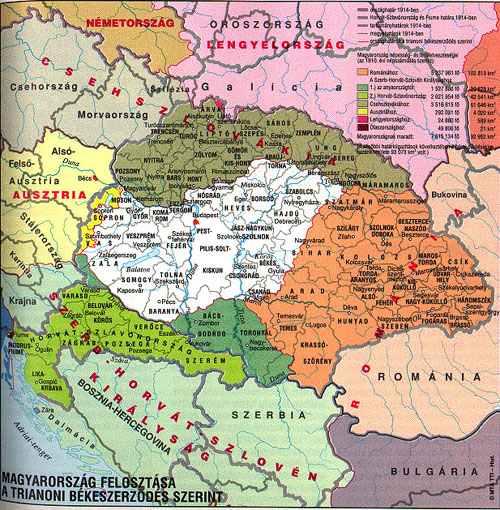
The Ruthenians (described above) actually do not have a home territory in that sense, because it is not recognized as one synod at all. It started out as subject to the Latin bishop of Egar in the Hungarian kingdom, and was later removed from that dependent relationship by some Pope. The Pope has named every bishop for them since, elevating new dioceses as he may deem necessary. (Among Byzantine Catholics there has been talk in the past that consolidation of BCC eparchies in the USA might be necessary due to shrinking enrollments, but Rome has never publicly said anything about that possibility that I am aware of.)
I just read an article about the Romanian Catholic church where it describes the bishop of Alba Iulia has recently been elevated to a Major-Metropolitanate by the Pope. This seems to put every other Byzantine-Rite bishop in the nation of Romania under his authority (an area bigger than the original region of Transylvania), but not the Romanian Catholic diocese of Canton, OH USA, which (although quite small) technically remains under the supervision of the Pope.
The Byzantine-Slavonic church in Trans-Carpathian Ukraine (Mukaèevo), is not part of the Ukrainian Greek Catholic church, having originally been in the Hungarian kingdom when it’s priests submitted to Rome (at
Uzhorod). It’s bishop is named by the Pope.
I am open to correction about the statements I make here, if anyone has more accurate information to contribute.