J

You are using an out of date browser. It may not display this or other websites correctly.
You should upgrade or use an alternative browser.
You should upgrade or use an alternative browser.
- Status
- Not open for further replies.
J
Josephene
Guest
A topic that we need not dwell on in depth ,IMO , since those who need to focus on such seem to be doing their roles to remedy and deal with the issues .Isn’t Indian society organized according to a caste system?
In fact, the website you cited expressly mentions that people are accepted into the Church regardless of caste, color, creed or culture (used much the same as the word “race” would be used in similar instances in the U.S.A.).
So, wouldn’t every citizen of India possess a “caste system mentality”?
berchmans.tripod.com/early.html - the last sentence in there might give some idea of what as to what is mentioned ; yet , The Church(s ) have shown the grace , to move ahead, under appropriate guidance , where the truth of the intrinsic dignity of all person is given its due place .
Extensive works , such as the one sited below are on the market - indianchristianity.com/ -
Again, the only intent is sharing has been to indicate that the precious attitudes of cooperation and fidelity to Church teachings in major areas has been a blessing to the Church in India , which is thus being helped to overcome the shortcomings of the past too !
God bless !
J
jerry_joseph
Guest
Children preparing for First Holy Communion in a Syro Malabar church in Kerala, India
http://a2.sphotos.ak.fbcdn.net/hpho...6455199_165235253580313_353137_98335529_n.jpg
http://a2.sphotos.ak.fbcdn.net/hpho...6455199_165235253580313_353137_98335529_n.jpg
J
jerry_joseph
Guest
B
BVT
Guest
The Malabar Coast of India had long been home to a thriving Christian community, known as the St. Thomas Christians. The community traces its origins to the evangelical activity of Thomas the Apostle in the 1st century. It is believed that these christians developed a cordial relationship with its sister churches in midle east as early as 5th century. Indian Christian community were initially part of the metropolitan province of Fars(500-800 AD), but were detached from that province in the 7th century, and again in the 8th, and given their own metropolitan bishop by the patriarch Ishoʿyahb III (Metropolitan v-thara d- kollah hendo)).Communications between Mesopotamia and India were not always good, however, and in the eighth century the patriarch Timothy I again detached India from Fars and created a separate metropolitan province for India(Beth Hindey).
The province of Fars, the historic cradle of Persian civilisation, was a metropolitan province of the Church of the East between the sixth and twelfth centuries. It was centered in what is now Fars Province, and besides a number of centres in Fars itself, the East Syrian ecclesiastical province also included a number of dioceses in Arabia and a diocese for the island of Soqotra.According to tradition, Christianity was brought to the Persian province of Fars (Syriac: Beth Parsaye, ܒܝܬ ܦܪܣܝܐ) by Persian merchants exposed to the teaching of the apostle Addai in Roman Edessa. This tradition, which rejected a significant role for the apostle Mari, widely credited with the evangelisation of the Mesopotamian provinces of the Church of the East, reflects a deep division within the Church of the East in the Sassanian period between its Syrian and Persian converts. The patriarchs of Seleucia-Ctesiphon frequently found it difficult to exert authority over the ecclesiastical province of Fars.
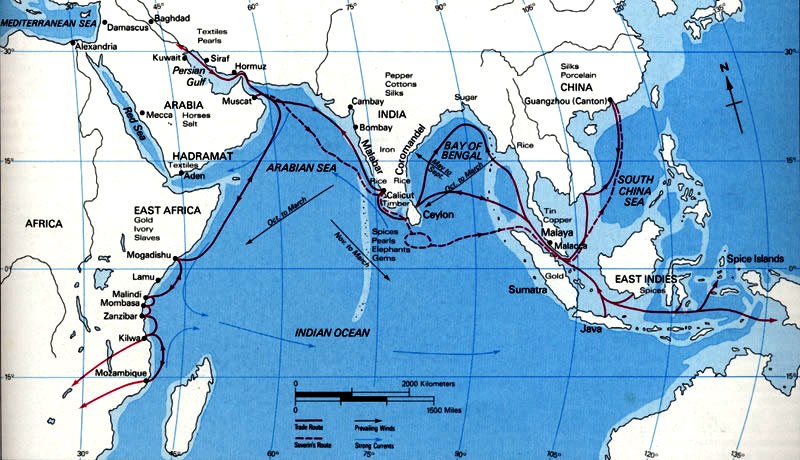
It was patriarch Ishoʿyahb III (649–59) who raised India to the status of a metropolitan province, probably because of the unsatisfactory oversight of the metropolitan Shemʿon of Fars. A number of letters from Ishoʿyahb to Shemʿon have survived, in one of which Ishoʿyahb complained that Shemʿon had refused to consecrate a bishop for ‘Kalnah’ (the ‘Calliana’ of Cosmas Indicopleustes), because the Indian Christians had offended him in some way.
In a letter of lshoyahb lll (647 or 650-657 A.D.) the Catholicose-patriarch of the Persian church. He reports that the metropolitan of Rev-Ardashir (in the Persian Gulf) Was responsible for the church in “India”, by which he meant a region extending “from the maritime borders of the Sassinid empire to the country called QLH which is at distance of 1,200 parasangs"
According to the fourteenth-century writer ʿAbdishoʿ of Nisibis, the patriarch Sliba-zkha (714–28) created metropolitan provinces for Herat, Samarqand, India and China. If ʿAbdishoʿ is right, India’s status as a metropolitan province must have lapsed shortly after it was created by Ishoʿyahb III(650). An alternative, and perhaps more likely, possibility, is that Sliba-zkha consecrated a metropolitan for India, perhaps in response to an appeal from the Indian Christians, to fill the place of the bishop sent there by Ishoʿyahb half a century earlier.
Mar Sabor and Mar Proth (real names may be Mar Sabor and Mar Proth or Mar Sapir Proth or Mar Prodh (ca. 849) were two Monks who build and ruled many churches in Travancore and Malabar. 825 AD, Maruvan Sapir Eso, a successful merchant from Persia crossed the seas to reach Quilon. Along with him came Mar Aproth and Mar Sapor with a group of Christians probably fleeing after the growing Islamic threat in their home country , two bishops representing the Persian Christians.
The book Pahlavi inscription around a 8th century cross when translated is,
”I, the beautiful bird of Nineveh has come to this land. Written by me Shapper, who was saved by the Holy Messiah from misery.”
The book Pahlavi inscription around another 8th century cross when translated is,
“My Lord Christ, have mercy upon Afras son of Chaharbukht the Syrian, who cut this (or, who caused this to be cut).”
The province of Fars, the historic cradle of Persian civilisation, was a metropolitan province of the Church of the East between the sixth and twelfth centuries. It was centered in what is now Fars Province, and besides a number of centres in Fars itself, the East Syrian ecclesiastical province also included a number of dioceses in Arabia and a diocese for the island of Soqotra.According to tradition, Christianity was brought to the Persian province of Fars (Syriac: Beth Parsaye, ܒܝܬ ܦܪܣܝܐ) by Persian merchants exposed to the teaching of the apostle Addai in Roman Edessa. This tradition, which rejected a significant role for the apostle Mari, widely credited with the evangelisation of the Mesopotamian provinces of the Church of the East, reflects a deep division within the Church of the East in the Sassanian period between its Syrian and Persian converts. The patriarchs of Seleucia-Ctesiphon frequently found it difficult to exert authority over the ecclesiastical province of Fars.
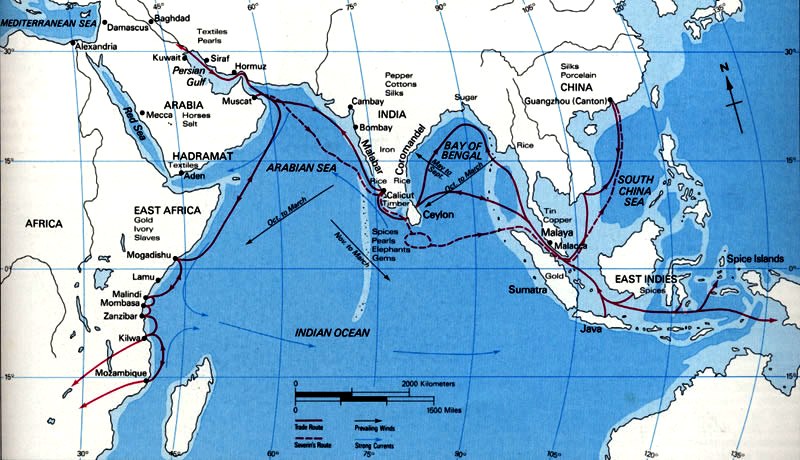
It was patriarch Ishoʿyahb III (649–59) who raised India to the status of a metropolitan province, probably because of the unsatisfactory oversight of the metropolitan Shemʿon of Fars. A number of letters from Ishoʿyahb to Shemʿon have survived, in one of which Ishoʿyahb complained that Shemʿon had refused to consecrate a bishop for ‘Kalnah’ (the ‘Calliana’ of Cosmas Indicopleustes), because the Indian Christians had offended him in some way.
In a letter of lshoyahb lll (647 or 650-657 A.D.) the Catholicose-patriarch of the Persian church. He reports that the metropolitan of Rev-Ardashir (in the Persian Gulf) Was responsible for the church in “India”, by which he meant a region extending “from the maritime borders of the Sassinid empire to the country called QLH which is at distance of 1,200 parasangs"
According to the fourteenth-century writer ʿAbdishoʿ of Nisibis, the patriarch Sliba-zkha (714–28) created metropolitan provinces for Herat, Samarqand, India and China. If ʿAbdishoʿ is right, India’s status as a metropolitan province must have lapsed shortly after it was created by Ishoʿyahb III(650). An alternative, and perhaps more likely, possibility, is that Sliba-zkha consecrated a metropolitan for India, perhaps in response to an appeal from the Indian Christians, to fill the place of the bishop sent there by Ishoʿyahb half a century earlier.
Mar Sabor and Mar Proth (real names may be Mar Sabor and Mar Proth or Mar Sapir Proth or Mar Prodh (ca. 849) were two Monks who build and ruled many churches in Travancore and Malabar. 825 AD, Maruvan Sapir Eso, a successful merchant from Persia crossed the seas to reach Quilon. Along with him came Mar Aproth and Mar Sapor with a group of Christians probably fleeing after the growing Islamic threat in their home country , two bishops representing the Persian Christians.
The book Pahlavi inscription around a 8th century cross when translated is,
”I, the beautiful bird of Nineveh has come to this land. Written by me Shapper, who was saved by the Holy Messiah from misery.”
The book Pahlavi inscription around another 8th century cross when translated is,
“My Lord Christ, have mercy upon Afras son of Chaharbukht the Syrian, who cut this (or, who caused this to be cut).”
B
BVT
Guest

Syro-Chaldean Karshuni ( Suriyaani Malayalam) or simply Karshuni (Syriac script: ܓܪܫܘܢܝ, which used the Syriac script to write Malayalam, was a popular medium of written communication among Christians until the 19th century, like Arabi-Malayalam used by Muslims in Malabar or judo Malayalam by the cochin Jews. Syro-Chaldean Karshuni originated in the ninth century AD, when Eastern Aramaic became the dominant liturgical language in the Malabar coast (Possibly by the large scale migration from Mesopotamia). After this initial period, Karshuni writing has continued up to the twentieth century among the Syriac Christian communities in the Malabar Coast. Syriac was the liturgical language of most denominations of Christianity in Kerala until half a century ago but now most Christian denominations have replaced it with Malayalam.” Most Christian denominations, especially the Catholic rites, dropped Syriac as the language of church service in the second half of the 20th century (1960).
The antiquity of this writing system is clear from the following observation by Isaac Taylor

It was probably about the 9th century that the Syrian Estrangelo alphabet was carried by Nestorian missionaries to India, where it is still used by the so-called “Christians of St. Thomas,” on the Malabar coast. Nine additional characters have been borrowed from the Malayalim, a local Indian alphabet, in order to express certain peculiar Dravidian sounds. The original twenty-two Syriac letters have however remained almost absolutely true to the Nestorian forms of the 9th century.[We possess Nestorian MSS. dated in the years 600 and 768 A.D., but the forms vary little from the Estrangelo of the 6th century. The distinctive Nestorian peculiarities make their earliest appearance in a MS. written at Haran in 899 A.D.]This curious composite alphabet is called KARSHUNI, a term whose meaning is unknown, though it is probably of Syrian origin, being also applied by the Maronites to the Syriac characters in which Arabic is sometimes written.
B
BVT
Guest
Mar Yaqob of India,AD 1301
Mar Jacob(Mar Yaqob of India,AD 1301) was one of the legendary metropolitan of the Church of Malabar of St Thomas Christians.
The dating formula in the colophon to a manuscript copied in June 1301 in the church of Mar Quriaqos in Cranganoor mentions the patriarch Yahballaha III (whom it curiously describes as Yahballaha V), and the metropolitan Yaʿqob of India(described as ‘vicar and governor of the seat of the apostle Thomas’, and probably the bishop Yacqob mentioned as the scribe’s tutor)…
“This holy book was written in the royal, renowned and famous city of Chingala (Cranganore) in Malabar in the time of the great captain and director of the holy catholic church of the East… our blessed and holy Father Mar Yahd Alaha V and in the time of bishop Mar Jacob, Metropolitan and director of the holy see of the Apostle Mar Thoma, that is to say, our great captain and the director of the entire holy church of Christian India”
en.wikipedia.org/wiki/Yaqob_of_India
Mar Yohannan(1490-1505).
Mar John(Mar Yohannan) was one of the legendary metropolitan of the Church of Malabar of st Thomas Christians.At the end of the fifteenth century the Church of the East responded to a request by the Saint Thomas Christians for bishops to be sent out to them. In 1490, two Christians from Malabar arrived in Gazarta to petition the East Syrian patriarch to consecrate a bishop for their church. Two monks of the monastery of Mar Awgin were consecrated bishops and were sent to India.
Mar Jacob Abuna.(1505-1555)
Mar Jacob Abuna(Mar Yacob) was one of the legendary metropolitan of the Church of Malabar of st Thomas Christians.In 1503, the successor of Mar Simeon, Mar Elias, the Catholicos Patriarch of the Church of the East consecrated three Bishops from the Monastery of St Eugene- Rabban David as Mar Jaballaha, Rabban George as Mar Denha, Rabban Masud as Mar Jacob. Mar Elias sent these three new Bishops together with Mar Thomas to the lands of the Indians, and to the islands of the seas, which are within Dabag, and to Sin and Masin- Java, China and Maha china- Great China
en.wikipedia.org/wiki/Jacob_Abuna
Mar Jacob(Mar Yaqob of India,AD 1301) was one of the legendary metropolitan of the Church of Malabar of St Thomas Christians.
The dating formula in the colophon to a manuscript copied in June 1301 in the church of Mar Quriaqos in Cranganoor mentions the patriarch Yahballaha III (whom it curiously describes as Yahballaha V), and the metropolitan Yaʿqob of India(described as ‘vicar and governor of the seat of the apostle Thomas’, and probably the bishop Yacqob mentioned as the scribe’s tutor)…
“This holy book was written in the royal, renowned and famous city of Chingala (Cranganore) in Malabar in the time of the great captain and director of the holy catholic church of the East… our blessed and holy Father Mar Yahd Alaha V and in the time of bishop Mar Jacob, Metropolitan and director of the holy see of the Apostle Mar Thoma, that is to say, our great captain and the director of the entire holy church of Christian India”
en.wikipedia.org/wiki/Yaqob_of_India
Mar Yohannan(1490-1505).
Mar John(Mar Yohannan) was one of the legendary metropolitan of the Church of Malabar of st Thomas Christians.At the end of the fifteenth century the Church of the East responded to a request by the Saint Thomas Christians for bishops to be sent out to them. In 1490, two Christians from Malabar arrived in Gazarta to petition the East Syrian patriarch to consecrate a bishop for their church. Two monks of the monastery of Mar Awgin were consecrated bishops and were sent to India.
Mar Jacob Abuna.(1505-1555)
Mar Jacob Abuna(Mar Yacob) was one of the legendary metropolitan of the Church of Malabar of st Thomas Christians.In 1503, the successor of Mar Simeon, Mar Elias, the Catholicos Patriarch of the Church of the East consecrated three Bishops from the Monastery of St Eugene- Rabban David as Mar Jaballaha, Rabban George as Mar Denha, Rabban Masud as Mar Jacob. Mar Elias sent these three new Bishops together with Mar Thomas to the lands of the Indians, and to the islands of the seas, which are within Dabag, and to Sin and Masin- Java, China and Maha china- Great China
en.wikipedia.org/wiki/Jacob_Abuna
B
BVT
Guest
Mar Joseph Sulaqa(1555-1568)-Brother of First Chaldean patriach Mar John Sulaqa
Mar Joseph Sulaqa (Syriac: ܝܘܣܦ ܣܘܠܩܐ) was one of the last East Syrian bishops to Malabar. He was shortly followed by Mar Abraham; both reached in Malabar after the arrival of the Portuguese.Abdisho IV Maron(1555–1570), the successor of Shimun VIII Yohannan Sulaqa(Alias Mar John Sulaqa murdered in 1555), sent the brother of John, Mar Joseph, to Malabar as a Chaldaean bishop; although consecrated in 1555 or 1556, Mar Joseph could not reach India before the end of 1556, nor Malabar before 1558, when the Portuguese were finally alerted by the presence of Mar Abraham and allowed Mar Joseph, accompanied by another Chaldaean bishop, Mar Eliah, to – very briefly – occupy his see, before the Inquisition also sent him to Lisbon in 1562.There is no doubt that Mar Joseph Sulaqa’s appointment was canonical, for he, the brother of the first Chaldean patriarch Shimun VIII Yohannan Sulaqa, was appointed by his successor Abed Jesu and sent out to Malabar.Before that he was the bishop of Nineveh(Mar Joseph was consecrated Metropolitan by his own brother Patriarch John Sulaqa in 1554 AD)).Mar Joseph was sent to India with letters of introduction from the pope to the Portuguese authorities; he was besides accompanied by Bishop Ambrose, a Dominican and papal commissary to the first patriarch, by his socius Father Anthony, and by Mar Elias Hormaz, Archbishop of Diarbekir.
Eugene Tisserant (Roman catholic Cardinal) in his book Eastern Christianity in India comments on the pathetic end of Mar Joseph Sulaqa. Cardinal comments.
“Yet the measure of suffering was full, and Mar Joseph received, near the tomb of the Apostles, the crown which he had merited , through his long and slow martyrdom which was perhaps a more painful one than that of his heroic brother(Shimun VIII Yohannan Sulaqa)”
Cardinal Eugene Tesserant, Eastern Christianily in India, Translated by E.R. Hambye, Culcutta:Orient Longmans, 1957,p.41.
en.wikipedia.org/wiki/Joseph_Sulaqa
Mar Joseph Sulaqa (Syriac: ܝܘܣܦ ܣܘܠܩܐ) was one of the last East Syrian bishops to Malabar. He was shortly followed by Mar Abraham; both reached in Malabar after the arrival of the Portuguese.Abdisho IV Maron(1555–1570), the successor of Shimun VIII Yohannan Sulaqa(Alias Mar John Sulaqa murdered in 1555), sent the brother of John, Mar Joseph, to Malabar as a Chaldaean bishop; although consecrated in 1555 or 1556, Mar Joseph could not reach India before the end of 1556, nor Malabar before 1558, when the Portuguese were finally alerted by the presence of Mar Abraham and allowed Mar Joseph, accompanied by another Chaldaean bishop, Mar Eliah, to – very briefly – occupy his see, before the Inquisition also sent him to Lisbon in 1562.There is no doubt that Mar Joseph Sulaqa’s appointment was canonical, for he, the brother of the first Chaldean patriarch Shimun VIII Yohannan Sulaqa, was appointed by his successor Abed Jesu and sent out to Malabar.Before that he was the bishop of Nineveh(Mar Joseph was consecrated Metropolitan by his own brother Patriarch John Sulaqa in 1554 AD)).Mar Joseph was sent to India with letters of introduction from the pope to the Portuguese authorities; he was besides accompanied by Bishop Ambrose, a Dominican and papal commissary to the first patriarch, by his socius Father Anthony, and by Mar Elias Hormaz, Archbishop of Diarbekir.
Eugene Tisserant (Roman catholic Cardinal) in his book Eastern Christianity in India comments on the pathetic end of Mar Joseph Sulaqa. Cardinal comments.
“Yet the measure of suffering was full, and Mar Joseph received, near the tomb of the Apostles, the crown which he had merited , through his long and slow martyrdom which was perhaps a more painful one than that of his heroic brother(Shimun VIII Yohannan Sulaqa)”
Cardinal Eugene Tesserant, Eastern Christianily in India, Translated by E.R. Hambye, Culcutta:Orient Longmans, 1957,p.41.
en.wikipedia.org/wiki/Joseph_Sulaqa
B
BVT
Guest
Mar Abraham of Angamaly1568-1597 -Appointed by Pope Pius IV.
Abraham of Angamaly (Syriac: ܐܒܪܗܡ ܡܛܪܢ,Mar Abraham died c. AD 1597) was the last in the long line of Mesopotamin Bishops who governed the Church of Saint Thomas Christians. In spite of the express approbation of the Pope, he was not welcomed by the Portuguese ecclesiastical authorities.
Later the Portuguese captured him and sent him to Portugal, but during the journey he escaped at Mozambique, found his way back to Mesopotamia, and went straight to Mar Abdisho IV Maron the Chaldean Patriarch, having realized from his Indian experience that unless he secured a nomination from him it would be difficult to establish himself in Malabar. He succeeded admirably in his devices, obtained nomination, consecration, and a letter to the pope from the patriarch. With this he proceeded to Rome, and while there at an audience with the pope he disclosed his position.[4] The pope ordered the Bishop of San Severino to give him orders from tonsure to the priesthood, and a Brief was sent to the Patriarch of Venice to consecrate Abraham the bishop. The facts were attested, both as to the lesser orders and the episcopal consecration, by the original letters which were found in the archieves of the Church of Angamaly where he resided and where he had died.[2]
[edit]
Abraham succeeded also in obtaining his nomination and creation as Archdiocese of Angamaly from the Pope Pius IV, with letters to the Archbishop of Goa, and to the Bishop of Cochin dated 27 Feb., 1565. Such was the success of this daring man.
en.wikipedia.org/wiki/Abraham_Methran
Abraham of Angamaly (Syriac: ܐܒܪܗܡ ܡܛܪܢ,Mar Abraham died c. AD 1597) was the last in the long line of Mesopotamin Bishops who governed the Church of Saint Thomas Christians. In spite of the express approbation of the Pope, he was not welcomed by the Portuguese ecclesiastical authorities.
Later the Portuguese captured him and sent him to Portugal, but during the journey he escaped at Mozambique, found his way back to Mesopotamia, and went straight to Mar Abdisho IV Maron the Chaldean Patriarch, having realized from his Indian experience that unless he secured a nomination from him it would be difficult to establish himself in Malabar. He succeeded admirably in his devices, obtained nomination, consecration, and a letter to the pope from the patriarch. With this he proceeded to Rome, and while there at an audience with the pope he disclosed his position.[4] The pope ordered the Bishop of San Severino to give him orders from tonsure to the priesthood, and a Brief was sent to the Patriarch of Venice to consecrate Abraham the bishop. The facts were attested, both as to the lesser orders and the episcopal consecration, by the original letters which were found in the archieves of the Church of Angamaly where he resided and where he had died.[2]
[edit]
Abraham succeeded also in obtaining his nomination and creation as Archdiocese of Angamaly from the Pope Pius IV, with letters to the Archbishop of Goa, and to the Bishop of Cochin dated 27 Feb., 1565. Such was the success of this daring man.
en.wikipedia.org/wiki/Abraham_Methran
B
BVT
Guest
In 1597, Mar Abraham, the last Chaldean Catholic metropolitan archbishop appointed by the Chaldean Patriarch and Pope , died. His Archdeacon, George (of the Cross) according to the custom and by virtue of appointment of Mar Abraham, took up the administration of the Archdiocese of Angamale.The Fraud Synod of Diamper separated the Thomas Christians from the Chaldean Catholic Patriarch and subjected them directly to the Latin Archbishopric of Goa. The Archbishopric of Angamale was downgraded to a Bishopric under Goa in 1600 AD. Portuguese Padroado rule was thus imposed and the Bishops for Saint Thomas Christians were appointed by Portuguese Padroado.
The Syond solemnly began on the third Sunday after Pentecost, 20 June 1599. It was held in the church of Diamper ( Udayamperoor) from June 20 to 26, 1599. Thr Latin Archbishop Menezes of Goa presided the Syond. The Chaldean Catholic Patriarch was condemned as a heretic and schismatic, and they were made to swear that they would not accept any bishop except the one immediately nominated by Portuguese Padroado.
The Syond solemnly began on the third Sunday after Pentecost, 20 June 1599. It was held in the church of Diamper ( Udayamperoor) from June 20 to 26, 1599. Thr Latin Archbishop Menezes of Goa presided the Syond. The Chaldean Catholic Patriarch was condemned as a heretic and schismatic, and they were made to swear that they would not accept any bishop except the one immediately nominated by Portuguese Padroado.
- Status
- Not open for further replies.