
Opt-Out Organ Donation

  • Thread starter Thread starter Vonsalza
  • Start date Start date
Status
Not open for further replies.
The interesting part is the “Organ donation after death is a noble and meritorious act” part of things. Because what is the definition of death?

The medical community began redefining “death” to mean “brain dead” once organ donation became a big thing. Because organs harvested from a dead-dead individual are pretty much useless. If you don’t get them within 5 minutes of being dead-dead, those organs can’t be kept alive and functioning to be repurposed elsewhere.

But the concept of “brain death” has been only around since, say, the 60’s and medical ethicists (and families) are still struggling with it.
 
The interesting part is the “Organ donation after death is a noble and meritorious act” part of things. Because what is the definition of death?

The medical community began redefining “death” to mean “brain dead” once organ donation became a big thing. Because organs harvested from a dead-dead individual are pretty much useless. If you don’t get them within 5 minutes of being dead-dead, those organs can’t be kept alive and functioning to be repurposed elsewhere.

But the concept of “brain death” has been only around since, say, the 60’s and medical ethicists (and families) are still struggling with it.
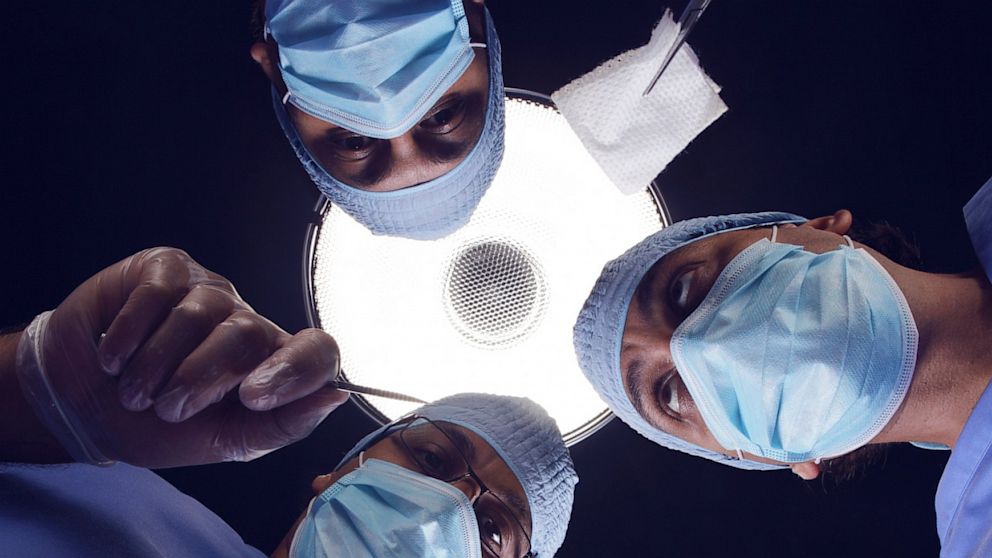
Sure. it’s a hard issue.

Whose to say that the beautiful 16 year old girl who died due to a burst aneuryism which drowned her brain in blood couldn’t have eventually opened her eyes again if she was kept on life support for half a century?

Instead of seeing, they “flipped the switch” and gave her organs to, I think, 8 people.

Ergo part of the moral issue.🤔
 
End of life issues are moral issues.
Sure. But is legislating Opt-Out Organ Donation at the Rotunda this coming Tuesday (just as an example) also an end-of-life issue?

It abuts an end-of-life issue, I’ll give you that.

But by similar proxy, your house abuts the White House.
 
Last edited:
Did a bit of digging online, I am guessing you are not in the US.

While a couple states have flirted with this idea, I cannot imaging it getting traction in the US for a very long time.

Seems that this study shows that in countries where these laws are in place, 90% of people opt in. Not exactly a solution to the problem because of the draconian "big brother"ness for the average American citizen!

 
Last edited:
Seems that this study shows that in countries where these laws are in place, 90% of people opt out. Not exactly a solution to the problem.
That’s not what the article says:
“In these so-called opt-out countries, more than 90% of people donate their organs. Yet in countries such as U.S. and Germany, people must explicitly “opt in” if they want to donate their organs when they die. In these opt-in countries,fewer than 15% of people donate their organs at death.”
 
Last edited:
Fixed.

To follow, I am guessing that citizens of other countries do not have the firm belief in personal autonomy that some other countries have. Americans don’t like being told what to do with their bodies.
 
Organ donation came up over the weekend with my 87 year old mom. She was in the hospital with a cardiac event and the Dr asked her about organ donation. She said “No, who would want my old organs”? I piped up and overrode, and told the Dr. that “if any of her organs are viable for donation, then yes, she is a donor”, and then just stared at my mom. Granted her heart/kidneys may not be helpful for anyone, but bone marrow, liver, corneas, etc may all help people after she dies. I can’t understand not wanting to help others in this way.
 
To follow, I am guessing that citizens of other countries do not have the firm belief in personal autonomy that some other countries have
A “firm belief in personal autonomy” doesn’t have to cost 18 lives a day. And it’s hardly “draconian” when you can opt-out.
 
Last edited:
There are problems saying either heart death or brain death are actual death: people have come back from both.
There’s even a case of a lady waking up as her organs were being taken.


Lots of people are thought dead but are not.

The good news is that we can now 3D print organs. Hopefully the technology advances sufficiently soon so that organ donation becomes obsolete.
 
Did a bit of digging online, I am guessing you are not in the US.
No, no. I’m a yank. Of the southern variety.
Seems that this study shows that in countries where these laws are in place, 90% of people opt in. Not exactly a solution to the problem because of the draconian "big brother"ness for the average American citizen!
Well, in fairness, you can just opt-out. From the handful of situations I’m familiar with; organ donors in the US are still verified as being such before they begin “parting them out”. Vis-a-vis, if you’re an organ donor and your spouse is dead-set against it, they can almost certainly stop the process if you’re presumably unconscious.

I saw a touching video where a woman lost her daughter to a car wreck and was meeting the gentleman her daughter’s heart went to.
After a few awkward attempts at conversation with the grieving mother, she got up to leave. He then asked if she wanted to listen to her daughter. So he unbuttoned his shirt and then she laid her ear upon his surgery-scarred chest.

“I can hear her”, spoken through tears.
 
Last edited:
The good news is that we can now 3D print organs. Hopefully the technology advances sufficiently soon so that organ donation becomes obsolete.
Well, we can 3d print hard structures. They still have to be infused with the soft organ tissue you’re referring to which starts to abut stem cell research.

You can’t just print a kidney.
 
Last edited:
But she just didn’t realize that some of her organs might still be useful…
 
So many bioethical questions with so much done today…
 
Last edited:
OK, makes sense once she was happy to donate on realizing they may be useful.
 
Sure. I know people who had aneuryisms and lived. I know people who had motorcycle accidents and died. They were organ donors and were kept on life support long enough to harvest their organs, but even though their body was artificially alive, “they” were not there anymore. I want to say that particular motorcycle fatality that I’m thinking about benefited about 23 different people.

But there’s nowhere on the form that says, “Okay, under these circumstances, I think I’ll be too far gone, so go ahead and help yourselves; but under those circumstances, I’d really like to have a fighting chance to come back.”

Because statistically, how many of us die from something like head trauma or an aneurysm? It’s like, 1% of the population. Now compare that to how many people die of something like failure of the heart/the circulation/the respiratory system? And you know how fast organs deteriorate under those circumstances.
The exam for brain death is simple. A doctor splashes ice water in your ears (to look for shivering in the eyes), pokes your eyes with a cotton swab and checks for any gag reflex, among other rudimentary tests. It takes less time than a standard eye exam. Finally, in what’s called the apnea test, the ventilator is disconnected to see if you can breathe unassisted. If not, you are brain dead. (Some or all of the above tests are repeated hours later for confirmation.)

Here’s the weird part. If you fail the apnea test, your respirator is reconnected. You will begin to breathe again, your heart pumping blood, keeping the organs fresh. Doctors like to say that, at this point, the “person” has departed the body. You will now be called a BHC, or beating-heart cadaver.

Still, you will have more in common biologically with a living person than with a person whose heart has stopped. Your vital organs will function, you’ll maintain your body temperature, and your wounds will continue to heal. You can still get bedsores, have heart attacks and get fever from infections.

“I like my dead people cold, stiff, gray and not breathing,” says Dr. Michael A. DeVita of the University of Pittsburgh Medical Center. “The brain dead are warm, pink and breathing.”

You might also be emitting brainwaves. Most people are surprised to learn that many people who are declared brain dead are never actually tested for higher-brain activity. The 1968 Harvard committee recommended that doctors use electroencephalography (EEG) to make sure the patient has flat brain waves. Today’s tests concentrate on the stalk-like brain stem, in charge of basics such as breathing, sleeping and waking. The EEG would alert doctors if the cortex, the thinking part of your brain, is still active.

But various researchers decided that this test was unnecessary, so it was eliminated from the mandatory criteria in 1971. They reasoned that, if the brain stem is dead, the higher centers of the brain are also probably dead.
 
But in at least two studies before the 1981 Uniform Determination of Death Act, some “brain-dead” patients were found to be emitting brain waves. One, from the National Institute of Neurological Disorders and Stroke in the 1970s, found that out of 503 patients who met the usual criteria of brain death, 17 showed activity in an EEG.

Even some of the sharpest critics of the brain-death criteria argue that there is no possibility that donors will be in pain during the harvesting of their organs. One, Robert Truog, professor of medical ethics, anesthesia and pediatrics at Harvard Medical School, compared the topic of pain in an organ donor to an argument over “whether it is OK to kick a rock.”

But BHCs—who don’t receive anesthetics during an organ harvest operation—react to the scalpel like inadequately anesthetized live patients, exhibiting high blood pressure and sometimes soaring heart rates. Doctors say these are simply reflexes.

What if there is sound evidence that you are alive after being declared brain dead? In a 1999 article in the peer-reviewed journal Anesthesiology, Gail A. Van Norman, a professor of anesthesiology at the University of Washington, reported a case in which a 30-year-old patient with severe head trauma began breathing spontaneously after being declared brain dead. The physicians said that, because there was no chance of recovery, he could still be considered dead. The harvest proceeded over the objections of the anesthesiologist, who saw the donor move, and then react to the scalpel with hypertension.

Organ transplantation—from procurement of organs to transplant to the first year of postoperative care—is a $20 billion per year business. Average recipients are charged $750,000 for a transplant, and at an average 3.3 organs, that is more than $2 million per body. Neither donors nor their families can be paid for organs.
 
I’m not an organ donor. When I depart, my family will decide what should be done. There’s no way I’m gonna have a doctor hovering around waiting to scoop my interior clean. Everyone is in such a rush!

 
Status
Not open for further replies.
Back
Top