So…? Just because ‘pagans’ use something does not automatically mean that they’re evil.
Case in point. In Exodus, God commands Moses to construct altars for the Tabernacle: the golden altar of incense and the brazen altar of sacrifice. Curiously, these altars have horns in them. Guess what? Horned altars are not unique to the Israelites. In many archeological digs in the Holy Land, a number horned altars have been found, many of them unrelated to Israel. For example:
http://img503.imageshack.us/img503/1504/ekronironiihornedaltars.jpg
Horned altars from Iron Age-II (10th-6th centuries BC) Ekron, modern-day Tel Miqne.
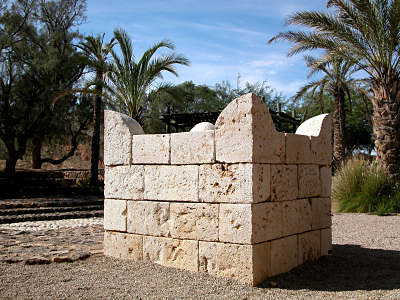
An altar at Beersheba, probably connected to a temple or cult center in the city. When Tel Be’er-Sheva was first excavated, archeologists discovered sandstone blocks in the walls of storehouses - most of the blocks used in the ancient city was made of limestone. They eventually took these blocks and reconstructed the altar, as shown here. It is thought that the altar was dismantled during the reforms of King Hezekiah in circa 8th century BC.
ADMIN: IMAGE REMOVED
An altar from Megiddo, dating 1000-900 BC and discovered in 1926 near a four-chambered gate and a casemate wall dated to the 10th century BC. This altar is too small for animal sacrifices and must have been used for sacrifices of wine, incense, or grain mixed with oil.
Now, just because the ‘pagan’ neighbors of Israel used horned altars does not make it automatically evil. After all, God Himself is the one who ordered their construction.

Plus, sacrifice of animals and incense ain’t really a unique custom to the sons of Israel. Also, we have the Ark of the Covenant, functioning both as the receptacle of the Law and God’s portable throne-chair: well, we do have gods and Pharaohs in Ancient Egypt who are
carried around in box-like litters or shrines too. Some find a parallel between the cherubim on the
kapporet - loosely paraphrased as ‘mercy-seat’ - and the winged humans/human-animal hybrids/animals
usually seen flanking or overshadowing
the thrones of kings and gods in the Ancient Near East and
Ancient Egypt as well (sometimes they are seen
riding on them as well).
The Temple of Solomon sports many features which are also present in other Ancient Near Eastern temples, in part due to the Tyrian workers and craftsmen who helped built it: say, that ‘cherubim-palm tree-flower’
motif that decorated the interior walls, or the idea of having two big pillars in front of the entrance themselves. In layout, appearance and iconography, it would not have looked that much different from any other temple you can see in other areas. The Temple has for example the private, innermost sanctuary usually dubbed in scholarly parlance the
adyton (Hebrew:
debir) usually containing the cult image of the deity being worshipped inside the edifice (in the case of the Israelites, the one contained inside the the ‘
Holy of Holies’ is the box which also served as the throne of their unseen God), a rectangular room called the
cella (Hebrew:
heikal), and a
pronaos (aka
ulam) or an outer hallway. A courtyard surrounding the god’s house, marked with stones, is also one common feature. Solomon’s Temple only differs in that the True God was worshipped in it!
All of the elements I have mentioned also exist among other, ‘pagan’ ANE cultures, but they are not in itself ‘evil’ or ‘satanic’ just because they were used by these peoples. Once again: ‘pagan’ usually does not automatically equal ‘evil’.



