D
Dakota_Roberts
Guest
Mea culpa, I was thinking of Saint Pope Pius XNo, it wouldn’t.
Indeed, but I’d miss having His Eminence in Boston. We love him here, especially the Seminarians.

Mea culpa, I was thinking of Saint Pope Pius XNo, it wouldn’t.
Indeed, but I’d miss having His Eminence in Boston. We love him here, especially the Seminarians.
I’m going to agree here.I find his humility simply inspiring. I fear for his life being out in public when it seems like so many would want to do the Pope harm, but I admire his fearlessness in this regard. But it is good for the Church to have such a Pope, if the plan is to bring souls to Christ, today’s people respond better to humility manifested in taking the bus as opposed to the historic pomp and circumstance associated with things like the Papal Tiara or the Sedia Gestatoria.
How wonderful for you that you’ve met him! I imagine he will also be gracious with people calling him Your Holiness.Actually, in Buenos Aires he is always “Jorge Mario,” never “Jorge” – i.e., “with Benedict our Pope, Jorge Mario our bishop …”. And most everybody refers (er, referred) to him as “el Cardenal.” When I called him “eminence,” he didn’t bat an eye! Though maybe he was just being gracious.

My college age daughter said the same thing! She was texting me from the campus ministry where they were all watching. He does look like a very sweet man!he’s ‘adorable’.I’m sorry i had to say it, he looks like such a nice, caring and sweet man.
:'D
I believe that was only in Japan.I’m going to agree here.
If we look at both St. Francis of Assisi and St. Ignatius of Loyola, they have some commonalities. While it is true that St. Ignatius founded a clerical order while St. Francis founded a family, both men are well known for their simplicity and both traditions are known for their austerity.
Let’s look at the roots of the Society of Jesus. The Society was founded as a very different kind of religious order. It defined a new direction in the religious life. Ignatius was forced to take on the solemn vowed life of the mendicants, because that’s what the Church knew at the time. The idea of simple vows came much later with the founding of the congregations. But there were no congregations at the time.
However, what many people fail to notice is how clever Ignatius was. He negotiated with the Holy See so that the Jesuits, while bound by solemn vows, like Franciscans, were not bound to live the religious life the way that Franciscans and other religious lived it.
These men were to be poor. They were to be anonymous. They had no distinctive habit. They dressed as secular clergy. No one could tell the difference between a Jesuit and a secular priest. They were not to accept positions among the hierarchy unless commanded to do so by the pope. They did not live in religious communities as did other religious. This was an option that they could choose only if it was practical. This freedom allowed men like St. Francis Xavier and St. Isaac Jogues the freedome to go off on their own to foreign missions on their own and do whatever was necessary to preach the Gospel.
**When they arrived in the East, they were coined “the Black Robes”. What did they do? They changed the traditional secular black cassock for the orange cassock to fit in with the local culture.
**
In one of his letters back to St. Ignatius, written at the very end of his life, St. Francis Xavier admits that their failure in the East was due to their attempt to bring European Catholicism to the East. He encourages his brother Jesuits to Christianize Asian culture and avoid making it European.
The Jesuits were the first religious to have an independent prayer life. Up to the time of St. Ignatius, the choir was very much in place. Ignatius got rid of the choir. Francis of Assisi had already banned the use of Gregorian Chant in choir. The Divine Office had to be recited; but it was still prayed in community. Ignatius changed it.
This may sound unimportant to many people; but it’s VERY important. One of the differences between solemn vows and simple vows is the Divine Office. Religious in solemn vows, be they priests, brothers or sisters, are bound to pray the Divine Office in choir under pain of mortal sin. The Jesuits were dispensed from this from the onset. The Church granted them the spiritual benefits and graces that go with the celebration of the Hours in choir without having to pray it in choir. They pray the Divine Office individually.
Why is this background important? Because it shows us that this is a pope who comes from a 500 year tradition of simplicity and practical spirituality. We already saw that yesterday in his manner of dress. The Holy Father has turned down wearing the gold cross. Instead he has adopted an iron cross. He turned down the red slippers and adopted brown work shoes. This morning, he went to pray at the basilica, again wearing the simple cassock, iron cross and brown shoes.
I’ll be interested to see if he deviates from the traditional Jesuit simplicity and spirit of anonymity. Especially in a man who has made Francis of Assisi his role model. We have the practical simplicity of Ignatian spirituality coupled with the fraternal (rather than clerical) vision of St. Francis. Remember what he said in his opening remarks. “We are a fraternity.” Those are not Ignatian terms. That’s Franciscan. Ignatius used military terminology This pope brings a blend of two spiritual schools that are not well liked by many Catholics, especially radical traditionalists.

I am ok with Father Jorge. But “Jorge”? I think there was a question answered on CAF itself by the Apologist (Fr. Vincent Serpa if memory serves correct) that such references is to be avoided even if the person insists. Are you sure Pope Francis insisted as a Cardinal that he simply be referred to as Jorge?The man refuses to use limos and private cars. He also refuses to be called Eminence, Excellency, Bishop or Cardinal. He has been simply “Jorge” or “Father Jorge”.
For all your writing Brother, I sometimes do not understand why you are against those who might think differently from St. Francis of Assisi. You say St. Francis Xavier was a failure but he is revered in the very parts of the world as a great Saint. Its almost as if Europeans themselves are the ones who think that St. Francis Xavier was a failure because he did things differently from St. Francis of Assisi. Don’t you think it is unfair that Europeans keep saying that someone was a failure when Catholics who belong to that part of the world insist that he was a great saint and love the European architecture, traditions handed down to us?I’m going to agree here.
If we look at both St. Francis of Assisi and St. Ignatius of Loyola, they have some commonalities. While it is true that St. Ignatius founded a clerical order while St. Francis founded a family, both men are well known for their simplicity and both traditions are known for their austerity.
Let’s look at the roots of the Society of Jesus. The Society was founded as a very different kind of religious order. It defined a new direction in the religious life. Ignatius was forced to take on the solemn vowed life of the mendicants, because that’s what the Church knew at the time. The idea of simple vows came much later with the founding of the congregations. But there were no congregations at the time.
However, what many people fail to notice is how clever Ignatius was. He negotiated with the Holy See so that the Jesuits, while bound by solemn vows, like Franciscans, were not bound to live the religious life the way that Franciscans and other religious lived it.
These men were to be poor. They were to be anonymous. They had no distinctive habit. They dressed as secular clergy. No one could tell the difference between a Jesuit and a secular priest. They were not to accept positions among the hierarchy unless commanded to do so by the pope. They did not live in religious communities as did other religious. This was an option that they could choose only if it was practical. This freedom allowed men like St. Francis Xavier and St. Isaac Jogues the freedome to go off on their own to foreign missions on their own and do whatever was necessary to preach the Gospel.
When they arrived in the East, they were coined “the Black Robes”. What did they do? They changed the traditional secular black cassock for the orange cassock to fit in with the local culture.
In one of his letters back to St. Ignatius, written at the very end of his life, St. Francis Xavier admits that their failure in the East was due to their attempt to bring European Catholicism to the East. He encourages his brother Jesuits to Christianize Asian culture and avoid making it European.
The Jesuits were the first religious to have an independent prayer life. Up to the time of St. Ignatius, the choir was very much in place. Ignatius got rid of the choir. Francis of Assisi had already banned the use of Gregorian Chant in choir. The Divine Office had to be recited; but it was still prayed in community. Ignatius changed it…
Certainly a person should be called what they prefer when it comes to their own name. I doubt that Jorge Cardinal Bergoglio asked people that he would only meet once or twice to call him Jorge. But among his priests or those he worked with regularly, perhaps he did. I don’t see how this could possible be conscrued as a huge negative.I am ok with Father Jorge. But “Jorge”? I think there was a question answered on CAF itself by the Apologist (Fr. Vincent Serpa if memory serves correct) that such references is to be avoided even if the person insists. Are you sure Pope Francis insisted as a Cardinal that he simply be referred to as Jorge?
Well, I felt that the Apologist made a good case why we should not.Certainly a person should be called what they prefer when it comes to their own name. I doubt that Jorge Cardinal Bergoglio asked people that he would only meet once or twice to call him Jorge. But among his priests or those he worked with regularly, perhaps he did. I don’t see how this could possible be conscrued as a huge negative.
And anyway, we will all call him Pope Francis and won’t be there when he has the bishops in for ad limia visits.
Certainly a person should be called what they prefer when it comes to their own name. I doubt that Jorge Cardinal Bergoglio asked people that he would only meet once or twice to call him Jorge. But among his priests or those he worked with regularly, perhaps he did. I don’t see how this could possible be conscrued as a huge negative.
And anyway, we will all call him Pope Francis and won’t be there when he has the bishops in for ad limia visits.

he’s ‘adorable’.
I believe that was only in Japan.
http://upload.wikimedia.org/wikipedia/commons/thumb/8/8f/Matteo_Ricci_2.jpg/200px-Matteo_Ricci_2.jpg
Ricci in traditional robes
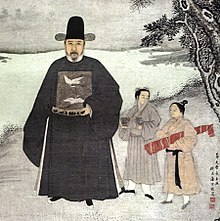
They may have worn orange robes to blend in with the Buddhist monks, but they quickly shed these robes because they went with trying to convert the literati who didn’t wear orange robes. Many would have worn mandarin robes like this.
http://upload.wikimedia.org/wikiped...Shunfu.jpg/220px-Portrait_of_Jiang_Shunfu.jpg
I am ok with Father Jorge. But “Jorge”? I think there was a question answered on CAF itself by the Apologist (Fr. Vincent Serpa if memory serves correct) that such references is to be avoided even if the person insists. Are you sure Pope Francis insisted as a Cardinal that he simply be referred to as Jorge?
Whoah! Slow down. I never said that St. Francis Xavier was a failure. St. Francis Xavier said this about their missionary work in his letter to St. Ignatius. You’re doing to me what the Muslims did to Pope Benedict when he made reference to what someone else said about the Muslims.For all your writing Brother, I sometimes do not understand why you are against those who might think differently from St. Francis of Assisi. You say St. Francis Xavier was a failure but he is revered in the very parts of the world as a great Saint. Its almost as if Europeans themselves are the ones who think that St. Francis Xavier was a failure because he did things differently from St. Francis of Assisi. Don’t you think it is unfair that Europeans keep saying that someone was a failure when Catholics who belong to that part of the world insist that he was a great saint and love the European architecture, traditions handed down to us?
St Francis of Assisi is one saint of the Church. The Church did exist prior to St. Francis of Assisi. It was the same Church that gave birth to someone like him after all. So to insist that his way should be adopted by others and that others who did not follow his way FAILED seems unfair.
Respect St. Francis, respect St. Xavier or the founder St. Ignatius. They are both good in certain situations and they are both utter failures in some others (we could go in to particulars but I would say it would be too far outside of this thread). One could say that if St. Francis of Assisi did things differently, he might have been successful with Muslims. One could then argue using the fact that those lands that were Muslim then are Muslim today is a testament of his failure. Do you think that line of reasoning valid?
Just as that reasoning is dubious, I think we need to be careful when we oppose the other side as well.
That being said, I think it is important to point out that there is a difference in the St. Francis people seem to know today and the actual person. History speaks of a St. Francis of Assisi who was a very enthusiastic person who actively evangelized and even tried to do so with Muslims. In other words, he certainly used a lot of words. But the St. Francis most people know today seems to be the man who said don’t use words and just use actions. I think there is a bit of a lack of touch with actual historical facts about St. Francis. He was not the likes of modern ecumenism by any stretch. It is this insistence that he WAS by many that used to make me uncomfortable with this great saint St. Francis to begin with. But once I got gifted a statue, I did some background research. He seems nothing like what people insist he was.
I’ve never met the man. This was said by the people of his Archdiocese. They have reported that he introduced himself as either Jorge Mario or Padre Jorge.I am ok with Father Jorge. But “Jorge”? I think there was a question answered on CAF itself by the Apologist (Fr. Vincent Serpa if memory serves correct) that such references is to be avoided even if the person insists. Are you sure Pope Francis insisted as a Cardinal that he simply be referred to as Jorge?
Just something I wasn’t able to understand in the following:-Whoah! Slow down. I never said that St. Francis Xavier was a failure. St. Francis Xavier said this about their missionary work in his letter to St. Ignatius. You’re doing to me what the Muslims did to Pope Benedict when he made reference to what someone else said about the Muslims.
By the d. underlined above, you meant he did not say to just preach with lives and faith instead of actions? I wasn’t sure what you meant by that last point.The brothers are ordered:
a. Not to preach in any diocese where the bishop does not allow it.
b. Not to engage in arguments with anyone
c. To leave, if their preaching is no welcome
d. No preach with their lives and their faith rather than their words
I said the same thing to my wife yesterday. He’s going to drive his security detail bananas!I would not want to be working his security.
I suspect the “No” was a typo and mean to be “To”. If the latter it makes perfect sense. I had to do a double-take as well.Just something I wasn’t able to understand in the following:-
By the d. underlined above, you meant he did not say to just preach with lives and faith instead of actions? I wasn’t sure what you meant by that last point.

The Vatican and Roman police forces must be freaking out about this. I wonder how they managed security on a public bus???I would not want to be working his security.

I wasn’t a public bus, it was a Vatican minibus that took the cardinals from the Sistine Chapel to the Casa di Santa Marta, both located within the Vatican.The Vatican and Roman police forces must be freaking out about this. I wonder how they managed security on a public bus???
Pray for the safety of HH Francis.