
Question about Greek

  • Thread starter Thread starter Ite_ad_Ioseph
  • Start date Start date
Status
Not open for further replies.
I

Ite_ad_Ioseph

Guest
I thought I would ask the Greeks this one. 🙂

In my demonstration speech on school, I am ‘demonstrating’ the Greek alphabet. I want to give little stories on each letter as well. For example, I heard theta is used as a symbol for death because it looks like a skull( sort of) and the word ‘thanatos’ means ‘death’ (correct me if I’m wrong) and th is th is the letter theta.
In Matt 5:18, newadvent.org/bible/mat005.htm, Christ mentions a ‘jot’ and the Latin is ‘jota’. Is this the Greek letter iota?
It is small, so is He commenting on the letter’s size?
Your thoughts or comments, please.
Pax et bonum. (I would speak Greek here but I don’t know it.)
 
thanatos does mean death. I don’t know about the theta being used as a symbol for death though.

About that verse, i have the greek new testament at home, I can check for you when I am back form work.
 
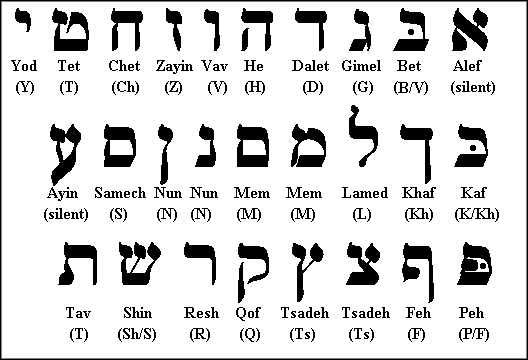
yea, the Greek text says iota. i looked it up in the glossary of the Greek NT that I have, and it is not only the greek iota, but also (and probably in this verse refers to) yod, the smallest letter of the Hebrew alphabet. I always thought that was the origin of the phrase “not an iota”.

As for tittle- the Greek word is keraia and the glossary defines it as “a little horn (the small projecting stroke by which certain similar Hebrew letters are distinguished)” But I have no clue where the english word tittle comes from.

So in this verse, he’s basically saying, not the smallest letter of the alphabet, nor even a smal part of a letter will be taken away from the law. a listener of the time who was a speaker of his language would have understood what he meant.
 
**I don’t know about the theta being used as a symbol for death though.
**

I’ve seen it so used in ancient mosaics depicting gladiatorial games and battles.
 
**I don’t know about the theta being used as a symbol for death though.
**

I’ve seen it so used in ancient mosaics depicting gladiatorial games and battles.
Oh interesting. just to clarify, I wasn’t implying that I doubted it was true, but just saying that I did not know myself one way or the other.
 
Thank you all. So Christ wasn’t speaking about Greek after all. Anyway, any other help with the Greek alphabet would be appreciated. Pax
 
Ite ad Ioseph,

In the Peshitta (Peshitto), the Syriac-Aramaic Bible of the Assyro-Chaldean and Antiochene Churches, here is the verse in question with the two words highlighted in red:

ܐܡܝܢ ܓܝܪ ܐܡܪ ܐܢܐ ܠܟܘܢ ܕܥܕܡܐ ܕܢܥܒܪܘܢ ܫܡܝܐ ܘܐܪܥܐ ܝܘܕ ܚܕܐ ܐܘ ܚܕ ܤܪܛܐ ܠܐ ܢܥܒܪ ܡܢ ܢܡܘܤܐ ܥܕܡܐ ܕܟܠ ܢܗܘܐ

For Jot - The word is Yodh (ܝܘܕ), the smallest letter in the Aramaic alphabet. The letter Yodh is in red in this picture:

http://sor.cua.edu/Bible/AramaicAlphabet.jpg

Or in Hebrew, look for Yod:


For Tittle - the word is Sirta (ܤܪܛܐ) which means: Stroke

Jesus was basically saying that neither the smallest letter nor one stroke of the law will pass away until everything is fulfilled.

I hope the imagery helps.

God bless,

Rony

P.S. Thanks to Fidelia for giving a good similar explanation, and for looking up the Greek.
 
Rony, thanks for showing the Hebrew and especially the Aramaic!
 
Status
Not open for further replies.
Back
Top