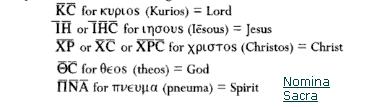
If they don’t think the name Iesous or the name Iesu (or Jhesu, or Jhesus) are the same as Jesus, they are clearly more interested in Spelling than the Gospel. But they don’t seem to be much interested in the history of the Bible, or they’d fairly easily get hold of copies of the Vulgate, the Septuagint, the Vetus Latina stuff, etc… And of course the prophet Habakkuk notoriously called upon the name of Jesus before Jesus had ever been born, in Habakkuk 3:18.
Also, “Iesus” the son of “Sirac” is a fairly important guy, although of course Sirach doesn’t get to be in the Bible for most of these Protestant folks.
Anyway, I don’t see how they think St. Joan of Arc’s motto could possibly have been “Jhesus - Maria” unless medieval Europeans knew the name of Jesus. One of the oldest Old Irish poems, attributed to St. Ita, is found in the Felire Oengusso, is not only about Jesus but “Isucan” – little Jesus, baby Jesus. There’s an entire medieval devotional movement centered around the Holy Name of Jesus (mostly started up by St. Bernardine of Siena, who died in 1380).
Occasionally one really does run into medieval folks who shy away from using the name “Jesus” out of piety, just as one runs into medieval folks who love the name “Jesus” so much that they scarcely use His other titles. For example, there are some curious features of Old English translations of the Bible. Jesus is usually called “Haelend” or “Crist”, either out of shyness or because “Haelend” (savior/healer) is the closest translation to Jesus/Joshua (“God saves”), and because “Jesus” seems to have been hard for the Saxons to say. But “Iesus” does show up for the son of Sirach, no problema.
Sigh. Our American forebears would have laughed this kind of stuff to scorn, because even back in the rural waybacks and in the worst parts of town, they knew history better than this. We are so ignorant, these days.