
P
patrick457
Guest
I’ll admit I’m a bit fascinated by the customs that surround the Scriptural readings in the various liturgies.
Why did the deacon face north for the Gospel?
In the older form of the Roman Rite (the ‘Extraordinary Form’ or the ‘Tridentine Mass’) and liturgies derived from the Roman Rite, specifically in Solemn/High Masses, the custom was for the subdeacon or a lector to chant the Epistle facing the south and for the deacon to face the opposite direction (the north) when reading the gospel.
http://www.lms.org.uk/photo-files/westminster-cathedral-st-joseph-3
This led to the southern and northern sides of the altar being dubbed the ‘Epistle side’ (the viewer’s right) and the ‘Gospel side’ (the viewer’s left). In more simple forms of Masses where there are no deacon or subdeacon such as Low Mass, the priest chants or reads the readings himself from these two sides of the altar.
http://www.praytherosaryapostolate.com/Mass & Sacraments/Epistle n Gospel.JPG
The thing is, that it was originally the opposite: the Epistle was read facing the north while the Gospel was preached to the south. The deacon originally faced southwards when reading the Gospel from the pulpit or ambo, which back then was halfway down the church right in the middle (or slightly off-center) of the nave and connected to the sanctuary by a raised walkway or solea, where everyone could hear him. (In churches where there were two pulpits, he used the pulpit on the northern side, whence he faced south.)
http://www.shadysidelantern.com/pulpit/basilica.png
Back then, the congregation were not standing facing the sanctuary front-and-center like today. Instead, men and women attending the liturgy stood (no pews back then: either you stood through the whole liturgy, or in some areas, you brought your own chair or couch to sit on) separately, in opposing halves of the nave and the adjacent aisles: the men were at the southern side aisle(s), while the women were on the opposite side. Viewed from the sanctuary, men are on the right-hand side, while women are on the left. The central nave was generally kept free. Why did the deacon face the south then? Because that was the men’s side, and St. Paul’s injunction that women should be silent inside the church is apparently taken to mean that the gospel should be read facing men (1 Corinthians 13:33b-35).
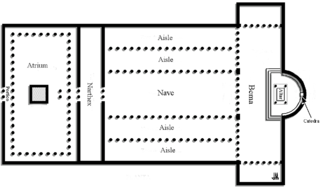
Another thing which could have also determined the change is the position of the bishop’s throne or cathedra. In secular basilicas, the throne where the tribune or the presiding magistrate sat when he held court stood in the middle of the apse. When Christians adopted the basilica, also appropriated this arrangement; in place of the magistrate and his assessors were the bishop and the clergy.

Since the right side is the side of honor, the deacon originally read the gospel to the right of the bishop, but without turning his back on him, facing the congregation (or at least, the men). Of course, since the earliest churches in Rome are oriented ‘upside down’, so that the façade and the entrance is to the east and the apse is to the west (so that when the priest faced east he will have to face the church doors instead of the apse), this would mean that in Rome, the deacon will face the south.
In fact, facing north for the Gospel one only became standard by the 16th century and afterwards: there were still a few local liturgies where the deacon apparently still faced southward during the gospel by the late 15th century (including a few areas in England), although by then, most places already have the deacon facing north. Some even mandated it in the rubrics.
Why did the deacon face north for the Gospel?
In the older form of the Roman Rite (the ‘Extraordinary Form’ or the ‘Tridentine Mass’) and liturgies derived from the Roman Rite, specifically in Solemn/High Masses, the custom was for the subdeacon or a lector to chant the Epistle facing the south and for the deacon to face the opposite direction (the north) when reading the gospel.
http://www.lms.org.uk/photo-files/westminster-cathedral-st-joseph-3
This led to the southern and northern sides of the altar being dubbed the ‘Epistle side’ (the viewer’s right) and the ‘Gospel side’ (the viewer’s left). In more simple forms of Masses where there are no deacon or subdeacon such as Low Mass, the priest chants or reads the readings himself from these two sides of the altar.
http://www.praytherosaryapostolate.com/Mass & Sacraments/Epistle n Gospel.JPG
The thing is, that it was originally the opposite: the Epistle was read facing the north while the Gospel was preached to the south. The deacon originally faced southwards when reading the Gospel from the pulpit or ambo, which back then was halfway down the church right in the middle (or slightly off-center) of the nave and connected to the sanctuary by a raised walkway or solea, where everyone could hear him. (In churches where there were two pulpits, he used the pulpit on the northern side, whence he faced south.)
http://www.shadysidelantern.com/pulpit/basilica.png
Back then, the congregation were not standing facing the sanctuary front-and-center like today. Instead, men and women attending the liturgy stood (no pews back then: either you stood through the whole liturgy, or in some areas, you brought your own chair or couch to sit on) separately, in opposing halves of the nave and the adjacent aisles: the men were at the southern side aisle(s), while the women were on the opposite side. Viewed from the sanctuary, men are on the right-hand side, while women are on the left. The central nave was generally kept free. Why did the deacon face the south then? Because that was the men’s side, and St. Paul’s injunction that women should be silent inside the church is apparently taken to mean that the gospel should be read facing men (1 Corinthians 13:33b-35).

Another thing which could have also determined the change is the position of the bishop’s throne or cathedra. In secular basilicas, the throne where the tribune or the presiding magistrate sat when he held court stood in the middle of the apse. When Christians adopted the basilica, also appropriated this arrangement; in place of the magistrate and his assessors were the bishop and the clergy.
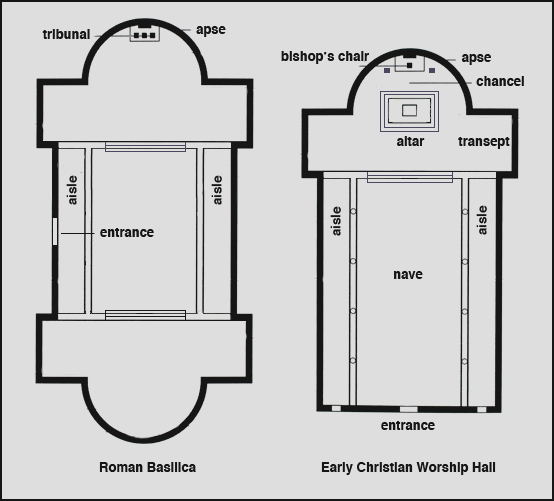
Since the right side is the side of honor, the deacon originally read the gospel to the right of the bishop, but without turning his back on him, facing the congregation (or at least, the men). Of course, since the earliest churches in Rome are oriented ‘upside down’, so that the façade and the entrance is to the east and the apse is to the west (so that when the priest faced east he will have to face the church doors instead of the apse), this would mean that in Rome, the deacon will face the south.
In fact, facing north for the Gospel one only became standard by the 16th century and afterwards: there were still a few local liturgies where the deacon apparently still faced southward during the gospel by the late 15th century (including a few areas in England), although by then, most places already have the deacon facing north. Some even mandated it in the rubrics.
